


For decades, the prospect of undergoing complex spinal operations carried a heavy burden of fear, uncertainty, and extended recovery times. Patients diagnosed with severe spinal deformities were often forced to weigh the debilitating physical consequences of their condition against the terrifying potential risks of traditional orthopedic surgery. Today, however, the landscape of orthopedic medicine has been completely revolutionized. Advanced robotic scoliosis surgery has emerged as a beacon of hope, offering unprecedented precision, drastically reduced complication rates, and an incredibly accelerated path to recovery.
This comprehensive guide delves deeply into the transformative power of robotic-assisted spine surgery. By examining the firsthand experience of an eighteen-year-old patient who successfully overcame a severe congenital spinal curvature, we will explore why modern robotic systems are rendering traditional, high-risk surgical methods obsolete. If you or a loved one are facing the daunting reality of progressive scoliosis, understanding these technological advancements is the crucial first step toward restoring both physical functionality and profound self-confidence.
Video Chapters & Quick Navigation
The Severe Dangers of Untreated Scoliosis
Scoliosis is frequently misunderstood merely as a cosmetic issue—a slight asymmetry in the shoulders or a subtle unevenness in the hips. However, as spinal curvatures progress beyond thirty to forty degrees, the condition ceases to be just an aesthetic concern and rapidly transforms into a highly dangerous internal mechanical failure. When the spinal column twists and bends aggressively, it fundamentally alters the entire structural cavity of the human torso.
One of the most terrifying realities for patients facing severe, progressive scoliosis is the looming threat of internal organ compression. As highlighted by Hatice at [00:04] in the documentary, failing to surgically correct an aggressive curvature can lead directly to catastrophic pressure on the lungs. The rib cage, intrinsically connected to the thoracic spine, becomes distorted. This distortion severely restricts the expansion of the lungs during normal respiration, leading to a condition known as restrictive lung disease.
Furthermore, untreated scoliosis places profound stress on the delicate neural pathways housed within the spinal canal. Over time, the abnormal biomechanical forces can stretch, pinch, or continuously irritate the spinal cord and its branching nerve roots. Without medical intervention, this persistent structural abuse carries a very real, scientifically documented risk of partial or complete paralysis. The daily physical toll is equally exhausting; patients frequently experience chronic back pain, overwhelming fatigue, and a severe inability to engage in normal physical exertions due to structural instability.
Understanding Congenital Scoliosis: A Structural Anomaly
While the majority of scoliosis cases diagnosed in adolescents are termed "idiopathic"—meaning the exact cause remains unknown—there is a highly specific and often more aggressive variant known as congenital scoliosis. This specific classification means the spinal deformity is present entirely from birth, resulting directly from embryological malformations during the earliest stages of fetal development.
At [00:30], Hatice details the underlying anatomical defect responsible for her severe curvature: the presence of an extra bone, or a hemivertebra. In a normal human spine, each vertebral bone forms as a symmetrical, uniform cylinder, stacking neatly upon one another to create a straight, stable column. In the case of a hemivertebra, only one half of the vertebral body forms correctly.
This wedge-shaped anomaly acts as a structural wedge driven into the spine. As the child grows, this wedge forces the spine to tilt and rotate disproportionately to one side. Because the growth plates on the malformed bone continue to expand asymmetrically, congenital scoliosis curves are notoriously stubborn and have a high propensity for rapid progression during childhood growth spurts. Unlike idiopathic scoliosis, which might respond favorably to external bracing, congenital anomalies involve a literal architectural defect that almost always necessitates definitive surgical correction to prevent lifelong disability.
The Tragic Consequences of Missed Early Interventions
The journey to receiving adequate treatment for complex spinal conditions is often fraught with diagnostic delays and missed opportunities. Early detection is widely considered the absolute gold standard in orthopedic medicine, yet all too often, subtle warning signs are overlooked or dismissed by initial medical practitioners.
Remarkably, Hatice’s congenital abnormality was actually visible on ultrasound imaging while she was still in her mother's womb, as she notes at [00:41]. Despite the presence of a visible spinal asymmetry on the prenatal scans, the attending physicians failed to recognize the severity of the structural defect. The anomaly was dismissed as a non-issue, a tragic oversight that allowed the deformity to quietly progress unchecked for over a decade. It wasn't until she reached the fourth or fifth grade that the physical manifestations of the curvature became impossible to ignore.
Compounding this diagnostic failure was the total lack of non-invasive preventative care. At [00:51], she recounts that no custom orthopedic braces or targeted physiotherapeutic exercise regimens were ever prescribed during her early childhood. This absence of a proactive treatment plan left her spine entirely at the mercy of gravity and asymmetrical growth. By her teenage years, the physical burden had become immense. Simple daily tasks became daunting, and as she explains at [01:08], she found herself completely unable to lift heavy objects or place any meaningful strain on her back without experiencing profound discomfort and physical limitation.
The Robotic Surgery Revolution: Unprecedented Precision
To fully grasp why robotic-assisted scoliosis surgery is a monumental leap forward, one must understand the inherent limitations of traditional "freehand" spinal surgery. Historically, surgeons relied solely on their anatomical knowledge, tactile feedback, and basic two-dimensional X-rays to place pedicle screws directly into the spine. While highly skilled surgeons perform this admirably, the human hand is always subject to micro-tremors, and working millimeters away from the spinal cord naturally carries a frightening degree of risk.
Robotic spinal surgery completely removes this element of anatomical guesswork. At [01:43], the meticulous pre-operative planning phase is revealed. Before the patient ever enters the operating room, an advanced 3D Computed Tomography (CT) scan of the patient's unique spinal architecture is captured. This highly detailed imaging is fed directly into a sophisticated robotic software system, such as the Mazor X.
The surgeon then uses this software to construct a complete, three-dimensional surgical blueprint. Every single titanium screw is mapped out virtually. The software calculates the exact trajectory, the required diameter, and the optimal depth of every implant down to the sub-millimeter level. It actively maps the location of critical nerve pathways, ensuring that the planned surgical route avoids them entirely.
How the Robotic Arm Functions in the OR
During the actual procedure, the robotic arm does not operate independently. Instead, it acts as an flawlessly stable, hyper-accurate guide for the human surgeon. The robot dynamically aligns its mechanical arm to the exact pre-planned trajectory determined by the 3D software. The surgeon then physically passes their instruments through the robotic guide tube. This ensures that the screws are driven into the bone with mathematical perfection. As noted at [01:51], this technological synergy essentially reduces the risk of nerve damage and intraoperative complications to practically zero.
| Feature | Traditional Freehand Surgery | Robotic-Assisted Surgery |
|---|---|---|
| Pre-Op Planning | Based on 2D X-rays and mental mapping | Advanced 3D CT modeling and virtual screw simulation |
| Screw Placement Accuracy | Typically 85% to 92% accuracy | Consistently 99% to 100% accuracy |
| Radiation Exposure | High (requires continuous intraoperative fluoroscopy) | Significantly reduced (relies on pre-mapped 3D models) |
| Nerve Damage Risk | Noticeable risk depending on surgeon experience | Virtually eliminated due to sub-millimeter robotic guidance |
Overcoming the Deep-Seated Fear of Spinal Surgery
It is entirely natural for patients and their families to experience severe anxiety when discussing spinal surgery. The spine is the central pillar of the human body, housing the delicate nervous system that controls all voluntary movement. The historical stigma surrounding spinal operations—often associated with long hospital stays, severe postoperative pain, and the terrifying, albeit rare, risk of paralysis—makes the decision to undergo surgery incredibly difficult.
However, the introduction of robotic technology actively dismantles these fears. At [01:15], Hatice explains how discovering the robotic surgical option provided her family, particularly her mother, with an immense sense of relief and confidence. Knowing that a multi-million dollar technological system was being utilized to actively protect her spinal cord shifted their mindset from fear to proactive optimism.
This psychological comfort is further reinforced by dedicated, empathetic medical professionals. Choosing a specialized center, such as the Turan Turan Health Group led by experts like Op. Dr. Yunus Uysal, ensures that patients are not just treated as anatomical problems, but as individuals requiring deep reassurance. Comprehensive pre-surgical consultations, where the 3D surgical plan is visually demonstrated to the patient, play a massive role in alleviating anxiety. As stated powerfully at [04:02], the robotic approach effectively lowers the surgical risks to zero, transforming a once-frightening ordeal into a highly controlled, safe, and routine medical intervention.
The Immediate Post-Operative Reality: Defying Expectations
Perhaps the most astonishing aspect of advanced robotic scoliosis surgery is the vastly accelerated postoperative recovery timeline. In the past, patients undergoing comprehensive spinal fusion were often confined to a hospital bed for over a week, heavily medicated to manage excruciating pain. Modern techniques have completely rewritten this narrative.
As documented at [02:25], by just the second day following her major spinal reconstruction, Hatice was sitting up and experiencing a profound physical transformation. The immediate sensation of sitting perfectly upright, free from the skewed gravitational pull of her former curvature, is a uniquely liberating experience. Because robotic surgery allows for smaller, more precise muscular incisions and significantly less tissue trauma, the post-operative inflammatory response is dramatically lower.
Consequently, the pain levels experienced by patients are drastically reduced. Instead of requiring heavy, prolonged narcotic interventions, many patients find their discomfort managed easily with standard clinical analgesics. Furthermore, the structural straightening of the spine yields an immediate cosmetic and anatomical benefit: an instant increase in height. As Hatice joyfully notes at [02:47], straightening her severe curvature physically elongated her torso, resulting in an immediate height gain of two to three centimeters. By the very next day after her procedure, she was already up and walking the hospital corridors, demonstrating the incredible resilience of the human body when treated with minimally traumatic surgical precision.
Thriving at the Three-Month Milestone and Beyond
The true measure of any orthopedic intervention is found in the long-term quality of life it provides to the patient. Transitioning from the acute recovery phase in the hospital to daily life at home is where the benefits of robotic surgery truly shine. Once discharged, patients typically experience a surprisingly smooth convalescence. Because the titanium implants provide immediate internal stabilization, external bracing is rarely required.
By the three-month mark, as highlighted at [03:06], patients like Hatice are overwhelmingly thriving. She reports moving effortlessly, bending, and returning to normal daily activities with absolutely no pain at home. The only minor clinical restrictions at this stage involve avoiding excessively heavy lifting or hyper-strenuous athletic activities while the bone grafts continue to solidly fuse with the titanium hardware—a biological process known as osseointegration.
The Profound Psychological Impact
Beyond the physical mechanics of healing, the psychological elevation experienced by severe scoliosis patients is immeasurable. Living with a highly visible spinal deformity during adolescence can cause severe body image issues, social anxiety, and plummeting self-esteem. Teenagers often hide beneath baggy, oversized clothing to mask the asymmetry of their shoulders, ribs, and hips.
Following surgical correction, this emotional burden is instantly lifted. At [03:29], Hatice expresses how much more she appreciates her reflection. Being able to wear normal clothing, stand with a symmetrical, confident posture, and view herself without the shadow of physical deformity is life-changing. Even the minor clinical follow-ups, such as having surgical stitches removed, proved to be entirely painless and stress-free, finalizing her transition from a chronic patient back to a healthy, confident young adult.
Global Access to World-Class Orthopedic Solutions
For many patients residing in the United States, the United Kingdom, or Canada, accessing advanced medical technologies like robotic-assisted spine surgery is financially devastating. The prohibitive costs of high-tech orthopedic care at home often leave families feeling trapped and hopeless. However, the rise of global medical tourism has thoroughly shattered this geographic and financial barrier.
Top-tier international medical facilities are now offering the exact same FDA-approved robotic systems, highly specialized surgical teams, and ultra-modern hospital environments at a fraction of the cost found in Western nations. By choosing to travel for care, patients are no longer forced to compromise on quality or settle for outdated, high-risk surgical methodologies. They are stepping into state-of-the-art medical sanctuaries where their safety, comfort, and long-term well-being are prioritized above all else.
This paradigm shift in global healthcare means that a straight, healthy spine and a pain-free future are no longer exclusive privileges for the wealthy. They are accessible, highly viable realities for anyone willing to explore their options beyond local borders. With dedicated patient coordination services handling every logistical detail—from surgical consultations to post-operative recovery accommodations—the journey to structural healing has never been safer or more straightforward.
Take the First Step Toward a Pain-Free, Confident Future
You do not have to live in fear of spinal surgery or suffer from the physical limitations of severe scoliosis. PlacidWay connects you with globally recognized, top-rated orthopedic centers offering revolutionary robotic spine surgery. Experience unmatched precision, zero-compromise safety, and highly affordable care packages. Let us manage your medical journey while you focus entirely on your recovery and your new life.
GET A FREE, NO-OBLIGATION QUOTE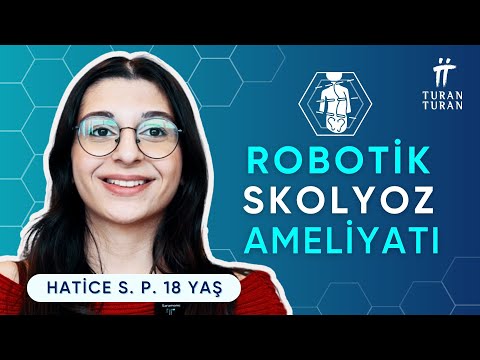


















Share this listing