


If you are planning to restore your missing teeth with permanent dental implants, you might discover that your jawbone lacks the necessary density to support them. This is where the dental bone grafting procedure in Turkey becomes a strictly necessary step in your oral restoration journey. Thousands of international patients travel abroad every single year to take advantage of world-class oral surgery at highly accessible price points.
Whether you have suffered extensive bone loss due to severe periodontal disease, facial trauma, or long-term missing teeth, bone grafting rebuilds the structural foundation necessary for successful implant placement. Bypassing this vital step can lead to implant failure, nerve damage, or aesthetic complications. In this detailed guide, we explore the precise biological processes behind getting a dental bone graft for dental implants.
Video Chapters
Understanding the Fundamentals of the Dental Bone Grafting Procedure
Before diving into the specifics of medical tourism, it is vital to grasp the clinical necessity of bone augmentation. A dental bone graft is an advanced surgical procedure designed to add volume and density to your jawbone. When a tooth is extracted or falls out naturally, the alveolar bone begins to resorb or melt away almost immediately.
This biological deterioration occurs because the jawbone no longer receives the mechanical stimulation from chewing that keeps it dense and healthy. Over time, the remaining bone becomes too thin or too short to safely hold a titanium implant post. This structural deficiency requires prompt medical intervention to reverse the atrophy.
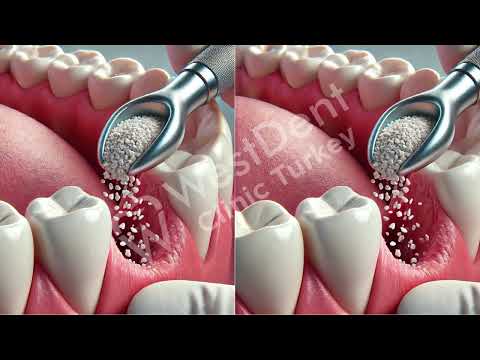
As demonstrated in the clinical animation at [00:01], the dental bone grafting procedure involves placing specialized bone grafting granules directly into the empty tooth socket or the deficient area of the jaw. Over a period of several months, your body will naturally absorb this grafting material and replace it with your own healthy native bone.
The Biology of Bone Healing: Osteoconduction and Osteoinduction
To truly understand why dental bone grafting is highly successful, one must look at the cellular mechanisms at play. The grafting material placed into your jaw acts primarily as a biological scaffold. This scientific concept, known as osteoconduction, provides a physical framework for your body’s natural bone-forming cells to climb across and multiply.
Simultaneously, certain advanced grafting materials possess osteoinductive properties. This means they contain specific bone morphogenetic proteins that stimulate your body’s stem cells to differentiate into active, bone-generating cells. The precise combination of these materials guarantees rapid and predictable bone regeneration in the oral cavity.
The highly detailed animation highlights this delicate clinical placement at [00:03], showing exactly how tightly the bone graft granules are packed. This dense packing facilitates perfect cellular integration and prevents soft gum tissue from invading the surgical site.
Common Reasons Patients Require a Bone Graft Before Dental Implants
Many patients are completely surprised to learn they need a bone graft before they can receive their new permanent teeth. However, bone loss in the oral cavity is an incredibly common condition among adults. Turkish dental clinics routinely perform detailed 3D cone-beam computed tomography (CBCT) scans to evaluate your jawbone prior to clearing you for surgery.
Here are the primary dental conditions that make bone augmentation absolutely necessary:
- Tooth Extractions and Socket Preservation: By filling a fresh socket with graft material right away, the surgeon prevents the natural shrinkage of the jawbone. This proactive step saves patients from needing more invasive block grafts in the future.
- Advanced Periodontal Disease: Chronic gum disease actively destroys the underlying bone supporting the teeth. Patients with a history of periodontitis often require extensive full-mouth bone grafting to repair this damage.
- Prolonged Tooth Loss: If you have been wearing traditional removable dentures for years, your jawbone has likely suffered significant atrophy. Major ridge augmentation is required to build the jaw back to its original width.
- Facial Trauma and Cysts: Facial injuries or long-standing root canal infections can create massive defects within the jaw. The remaining hollow cavity must be densely packed with grafting material to restore structural integrity.
Sinus Lift Surgery: A Highly Specialized Bone Graft
When discussing the dental bone grafting procedure in Turkey, it is critical to cover the sinus lift. The maxillary sinuses are air-filled cavities located just above your upper back teeth. When upper molars are lost, the sinus floor drops down, leaving an ultra-thin layer of bone that cannot support an implant.
A sinus augmentation is a specialized procedure where the oral surgeon gently lifts the delicate sinus membrane upward. Bone graft material is then packed firmly beneath it to raise the sinus floor. Turkish maxillofacial surgeons are globally recognized for their incredibly high success rates when performing complex sinus elevations.
Exploring the Different Types of Bone Graft Materials for Dental Surgery
During your initial consultation for a dental bone grafting procedure in Turkey, your oral surgeon will discuss the various types of clinical grafting materials available. The exact choice of material depends heavily on the size of the bony defect and the specific location in your mouth.
| Material Type | Origin Source | Key Medical Advantages |
|---|---|---|
| Autograft | Patient's own natural bone | Fastest healing timeline, absolutely zero risk of tissue rejection. |
| Allograft | Human donor bone (sterile) | No second surgical harvest site needed, highly predictable results. |
| Xenograft | Animal-derived bone (bovine) | Resorbs incredibly slowly, provides exceptional long-term volume stability. |
| Alloplast | 100% Synthetic laboratory materials | No risk of disease transmission, highly engineered porous structure. |
Autografts and Allografts: The Biological Standards
An autograft is universally considered the gold standard in bone augmentation because it utilizes bone harvested directly from your own jaw or chin. Because the material is your own living tissue, it actively contains cellular elements that drastically accelerate healing. However, autografts do require a minor secondary surgical site.
For patients who wish to avoid a second surgical site entirely, allografts present a flawless alternative. Allografts utilize heavily processed human bone that has been meticulously sterilized and freeze-dried by accredited medical tissue banks. This extensive purification process removes all organic material, leaving behind a pristine mineral scaffold.
Xenografts and Synthetic Alloplasts
A xenograft is derived from animal bone, most commonly high-grade bovine origins. The animal bone undergoes rigorous high-heat chemical sterilization to ensure absolute clinical safety. Bovine bone is particularly favored in Turkish dental clinics for sinus lifts because its microscopic structure closely mimics human bone.
Alloplasts are entirely synthetic bone graft substitutes engineered in a controlled laboratory setting. These materials are typically composed of calcium phosphate or advanced bioactive glass. As seen at the [00:04] mark of the clinical footage, synthetic granular materials are extremely easy to manipulate and pack precisely into intricate jawline defects.
The Step-by-Step Dental Bone Grafting Procedure in Turkey
Understanding the strict surgical timeline deeply helps alleviate patient anxiety. The procedural protocol at top-tier Turkish facilities is highly standardized. Clinics focus heavily on maximum patient comfort, absolute room sterility, and flawless precision execution.
Phase 1: Advanced Diagnostics and Site Preparation
Your journey begins with capturing high-resolution 3D CBCT scans to precisely map out the topography of your underlying jawbone. This digital mapping allows the oral surgeon to measure the exact millimeter dimensions of the bone defect. The surgical site is then deeply numbed using highly effective local anesthetics.
For patients experiencing extreme dental phobia, many Turkish clinics offer intravenous conscious sedation administered by a board-certified anesthesiologist. Once you are completely comfortable, the surgeon makes a small, highly precise incision in the gum tissue. This gently exposes the underlying deficient jawbone for treatment.
Phase 2: Precise Placement of the Bone Grafting Material
The core of the surgery involves the careful application of the selected bone graft material. The surgeon meticulously cleans and disinfects the bony defect to remove any tiny remnants of infection. Then, the granular bone graft is firmly packed into the empty void to ensure maximum density.
Depending on the specific procedure, a special collagen membrane is carefully placed directly over the graft site. This guided bone regeneration membrane acts as an impenetrable protective barrier. You can observe the exact instrument handling used during this critical structural step at [00:05].
Phase 3: Suturing and the Onset of Initial Healing
Once the graft and protective collagen membrane are perfectly positioned, the surgeon repositions the soft gum tissue back over the surgical site. The flaps are secured tightly with ultra-fine medical sutures. These specialized stitches may be dissolvable, or they may need to be quickly removed during your follow-up visit.
The initial structural foundation is now completely set within your mouth. At this exact moment, the complex biological process of cellular bone regeneration officially begins beneath the surface of your gums.
Timeline for Dental Bone Graft Recovery and Post-Surgical Aftercare
Diligent aftercare is the deciding factor between a highly successful graft and a failed medical procedure. Your Turkish oral surgeon will provide a detailed list of postoperative instructions that must be followed completely. Skipping these steps greatly increases your risk of site infection.
Immediate Post-Surgical Care Guidelines
The first 48 to 72 hours are critically important for stabilizing the protective blood clot and actively minimizing facial swelling. Minor bleeding and light oozing are completely normal occurrences during the first day. Swelling typically peaks right around the third day and can be managed effectively by applying ice packs to your face.
Your dedicated Turkish dental team will prescribe a fully customized regimen of oral antibiotics to aggressively prevent bacterial infection. This is paired with strong anti-inflammatory painkillers to ensure your total comfort during the earliest healing phases.
Strict Dietary Restrictions for Rapid Osseointegration
To fiercely protect the fragile surgical site, you must adhere strictly to a soft-food diet for the first week. Foods like plain yogurt, blended applesauce, scrambled eggs, and lukewarm protein broths are absolutely ideal. Consuming high levels of Vitamin C, Vitamin D, and Calcium during this time aggressively aids in the natural osteogenesis process.
You must absolutely avoid eating anything hard, excessively spicy, or extremely hot. Furthermore, smoking is strictly forbidden for several weeks. The toxic chemicals in tobacco smoke severely constrict your blood vessels, literally starving the fresh surgical site of the vital oxygen required for bone regeneration.
Average Cost of Dental Bone Grafting Procedures in Turkey vs Global Averages
One of the massive driving factors behind the explosion in international dental tourism is the overwhelming financial advantage. Understanding the exact cost of dental bone grafting in Turkey quickly reveals why thousands of patients fly across the globe for this specialized medical care.
| Surgical Procedure Type | Average Cost in USA/UK | Average Cost in Turkey |
|---|---|---|
| Minor Socket Preservation | $400 - $800 per tooth | $150 - $300 per tooth |
| Moderate Ridge Augmentation | $900 - $1,500 per quadrant | $350 - $600 per quadrant |
| Complex Bilateral Sinus Lift | $2,500 - $5,000 total | $800 - $1,500 total |
Unlocking the Hidden Value in Turkish Dental Packages
In the United States and the United Kingdom, complex oral surgeries are heavily burdened by massive overhead costs and premium insurance rates. Conversely, the dental bone grafting procedure in Turkey is exceptionally affordable due to a significantly lower cost of living and strong government subsidies supporting the medical tourism sector.
Beyond the direct procedural costs, Turkish dental clinics are globally famous for providing luxurious all-inclusive treatment packages. When you book a comprehensive implant treatment plan, the initial quote often strictly covers VIP airport transfers, luxury hotel accommodations, and all necessary diagnostic CBCT scans.
Evaluating the Success Rates and Potential Risks of Dental Bone Grafts
When investing heavily in international travel for a dental bone grafting procedure in Turkey, understanding the long-term success metrics of the surgery is absolutely paramount. Fortunately, modern clinical bone augmentation techniques boast exceptionally high success rates.
Primary Factors That Influence Bone Graft Success
The clinical predictability of your bone graft depends on a strict combination of surgical precision and excellent patient compliance. The biological quality of the recipient bone site plays a massive role. Areas with an excellent, localized blood supply will always heal much faster than heavily compromised or infected tissues.
Your overall systemic health is equally critical to the timeline. Patients who unfortunately suffer from uncontrolled diabetes, untreated autoimmune disorders, or severe osteoporosis face a slightly higher mathematical risk of delayed healing. It is an absolute imperative to disclose your complete medical history to your dental team in Turkey prior to booking your flights.
Identifying and Managing Potential Surgical Complications
While severe complications are incredibly rare, all surgical procedures inherently carry minor risks. Post-operative infections are the most common documented cause of early graft failure. Symptoms of a developing infection include a sudden, sharp spike in pain, foul-tasting oral discharge, and severe localized swelling.
Another rare complication is membrane exposure, where the protective collagen barrier unexpectedly becomes visible through your gum tissue. If the delicate membrane is exposed to harsh oral bacteria, the underlying graft is put at high risk. Reputable Turkish clinics provide dedicated 24/7 aftercare support lines to address these exact issues instantly.
Frequently Asked Questions About the Dental Bone Grafting Procedure in Turkey
To provide total absolute clarity for international patients considering medical tourism, we have compiled the most critically important questions surrounding complex bone augmentation surgeries abroad.
Is the Dental Bone Grafting Procedure Painful?
One of the biggest emotional fears preventing patients from seeking necessary oral surgery is the intense anticipation of pain. Rest assured, the dental bone grafting procedure in Turkey is entirely painless during the actual operation. Advanced local anesthesia completely numbs the jawbone and surrounding gum tissue.
Once the heavy anesthesia wears off later in the evening, you will experience a dull, throbbing ache rather than any sharp pain. This mild postoperative discomfort is highly manageable with the standard prescription analgesics provided tightly by your clinic.
How Long Does the Bone Graft Surgery Actually Take?
The overall duration of the surgery is entirely dependent on the specific scope of the bone augmentation required. A simple socket preservation performed immediately after a routine tooth extraction adds only 10 to 15 minutes to your overall dental appointment.
However, if you are strictly undergoing a major bilateral sinus lift combined with full-mouth grafting, the procedure can safely take anywhere from two to four hours. Your dedicated dental tourism coordinator will provide a precise, minute-by-minute surgical itinerary based directly on your initial 3D scans.
Can My Body Reject the Synthetic Bone Graft Material?
A highly common patient misconception is that the human body will treat the bone graft exactly like a transplanted organ and actively reject it. True immunological rejection is virtually impossible when utilizing modern allografts, xenografts, or alloplasts.
This is because these specific medical materials contain absolutely no living cells or organic donor proteins. The rigorous laboratory sterilization process leaves behind only a purely mineralized structural calcium scaffold. If a bone graft ever fails to strictly integrate, it is almost always due to an acute bacterial infection rather than immunological rejection.
Why WestDent Clinic and Turkish Dental Centers Command Global Authority
You might naturally wonder if the significantly lower financial costs equate to lower quality medical care. The verified reality is quite the absolute opposite. Turkish dental centers are heavily equipped with medical technology that very often surpasses standard local practices found in Western countries.
State-of-the-Art Clinical Technology and Accreditation
The brief visual snippet shown exactly at [00:06] visually showcases the highly modern clinical environment common in Turkey. Leading clinics hold prestigious international medical accreditations, dictating rigorous standards for absolute room sterilization and perfect patient safety.
These advanced facilities are routinely outfitted with the absolute latest CAD/CAM milling machines, digital intraoral scanning wands, and high-powered surgical microscopes. This severe dedication to technological investment guarantees highly precise surgical outcomes.
Unmatched Surgical Expertise of Turkish Oral Surgeons
Dedicated oral surgeons and specialized periodontists in Turkey undergo intensely rigorous, multi-year medical training. Because these dedicated surgeons actively treat an incredibly high volume of complex international cases every single day, their hands-on proficiency in advanced bone grafting is virtually unmatched globally.
This deep, extensive clinical experience translates very directly into significantly higher success rates and far fewer postoperative complications. By choosing to receive your complex oral rehabilitation in Turkey, you are placing your dental health in the hands of genuine global industry leaders.
Ready to Restore Your Smile With Expert Care?
Connect with top-rated, internationally accredited dental clinics in Turkey. Get a personalized, highly accurate cost estimate for your dental bone grafting procedure and begin your stress-free journey to a permanent, healthy smile today.
Get Free QuoteView Full Video Transcript & Visual Analysis
[00:00] High-definition visual introduction displaying a specialized dental instrument positioned strategically near the lower jaw.
[00:01] Close-up clinical demonstration highlighting an empty alveolar tooth socket strictly requiring prompt bone augmentation.
[00:03] The specialized dental instrument carefully dispenses granular bone graft material directly into the heavily deficient jawbone space.
[00:04] Visual detailing of the high-grade synthetic alloplast granules seamlessly integrating with the surrounding tissue.
[00:05] The graft granules are densely and tightly packed by the surgeon to ensure optimal osteoconduction and long-term structural stability.
[00:06] The WestDent Clinic Turkey official logo and watermark elegantly fade into view, proudly highlighting the facility's surgical expertise.
[00:07] Final comprehensive view showcasing the fully grafted alveolar socket, now perfectly prepared for future permanent implant placement.

.png)













Share this listing