


Patients seeking facial rejuvenation frequently overlook the cervical region until visible sagging becomes prominent. Opting for a specialized neck lift procedure in Thailand offers an effective solution for addressing these stubborn signs of aging. The cervical area presents unique anatomical challenges that make it highly susceptible to early deterioration compared to other areas of the body. [00:00] The neck often shows aging before the face due to specific biological disadvantages.
Advanced surgical interventions at dedicated medical facilities provide structural correction rather than superficial skin tightening. Medical tourists globally pursue lower rhytidectomy operations to achieve a harmonized, youthful profile. Understanding the underlying causes of cervical aging helps patients make informed decisions about their surgical options. This guide details the anatomical factors driving neck aging and the surgical techniques utilized by top medical professionals.
Video Chapters & Quick Navigation
Why the Neck Shows Early Signs of Aging Before the Face
The discrepancy between facial aging and neck aging stems directly from cellular composition. Environmental stressors impact the cervical region much faster due to lower natural defenses. Daily movements, such as looking down at mobile devices, continuously strain this delicate tissue over decades.
Ultraviolet radiation plays a massive role in accelerating this localized aging process. Most individuals diligently apply sunscreen to their faces while completely neglecting their neck and décolletage. This chronic sun exposure breaks down the structural integrity of the skin layer much faster than anticipated.
The Impact of Dermal Thickness on Neck Sagging
[00:04] The skin on the neck has a thinner dermis and fewer oil glands, creating a fragile environment. The dermis is the layer responsible for housing structural proteins and providing elasticity to the skin. When this layer is naturally thin, any degradation becomes immediately visible on the surface.
Fewer sebaceous glands mean the area struggles to retain vital moisture. Dry skin is significantly more prone to creasing, wrinkling, and developing a crepe-like texture. This lack of natural hydration requires intervention through targeted medical aesthetics or surgical correction.
| Anatomical Feature | Facial Skin | Neck Skin |
|---|---|---|
| Dermis Thickness | Thick and resilient | Very thin and fragile |
| Sebaceous Glands | High concentration | Low concentration |
| Bone Support | Strong structural scaffolding | No underlying bone structure |
Understanding Vulnerability to Collagen Loss in the Neck
Collagen provides the essential framework that keeps human skin taut and youthful. As humans age, cellular production of this vital protein slows down drastically. The neck’s naturally thin dermal layer makes it exceptionally vulnerable to this biological decline.
Without sufficient collagen, the extracellular matrix weakens and loses its snap-back quality. Skin stretching becomes permanent, leading to horizontal rings and overall tissue laxity. Over-the-counter topical creams cannot penetrate deeply enough to reverse severe collagen depletion in this area.
Cellular Turnover and Skin Elasticity
Elastin fibers work alongside collagen to allow skin to stretch and return to its original shape. Sun damage targets these specific fibers, causing them to clump together and lose functionality. This degradation manifests as the characteristic "turkey wattle" appearance underneath the chin.
A surgical neck lift procedure directly addresses this excess, inelastic skin by meticulously excising it. Surgeons re-drape the remaining healthy tissue to create a smoother, tighter cervical appearance. This physical removal of damaged skin provides results that non-invasive devices simply cannot match.
How Platysma Muscle Laxity Creates Vertical Neck Bands
The platysma is a broad, thin sheet of muscle extending from the collarbone up to the lower jawline. In youth, this muscle sits tightly against the deep structures of the neck. [00:10] Over time, gravity and platysma muscle laxity cause the skin to descend, creating loose folds and vertical bands.
These vertical bands, often called platysmal bands, act like thick cords running down the front of the throat. As the muscle weakens and separates at the midline, the underlying fat pads can also bulge forward. This combination of muscle separation and fat protrusion completely obscures the natural angle of the neck.
The Role of Platysmaplasty in Neck Rejuvenation
Addressing muscle laxity requires a specialized surgical technique known as a platysmaplasty. During this phase of the operation, the surgeon accesses the separated muscle edges through a small incision under the chin. The medial edges of the platysma are sutured back together, functioning much like an internal corset.
This internal tightening instantly restores the sharp cervicomental angle that defines a youthful profile. Without tightening the underlying muscle, simply removing excess skin will yield poor, short-lived results. Experienced plastic surgeons prioritize muscular reconstruction to ensure long-term stability and aesthetic harmony.
- Muscle Corseting: Suturing the separated platysma muscle creates a firm internal foundation.
- Fat Pad Reduction: Submental liposuction removes stubborn fat deposits obscuring the jawline.
- Fascia Anchoring: Securing the lifted muscle to deep facial structures prevents future drooping.
- Skin Redraping: Redundant skin is excised only after the muscular foundation is fully secured.
The Crucial Lack of Structural Support in the Neck Area
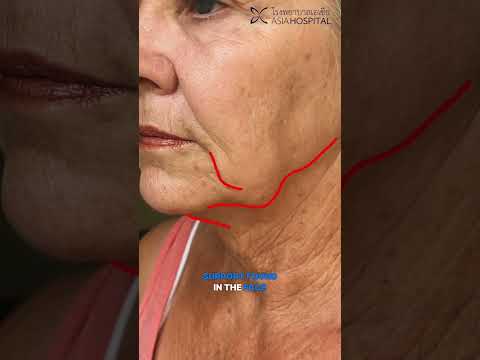
Human facial anatomy boasts a complex framework of facial bones, deep fat pads, and retaining ligaments. These elements hold facial skin taut and dictate the overall shape of the cheeks, brow, and jaw. [00:17] Because the neck lacks the structural support found in the face, aging becomes visible much earlier.
The cervical spine is the only bony structure in the neck, located far at the posterior. The anterior neck relies entirely on the delicate platysma muscle and thin skin envelope to maintain its shape. Once gravity begins its relentless pull, there is no bony scaffolding to stop the downward migration of tissue.
Gravity's Relentless Effect on Soft Tissue
Soft tissue descendence creates the appearance of a double chin or submental fullness, even in thin individuals. The lack of retaining ligaments means the skin simply slides downward, accumulating around the base of the neck. This gravitational pull constant exacerbates horizontal static wrinkles, etching them deeply into the dermis.
Surgical intervention counteracts this downward trajectory by physically lifting and repositioning the tissue upward and laterally. By anchoring the lifted tissues behind the ears, surgeons create an artificial support system that defies gravity. This technique re-establishes a crisp transition between the jawline and the neck.
How Asia Cosmetic Hospital Addresses Deep Anatomical Changes
Selecting the right surgical facility dictates the safety and outcome of any cosmetic intervention. Thailand has positioned itself as a global hub for advanced medical tourism, attracting thousands seeking facial rejuvenation. [00:22] At Asia Cosmetic Hospital, neck lift procedures specifically address these deeper anatomical changes.
Surgeons at this facility utilize high-definition endoscopic equipment to maximize precision while minimizing incision length. This advanced approach allows them to navigate the complex vascular network of the neck safely. Targeting the deep plane ensures that the results look entirely natural rather than tightly stretched or windblown.
Comprehensive Pre-Surgical Evaluation
Every patient undergoes a rigorous anatomical assessment before entering the operating theater. The medical team evaluates skin elasticity, submandibular gland positioning, and specific patterns of fat distribution. This highly individualized assessment dictates the exact surgical protocol required for optimal aesthetic outcomes.
Asia Cosmetic Hospital prioritizes a holistic approach, often combining lower rhytidectomy with complementary procedures. Addressing the lower face simultaneously prevents aesthetic mismatch between a rejuvenated neck and aging jowls. Comprehensive treatment plans yield the highest levels of patient satisfaction and surgical harmony.
Restoring a Defined Neck Profile and Youthful Contour
The primary goal of aesthetic cervical surgery is to recreate the sharp angles synonymous with youth and vitality. A well-defined jawline frames the lower face and completely alters the perception of an individual's age. [00:27] The ultimate objective involves restoring contour, muscle support, and a defined neck profile.
Achieving this requires meticulous sculpting of the submental fat deposits situated above and below the platysma muscle. Excess adipose tissue is removed via closed micro-liposuction or direct surgical excision depending on the volume. The skin is then smoothly draped over the newly refined muscular and structural framework.
The Importance of the Cervicomental Angle
The cervicomental angle is the visual curve where the underside of the jaw meets the vertical plane of the neck. An ideal, youthful angle measures between 105 and 120 degrees, creating a distinct separation. Aging obliterates this angle, resulting in an obtuse, sloping appearance that blends the chin directly into the chest.
Re-establishing this crisp angle requires precise suturing techniques deep within the cervical structures. Surgeons suspend the hyoid bone structures if necessary to deepen the internal crease naturally. This anatomical manipulation provides a dramatic, elegant silhouette that looks completely indigenous to the patient's face.
Identifying Ideal Candidates for a Surgical Neck Lift Procedure
Not every individual experiencing cervical aging requires invasive surgical intervention immediately. Non-surgical modalities like radiofrequency microneedling or ultrasound therapy benefit those in the earliest stages of laxity. However, significant structural drooping necessitates a surgical neck lift procedure to achieve meaningful improvement.
Ideal candidates generally fall between the ages of 45 and 70, exhibiting moderate to severe skin redundancy. They must possess realistic expectations regarding surgical outcomes and understand the limitations of human tissue. Excellent general health and a non-smoking lifestyle remain non-negotiable prerequisites for safe anesthesia and optimal wound healing.
- Visible Banding: Patients with distinct vertical platysmal bands that protrude during speaking or facial expressions.
- Submental Fullness: Individuals carrying stubborn fat deposits under the chin that resist diet and exercise.
- Severe Skin Laxity: Cases where the skin exhibits a crepe-paper texture and hangs loosely from the jawline.
- Good Medical Standing: Patients free from cardiovascular issues, uncontrolled diabetes, or bleeding disorders.
Step-by-Step Breakdown of the Post-Operative Recovery Phase
The recovery trajectory following a neck lift procedure requires patience and strict adherence to medical guidelines. Immediate post-operative care involves managing swelling and protecting the newly secured internal structures. Patients wake up with a compression garment wrapped securely around their lower face and neck.
This specialized garment minimizes edema, reduces the risk of hematoma formation, and helps the skin adhere to its new contour. Patients must keep their heads elevated at all times, even while sleeping, to facilitate proper lymphatic drainage. Pain is typically manageable with prescribed oral analgesics during the first few days.
Managing Incisions and Scar Optimization
Incisions are strategically placed behind the earlobes and within the natural crease under the chin to ensure stealthy healing. Proper wound care involves gentle cleansing and the application of prescribed antibiotic ointments to prevent infection. Sutures are usually removed between seven and ten days post-operation by the attending medical staff.
Once incisions are fully closed, patients transition to targeted scar management protocols using silicone gels. Avoiding direct ultraviolet exposure remains critical for at least six months to prevent hyperpigmentation of the immature scars. With proper care, the resulting incision lines fade into imperceptible, fine silver marks.
| Recovery Milestone | Expected Timeline | Patient Activity Level |
|---|---|---|
| Initial Swelling & Bruising | Days 1 to 7 | Strict rest, head elevated, light walking |
| Suture Removal | Days 7 to 10 | Return to desk work, minimal bending |
| Resuming Exercise | Weeks 4 to 6 | Gradual return to cardiovascular activities |
| Final Aesthetic Results | Months 3 to 6 | Unrestricted activities, completely healed |
Evaluating the Value of Medical Tourism for Cosmetic Surgery
Pursuing a neck lift procedure in Thailand offers substantial financial advantages without compromising clinical excellence. Medical infrastructure in Southeast Asia heavily caters to international patients, boasting Joint Commission International (JCI) accredited facilities. Surgeons frequently train in the United States or Europe before returning to practice in top-tier Asian hospitals.
The overall package cost typically includes the surgical fees, anesthesia, private recovery suites, and comprehensive nursing care. Even when factoring in international flights and luxury hotel accommodations, patients save up to sixty percent compared to Western prices. This exceptional value proposition makes Thailand a premier destination for complex facial rejuvenation surgeries.
Ready to Restore Your Youthful Neck Contour?
Take the first step toward correcting loose skin and muscle laxity. Consult with top board-certified surgeons in Thailand to receive a personalized evaluation and transparent pricing for your customized procedure.
Get Free QuoteView Full Video Transcript
[00:00] The neck often shows aging before the face.
[00:02] And the reason is biological.
[00:04] The skin on the neck has a thinner dermis and fewer oil glands.
[00:08] Making it more vulnerable to collagen loss.
[00:10] Over time, gravity and platysma muscle laxity cause the skin to descend.
[00:14] Creating loose folds and vertical bands.
[00:17] Because the neck lacks the structural support found in the face.
[00:20] Aging becomes visible earlier.
[00:22] At Asia Cosmetic Hospital, neck lift procedures address these deeper anatomical changes.
[00:27] Restoring contour, muscle support, and a defined neck profile.









.jpg)









Share this listing