


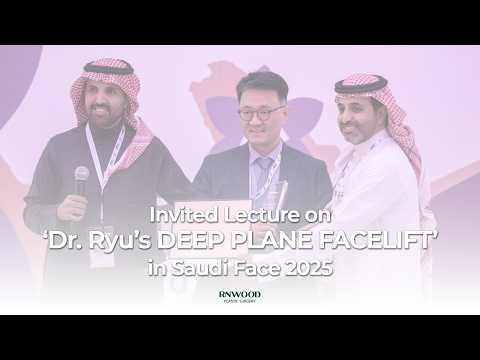
For patients actively seeking comprehensive deep plane facelift surgery in Seoul South Korea, understanding the intricate surgical anatomy and advanced techniques utilized by top medical professionals is absolutely paramount. The landscape of facial rejuvenation has evolved significantly, moving away from superficial skin-tightening procedures toward profound structural restorations that yield exceptionally natural and long-lasting results. At the forefront of this medical advancement is the deep plane approach, which addresses the foundational layers of the face to combat the visible signs of aging effectively. [00:00] As demonstrated by leading experts like Dr. Minhee Ryu from RNWOOD Plastic Surgery, mastering these complex anatomical planes requires years of dedicated study and international collaboration.
Patients exploring options for facial rejuvenation surgery must prioritize techniques that emphasize safety, anatomical precision, and minimal surgical trauma. The integration of specialized methodologies, such as the safe release of facial retaining ligaments and the utilization of preservation composite flaps, directly influences the quality of the aesthetic outcome and the speed of patient recovery. [00:13] By examining the core principles discussed at prestigious global medical conferences like the Saudi Face meeting in Riyadh, individuals can make highly informed decisions regarding their advanced cosmetic procedures.
Video Chapters & Quick Navigation
- Understanding Facial Rejuvenation Surgical Anatomy
- Four Core Principles of Deep Plane Techniques
- Releasing Retaining Ligaments in the Sub-SMAS Plane
- High SMAS Technique for Effective Midface Lifting
- Extended Deep Plane Concept for Jawline Improvement
- Minimizing Trauma with the Preservation Composite Flap
- The Push Down Technique for Safely Releasing Ligaments
- Global Collaboration in Facial Rejuvenation Surgery
Understanding Facial Rejuvenation Surgical Anatomy
A profound comprehension of facial anatomy is the absolute foundation of any successful facial rejuvenation procedure. The human face ages not merely through the loss of skin elasticity, but through a complex degradation of underlying fat pads, muscle laxity, and bone resorption. Surgeons must navigate these intricate layers with exceptional precision to restore a youthful contour without creating an artificial or "pulled" appearance.
The SMAS, or Superficial Musculoaponeurotic System, acts as the critical structural network of the face. Traditional facelift techniques often only manipulated the skin or the very superficial layers of the SMAS, leading to short-lived aesthetic improvements and visible tension lines. Modern cosmetic surgery requires accessing the deeper anatomical planes beneath this fibrous network to achieve a harmonious and balanced restoration.
Advanced academic meetings, such as the Saudi Face conference, dedicate significant resources to teaching these precise anatomical pathways. [00:20] By studying the fascial layers and neurovascular structures in detail, surgeons can elevate ptotic facial tissues while rigorously protecting the delicate branches of the facial nerve.
Four Core Principles of the Advanced Deep Plane Facelift
To achieve consistent and highly effective aesthetic outcomes, elite plastic surgeons rely on a systematized approach grounded in strict anatomical principles. [00:25] The development of a comprehensive strategy allows for the precise customization of the surgery to meet the unique aging patterns of each individual patient. These principles act as a strict surgical blueprint, ensuring that every maneuver contributes directly to a natural, long-lasting rejuvenation.
A well-defined methodology is particularly crucial when operating in the deep plane, where the margin for error is exceedingly small. By adhering to core surgical tenets, the operating physician can confidently reposition descended midface tissues, redefine the jawline, and smooth severe nasolabial folds. This structural approach is what differentiates a standard facelift from a truly transformative facial contouring procedure.
The four core principles introduced by top-tier specialists encompass the thorough release of ligaments, high SMAS manipulation, extended deep plane dissection, and tissue preservation. [00:30] Together, these interconnected steps provide a highly reliable framework that addresses the root anatomical causes of facial aging rather than merely treating the superficial symptoms.
Releasing Retaining Ligaments in the Sub-SMAS Plane
The first and arguably most critical principle in advanced facial rejuvenation is the precise release of the retaining ligaments located within the sub-SMAS plane. [00:34] These strong, fibrous bands act as anatomical anchor points, securing the facial soft tissues directly to the underlying bone framework. As a person ages, the tissues between these anchor points begin to sag, creating deep creases, jowls, and a heavy lower face.
Attempting to lift the face without properly releasing these ligaments results in unnatural tension and an inherently restricted elevation. The skin and SMAS will simply pull against these unyielding tethers, leading to the dreaded "windblown" look that characterizes outdated cosmetic surgery techniques. By operating beneath the SMAS layer, the surgeon can directly visualize and safely sever these restraining bands.
Once the zygomatic, masseteric, and mandibular retaining ligaments are fully released, the entire facial soft tissue envelope becomes highly mobile. This newly achieved mobility allows the surgeon to reposition the descended fat pads and muscle structures back to their youthful, superior positions with zero tension on the overlying skin.
High SMAS Technique for Effective Midface Lifting
The high SMAS technique represents a significant evolutionary leap in the surgical management of the aging midface. [00:39] Traditional SMAS procedures typically initiate the tissue lift lower on the face, which provides adequate improvement for the jawline but completely fails to address the hollowing of the cheeks and the descent of the malar fat pad. The high SMAS approach specifically targets this notoriously difficult anatomical zone.
By making the surgical incision much higher along the zygomatic arch, the surgeon gains the ability to mobilize the entire midface complex as a single, unified unit. This powerful vertical vector of pull is essential for correcting severe midface ptosis, softening deep nasolabial folds, and restoring youthful volume to the upper cheeks. The result is a profoundly natural restoration of the facial heart shape that cannot be achieved through lower incisions.
Furthermore, the high SMAS technique provides exceptionally robust support for the elevated tissues. By securing this dense fascial layer high on the firm temporal fascia, the surgeon ensures that the midface lift remains stable and resilient against the continuous forces of gravity over time.
Extended Deep Plane Concept for Comprehensive Jawline Improvement
A crisp, smoothly contoured jawline is universally recognized as a primary marker of youth and aesthetic vitality. [00:45] The extended deep plane concept was specifically developed to provide comprehensive jawline improvement and neck contouring, areas where superficial techniques frequently fall short. This advanced maneuver involves continuing the deep sub-SMAS dissection well into the neck region to release the cervical ligaments.
The formation of heavy jowls and a blunted cervicomental angle are direct results of the platysma muscle separating and descending over time. The extended deep plane approach allows the surgeon to treat the lower face and neck as a continuous anatomical unit. By re-suspending the platysma muscle alongside the facial SMAS, a sharply defined mandibular border is meticulously restored.
This comprehensive anatomical release ensures that there is no bunching of tissue behind the ear or unnatural pulling along the jaw. Patients benefit from a seamless, elegant transition between the lower cheek, the jawline, and the neck, drastically improving their overall facial profile and aesthetic harmony.
Minimizing Surgical Trauma with the Preservation Composite Flap Technique
One of the most pressing concerns for patients undergoing facial aesthetic surgery is the duration and comfort of the postoperative recovery period. [00:50] The preservation composite flap technique is an innovative surgical design engineered specifically to minimize surgical trauma while maximizing tissue elevation. By keeping the skin firmly attached to the underlying SMAS layer during the lifting process, the critical blood supply and lymphatic drainage pathways remain largely undisturbed.
Traditional facelifts often require extensive subcutaneous undermining, separating the skin from the SMAS over a wide area. This outdated approach routinely damages the delicate perforating blood vessels, leading to severe postoperative bruising, prolonged swelling, and an increased risk of skin flap necrosis. The composite flap avoids this widespread disruption entirely.
Because the skin and underlying tissues are mobilized together as a single, robust flap, the healing process is exponentially accelerated. [00:56] Patients experience significantly less edema and ecchymosis, allowing for a rapid recovery and a much faster return to their normal daily activities and social engagements.
The Push Down Technique for Safely Releasing Retaining Ligaments
Navigating the sub-SMAS plane requires navigating directly above the complex web of the facial nerve branches, demanding absolute surgical precision. [00:59] The proprietary Push Down Technique was meticulously developed to address the specific challenge of how to safely release retaining ligaments in a deep plane facelift. This methodology acts as a critical safety protocol, protecting vital neurovascular structures while still allowing for the necessary tissue mobility.
Instead of using aggressive upward traction that can inadvertently stretch and damage the facial nerve, the Push Down Technique utilizes gentle, targeted downward pressure to isolate the ligamentous structures. [01:04] By spreading the tissues parallel to the nerve branches, the surgeon maintains clear visualization of the danger zones at all times. This deliberate, measured approach drastically reduces the risk of accidental nerve injury.
This sophisticated technique has been rigorously refined over many years of specialized practice and anatomical study. [01:09] Its efficacy and high safety profile have led to it being demonstrated internationally through complex cadaver dissections at major academic meetings, proving its value to the global plastic surgery community.
Global Collaboration in Facial Rejuvenation Surgery
The continual advancement of aesthetic medicine relies heavily on the open exchange of knowledge between elite surgical professionals worldwide. [01:18] Major academic platforms, including the Mayo Clinic and the Leiden University Medical Center, serve as vital hubs where innovative techniques like the Push Down method are scrutinized and validated by peers. This cross-pollination of surgical philosophies directly elevates the global standard of patient care.
Live facelift surgery sessions, such as those moderated at the Saudi Face 2025 event, provide unparalleled opportunities for real-time anatomical education. [01:24] Observing expert surgeons, such as Dr. Giovanni Botti and Dr. Mario Pelle-Ceravolo, demonstrate their distinct surgical philosophies allows attendees to witness the practical application of highly complex deep plane theories. [01:30]
Such exceptionally valuable academic experiences ensure that the importance of safety, anatomical precision, and continuous innovation remains at the forefront of the specialty. [01:53] By fostering strong international collaboration, the plastic surgery community can continually refine procedures like the comprehensive deep plane facelift, ultimately providing patients with the safest and most aesthetically pleasing results possible.
Elevating the Standard of Aesthetic Care
Patients traveling to top medical hubs benefit immensely from this rigorous academic environment. When surgeons engage actively in international teaching and live demonstrations, they must hold their own techniques to the absolute highest standards of peer review. This dedication to continuous learning and anatomical mastery translates directly into superior clinical outcomes and elevated safety protocols in the operating room.
- Precision Anatomy: Operating strictly within designated fascial planes to protect neurovascular networks.
- Structural Restoration: Rebuilding the foundational support of the face rather than merely tightening superficial skin.
- Optimized Healing: Utilizing preservation techniques to maintain vital blood supply and drastically reduce downtime.
Ready to Explore Advanced Facial Rejuvenation?
Take the first step toward a natural, youthful appearance. Connect with leading specialists to discuss how advanced deep plane facelift techniques can be customized for your unique aesthetic goals.
Get Free QuoteView Full Video Transcript
[00:00] Hello, this is Dr. Minhee Ryu from RNWOOD Plastic Surgery, Seoul, South Korea.
[00:06] I would like to share my experience as an Invited Faculty at SAUDI FACE, in Riyadh.
[00:13] At this meeting, I delivered a Lecture on 'Deep Plane Facelift and Surgical Anatomy'
[00:19] and also served as Chair for the Live Facelift Surgery sessions.
[00:25] I introduced Dr. Ryu's DEEP PLANE FACELIFT,
[00:28] a comprehensive approach based on Four Core Principles.
[00:34] First, Release of the Retaining Ligaments in the sub-SMAS plane.
[00:39] Second, The High SMAS technique for effective midface lifting.
[00:45] Third, Extended Deep Plane Concept for jawline improvement.
[00:50] Fourth, Preservation COMPOSITE Flap designed to minimize surgical trauma and allow rapid recovery.
[00:59] In addition, I shared my 'PUSH DOWN Technique',
[01:04] which is 'How to SAFELY Release Retaining Ligaments in DEEP PLANE FACELIFT'.
[01:09] This technique has been refined over many years
[01:13] and has been demonstrated internationally through cadaver dissections
[01:18] and major academic meetings, including the Mayo Clinic and Leiden University Medical Center.
[01:24] During the meeting, I moderated live facelift surgeries performed by
[01:30] Dr. Giovanni Botti and Dr. Mario Pelle-Ceravolo.
[01:34] Observing these two expert surgeons demonstrate their distinct surgical philosophies in real time,
[01:42] was an exceptionally valuable academic experience.
[01:46] Saudi FACE 2025 was a highly meaningful meeting
[01:50] that strengthened international collaboration
[01:53] and emphasized the importance of safety, anatomical precision, and innovation
[02:00] in facial rejuvenation surgery. Thank you very much.








.jpg)









Share this listing