


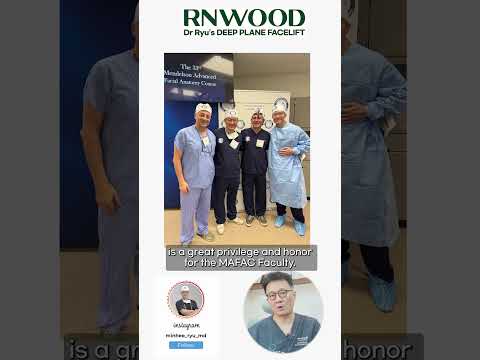
The demand for a highly refined deep plane facelift procedure in the USA continues to grow as patients actively seek natural, long-lasting facial rejuvenation. Achieving these superior aesthetic results requires surgeons to possess an intricate, masterful understanding of layered facial architecture. Recently, top medical professionals gathered for the 33rd Mendelson Advanced Facial Anatomy Course (MAFAC) at the globally renowned Mayo Clinic in Rochester. This prestigious academic event showcased cutting-edge surgical techniques and vital anatomical concepts necessary for modern aesthetic surgery.
Throughout this intensive course, experts engaged in hands-on cadaver dissection demonstrations and collaborative peer-to-peer tutoring to perfect their surgical skills. Mastering the advanced deep plane approach means safely navigating complex facial layers to release retaining ligaments without causing trauma. This dedicated level of continuous medical education ensures that practitioners provide the highest standard of patient care. We will explore the critical techniques discussed, including the innovative Push Down Technique, and explain why this advanced anatomical knowledge is actively transforming facial rejuvenation surgery.
Video Chapters
The Prestige of MAFAC at Mayo Clinic for Advanced Surgical Education
The 33rd MAFAC event at the Mayo Clinic marks a pivotal moment for aesthetic medical education. The collaboration between MAFAC and the Mayo Clinic brings together two highly prestigious organizations dedicated to advancing surgical safety and precision. As noted in the video at [00:02], this rigorous course took place from July 6th to 9th.
It provided an unparalleled academic environment for surgeons to refine their practical skills. Hosting such an advanced facial anatomy course highlights the medical community's dedication to mastering complex procedures. Surgeons participating in these specialized training sessions gain invaluable hands-on experience through detailed cadaver dissection demonstrations.
This tactile, hands-on approach is absolutely vital for any practitioner performing a deep plane facelift procedure in the USA. It allows surgeons to safely explore the intricate web of facial structures and neurovascular networks in a highly controlled setting. The faculty's active contribution to dissection demonstration and tutoring ensures that technical nuances are passed down effectively.
By combining theoretical lectures with immediate practical application, the MAFAC curriculum guarantees that surgeons are well-equipped to handle real-world surgical challenges. Surgeons leave this course with dramatically enhanced techniques, allowing them to deliver safer procedures and highly predictable aesthetic outcomes. The focus on exact anatomical accuracy directly translates to improved patient care on a global scale.
Mastering Layered Facial Anatomy for Safe Facelift Surgery
A fundamental requirement for any successful facial rejuvenation surgery is a profound comprehension of layered facial anatomy. The foundational lecture of the MAFAC course, delivered by Dr. Bryan Mendelson at [01:08], focused entirely on this crucial concept. The human face is not a single, solid mass of static tissue.
Instead, it is composed of distinct, gliding layers that age, descend, and move independently of one another. Traditional facelift techniques often incorrectly focused solely on the superficial skin layer. This outdated approach frequently led to a pulled, artificial, or uncomfortably tight appearance.
Modern techniques intentionally target the deeper foundational layers, specifically the superficial musculoaponeurotic system (SMAS). By understanding the exact anatomical layers, surgeons can elevate the entire structural base of the face without creating unnatural tension on the skin. Dr. Mendelson's teachings emphasize that facial aging is primarily a structural failure of deeper tissues rather than simple skin laxity.
When executing a deep plane facelift procedure in the USA, surgeons utilize this layered knowledge to physically restore tissues to their original youthful positions. This anatomically respectful approach provides a much more profound and naturally integrated lift. It also significantly reduces visible scarring and accelerates the patient's recovery timeline by eliminating excess skin tension.
Releasing Retaining Ligaments and Facial Nerve Preservation
One of the most technically demanding aspects of deep plane surgery is the proper management of facial ligaments. As explicitly highlighted at [00:24], the most important aspect of a deep plane facelift is releasing the retaining ligaments without causing any damage to the facial nerves. These robust ligaments act as strong internal anchor points, tightly attaching the skin and soft tissues directly to the underlying facial skeleton.
Over time, as skin loses essential elasticity, these ligaments firmly tether the descending facial tissues. This tethering effect creates deep anatomical folds, most notably the heavy nasolabial folds and marionette lines around the mouth. To properly elevate and reposition the midface, a surgeon must meticulously and completely release these anchor points.
Key Ligaments Targeted During Surgery
- Zygomatic Ligaments: Located near the cheekbones, these must be released to elevate the midface and soften nasolabial folds.
- Masseteric Cutaneous Ligaments: Securing the tissue over the jaw, their release is vital for correcting heavy jowls.
- Mandibular Ligaments: Positioned near the chin, releasing these helps restore a smooth, continuous, youthful jawline.
However, the delicate branches of the facial nerve run in extreme proximity to these retaining ligaments, requiring absolute surgical precision. The facial nerve is responsible for controlling all dynamic facial expressions, making its complete preservation the surgeon's highest priority. A successful deep plane facelift requires careful, blunt dissection to identify and protect these nerve branches while systematically dividing the ligaments.
Once these ligaments are safely released, the entire cheek and lower face complex can be repositioned vertically without resistance. This critical surgical maneuver is exactly what grants the deep plane facelift its reputation for producing incredibly natural and durable aesthetic results. Surgeons train extensively to master this delicate balance between structural release and nerve preservation.
The Push Down Technique for Deep Plane Facelift Efficiency
Surgical methodologies constantly evolve to become significantly safer, faster, and less invasive for the patient. Building upon the foundational surgical anatomy learned from mentors like Dr. Mendelson, new operational methods have emerged to optimize tissue elevation. At [00:34], the speaker details a proprietary surgical method known as the Push Down Technique.
This technique was demonstrated directly to peers during the cadaver labs and represents a major advancement in advanced facial surgery. The Push Down Technique is explicitly described as simple, highly effective, and possessing high surgical utility. By utilizing this specific method, surgeons can achieve the necessary deep tissue mobility with greater precision and significantly reduced trauma to surrounding structures.
Advantages of the Push Down Technique
- Direct Deep Plane Entry: Bypasses superficial bleeding risks by directly accessing the avascular surgical plane.
- Reduced Tissue Trauma: Minimizes unnecessary disruption to surrounding facial tissues, decreasing postoperative swelling.
- Enhanced Precision: Allows the surgeon to isolate retaining ligaments cleanly before surgical division.
- Streamlined Workflow: Simplifies the elevation process, increasing the overall efficiency and safety of the facelift surgery.
The technique involves a calculated maneuver that safely separates the superficial structures, allowing the surgeon to enter the avascular deep plane directly. This precise entry minimizes the risk of bleeding and drastically reduces postoperative swelling for the patient. Having been initially presented at the MAFAC Mayo Clinic two years prior, as mentioned at [00:53], the technique was showcased with even greater clinical detail this year.
Sharing such innovative techniques through live demonstration is exactly how the entire field of plastic surgery advances globally. Surgeons adopting the Push Down technique for their deep plane facelift procedure in the USA can offer their patients a much smoother recovery process. It ensures superior structural refinements while actively maintaining the highest levels of patient safety.
3D Visualization and the Evolution of Facial Rejuvenation Surgery
The field of aesthetic medicine is heavily influenced by rapid technological advancements in medical imaging. During the MAFAC event, Professor Basel Sharaf shared his highly innovative 3D-lecture at [01:15]. This unique presentation allowed attendees to experience the past, present, and future of facial rejuvenation surgery and anatomy in a single, highly immersive moment.
High-definition 3D visualization is rapidly becoming an indispensable tool for both thorough preoperative planning and surgical education. Historically, anatomical education relied almost entirely on static two-dimensional textbook illustrations and limited physical cadaver access. Today, advanced 3D lectures provide an interactive, spatial understanding of the complex neurovascular networks hidden within the face.
This monumental technological leap allows surgeons to virtually navigate the intricate facial layers before making a single physical incision. It dramatically enhances the safety profile of complex procedures by making the invisible anatomical danger zones clearly visible. Utilizing advanced imaging software helps practitioners anticipate unique anatomical variations that differ substantially from patient to patient.
Looking toward the future, the deep integration of 3D imaging, digital mapping, and augmented reality will continue to refine surgical precision. Surgeons will soon be able to fully customize their surgical approach based on the exact anatomical structures of individual patients. This personalized, technology-driven approach to the deep plane facelift procedure in the USA will lead to even higher patient satisfaction rates.
Global Experts Collaborating on Deep Plane Facelift Techniques
Medical breakthroughs and elevated patient safety standards rarely happen in complete isolation. They are the direct result of rigorous, open collaboration among global medical experts. The MAFAC course serves as a premier example of international specialists converging to elevate worldwide surgical standards.
As noted at [01:33], highly respected figures like Dr. Mario Pele Cerevelo and Dr. Bryan Pruit attended as invited faculty members. The active presence of such global icons enriches the educational experience immensely for all participants. When top-tier experts share their unique surgical experiences, challenging case studies, and successful techniques, the entire medical community benefits.
Each surgeon brings a distinct perspective heavily influenced by their specific patient demographics and varied training backgrounds. This exchange of ideas fosters a dynamic environment where standard practices are continually questioned, refined, and improved. Mentorship and professional camaraderie among global experts directly drive the ongoing evolution of aesthetic surgical practices.
For prospective patients, this international collaboration translates directly into superior clinical care and peace of mind. When a surgeon actively participates in international symposiums, they ensure their operational skills represent the absolute pinnacle of current medical science. Choosing a surgeon recognized by global top-tier experts provides an invaluable layer of assurance for anyone undergoing complex facial surgery.
Aesthetic and Functional Patient Benefits of the Deep Plane Facelift Procedure
Understanding the profound technical aspects of surgery is important, but translating those details into tangible patient benefits is absolutely essential. The deep plane facelift procedure in the USA has become highly sought after specifically because it addresses the actual structural causes of facial aging. Unlike superficial skin-only lifts that simply stretch the epidermis, the deep plane approach meticulously reconstructs the face from the inside out.
One of the primary benefits of this advanced procedure is the remarkable longevity of the aesthetic results. Because the deeper muscular structures and heavy fat pads are securely repositioned, the lift does not rely on fragile skin tension. Releasing the retaining ligaments entirely eliminates the pulled look associated with older methods, allowing patients to easily retain their natural facial expressions.
Comparing Facelift Techniques
| Surgical Feature | Traditional Facelift | Advanced Deep Plane Facelift |
|---|---|---|
| Surgical Target Layer | Skin and superficial tissue layers | Deep SMAS layer and retaining ligaments |
| Tissue Tension Level | High tension placed on the skin surface | Zero tension on the skin, tension on deep muscle |
| Final Aesthetic Result | Can occasionally appear tight or pulled back | Natural, harmonious, and structurally sound |
| Expected Longevity | Typically lasts between 5 to 7 years | Often securely lasts 10 to 15 years or more |
Patients emerge looking like a rested, organically youthful version of themselves, with results that often last well over a decade. Additionally, the deep plane facelift is exceptionally effective at comprehensively treating the midface, jawline, and neck simultaneously. It restores youthful volume to the cheeks by lifting descended malar fat pads back to their apex.
The procedure also creates a sharply defined, crisp jawline by repositioning the underlying platysma muscle. This comprehensive approach to facial rejuvenation surgery ensures a highly balanced, harmonious enhancement across all aesthetic zones. Patients consistently experience a profound boost in self-confidence alongside their physical transformation.
Continuous Medical Education and the Future of Facial Aesthetics
The specialized field of aesthetic surgery is highly dynamic, requiring practitioners to be deeply committed to lifelong medical learning. The successful conclusion of the 33rd MAFAC Mayo Clinic course, highlighted at [02:38], is a powerful indicator of the absolute importance of ongoing professional development. The faculty and participants' shared dedication to mastering the latest anatomical techniques directly impacts the safety of cosmetic surgeries performed worldwide.
Formal recognition from respected peers serves as a powerful motivator for surgeons to actively maintain the highest clinical standards. The touching, handwritten comment left by Dr. Bryan Mendelson on the speaker's Faculty Certification, mentioned at [02:07], highlights the strong bonds of mentorship existing within this community. This continuous loop of learning, practicing, and teaching ensures that surgical methods remain at the absolute forefront of medical science.
For individuals actively researching facial rejuvenation surgery, knowing that their chosen surgeon participates in advanced anatomical courses offers profound peace of mind. It demonstrates a dedicated, personal commitment not just to the business of cosmetic surgery, but to the intricate science and art of patient healing. As the medical community eagerly looks forward to the next MAFAC course in Amsterdam, continuous education remains the essential bedrock upon which safe surgical outcomes are consistently built.
Ready to Explore Advanced Facial Rejuvenation?
Connect with top-tier, board-certified surgeons utilizing the latest deep plane techniques to achieve natural, long-lasting aesthetic results. Request your personalized consultation today to learn more about the deep plane facelift procedure.
Get Free QuoteView Full Video Transcript
[00:00] The 33rd Mendelson Advanced Facial Anatomy Course (MAFAC) was held in Mayo Clinic, Rochester throughout the 6th to 9th of July.
[00:08] There is great significance in the collaboration of MAFAC and Mayo Clinic, two highly prestigious organizations.
[00:18] As a faculty, I contributed the Cadaver Dissection Demonstration & Tutoring.
[00:24] The most important aspect of DEEP PLANE FACELIFT is the releasing of the retaining ligaments without damage to the facial nerves.
[00:34] With the surgical anatomy I have learned from Dr. Mendelson, I demonstrated my own surgical technique known as the "PUSH DOWN Technique".
[00:47] This method is simple, effective and has high utility.
[00:53] I mentioned it during the MAFAC in Mayo Clinic 2023 on my DEEP PLANE FACELIFT presentation.
[01:01] This time, I was able to show it more detailed through demonstration.
[01:08] The first lecture was Dr. Bryan Mendelson's "The Concept of Layered Facial Anatomy".
[01:15] Afterwards, Prof. Basel Sharaf shared his 3D-Lecture.
[01:21] It was like experiencing the past, present and future of Facial Rejuvenation Surgery and Anatomy in this one moment.
[01:33] Dr. Mario Pele Cerevelo and Dr. Bryan Pruit also attended as Invited Faculty.
[01:41] As expected from a global icon, their lectures and admirable characters left me a lasting impression.
[01:50] To continually grow alongside such global top-tier experts is a great privilege and honor for the MAFAC Faculty.
[02:01] On the last day, all the participants joined the MAFAC Dinner.
[02:07] My mentor, Dr. Bryan Mendelson, kindly left me a written comment on my Faculty Certification.
[02:16] His comments offered encouragement and recognition. It personal and touching.
[02:23] Chin-Ho, Basel and Goergies, my brothers and role models, are also part of MAFAC Faculty.
[02:31] Their accomplishments and characters are truly inspirational and respectful.
[02:38] The 33rd MAFAC Mayo Clinic 2025 successfully ended.
[02:44] It was a great honor to be part of the faculty.
[02:48] I take great pride in the progress of MAFAC and look forward to the 34th MAFAC in Amsterdam in November! Thank you.








.jpg)









Share this listing