


Experiencing progressive hair loss can severely impact your self-confidence and overall quality of life. If you are exploring effective and permanent hair restoration solutions, undergoing a hair transplant in Malta presents an outstanding opportunity to receive world-class medical care. St Mary's Clinic has established itself as a premier destination for patients seeking advanced follicular unit extraction procedures. By combining cutting-edge surgical techniques with a highly experienced medical team, the clinic consistently delivers natural-looking and dense hair restoration results.
Understanding the intricacies of surgical hair restoration is essential for any prospective patient. This detailed guide explores every critical phase of the procedure, from the initial hairline mapping to the long-term post-operative care required for optimal graft survival. You will learn how modern extraction methods protect the donor area while maximizing the density of the recipient site. Furthermore, we will examine the specific pre-operative guidelines and lifestyle adjustments necessary to ensure a seamless surgical experience.
Choosing a highly regulated European medical facility guarantees adherence to rigorous hygiene and safety standards. Patients traveling for medical treatments benefit from transparent pricing structures and comprehensive consultation processes. By educating yourself on the anatomical principles of hair growth and the technical precision required for successful implantation, you can approach your aesthetic journey with complete confidence.
Video Chapters & Quick Navigation
- Understanding the Anatomy of Hair Loss
- Step-by-Step FUE Hair Transplant Procedure
- Pre-Operative Preparation Guidelines
- Detailed Hair Transplant Recovery Timeline
- Comparing Modern Hair Transplant Techniques
- The Role of PRP Therapy Post-Surgery
- Cost Factors and Medical Tourism in Malta
- Real Patient Experiences and Psychological Impact
Understanding the Anatomy of Hair Loss and the Norwood Scale
Before scheduling a surgical intervention, it is crucial to understand the biological mechanisms driving androgenetic alopecia, commonly known as male pattern baldness. This condition is primarily triggered by a genetic sensitivity to Dihydrotestosterone (DHT), a hormone that shrinks hair follicles over time. As these follicles miniaturize, the hair growth cycle shortens drastically, eventually leading to permanent hair loss in the affected regions. Identifying the early signs of follicular miniaturization allows medical professionals to recommend the most effective intervention strategies.
Surgeons utilize the standardized Norwood Scale to accurately classify the severity and progression of a patient's hair loss. This classification system ranges from Stage 1, representing a minor recession of the hairline, to Stage 7, which indicates severe hair loss leaving only a thin band of hair around the sides and back of the head. Accurately pinpointing a patient's stage on the Norwood Scale is the foundational step in determining their candidacy for a hair transplant in Malta. It helps the surgical team estimate the exact number of grafts required to achieve satisfactory density.
The success of any hair restoration procedure heavily relies on the quality and density of the patient's donor area. The donor area, typically located at the back and sides of the scalp, contains hair follicles that are genetically resistant to DHT. When these resilient follicles are extracted and relocated to the balding areas, they retain their genetic resistance and continue to grow naturally. Evaluating the density and health of this donor zone is a critical component of the initial medical assessment.
The Step-by-Step Follicular Unit Extraction (FUE) Procedure Explained
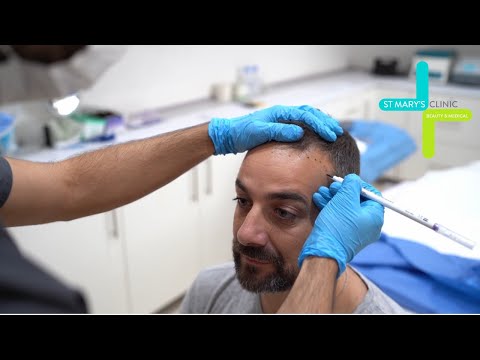
The Follicular Unit Extraction (FUE) method is widely recognized as the gold standard for modern hair restoration surgery. The process begins with a meticulous consultation and hairline mapping phase, which can be observed at [00:08] in the surgical footage. During this stage, the surgeon draws a customized hairline that complements the patient's facial symmetry and age. Establishing a natural-looking frontal boundary is arguably the most artistic and crucial element of the entire operation.
Once the hairline is finalized, the medical team prepares the donor area by carefully trimming the hair, a necessary step shown at [00:25]. Following the preparation, local anesthesia is administered to ensure the patient remains completely comfortable and pain-free throughout the surgery, as demonstrated at [00:33]. The use of advanced anesthetic techniques minimizes discomfort and allows the patient to relax, read, or even sleep during the lengthy extraction process.
The core of the FUE procedure involves the individual extraction of hair grafts using a specialized motorized micro-punch tool. At [00:38], the surgeon expertly isolates and removes healthy follicular units without creating the linear scars associated with older methods. Finally, these delicate grafts are carefully implanted into tiny incisions made in the recipient area, taking strict care to match the natural angle and direction of original hair growth, visible at [00:53].
Pre-Operative Preparation for Optimal Hair Restoration Results
Achieving the highest possible graft survival rate requires strict adherence to pre-operative medical guidelines. Patients must actively prepare their bodies in the weeks leading up to their hair transplant surgery. Proper preparation minimizes the risk of excessive bleeding during the procedure and ensures the scalp is in an optimal state for healing. Medical professionals will provide a comprehensive list of instructions customized to the patient's specific health profile.
One of the most critical directives is the cessation of blood-thinning medications and certain dietary supplements. Aspirin, ibuprofen, and high doses of Vitamin E must be avoided for at least ten days prior to the operation. Additionally, patients are strongly advised to eliminate alcohol consumption and smoking for a minimum of one week before surgery. Nicotine constricts blood vessels, significantly reducing the oxygen supply necessary for newly transplanted grafts to thrive.
- Dietary Adjustments: Maintain a balanced diet rich in iron, zinc, and vitamins to fortify hair follicle health prior to the extraction process.
- Scalp Hygiene: Wash the scalp thoroughly with a clinically approved, mild shampoo on the morning of the surgery to eliminate excess sebum and bacteria.
- Clothing Choices: Wear a loose-fitting, button-down shirt on the day of the procedure to avoid rubbing the newly implanted grafts when changing clothes.
- Caffeine Restriction: Avoid consuming coffee, energy drinks, or strong teas on the morning of the procedure to prevent elevated blood pressure and anxiety.
Detailed Hair Transplant Recovery Timeline and Post-Operative Care
The initial recovery phase immediately following a hair transplant requires immense patience and strict discipline. During the first three days, patients will experience mild swelling around the forehead and eyes, which is a normal response to the localized anesthetic fluids. The transplanted grafts are incredibly delicate during this window and require a specific sleeping position. Patients must sleep with their head elevated at a 45-degree angle using specialized neck pillows to prevent accidental friction and reduce overnight swelling.
By the end of the first week, small scabs will form around each newly implanted follicular unit. It is strictly prohibited to scratch or manually pick at these crusts, as doing so can dislodge the grafts permanently. Clinics provide specific saline sprays and medicated foams to keep the scalp hydrated and assist in the natural shedding of these scabs. Around the two-week mark, patients typically undergo a phenomenon known as "shock loss," where the transplanted hairs fall out. This is a completely standard part of the growth cycle, leaving the healthy root dormant beneath the skin.
The long-term hair growth timeline is a gradual process that demands realistic expectations. New, fine hairs will begin to emerge from the dormant follicles around the third or fourth month post-surgery. Between months six and eight, patients will notice a significant increase in both hair density and shaft thickness. The final, matured results of the hair restoration procedure are generally visible between 12 to 15 months, showcasing a permanent and completely natural-looking head of hair.
Comparing Modern Hair Transplant Techniques: FUE vs. FUT vs. DHI
Selecting the correct surgical methodology is a collaborative decision made between the patient and the lead surgeon. The Follicular Unit Extraction (FUE) method involves harvesting individual hair follicles directly from the scalp using microscopic punches. This technique leaves tiny, dot-like scars that are virtually undetectable even with short haircuts. FUE has become the globally preferred choice due to its minimally invasive nature and accelerated healing times.
Conversely, the Follicular Unit Transplantation (FUT) method, often referred to as the strip method, involves surgically removing a linear strip of skin from the donor area. The surgical team then dissects this strip under high-powered microscopes to separate the individual grafts. While FUT can yield a high volume of grafts in a single session, it leaves a permanent linear scar across the back of the head. This makes FUT less suitable for patients who prefer wearing tightly cropped hairstyles.
Direct Hair Implantation (DHI) represents the latest evolution in the field of surgical hair restoration. DHI is a modified version of FUE where extraction and implantation occur almost simultaneously using a specialized device known as a Choi Implanter Pen. This tool allows surgeons to control the depth, angle, and direction of the implant with unprecedented precision. Because the grafts spend less time outside the body, DHI often boasts exceptional survival rates and denser packing capabilities.
| Feature | FUE Method | FUT Method | DHI Method |
|---|---|---|---|
| Extraction Process | Individual micro-punches | Surgical strip removal | Individual micro-punches |
| Scarring Type | Scattered micro-dots | Linear scar on back of head | Scattered micro-dots |
| Implantation Tool | Forceps and scalpels | Forceps and scalpels | Choi Implanter Pen |
| Recovery Time | 7 to 10 days | 14 to 21 days | 5 to 7 days |
The Role of PRP Therapy in Accelerating Post-Surgical Hair Growth
To maximize the density and vitality of the transplanted hair, leading clinics frequently integrate Platelet-Rich Plasma (PRP) therapy into the post-operative care plan. PRP therapy is an innovative medical treatment that utilizes the patient's own blood to stimulate cellular regeneration. The medical staff draws a small amount of blood and processes it in a centrifuge to isolate the plasma, which is highly concentrated with fundamental growth factors.
When this nutrient-rich plasma is injected directly into the recipient area of the scalp, it drastically improves blood circulation around the newly implanted follicles. Enhanced vascularization ensures that the fragile grafts receive a continuous supply of oxygen and essential nutrients during the critical early healing phases. Clinical data strongly suggests that administering PRP significantly increases the overall survival rate of the hair grafts.
Furthermore, PRP therapy is highly effective at rejuvenating existing, miniaturized hairs that were not transplanted. By strengthening these native hairs, patients achieve a much thicker, more cohesive overall look. Most surgical protocols recommend a series of three to four PRP sessions spaced several weeks apart to consolidate the structural integrity of the newly established hairline.
Cost Factors and the Advantages of Medical Tourism in Malta
The total financial investment required for a hair transplant varies based on several distinct clinical factors. The primary determinant of the overall cost is the total number of grafts needed to achieve the patient's desired coverage. Severe cases of baldness requiring larger megasessions naturally demand more clinical resources and surgical time. Additionally, the specific extraction technology used, such as DHI versus standard FUE, influences the final pricing structure.
Malta has rapidly emerged as a highly sought-after hub for medical tourism due to its exceptional healthcare infrastructure and strict European regulatory standards. Patients traveling from the United Kingdom, the United States, and Northern Europe find that a hair transplant in Malta offers premium surgical expertise at a highly competitive price point. The island's clinics routinely utilize state-of-the-art European equipment while maintaining transparent, all-inclusive pricing packages.
These comprehensive medical packages often include vital services beyond the surgery itself, removing logistical stress for international patients. Clinics frequently bundle VIP airport transfers, luxury hotel accommodations, and comprehensive post-operative medication kits into the final quote. Beyond the financial advantages, Malta provides a tranquil, Mediterranean environment that allows patients to recover privately and comfortably away from the pressures of daily life.
Real Patient Experiences and the Psychological Impact of Restoration
The psychological distress caused by premature hair thinning cannot be overstated. For many men and women, severe hair loss leads to acute social anxiety, diminished self-worth, and an altered sense of personal identity. Restoring a youthful and structured hairline often acts as a powerful catalyst for profound emotional and psychological rejuvenation. Successful surgeries empower individuals to engage more confidently in both professional environments and personal relationships.
Hearing directly from individuals who have completed their surgical journey provides invaluable reassurance to prospective patients. Real-world testimonials highlight the minimal discomfort associated with modern techniques and the highly supportive clinical environments. At [01:00], a recent patient shares his immediate post-operative reflections, emphasizing the remarkably tranquil nature of the procedure at St Mary's Clinic. He notes the constant, transparent communication provided by the medical staff, which completely eliminated his pre-surgical anxiety.
The patient concludes his review by enthusiastically recommending the procedure to anyone hesitating due to fear or uncertainty. This level of post-surgical satisfaction is a direct result of meticulous preoperative planning, advanced extraction methodologies, and compassionate patient care. Ultimately, choosing a highly reputable facility for your hair transplant in Malta ensures not only aesthetic excellence but a safe, positive, and transformative medical experience.
Ready to Restore Your Hair and Confidence?
Take the first step towards a permanent solution. Contact our specialized medical team today to schedule your personalized consultation and receive a comprehensive graft assessment.
Get Free QuoteView Full Video Transcript
[00:00]
[Visual: Patient enters St Mary's Clinic Beauty & Medical and is greeted by the surgical team.]
[00:08]
[Visual: The lead surgeon carefully maps and draws the new frontal hairline design on the patient's scalp using a surgical marker.]
[00:25]
[Visual: The medical team prepares the donor area by trimming the patient's hair with clippers and marking extraction zones.]
[00:33]
[Visual: Local anesthesia is precisely injected into the scalp to ensure a painless surgical experience.]
[00:38]
[Visual: The surgeon utilizes a motorized micro-punch device to individually extract healthy follicular units from the donor zone.]
[00:53]
[Visual: High-density placement of the extracted grafts into the recipient area, showcasing the meticulous implantation process.]
[01:00]
Patient (Speaking in Maltese with English translation context): "Thank you very much. As you can see, I have just finished the hair transplant procedure. I can say that it was a very tranquil procedure. I was being informed about everything that was happening from time to time."
[01:21]
Patient: "And I can say that now I just have to wait a little bit to see the result. Obviously, I am very happy. I highly recommend it to all those who might be thinking about it and wish to undergo this procedure."
[01:33]
[Visual: St Mary's Clinic Beauty & Medical logo appears on screen.]







.jpg)








Share this listing