


Patients suffering from advanced stages of prostate cancer often face severe skeletal complications that require highly specialized and targeted medical interventions. Finding an effective mesenchymal stem cell treatment for bone metastasis in Mexico provides a viable pathway for individuals experiencing severe spinal deterioration and loss of mobility. This procedure directly addresses the structural damage caused by cellular spread while working to rebuild the compromised articular surfaces.
This comprehensive regenerative approach specifically targets the skeletal damage within the lower back. By utilizing state-of-the-art medical facilities and advanced imaging technology, specialized medical teams can directly address the structural integrity of the affected vertebrae. The primary focus of this advanced protocol remains on restoring physical mobility, drastically reducing chronic local inflammation, and improving the overall functional quality of daily life for the patient.
Video Chapters
- Understanding Prostate Cancer Bone Metastasis
- Targeting the L3 to S1 Lumbar Vertebrae
- Alleviating Severe Muscular Rigidity and Pain
- The Science of High-Dose Stem Cell Application
- Fluoroscopic Guidance in Regenerative Medicine
- Step-by-Step Joint Restoration Procedure
- Rebuilding the Spinal Articular Platform
- Benefits of Minimally Invasive Procedures in Mexico
Understanding Prostate Cancer Bone Metastasis and Spinal Erosion
Prostate cancer exhibits a strong clinical affinity for migrating toward the skeletal system during its advanced stages. When malignant cells escape the primary tumor site, they frequently travel through the bloodstream or lymphatic system to settle in the highly vascularized environments of the axial skeleton. As noted at [00:06], this cellular migration directly leads to secondary tumors within the bone tissue. The presence of these cancer cells disrupts the natural remodeling process of the human skeleton.
Healthy bone undergoes a constant cycle of breakdown by osteoclasts and rebuilding by osteoblasts to maintain structural density. Metastatic prostate cancer cells interfere with this delicate balance, often overstimulating osteoblasts while simultaneously triggering abnormal osteoclast activity. This pathological disruption creates irregular, brittle bone formations and significant structural deficits. The resulting condition manifests as severe bone erosion, drastically weakening the load-bearing capacity of the spinal column.
Patients facing this specific type of skeletal degradation require targeted therapeutic interventions to prevent further mechanical collapse. Traditional pain management strategies often fail to address the underlying structural weakness caused by the osteolytic and osteoblastic lesions. Regenerative medical protocols aim to introduce powerful biological agents directly into the compromised areas to halt inflammatory degradation. By focusing on the microenvironment of the damaged bone, medical professionals can begin to stabilize the affected spinal segments.
Targeting the L3 to S1 Lumbar Vertebrae for Intervertebral Compression Relief
The lower back serves as the primary load-bearing structure for the entire upper body, managing immense biomechanical stress during daily movements. The specific region spanning from the third lumbar vertebra down to the first sacral vertebra is particularly vulnerable to mechanical failure when compromised by disease. The clinical evidence highlighted at [00:11] shows that the L3 to S1 segments are frequently the most severely affected areas in metastatic spinal cases. When bone erosion attacks these specific vertebrae, the entire center of gravity becomes fundamentally unstable.
Each vertebra in the lumbar region connects to its neighbor through highly specialized facet joints and is cushioned by intervertebral discs. Bone erosion degrades the bony endplates that support these shock-absorbing discs, leading to rapid intervertebral compression. As the discs lose their vertical height, the facet joints are forced to bear unnatural loads, causing accelerated wear and tear on the cartilage. This mechanical collapse dramatically reduces the space available for the spinal nerves exiting the spinal canal.
Targeted stem cell injections for lumbar spine compression focus entirely on reversing this harsh inflammatory environment. By delivering regenerative cells directly to the L3, L4, L5, and S1 segments, medical specialists work to hydrate the surrounding tissues and stabilize the facet joints. The ultimate goal is to create a biological scaffold that supports the remaining healthy bone. Preventing further vertical collapse of the lumbar spine is essential for preserving the patient's ability to stand, walk, and maintain physical independence.
Alleviating Severe Muscular Rigidity and Deep Spinal Pain
When the structural integrity of the spinal column is compromised by metastatic erosion, the body initiates a powerful, involuntary defense mechanism. The central nervous system detects the dangerous instability in the L3 to S1 vertebrae and commands the surrounding paraspinal muscles to lock down. This phenomenon, clearly observed at [00:15], creates severe rigidity and persistent pain throughout the entire muscular chain of the back. The muscles enter a state of chronic spasm to act as biological splints for the failing bone structure.
This constant state of hyper-contraction rapidly depletes cellular energy within the muscle tissue, leading to the accumulation of lactic acid and other inflammatory byproducts. Patients experience this as a deep, burning ache that radiates outward from the central spine, making even minor positional changes excruciatingly painful. The rigid muscular chain further restricts blood flow to the area, creating a vicious cycle of ischemia, inflammation, and intensifying spasms. Breaking this cycle requires addressing the joint instability that triggers the muscular guarding in the first place.
Minimally invasive stem cell procedures for back pain aim to quiet the local pain receptors by reducing joint friction and synovial inflammation. As the intra-articular injections begin to take effect, the localized swelling within the facet joints subsides, sending signals of stability back to the nervous system. Once the brain perceives that the spinal segments are chemically and structurally supported, it gradually releases the muscular lock. This relaxation of the muscular chain is the primary driver of symptom relief for patients suffering from metastasis-induced rigidity.
The Science of High-Dose Stem Cell Application for Tissue Regeneration
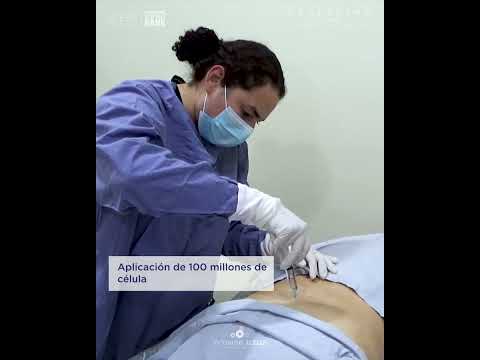
Achieving meaningful therapeutic outcomes in severely degraded spinal joints requires an aggressive and highly concentrated biological intervention. The protocol described at [00:20] utilizes a massive application of 100 million mesenchymal stem cells (MSCs) distributed across the affected spinal levels. This exceptionally high cell count is necessary to ensure that a sufficient number of viable cells survive the harsh, inflammatory microenvironment of the eroded bone. Mesenchymal stem cells are multipotent stromal cells known for their profound ability to modulate immune responses and secrete powerful healing factors.
Upon injection, these millions of cells immediately begin to exert a paracrine effect on the surrounding damaged tissues. They release a complex cascade of cytokines, growth factors, and extracellular vesicles that command the local cellular environment to switch from an inflammatory state to a regenerative state. This biological signaling helps to recruit the body's own dormant healing cells to the site of the bone erosion. Furthermore, MSCs have the inherent capacity to differentiate into osteoblasts and chondrocytes, the exact cells needed to repair bone and cartilage.
| Therapeutic Property | Action in Spinal Joints | Patient Benefit |
|---|---|---|
| Immunomodulation | Downregulates local joint inflammation | Rapid reduction in acute pain signals |
| Paracrine Signaling | Releases targeted growth factors | Stimulates natural tissue repair |
| Chondrogenesis | Promotes new cartilage cell formation | Improves facet joint gliding motion |
The Role of Fluoroscopic Guidance in Minimally Invasive Stem Cell Procedures
Treating highly complex spinal degradation requires absolute precision, as injecting valuable biological agents blindly into the general vicinity of the spine yields poor clinical results. To ensure maximum efficacy, the medical team utilizes advanced imaging technology, specifically performing the procedure with fluoroscopic guidance, as indicated at [00:35]. Fluoroscopy acts as a continuous, real-time X-ray movie that allows the traumatologist to visualize the internal skeletal structures dynamically. This technology is vital for navigating the intricate and often distorted anatomy of a spine suffering from metastatic bone erosion.
Using the fluoroscopic C-arm, the physician can precisely track the trajectory of the spinal needle as it advances through the dermal layers and paraspinal musculature. The goal is to perfectly position the needle tip entirely within the tiny capsule of the facet joint. Without this real-time imaging, navigating past crucial nerve roots, blood vessels, and severely eroded bone fragments would carry significant risk of internal injury. The visual feedback ensures that the delicate stem cells are deposited exactly where they are needed most.
This level of precision directly impacts the success rate of intra-articular stem cell injection for the lumbar spine. By confirming needle placement with a minute amount of contrast dye before delivering the cells, the physician guarantees that the therapeutic payload remains confined to the targeted joint space. This strict localization prevents the stem cells from washing away into the surrounding systemic circulation, concentrating their regenerative power strictly on the eroded articular surfaces.
Detailed Step-by-Step Joint Restoration Procedure
The administration of advanced cellular therapeutics must follow strict clinical protocols to ensure both patient safety and cell viability. The entire medical process takes place inside a specialized hospital procedure room, guaranteeing a sterile and highly controlled clinical environment. As mentioned at [00:32], maintaining these rigorous hospital standards minimizes any risk of post-procedural infection. Patients are carefully monitored by an anesthesiologist throughout the entire duration of the intervention.
To maximize patient comfort and eliminate procedural anxiety, light sedation is administered intravenously prior to the beginning of the injections. This conscious sedation ensures the patient remains completely relaxed and pain-free, yet responsive enough to provide feedback if necessary. Once the patient is comfortably positioned face-down, the targeted lower back region is extensively sterilized. The specialized traumatologist then utilizes the real-time imaging systems to begin the meticulous process of accessing each individual facet joint.
- Preparation and Sterilization: The lumbar region is prepped using advanced hospital-grade antiseptics to ensure a sterile field.
- Fluoroscopic Mapping: The C-arm machine maps the exact structural damage across the L3 to S1 vertebral segments.
- Intra-articular Needle Placement: Spinal needles are guided with pinpoint accuracy into the compromised facet joint capsules.
- Cellular Delivery: The 100 million mesenchymal stem cells are slowly infused to prevent pressure buildup within the joint.
- Post-Procedure Observation: The patient is moved to a recovery suite to awaken gently from the light sedation.
Rebuilding the Articular Platform and Intervertebral Compression Relief
The ultimate clinical objective of this targeted regenerative therapy is the structural restoration of the affected spinal joints. As the attending physician explains at [00:45], the treatment aims to successfully re-establish the articular platform. The articular platform refers to the smooth, cartilage-lined surfaces where two adjacent vertebrae meet and articulate. When bone erosion destroys this platform, every movement creates harsh, bone-on-bone friction that grinds away the remaining healthy tissue.
The concentrated application of mesenchymal stem cells works to coat these roughened, eroded surfaces with highly active biological material. Over the weeks following the procedure, the cells labor to lay down new extracellular matrix, effectively acting as a biological resurfacing agent. As the articular cartilage becomes healthier and more hydrated, the joints regain their ability to glide smoothly during flexion and extension. This biological resurfacing drastically reduces the painful mechanical friction that plagues patients with advanced bone metastasis.
Furthermore, by stabilizing the facet joints, the treatment indirectly provides vital intervertebral compression relief. A stable posterior joint complex prevents the vertebrae from shifting forward or collapsing downward, which in turn protects the intervertebral discs from excessive crushing forces. Rebuilding this platform is the key to unlocking long-term mobility, allowing patients to stand taller, walk with confidence, and break free from the debilitating cycle of muscular rigidity and chronic spinal pain.
Accessing High-Quality Regenerative Medicine in Mexico
In recent years, an increasing number of international patients have sought specialized medical care beyond their domestic borders to access cutting-edge cellular therapies. Seeking mesenchymal stem cell treatment for bone metastasis in Mexico has become a prominent choice due to the highly advanced regulatory frameworks supporting regenerative medicine in the country. Facilities equipped with world-class cleanrooms and specialized cell expansion laboratories offer treatments that are often restricted or cost-prohibitive elsewhere. Medical teams consist of highly trained traumatologists, immunologists, and orthopedic specialists dedicated to joint restoration.
These dedicated clinics prioritize comprehensive patient care, combining the latest technological advancements in fluoroscopic imaging with unparalleled expertise in cellular biology. The hospitals maintain strict international accreditation standards, ensuring that every biological product administered is rigorously tested for viability, sterility, and therapeutic potency. Patients receive personalized treatment protocols that are meticulously tailored to the exact nature of their bone erosion and muscular symptoms.
Beyond the technical superiority of the procedures, the holistic approach to patient well-being stands out in these specialized centers. From the moment of arrival, patients benefit from coordinated care that includes detailed imaging reviews, specialized nutritional support, and structured physical rehabilitation plans. This comprehensive medical ecosystem ensures that the biological benefits of the intra-articular stem cell injections are maximized, providing the best possible environment for tissue regeneration and long-term spinal health recovery.
Ready to Restore Your Spinal Health?
Discover how advanced intra-articular stem cell therapy can help rebuild compromised joints and relieve severe back rigidity. Connect with highly specialized medical professionals today to discuss your unique regenerative medicine options.
Get Free QuoteView Full Video Transcript
[00:00] El paciente Santiago de 70 años de edad...
[00:03] tuvo diagnóstico de cáncer de próstata hace dos años...
[00:06] con metástasis a hueso.
[00:08] Lo que provocó erosión ósea en diferentes partes de la columna...
[00:11] siendo las más afectadas desde L3 a S1.
[00:15] Esto ocasionó rigidez y dolor en la cadena muscular de la espalda.
[00:20] Por lo que realizamos una aplicación de 100 millones de células madre mesenquimales...
[00:24] de forma intraarticular en cada nivel afectado...
[00:26] para mejorar la compresión intervertebral, mejorando así los síntomas.
[00:32] Este procedimiento es llevado a cabo en un hospital...
[00:35] en cuarto de procedimientos bajo sedación ligera y con guía fluoroscópica.
[00:40] De esta manera aseguramos la aplicación en las articulaciones facetarias correspondientes.
[00:45] Esperando que con este tratamiento la plataforma articular se restablezca...
[00:48] mejorando la rigidez y el dolor generado por esto.
.png)
.png)







-(7).png)
.png)



-(8).png)










Share this listing