
Laser Surgery in Germany by Prof. Citak: How the ATLAS Laser Robot Works
Modern surgical innovations are continuing to transform patient care, offering higher safety standards and unmatched accuracy. In the realm of orthopedic and neurological procedures, Robotic Laser Surgery in Hamburg Germany represents a major leap forward, helping patients receive minimally invasive treatments with faster recovery times. At Asklepios Kliniken Hamburg in Hamburg, Germany, under the leadership of Prof. Citak, advanced technology like the ATLAS laser robot arm is reshaping traditional treatment protocols.
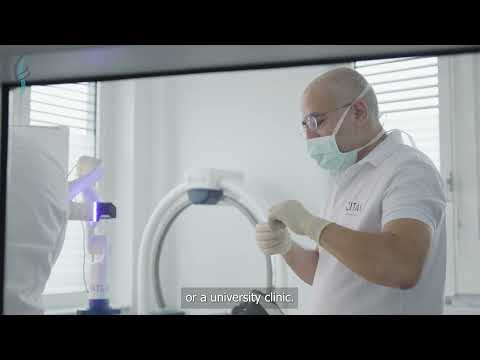
Periradicular therapy (PRT) and specialized spinal interventions require pinpoint accuracy to relieve nerve pain while avoiding damage to surrounding healthy tissues. By incorporating Robotic Surgery in Hamburg Germany into daily clinical practice, surgeons are now able to plan and execute injections with sub-millimeter precision. In this video overview, Prof. Citak demonstrates how the ATLAS navigation system and robotic arm work together to elevate standards of safety and efficiency, bringing university-hospital level innovation into everyday care.
Video Chapters & Quick Navigation
Revolutionizing Periradicular Therapy with the ATLAS System
Periradicular therapy involves targeted injections directly around irritated nerve roots to alleviate severe chronic back and leg pain. Traditionally, performing these delicate procedures required manual alignment guided by CT scans or fluoroscopy. With Laser-Assisted Surgery in Hamburg Germany, the process becomes streamlined and significantly more accurate. At [00:00], Prof. Citak points out that the laser robot arm directly simplifies the execution of PRT, allowing physicians to target nerve targets with robotic perfection.
The core advantage of integrating a laser-guided robotic arm lies in its ability to eliminate human error during position alignment. By keeping the trajectory steady, clinicians at Asklepios Kliniken Hamburg can perform spinal targeted therapy with unprecedented reliability, reducing patient discomfort while maximizing long-term pain relief.
Ensuring Maximum Safety: Calibration and Pre-Clinical Testing
Before implementing new surgical technologies in real-patient procedures, strict safety protocols must be met. At [00:09], Prof. Citak explains that the medical team scanned and planned multiple anatomical dummies to verify the robot’s spatial precision. This meticulous validation ensured that every trajectory mapped by the ATLAS navigation unit was completely reliable prior to treating their first human patient.
This commitment to thorough clinical testing highlights why Robotic Surgery in Hamburg Germany is recognized globally for exceptional patient safety standards. By verifying sub-millimeter accuracy through repetitive phantom trials, the surgical team guarantees predictable and reproducible clinical outcomes for everyone seeking treatment.
The Step-by-Step Robotic Laser Procedure
The operational process of the ATLAS laser robot arm relies on seamlessly combining imaging data with real-time robotic alignment. At [00:17], the step-by-step workflow is described as follows:
1. Marker Attachment: A specialized reference marker is fixed precisely at the location on the patient’s body where the periradicular therapy will take place.
2. Diagnostic Scanning: A localized anatomical scan is captured to map out internal tissue structures.
3. Data Transfer & Trajectory Planning: At [00:26], the image data is uploaded into the ATLAS navigation system, where the optimal injection trajectory is calculated.
4. Automated Arm Alignment: At [00:32], the robotic laser arm automatically positions itself along the exact planned angle, allowing the doctor to perform the PRT with high confidence.
Clinical Advantages: Increased Speed and Reduced Radiation Exposure
Adopting advanced laser robotics offers major clinical benefits over conventional free-hand or traditional CT-guided techniques. As highlighted at [00:40], the system significantly elevates spatial precision while simultaneously lowering radiation exposure for both the patient and the medical personnel.
| Feature | Impact on Patient Care |
|---|---|
| Enhanced Precision | Delivers therapeutic medication directly to affected nerve roots with absolute spatial accuracy. |
| Reduced Radiation | Minimizes overall X-ray exposure by streamlining scanning steps during trajectory alignment. |
| Faster Execution | Injections are completed noticeably faster than with older conventional equipment at [00:48]. |
World-Class Standards at Asklepios Kliniken Hamburg
For international patients seeking top-tier orthopedic or neurosurgical interventions, choosing Laser-Assisted Surgery in Hamburg Germany guarantees access to cutting-edge technologies. Asklepios Kliniken Hamburg combines renowned medical expertise with modern medical robotics, ensuring high standards across all routine therapies.
At [00:52], Prof. Citak notes that this technological integration allows daily medical practice to achieve quality benchmarks equivalent to top university hospitals. Patients can rest assured knowing they are receiving medical solutions optimized for safety, speed, and long-term recovery.
Interested in Robotic Surgery in Hamburg, Germany?
PlacidWay Medical Tourism connects you with premier hospitals like Asklepios Kliniken Hamburg and leading specialists such as Prof. Citak. Experience modern Laser-Assisted Surgery in Hamburg Germany.
GET A FREE QUOTEView Full Video Transcript
[00:00:03] Before we treated patients,
[00:00:08] we naturally wanted to make sure of its precision.
[00:00:09] So, we scanned and planned several dummies
[00:00:12] until we were able to treat the first patient.
[00:00:17] At the location where the PRT will later be performed,
[00:00:19] a reference marker is attached here.
[00:00:22] A scan is then performed,
[00:00:26] and this is transferred to the ATLAS navigation system.
[00:00:30] The trajectory is then planned,
[00:00:32] and the robotic laser arm aligns itself
[00:00:35] so that the PRT can then be performed.
[00:00:40] The laser robot arm allows the precision
[00:00:42] to be increased on the one hand,
[00:00:44] while on the other hand, radiation exposure
[00:00:46] is significantly reduced.
[00:00:48] The injection can also be performed much faster
[00:00:50] than with other conventional systems.
[00:00:52] This allows us to achieve
[00:00:54] a high standard in everyday practice,
[00:00:57] comparable to that of a large hospital
[00:00:59] or university hospital.


























Share this listing