
Better Mobility: Endoprosthetic Surgery in Hamburg, Germany
Living with chronic joint pain, restricted mobility, or long-term structural misalignments caused by past injuries can severely diminish quality of life. For many individuals, everyday movements like walking, sitting, driving, or bending down become daily hurdles accompanied by constant discomfort. When traditional conservative treatments no longer offer relief, advanced orthopedic interventions provide a path toward long-term recovery and renewed vitality.
At Asklepios Kliniken Hamburg in Germany, patients facing complex joint conditions receive world-class care powered by innovative surgical techniques, state-of-the-art medical technology, and comprehensive rehabilitation programs. Through specialized partial and total joint replacements, international and local patients regain mobility, overcome pain, and return to an active lifestyle. We explore a inspiring patient journey involving Endoprosthetic Surgery in Hamburg Germany, detailing the medical expertise, advanced prosthesis technology, and holistic care models that make Joint Replacement in Germany a global benchmark in modern orthopedics.
Video Chapters & Quick Navigation
- Remarkable Recovery: The Camino de Santiago
- Understanding Post-Traumatic Knee Misalignment
- Partial vs. Total Knee Arthroplasty
- Medial Mobile-Bearing Knee Prosthesis
- The Quality Contract Program at Asklepios
- Digital Rehabilitation & The Caspar App
- Long-Term Life Transformation
- Why Choose Orthopedic Care in Germany
A Journey of Determination: Walking the Camino de Santiago After Surgery
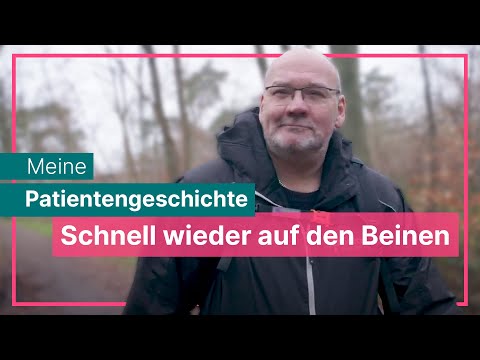
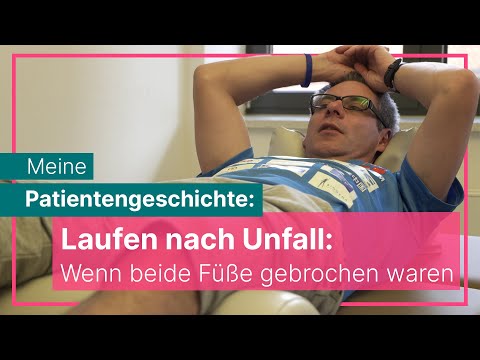
Setting ambitious personal goals before undergoing major surgical procedures can serve as a powerful catalyst for rehabilitation and mental endurance. For Mr. Stockfild, a patient facing severe joint degeneration, his primary motivation was clear: he wanted to walk the pilgrimage trail of the Camino de Santiago just five months following his procedure. During his initial clinical consultation at Asklepios Kliniken Hamburg, he presented this ambitious goal to his surgical team.
As documented at [00:00:00], the physician encouraged his determination, stating that with proper patient compliance, thorough physical preparation, and disciplined adherence to post-operative rehabilitation protocols, completing the pilgrimage was entirely achievable. This collaborative mindset between doctor and patient established an empowering foundation. Exactly five months after undergoing procedure, Mr. Stockfild successfully completed the trek across Spain, illustrating the potential of modern Joint Replacement Surgery in Hamburg Germany when combined with structured medical care and patient commitment.
Achieving such remarkable recovery times requires precision surgical execution, minimal soft tissue trauma, and an integrated care strategy that prepares the patient both physically and mentally before making the first incision. The milestone was not merely a physical achievement; it signified the total restoration of functional independence after decades of chronic physical limitations.
From Injury to Chronic Wear: Understanding Post-Traumatic Knee Misalignment
Post-traumatic osteoarthritis is a specialized subset of joint disease that develops following severe physical trauma to bone structures, ligaments, or articular cartilage. Mr. Stockfild's orthopedic challenges originated decades earlier in 1985, following a major accident at age 18 that resulted in severe fractures to both his thigh bone (femur) and shinbone (tibia) [00:00:24].
Although the initial skeletal fractures consolidated and healed well, they fused in a altered mechanical alignment. Over decades, this anatomical alteration fundamentally shifted his mechanical leg axis [00:01:03]. In a healthy lower limb, weight-bearing forces are distributed evenly across the medial (inner) and lateral (outer) compartments of the knee joint. In Mr. Stockfild's case, the malalignment concentrated disproportionate weight onto the inner compartment of the knee, leading to accelerated localized cartilage wear and eventual bone-on-bone friction.
Systemic Musculoskeletal Impacts of Uncorrected Joint Deformity
- Altered Gait Mechanics: Development of an unsteady, asymmetrical waddling gait to compensate for joint pain and instability.
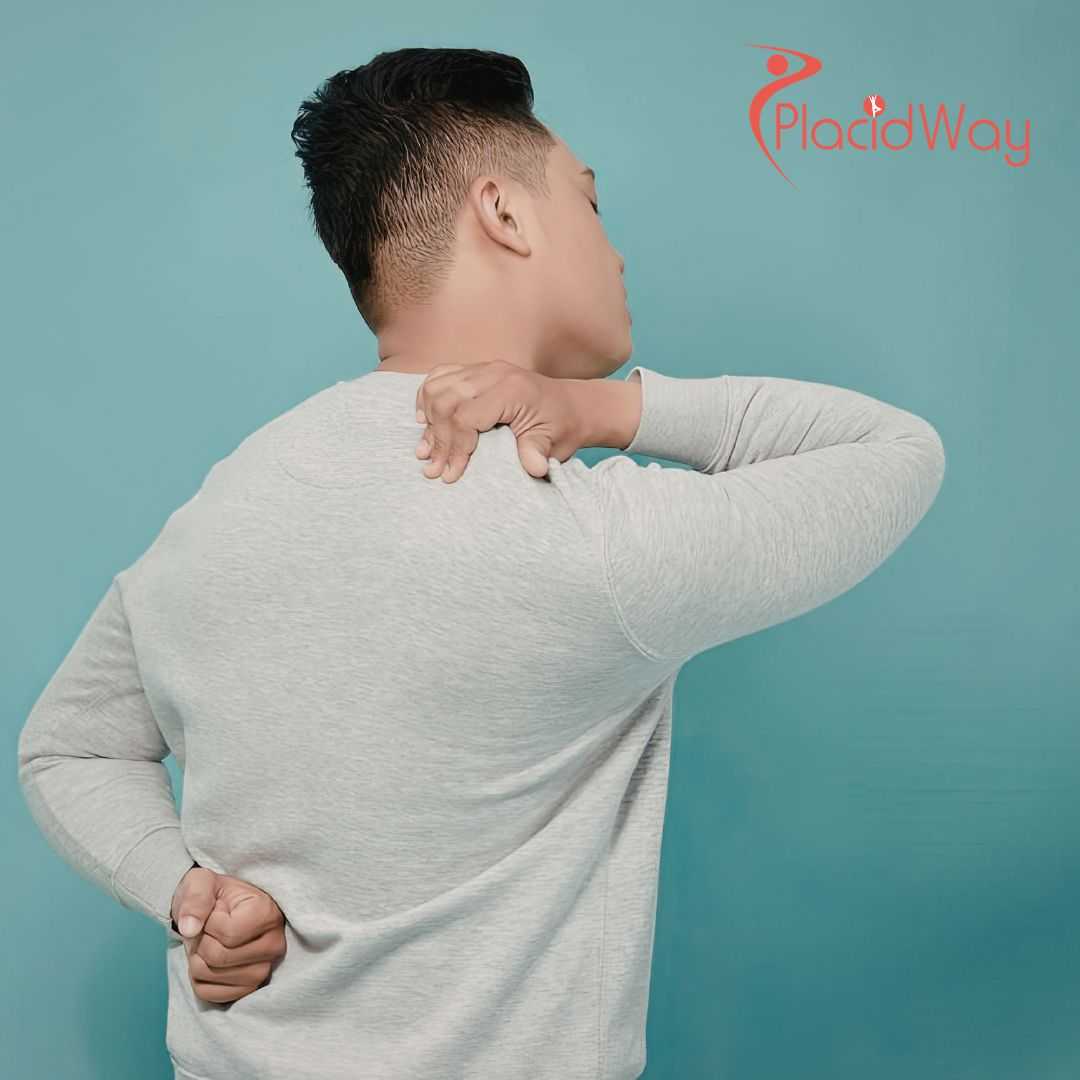
- Secondary Axial Spinal Pain: Asymmetrical weight distribution forces the spine out of neutral alignment, causing lumbar strain and back discomfort.
- Postural Muscle Adaptation: Compensatory muscle tension spreads upward along the kinetic chain, affecting shoulder girdle and cervical neck muscles.
- Severe Functional Restrictions: Daily actions such as long-distance driving, rising from low seats, or bending down to pick up objects become painful and restricted.
This progressive kinetic disruption highlights why comprehensive evaluation is vital. Treating localized joint destruction requires looking at the patient's entire movement system, a core strength of Orthopedic Surgery in Germany.
Preserving Healthy Tissue: Partial vs. Total Knee Arthroplasty
When considering joint intervention, many patients assume that an entire joint replacement is mandatory. However, modern surgical philosophies emphasize tissue preservation whenever clinically feasible. During diagnostic evaluation at Asklepios Kliniken Hamburg, imaging confirmed that while Mr. Stockfild's inner knee compartment was severely degraded, the outer compartment and the area behind the kneecap remained in healthy condition [00:01:29].
This specific condition made him an ideal candidate for a partial joint replacement (unicondylar knee arthroplasty) rather than a full joint resurfacing. By substituting only the damaged medial compartment, surgeons leave healthy cruciate ligaments, lateral cartilage, and natural bone tissue intact.
| Clinical Parameter | Partial Knee Replacement (Unicondylar) | Total Knee Replacement (TKA) |
|---|---|---|
| Surgical Incision & Trauma | Smaller incision, minimal soft tissue disruption, lower blood loss. | Standard longitudinal incision, extensive joint exposure. |
| Ligament Preservation | Preserves both Anterior (ACL) and Posterior (PCL) cruciate ligaments. | Often requires excision or mechanical substitution of the ACL. |
| Post-Operative Kinematics | Retains natural knee feel, proprioception, and fluid bending motion. | Provides stability with artificial structural mechanics. |
| Rehabilitation Timeline | Rapid functional recovery, earlier return to demanding physical tasks. | Gradual progress over several months of structured physiotherapy. |
By opting for partial joint replacement when clinically indicated, medical teams performing Endoprosthetic Surgery in Hamburg Germany maximize natural joint function while drastically reducing physical recovery barriers.
Advanced Engineering: Medial Mobile-Bearing Knee Prosthesis
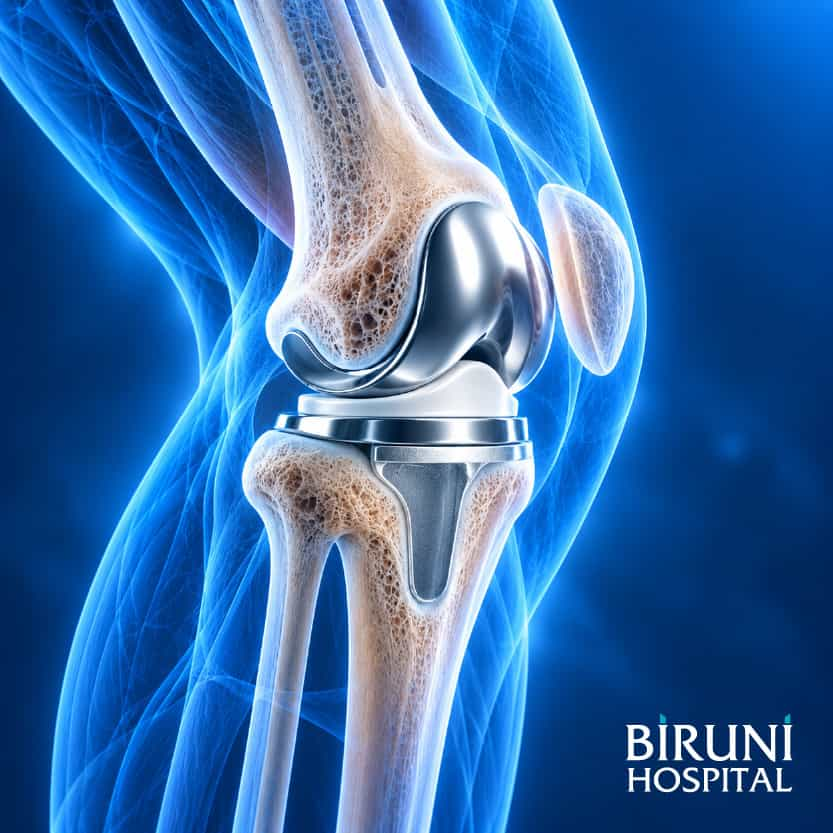
The success of partial joint procedures relies on sophisticated biomechanical design. In Mr. Stockfild's procedure, surgeons utilized a medial mobile-bearing knee prosthesis [00:01:51]. This engineered implant consists of precise metallic components anchored securely to the lower tibia bone and upper femoral condyle, separated by an ultra-high-molecular-weight polyethylene insert.
Unlike fixed-bearing implants where the plastic insert remains locked to the tibial plate, a mobile-bearing design allows the polyethylene insert to glide smoothly along the metal tray as the knee flexes and extends. This dynamic movement closely replicates natural human cartilage kinematics.
Key Biomechanical Advantages of Mobile-Bearing Implants
- Reduced Polyethylene Wear: Mobile contact surfaces distribute contact pressure over a larger area, reducing mechanical friction and material fatigue.
- Optimized Range of Motion: Promotes natural physiological rotation during deep bending, helping patients return to demanding activities like hiking or cycling.
- Reduced Interface Stress: Dynamic fluid motion absorbs stress forces that would otherwise transfer directly to the bone-implant interface, enhancing long-term fixation stability.
- Anatomical Axial Correction: Restores correct leg alignment, correcting long-standing structural strain on the lower back and surrounding muscle groups.
Implementing these advanced medical technologies ensures that patients seeking Joint Replacement in Germany benefit from long-lasting, highly functional joint mechanics tailored to their active lives.
Streamlined Patient Care: The Quality Contract Program at Asklepios
Achieving optimal surgical outcomes involves more than technical mastery inside the operating theater; it requires a structured clinical care pathway. Asklepios Kliniken Hamburg offers specialized "Quality Contracts" (Qualitätsverträge)—formally structured care agreements developed alongside leading health insurance providers [00:02:03].
This program integrates every stage of treatment into a continuous, well-coordinated experience. A core pillar of the Quality Contract is the dedicated Case Manager [00:02:21]. Acting as a central liaison, the Case Manager oversees patient logistics, schedules specialized pre-operative consultations, coordinates surgical timelines, organizes inpatient stays, and establishes outpatient rehabilitation routines.
By removing administrative stress and coordinating clinical handoffs, the Quality Contract framework minimizes care gaps between acute surgical discharge and active rehabilitation. This integrated approach ensures patients remain supported, informed, and focused on their physical recovery.
Pioneering Digital Rehabilitation: Pre-Operative Conditioning & The Caspar App
Rehabilitation in modern orthopedics starts well before the patient enters the operating room. Through the Quality Contract initiative, patients access digital health technology, including the Caspar App—a digital physiotherapy platform designed to guide patients through pre-habilitation and post-operative recovery [00:02:30].
Engaging in targeted conditioning exercises before surgery strengthens surrounding quadriceps, hamstrings, and core stabilizing muscles. Stronger supportive musculature leads to faster post-surgical mobilization and reduced discomfort during early physical therapy.
Benefits of Integrated Digital Health Platforms in Orthopedics
- Seamless Care Transition: Eliminates downtime between hospital discharge and outpatient physical therapy through structured home exercise routines.
- Customized Movement Training: Delivers step-by-step video demonstrations tailored to the patient's individual recovery phase and mobility level.
- Continuous Outcome Monitoring: Captures real-time patient progress data, allowing clinical teams to adjust exercise intensity and monitor recovery parameters remotely.
- Empowered Self-Management: Educates patients on safe movement mechanics, scar care, swelling management, and daily functional adjustments.
Furthermore, the program tracks long-term outcomes through structured follow-up examinations and patient surveys conducted at defined intervals following surgery [00:02:48]. This patient feedback loops directly back into quality control standards, confirming the high effectiveness of Joint Replacement Surgery in Hamburg Germany.
Reclaiming Vitality: Long-Term Transformation and Patient Perspective
The true success of any orthopedic intervention lies in its long-term impact on a patient's daily quality of life. Reframing the recovery journey nearly one year after his procedure, Mr. Stockfild shared that his entire surgical and rehabilitation experience yielded life-changing results [00:02:57].
He enjoys complete pain-free mobility, unhindered motion, and a renewed outlook on life. At age 57, he notes feeling physically better, more energetic, and more active than he did at age 40 [00:03:12]. Eliminating decades of persistent joint strain resolved his chronic knee discomfort while resolving secondary back pain and postural muscle tension.
Stories like this demonstrate that persistent joint pain and restricted mobility do not have to be accepted as inevitable parts of aging or trauma recovery. Modern medical advancements in Endoprosthetic Surgery in Hamburg Germany offer reliable solutions for patients seeking to reclaim active, pain-free lives.
Why Choose Asklepios Kliniken for Orthopedic Surgery in Germany
Germany has established itself as an international leader in orthopedic procedures, biomechanical research, and patient care standards. Among its premier healthcare networks, Asklepios Kliniken stands out as a center of excellence, operating specialized endoprosthetic centers throughout the country.
By bringing together world-class surgeons, advanced diagnostic imaging, customized implant selection, and integrated rehabilitation programs, Asklepios provides comprehensive care for international patients. Whether addressing early localized osteoarthritis, complex multi-joint degeneration, or post-traumatic misalignments, Asklepios delivers tailored treatments designed to restore long-term mobility and independence.
The Quality Contract program for endoprosthetic joint replacement is available across 15 premier medical centers in Germany [00:03:17], ensuring that patients receive top-tier care grounded in clinical innovation and compassionate patient support.
Ready to Restore Your Mobility and Quality of Life?
PlacidWay Medical Tourism connects you with premier orthopedic specialists for Joint Replacement Surgery in Hamburg Germany at Asklepios Kliniken Hamburg. Take the first step toward pain-free walking, active living, and personalized joint replacement options tailored to your needs.
GET A FREE QUOTEView Full Video Transcript
[00:00:00] During the consultation, I told the doctor that I would like to walk the Camino de Santiago in five months, and he said, "We can make that happen. If you cooperate well," he said, "then it will not be a problem at all." That motivated me even more to go through with it, and yes, I actually managed to do it. Five months after my knee surgery, I completed the Camino de Santiago.
[00:00:21] [Music]
[00:00:24] My knee problems started in 1985 after a serious accident. I was just 18 years old, and my legs were badly injured. The knee affected me to the point that I could not walk with a normal, upright gait. I had this kind of unsteady, waddling gait, and as a result, over the years I developed a misalignment. My back started to hurt because of it, and the muscles shifted as well. My neck was affected, and as a result I had really severe problems. Driving for a long time was difficult, and even getting out of the car was painful because my knee was constantly tense. I could not bend down properly. If something fell on the floor, I could not simply bend down on my knees like everyone else. I always had to take a step forward and then pick it up.
[00:01:03] In Mr. Stockfild's case, the particular issue is that his condition resulted from an accident. He had a thigh bone fracture and a shinbone fracture. They healed well, but they healed in a specific misaligned position. As a result, he developed an altered leg axis and a change in alignment that caused increased stress on the inner part of the knee joint, which eventually became worn.
[00:01:26] Hello, Mr. Stockfild. Hello. Good afternoon. Thank you.
[00:01:29] In his case, the special feature is that we were able to perform a partial replacement because the rest of the joint, the outer compartment and the area behind the kneecap, were still in good condition.
[00:01:39] So, the knee prosthesis—we have already seen it, right? We now essentially have the lower component of the tibia, the tibial component that is anchored in the lower leg. This is a good prerequisite for what we call a medial mobile-bearing knee prosthesis, meaning a partial knee replacement. The advantages are a smaller surgical incision and, as this particular case demonstrates, often very good mobility after surgery.
[00:02:03] During the consultation, the doctor also told me that I could participate in the quality contract program. He explained exactly what I could expect, and it was immediately clear to me that I wanted to participate because it was beneficial for the entire process.
[00:02:15] As part of these quality contracts, or quality agreements with health insurers, we have several elements that play a role. There is a case manager who is responsible for coordinating the patient's care, organizing rehabilitation, and being available for all the patient's organizational questions.
[00:02:29] There is also the Caspar App, a physiotherapy app that patients receive and should use before surgery. This helps ensure a smooth transition into rehabilitation. Otherwise, rehabilitation can sometimes involve a small gap between the operation and the start of rehabilitation. This is not the case for patients participating in the quality contract.
[00:02:48] Another advantage, in my opinion, is that we also learn how patients are doing because they are examined and interviewed at several points after the operation.
[00:02:57] Looking back now, it has been almost a year. Everything from the operation until today has been about a year, and the whole journey has been extremely positive for me. I have no pain, I can move freely, and I have a completely different outlook on life. Overall, at 57, I feel better than I did at 40.
[00:03:17] The quality contract for endoprosthetic joint replacement is available to people insured by more than 40 health insurance providers at 15 locations throughout Germany.
[00:03:26] [Music]














Share this listing