




Shoulder Replacement Surgery in Mexico: Your Comprehensive Guide

Shoulder replacement surgery cost in Mexico typically ranges from $6,500 to $9,000, compared to $20,000+ in the US. Board-certified orthopedic surgeons utilize advanced prosthetics in top-tier facilities for safe, effective recovery.
Key Takeaways: Healing Your Shoulder Abroad
- Exceptional Savings: Patients can save up to 70% on total orthopedic procedure costs compared to North American healthcare systems.
- Premium Implants: Surgeons use globally recognized, FDA-approved prosthetic devices to ensure joint longevity and optimal mobility.
- World-Class Expertise: Access to board-certified specialists who often hold international fellowships in upper extremity surgery.
- Comprehensive Care: Packages typically bundle hospital fees, specialist consultations, and immediate post-operative rehabilitation.
- Zero Wait Times: Avoid the extensive scheduling delays common in public healthcare systems and secure your procedure swiftly.
Why is shoulder replacement surgery in Mexico a top choice for international patients?
International patients choose this destination because it offers world-class medical expertise at a fraction of North American prices. Patients receive FDA-approved implants in state-of-the-art hospitals with virtually zero wait times.
The exponential rise of medical tourism in Mexico is heavily driven by the undeniable cost savings without compromising clinical quality. Patients facing immense out-of-pocket expenses or inadequate insurance coverage in their home countries can save tens of thousands of dollars on complex orthopedic procedures. This profound financial relief allows individuals suffering from severe chronic pain to access premium healthcare solutions that might otherwise be completely unaffordable.
Beyond outstanding affordability, the geographical proximity of this nation to the United States and Canada makes it an incredibly convenient and logical option. Short flight durations mean significantly less physical strain on a deteriorating and painful joint. Returning home for vital long-term physical therapy is highly manageable, and many border cities even allow patients to drive directly to their specialized treatment centers safely.
Furthermore, local orthopedic facilities are globally renowned for their distinctly patient-centric approach. Specialized surgeons often spend significantly more time consulting directly with patients compared to the notoriously fast-paced medical systems up north. This unhurried, personalized attention ensures that every single surgical plan is meticulously tailored to the individuals unique anatomical needs and future lifestyle goals.
What does the average shoulder replacement surgery cost in Mexico include?
The standard surgical package covers facility fees, the orthopedic surgeons fee, anesthesiology, standard medical testing, and the prosthetic implant itself. Comprehensive packages ensure total financial transparency from day one.
- Pre-operative Medical Evaluations: This includes essential blood work, comprehensive electrocardiograms, and standard imaging like specialized X-rays or MRI scans required for precise surgical planning and mapping.
- Complete Surgical Suite Fees: Full coverage for the operating room time, utilization of advanced sterilization equipment, and assistance from a highly skilled surgical nursing staff throughout the procedure.
- Professional Medical Fees: Compensation for the lead board-certified orthopedic surgeon as well as the dedicated anesthesiologist responsible for administering nerve blocks or general anesthesia safely.
- Premium Prosthetic Implants: The cost of high-quality, FDA-approved prosthetic devices sourced directly from globally recognized medical manufacturers to guarantee long-lasting joint functionality.
- Post-Operative Hospital Stay: An initial inpatient stay, usually lasting one to two nights, which includes basic pain management medications, nutritional meals, and round-the-clock nursing care.
- Initial Rehabilitation Consultations: Early physical therapy sessions conducted within the hospital to educate the patient on vital passive movements, safe sleeping positions, and strict sling management before discharge.
How do I choose the right shoulder replacement surgery clinic in Mexico?
Selecting the optimal facility requires evaluating hospital accreditations, verifying the lead surgeons orthopedic board certifications, and reviewing historical patient outcomes. A thorough assessment guarantees care matching international standards.
When critically evaluating a shoulder replacement surgery clinic in Mexico, your foremost priority should always be confirming international or national healthcare accreditations. Actively seek out modern hospitals recognized by the Joint Commission International or the esteemed Mexican General Health Council. These prestigious certifications mandate strict adherence to global safety protocols, rigorous infection control measures, and comprehensive emergency response capabilities.
The specialized expertise of the medical staff is equally critical to ensuring your surgical success. You must verify that your chosen orthopedic surgeon has successfully completed dedicated fellowship training specifically in upper extremity treatments or shoulder arthroplasty. Many elite Mexican surgeons have trained extensively at top universities in the United States or Europe, seamlessly integrating advanced surgical techniques into their local clinical practices.
Finally, absolute transparency is a defining hallmark of a reputable and trustworthy medical facility. High-quality clinics will eagerly provide detailed breakdowns of their success rates, infection statistics, and comprehensive treatment plans before requesting any financial commitment. They should also highly encourage open communication, offering thorough virtual video consultations so you can discuss your specific joint degradation directly with the attending physician.
Selecting a surgeon who performs high volumes of shoulder specific procedures is crucial. The biomechanics of the shoulder are vastly more complex than the hip or knee. Surgeons specializing exclusively in the upper extremity consistently demonstrate lower complication rates and yield superior range-of-motion outcomes for their patients.
What types of shoulder prosthetics are used during medical tourism in Mexico?
Surgeons utilize top-tier, globally recognized implant brands such as Zimmer Biomet, DePuy Synthes, and Stryker. These implants are identical to those used in the United States, ensuring maximum durability and biocompatibility.
A common misconception regarding seeking healthcare abroad is that lower costs equate to inferior medical materials. In reality, the premier orthopedic hospitals catering to international patients utilize the exact same state-of-the-art prosthetic joints found in top North American facilities. Patients can rest assured knowing their new joint is crafted from advanced medical-grade titanium, cobalt-chromium alloys, and highly cross-linked polyethylene.
Depending on your specific anatomical requirements, your surgeon will select the most appropriate prosthetic design. For standard total arthroplasty, an anatomical implant is used, mimicking the natural ball-and-socket structure to restore seamless, pain-free movement. The materials are specifically engineered to integrate flawlessly with your natural bone structure over time, a process known as biologic fixation.
In cases involving severe rotator cuff arthropathy, specialized reverse shoulder implants are utilized. These innovative devices literally reverse the natural anatomy, attaching the prosthetic ball to the shoulder blade and the socket to the arm bone. This ingenious engineering allows the patient to use their stronger deltoid muscle to lift the arm, bypassing the severely damaged rotator cuff entirely.
| Procedure Type | Best Suited For | Surgical Concept |
|---|---|---|
| Total Shoulder Replacement | Intact rotator cuff, severe osteoarthritis | Replaces both the arthritic humeral head (ball) and the glenoid (socket) with artificial parts matching natural anatomy. |
| Reverse Shoulder Replacement | Torn rotator cuff, complex previous joint failures | Swaps the anatomical positions of the ball and socket, relying on the deltoid muscle for arm elevation and mobility. |
| Partial Shoulder Replacement | Healthy socket, damaged humeral head only | Replaces only the damaged ball portion of the joint, leaving the natural bone of the socket completely intact. |
How long is the recovery timeline for shoulder replacement surgery in Mexico?
Initial recovery requires a sling for four to six weeks, while full functional recovery and strength building takes approximately six months. Consistent physical therapy is absolutely vital to achieving the best possible outcome.
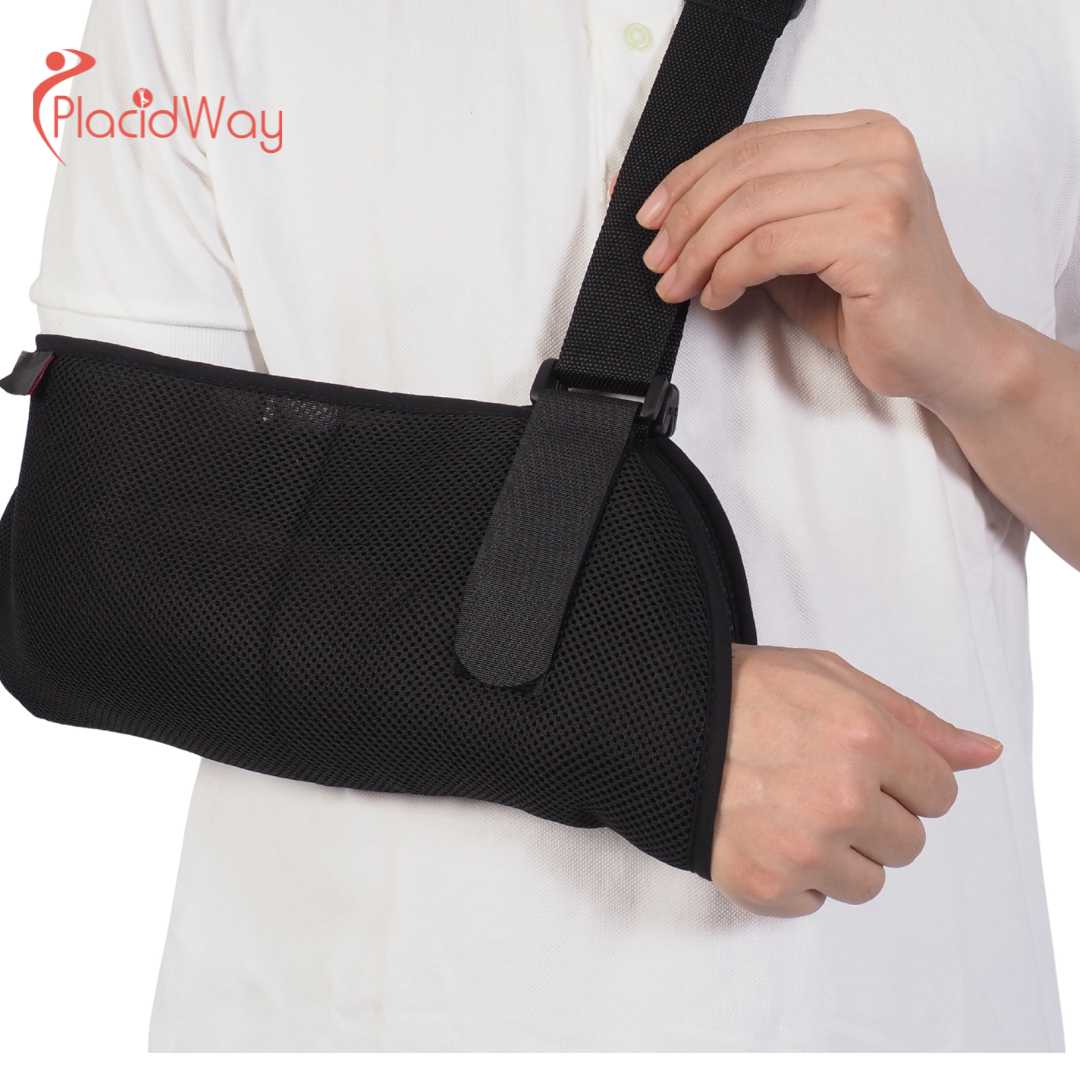
The journey to full functional restoration requires significant patience and steadfast dedication to medical advice. Immediately following the operation, your arm will be immobilized in a specialized clinical sling. During the first two weeks, pain and swelling are managed aggressively with prescribed medication, and you will learn to perform daily activities utilizing only your non-operative arm to protect the healing soft tissues.
Between weeks three and six, guided physical therapy becomes the cornerstone of your recovery process. You will participate in passive range-of-motion exercises, where a therapist or specialized machine gently moves your arm to prevent the joint capsule from stiffening. It is crucial during this delicate phase that you do not actively lift your arm using your own muscle power, as the internal structures require undisturbed time to anchor firmly.
After the six-week mark, active strengthening exercises are carefully introduced into your regimen. Patients typically begin feeling substantial relief from their original arthritic pain around this time. Over the subsequent several months, progressive resistance training will help rebuild the atrophied shoulder muscles. Most patients return to light, low-impact activities like swimming or golf between four and six months post-operation.
Proper sleep positioning is one of the most critical aspects of early shoulder recovery. Most surgeons highly recommend sleeping in a semi-reclined position, such as in a recliner chair or propped up on firm wedge pillows for the first four weeks. Laying completely flat can place excessive and painful tension on the newly repaired joint capsule.
Are board-certified orthopedic surgeons performing shoulder replacement surgery in Mexico?
Absolutely. The leading medical centers employ exceptionally qualified surgeons certified by the Mexican Council of Orthopedics and Traumatology. Many also hold active memberships in prestigious international orthopedic associations.
The standard of surgical expertise available for international patients is extraordinarily high. Physicians heading orthopedic departments in major healthcare hubs undergo rigorous, decade-long educational pathways. Following their foundational medical degrees, they complete demanding residencies in general orthopedics, culminating in highly competitive board certification examinations that test their comprehensive anatomical and surgical proficiency.
What truly distinguishes the elite surgeons is their commitment to continuous sub-specialization. A vast majority of the top specialists catering to foreign patients complete dedicated fellowships focused entirely on shoulder and elbow arthroplasty. These advanced training programs are frequently undertaken at world-renowned teaching hospitals in the United States, Canada, or Western Europe, ensuring their skill sets remain at the bleeding edge of medical science.
Furthermore, these surgeons are highly active in the global medical community. They regularly attend international symposiums, contribute to peer-reviewed orthopedic journals, and maintain affiliations with organizations like the American Academy of Orthopaedic Surgeons. This dedication to global medical standards guarantees that your surgeon utilizes the safest, most modern, and most effective, evidence-based surgical techniques available today.
Is it safe to travel for a shoulder replacement surgery in Mexico?
Yes, combining international travel with orthopedic surgery is entirely safe when planned methodically. Selecting reputable medical facilitators ensures secure transportation, appropriate accommodations, and seamless care coordination.
Safety during a medical journey encompasses both clinical outcomes and physical travel logistics. Clinically, the risks associated with this procedure abroad are identical to those faced in your home country. By meticulously selecting a fully accredited hospital and a board-certified specialist, you effectively mitigate surgical risks such as infection, implant rejection, or nerve damage, ensuring a clinically secure surgical environment.
Logistically, specialized medical travel networks have perfected the process of safely moving patients across borders. Upon arrival, patients are typically greeted by dedicated concierges who manage all heavy lifting and luggage handling, which is absolutely critical for someone suffering from a severely compromised shoulder joint. Ground transportation is conducted in spacious, comfortable vehicles designed to minimize physical jarring during transit.
Furthermore, destination healthcare hubs are located in highly developed, secure metropolitan areas or well-policed tourist districts. The hospitals themselves operate within modern medical complexes featuring advanced security measures. When patients adhere strictly to the itineraries provided by their medical facilitators and avoid unapproved excursions, the travel experience remains exceptionally safe, controlled, and comfortable.
How does a total shoulder replacement differ from a reverse shoulder replacement in Mexico?
A total replacement maintains the natural anatomy, while a reverse replacement swaps the positions of the ball and socket. The reverse technique is specifically designed for patients with unrepairable rotator cuff tears.
Understanding the anatomical differences between these two procedures is vital for managing functional expectations. In a standard total arthroplasty, the surgeon removes the damaged cartilage and bone, replacing them with a metal ball attached to the humerus and a plastic cup lining the glenoid cavity. This procedure relies heavily on a fully functioning, healthy rotator cuff to stabilize the new joint and power arm movements effectively.
Conversely, a reverse arthroplasty is an innovative biomechanical solution for patients suffering from complex cuff tear arthropathy. If the rotator cuff tendons are severely torn and cannot be repaired, a standard implant would simply slide out of place. By attaching the prosthetic ball to the shoulder blade and the artificial socket to the upper arm bone, the fundamental mechanics of the joint are completely altered.
This ingenious reversal changes the center of rotation, allowing the patient to bypass the damaged rotator cuff entirely. Instead, the large, powerful deltoid muscle takes over the primary responsibility of lifting and rotating the arm. Mexican orthopedic specialists are highly trained in both techniques, utilizing advanced preoperative 3D imaging to determine precisely which structural approach will yield the most optimal, pain-free mobility.
What are the top destinations for shoulder replacement surgery in Mexico?
Major metropolitan hubs like Tijuana, Cancun, Guadalajara, and Monterrey are the premier destinations. These cities boast massive healthcare infrastructures, specialized orthopedic hospitals, and excellent international airport connectivity.
- Tijuana: Positioned directly across the border from San Diego, this vibrant city is incredibly popular for North American patients seeking immediate access to care. It offers ultra-modern medical towers and allows patients the unique flexibility of driving to their appointments.
- Cancun: Beyond its reputation as a tropical paradise, Cancun hosts numerous internationally accredited hospitals. It provides a highly serene, resort-style recovery environment supported by a robust medical infrastructure explicitly designed to cater to international tourists.
- Guadalajara: Often referred to as the Silicon Valley of Latin America, this sprawling metropolis is deeply respected for its prestigious university hospitals. It attracts patients looking for highly specialized, academic-level orthopedic expertise and complex revision surgeries.
- Monterrey: This wealthy industrial powerhouse boasts some of the most technologically advanced medical facilities in the entire hemisphere. Hospitals here frequently mirror the opulence and high-tech operational standards of elite private institutions found in Texas.
- Puerto Vallarta: A deeply favored location for Canadian and US expatriates, offering exceptional bilingual medical care alongside tranquil coastal views. The orthopedic clinics here are highly experienced in managing the specific healthcare needs of older international demographics.
Why choose PlacidWay for your shoulder replacement surgery in Mexico?
PlacidWay acts as your ultimate medical advocate, securely connecting you with globally accredited orthopedic specialists, ensuring absolute price transparency, and streamlining your clinical documentation for a stress-free experience.
Navigating a foreign medical landscape requires a knowledgeable, reliable partner to ensure your clinical safety and financial security. PlacidWay excels as an industry leader by prioritizing patient health and procedural excellence above all else. Here is why thousands of patients trust our platform for their complex orthopedic needs:
- Rigorous Medical Facility Vetting: We partner exclusively with hospitals and clinics that maintain strict international accreditations, possess impeccable hygiene records, and operate dedicated, state-of-the-art orthopedic departments.
- Access to Elite Specialists: Our extensive network connects you directly with board-certified orthopedic surgeons who possess verifiable fellowship training in complex upper extremity and arthroplasty procedures.
- Transparent Cost Structuring: We completely eliminate hidden medical fees. Patients receive comprehensive, all-inclusive clinical quotes covering surgical fees, hospital stays, and prosthetic implants prior to making any commitments.
- Streamlined Medical Documentation: Our dedicated team facilitates the secure transfer of your personal X-rays, MRI scans, and medical histories directly to the attending surgeon, ensuring your preoperative evaluation is highly accurate.
- Dedicated Patient Advocacy: From the initial clinical inquiry to your post-operative hospital discharge, you receive continuous support, ensuring seamless communication between you and the medical staff at all times.
Frequently Asked Questions About Orthopedic Care Abroad
What is the overall success rate of shoulder replacement surgery in Mexico?
The success rate for shoulder arthroplasty in Mexico mirrors international standards, generally exceeding ninety percent for pain relief and functional improvement. Board-certified orthopedic surgeons utilize the same advanced surgical protocols and FDA-approved prosthetic implants found in the United States, ensuring long-lasting and positive clinical outcomes for international patients.
Do Mexican orthopedic clinics offer rehabilitation services after surgery?
Yes, top-tier orthopedic centers in Mexico provide comprehensive in-house physiotherapy and rehabilitation programs. Patients typically begin gentle passive range-of-motion exercises the day after surgery under the guidance of specialized physical therapists. Many clinics also offer extended stay packages that include daily rehabilitation sessions before you return home.
How soon can I fly home after undergoing shoulder joint replacement in Mexico?
Most orthopedic surgeons recommend waiting at least seven to ten days before taking a commercial flight. This waiting period allows your medical team to monitor your initial healing, remove surgical drains, ensure your pain is well-managed, and reduce the risk of deep vein thrombosis associated with flying post-surgery.
Will my health insurance cover orthopedic surgery performed in Mexico?
While traditional US health insurance plans like Medicare generally do not cover treatments performed abroad, some private insurance providers offer cross-border coverage or global medical networks. Patients are encouraged to contact their insurance provider directly to inquire about out-of-network international reimbursements or medical tourism specific policy riders.
What pain management protocols are used for shoulder arthroplasty in Mexico?
Mexican hospitals utilize advanced multimodal pain management protocols. This typically includes an interscalene nerve block administered before surgery to numb the shoulder and arm completely, significantly reducing immediate post-operative pain. Following surgery, a combination of oral analgesics and anti-inflammatory medications is provided to ensure a comfortable recovery.
Are English-speaking staff available at medical facilities in Mexico?
Yes, major private hospitals catering to international patients employ bilingual staff, including surgeons, nurses, and patient coordinators. Effective communication is a priority in cross-border healthcare, so you can expect clear instructions regarding your pre-operative preparation, surgical details, and post-operative care entirely in English.
Can I combine my shoulder replacement with a vacation in Mexico?
While you can certainly enjoy the beautiful surroundings of cities like Cancun or Puerto Vallarta before your procedure, a true active vacation post-surgery is not recommended. Following a joint replacement, your primary focus must be on rest, strict sling compliance, and physical therapy to ensure the joint heals correctly without complications.
What are the key signs that I need a total shoulder replacement?
The primary indicators include severe joint pain that interferes with daily activities like washing or dressing, moderate to severe pain while resting or sleeping, loss of motion in the shoulder, and a failure to improve with conservative treatments such as anti-inflammatory medications, cortisone injections, or extensive physical therapy.
How long do shoulder implants last when performed by Mexican surgeons?
Because Mexican orthopedic surgeons utilize the exact same premium implant brands as those used globally, the longevity of the prosthetic is identical. On average, modern shoulder implants are designed to last fifteen to twenty years, depending on the patients age, activity level, and commitment to post-operative physical therapy.
Are the medical facilities in Mexico internationally accredited?
Many private hospitals specializing in international patient care hold prestigious accreditations. These include recognition from the Joint Commission International and the Mexican General Health Council. These governing bodies ensure that the hospital maintains stringent protocols regarding patient safety, facility hygiene, and overall healthcare quality.
Restore Your Mobility and Live Pain-Free Today
* Patient coordinators typically respond within 24 hours. Your privacy is strictly guaranteed.
.png)







Share this listing