
Antalya's 3-Day Denture Fix: Your Rapid Smile Solution.
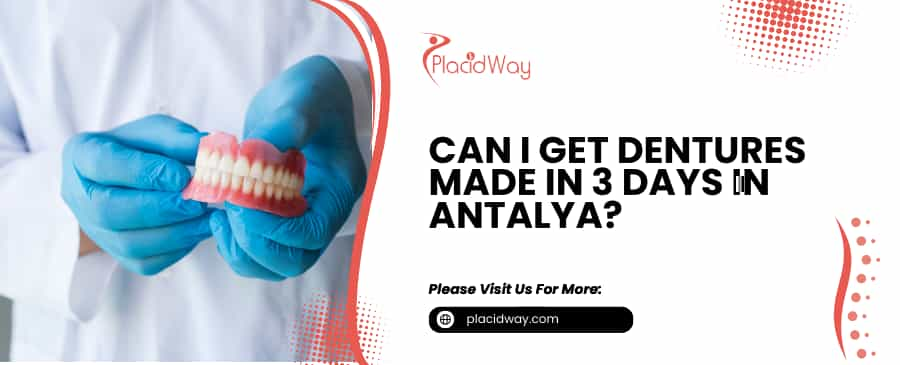
If you are dealing with missing teeth, you might be considering traveling for dental care and wondering about the timeframe required. Many patients ask if they can get dentures in Antalya in just three days. While fast turnarounds are a common appeal of dental travel, it is vital to understand what is realistic and medically appropriate for your specific oral health needs. Restoring your smile involves precise measurements, careful fabrication, and ensuring the final appliance fits securely without damaging your gum tissue.
Key Takeaways
- Basic full or partial acrylic dentures can often be fabricated in 3–5 days with dedicated lab resources.
- Complex restorations, such as implant-supported overdentures, require longer timelines and usually multiple trips.
- If you require tooth extractions, your treatment schedule must accommodate gum healing and bone changes.
- Rapid fabrication demands daily, sometimes multi-hour, clinic visits for impressions, try-ins, and adjustments.
- You should always prioritize medical suitability, safety, and proper fit over the speed of the treatment.
What Factors Determine if I Can Get Dentures in 3 Days?
A three-day turnaround requires a highly streamlined workflow. This is typically only feasible at facilities equipped with in-house dental laboratories or those with priority partnerships with nearby technicians. When the lab is on-site, the dentist can take your impressions in the morning and hand them directly to a technician, bypassing the shipping delays that often draw out the process at standard domestic practices.
Additionally, your current oral health plays a massive role. If your gums are fully healed from previous tooth loss and you have no active periodontal disease, a fast impression and fabrication process is much safer. Conversely, if you present with infections, swollen gums, or require teeth to be pulled during the visit, the tissue architecture in your mouth will change rapidly. Creating a final denture on immediately altering tissues can lead to severe discomfort and poor fit down the line.
Are All Types of Dentures Available on a 3-Day Timeline?
Standard full dentures (which rest directly on your gums) and traditional partial dentures are usually the ones that can be fabricated quickly. Using standard acrylic materials and occasionally digital CAD/CAM milling, technicians can craft these appliances efficiently.
However, if you are seeking "snap-on" dentures or implant-supported overdentures, a three-day timeline is usually impossible for the final product. Dental implants require surgical placement into your jawbone, followed by a process called osseointegration, where the bone fuses to the titanium post. This healing period typically takes three to six months. While you may receive a temporary denture to wear during this healing phase, the final, permanent appliance cannot be safely attached until the implants are fully integrated and tested for stability.
Even for traditional dentures, rushing the "wax try-in" phase—where you test the look and bite of the teeth before final processing—can lead to dissatisfaction with the final appearance or functional bite issues.
How Does the Rapid Denture Fabrication Process Work?
To achieve a three-day turnaround, you must expect to spend a significant portion of your trip in the dentist's chair. A typical accelerated schedule looks like this:
- Day 1: Initial examination, panoramic X-rays, and primary impressions. The lab creates custom trays from these molds to take a more precise secondary impression later that day.
- Day 2: Bite registration to determine how your upper and lower jaws align. Later on day two, you will usually have a "wax try-in." The lab places the synthetic teeth in wax so you can evaluate the color, shape, and bite before the final acrylic is cured.
- Day 3: The lab finalizes and polishes the denture. The dentist fits the appliance in your mouth, makes necessary physical adjustments to relieve pressure points, and instructs you on care.
What Happens if I Need Tooth Extractions First?
A common scenario involves a patient arriving with failing teeth that need to be removed. In this situation, the dentist will take impressions of your mouth before the extraction surgery. The lab fabricates the denture, and the dentist places it in your mouth immediately after pulling the teeth. This acts as a bandage, helps control bleeding, and ensures you do not have to leave the office without teeth.
However, it is crucial to understand that bone resorption (shrinkage) begins immediately after a tooth is removed. Over the next 6 to 12 months, the shape of your gums will change dramatically. The immediate denture that fit perfectly on day three will likely become loose and uncomfortable down the line. You will need to see a dentist in your home country for a permanent reline or possibly an entirely new denture once the tissue stabilizes.
Will Rushing the Denture Process Compromise Quality?
The physical fabrication of an acrylic denture can safely be completed in a few days without compromising the structural integrity of the materials. However, the clinical quality—how well the denture functions and feels in your specific mouth—can sometimes be challenged by a strict deadline.
Typically, a local patient might test a wax try-in for a few days, or return over a period of two weeks for minor adjustments as the new denture settles into the gum tissue. When you condense this into 72 hours, you lose that testing window. If the bite is slightly off, or if the denture rubs against the frenum (the connective tissue in the mouth), you might not notice until you are already on a plane. This makes post-trip follow-up care incredibly important.
What Should I Expect to Pay for the Procedure?
Pricing for dental restorations varies widely from patient to patient. While many travelers find the overall estimates lower than in North America or Western Europe, it is important to remember that the cheapest option is rarely the best for long-term health. Estimates usually factor in:
- Material Quality: Standard acrylic vs. reinforced resins or porcelain teeth.
- Type of Denture: Partial vs. full arch.
- Preparatory Work: X-rays, extractions, root canals on remaining anchor teeth, or periodontal treatments.
- Laboratory Fees: Expedited services sometimes incur a rush fee depending on the facility.
Always ask for a detailed, itemized estimate before committing to travel. Ensure you understand what is included (like adjustments or temporary appliances) and what might be considered an extra charge.
How Do I Choose a Reliable Provider for Fast Dental Work?
Because dentistry involves medical procedures with inherent risks, choosing where to receive care should be done meticulously. A facility offering ultra-fast turnarounds must have the infrastructure to support it safely. Look for providers that prioritize thorough initial consultations and transparent communication over high-pressure sales tactics.
It is beneficial to inquire about the dentist's training in prosthodontics, which is the specialized field of designing and fitting artificial teeth. Ask directly how they handle cases where a denture requires adjustments after the three-day window. Reliable professionals will be upfront about the potential need for you to seek local care once you return home and should be willing to provide your dental records and material specifications to your local dentist.
What Are the Risks of Getting Dental Work Done So Quickly Abroad?
Even perfectly fabricated dentures require an adaptation period. Your mouth produces extra saliva, your facial muscles must learn to hold the appliance in place, and your tongue needs space to articulate words properly. During a standard domestic timeline, you would visit your dentist multiple times over several weeks to have the acrylic shaved down in areas where it rubs aggressively against your gums.
When traveling, you lose this proximity. If severe sores develop, continuing to wear the denture can cause tissue ulceration or infection. You must be prepared to find a local dentist who is willing to adjust an appliance they did not make. Additionally, if the bite (occlusion) is improperly balanced because it was rushed, it can lead to jaw pain (TMJ issues) or make chewing certain foods very difficult.
Always factor the potential cost of post-trip adjustments at home into your overall budget. Dentures are rarely a "one-and-done" treatment.
Is It Safe to Fly Immediately After Getting New Dentures?
If your procedure strictly involved taking impressions and fitting a denture over healed gums, flying poses minimal risk. However, it is highly recommended to stay in the destination for at least one or two days after receiving the final denture. This buffer allows the dentist to check for immediate pressure points and make necessary adjustments before you board a flight.
If your treatment involved tooth extractions, oral surgery, or implant placement alongside a temporary denture, travel health rules change. Changes in cabin pressure can sometimes disturb blood clots at extraction sites, potentially leading to a painful condition known as dry socket. Always follow the specific travel clearance guidelines provided by your attending dentist, and remain well-hydrated during the flight.
What is the Role of Medical Tourism Support in Organizing This?
Coordinating an international trip centered around a strict three-day medical timeline requires precise scheduling. Support networks and informational platforms can assist patients by presenting options that clearly outline their technological capabilities. Knowing beforehand whether a facility actually has the laboratory resources to meet your schedule prevents arriving and discovering the process will take two weeks.
Furthermore, these resources can help you understand the standard protocols for international patients, ensuring that you bring appropriate medical records, recent panoramic X-rays, and clear health histories so the clinical team can determine your eligibility before you even book a flight.
Why Choose PlacidWay for Medical Tourism Information?
When researching healthcare options abroad, finding clear, factual information is an important step in making empowered decisions about your oral health. PlacidWay offers a platform designed to assist patients in exploring global healthcare possibilities.
Access a wide library of articles, guides, and FAQ sections that explain various dental procedures and standard international timelines.
Browse and compare profiles of multiple healthcare facilities, allowing you to review their stated services and laboratory capabilities.
Utilize tools to contact facilities directly, helping you ask critical questions about adaptation periods and follow-up care.
Review general pricing estimates provided by various centers to better understand the financial scope of your desired treatment.
PlacidWay emphasizes the importance of individual research and consultation with qualified healthcare professionals, supporting you in making choices that fit your medical needs.
Frequently Asked Questions (FAQs)
How long do standard acrylic dentures typically last?
Standard acrylic dentures generally last between five to ten years with proper care. Over time, your jawbone and gums naturally change shape, meaning the dentures will eventually require relining, rebasing, or complete replacement to maintain a proper fit.
Can I sleep with my new dentures in?
Dentists typically recommend removing your dentures at night while you sleep. Taking them out gives your gums and supporting tissues a chance to rest and recover from the pressure of wearing them during the day, which helps prevent tissue irritation and fungal infections.
What materials are used for quick dentures in Turkey?
Fast-turnaround dentures are most commonly made from Polymethyl Methacrylate (PMMA), a durable dental acrylic. Some providers may also use flexible resin materials for partial dentures or digitally milled materials if utilizing CAD/CAM technology.
Are immediate dentures considered permanent?
Immediate dentures are typically considered a temporary or transitional solution. Because your gums and bone will shrink significantly in the months following tooth extraction, immediate dentures will eventually become loose and usually need to be replaced or heavily relined after 6 to 12 months.
Will I need adjustments after returning home from Antalya?
Yes, it is highly likely you will need minor adjustments after returning home. As you begin speaking and eating normally, sore spots can develop. You will need a local dentist willing to adjust dentures that were fabricated abroad.
Can a broken denture be repaired in Antalya in one day?
In many cases, a simple fracture or a dislodged tooth on an existing acrylic denture can be repaired in a single day if the provider has an in-house laboratory. However, complex breaks may take slightly longer or require a completely new denture.
Does dental insurance cover treatments done in Turkey?
Most domestic dental insurance plans do not directly cover treatments performed internationally. However, you should check with your specific insurance provider, as some may offer partial reimbursement for out-of-network international care if you submit the proper translated documentation.
How do I clean my dentures while traveling?
While traveling, you should rinse your dentures after meals, brush them daily using a soft-bristled denture brush and non-abrasive denture cleanser, and soak them overnight in water or a mild denture-soaking solution to prevent them from drying out or warping.
What should I eat during the first few days with new dentures?
Stick to a soft-food diet for the first few days to allow your gums to adjust and to practice chewing. Good options include scrambled eggs, yogurt, mashed potatoes, applesauce, and smoothies. Avoid sticky, hard, or chewy foods until you are fully comfortable.
Do English-speaking staff typically work at dental centers in Antalya?
Yes, facilities in Antalya that frequently care for international patients typically employ English-speaking dentists or provide dedicated patient coordinators and translators to ensure clear communication regarding your medical history and treatment plan.
Compare Treatment Options
Explore facilities, gather detailed information, and request estimates to better understand if traveling for dental care aligns with your medical needs and schedule.
Request Treatment InformationReferences
- Dentures - American Dental Association (ADA)
- Dental Exam and Care - Mayo Clinic
- Medical Tourism - Centers for Disease Control and Prevention (CDC)
- Dentures (False Teeth) - National Health Service (NHS)
- Oral Health - World Health Organization (WHO)
- Oral Health Guidelines - FDI World Dental Federation
- Tooth Loss - National Institute of Dental and Craniofacial Research



























Share this listing