
Can Americans Save on Hysterectomy Surgery in Mexico?
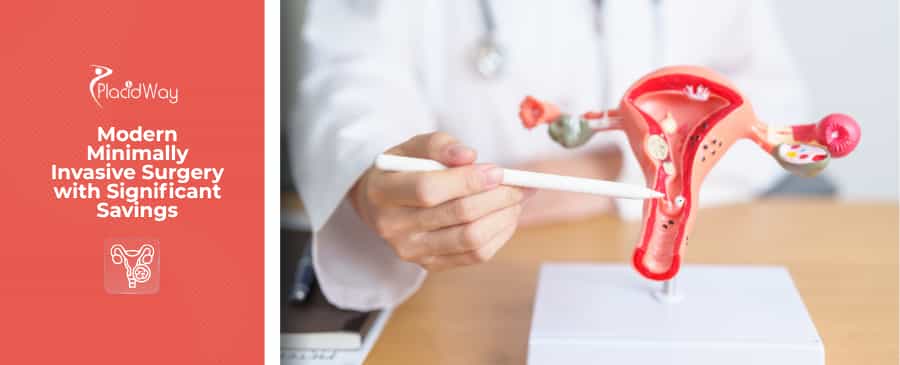
Living with severe pelvic pain, relentless endometriosis, massive fibroids, or uncontrollable bleeding is exhausting enough. You spend days curled up with heating pads, canceling plans, and feeling like your body has betrayed you. When your doctor finally suggests uterus removal as the best path to reclaim your life, you feel a brief wave of relief—until you see the estimated medical bill. Add the anxiety of navigating high deductibles, insurance denials, and the broken US healthcare system, and that relief quickly turns to panic.
A standard minimally invasive gynecological procedure in the United States can easily cost $20,000 to $35,000 out-of-pocket if your insurance deems it "elective" or if you have a sky-high deductible. For many women, that financial burden is impossible. So, you start exploring healthcare abroad. You wonder, exactly how much does a laparoscopic hysterectomy cost in Mexico for American patients in 2026? More importantly, is it safe to have major surgery in another country? Will you be cared for? Will you regret it? I understand those fears perfectly. This guide is written to give you honest, thoroughly researched, and compassionate answers so you can make the best choice for your health and your wallet.
Quick Facts: Hysterectomy in the US vs. Mexico
What Exactly Is a Laparoscopic Hysterectomy and How Does It Work?
If you picture a hysterectomy and imagine a massive scar across your stomach and weeks stuck in bed, you are thinking of a traditional open abdominal surgery. Medical technology has moved far beyond that. Laparoscopic surgery is the modern, gold-standard approach.
Here is step-by-step how your surgical team will perform the procedure:
- Anesthesia: You are placed under general anesthesia, meaning you are completely asleep and feeling no pain.
- Tiny Incisions: The surgeon makes 3 or 4 small incisions (about half an inch each) in your abdomen, usually near the belly button and hip bones.
- Inflation and Visualization: Harmless carbon dioxide gas is pumped into your abdomen to create space. A laparoscope (a thin tube with a high-definition camera) is inserted, broadcasting a magnified view of your pelvic organs onto a surgical monitor.
- Detachment: Using specialized, tiny surgical instruments, the surgeon carefully cuts the uterus away from the surrounding ligaments, blood vessels, and fallopian tubes.
- Removal: The uterus is removed either through the vagina (laparoscopically assisted vaginal hysterectomy) or divided into smaller pieces and removed through the tiny abdominal incisions. The incisions are then closed with dissolvable stitches or surgical glue.
The beauty of this method is the minimal trauma to your abdominal wall. It drastically reduces post-operative pain and significantly cuts down your recovery timeline.
Why Choose a Laparoscopic Hysterectomy Over Alternative Methods?
When you sit down for your consultation, your doctor might mention a few ways to remove the uterus. Here is why the laparoscopic route is overwhelmingly preferred for eligible patients:
- Dramatically shorter recovery: While an open abdominal procedure requires 6 to 8 weeks of strict downtime, laparoscopic patients are often back to normal, non-strenuous daily activities within 2 to 4 weeks.
- Minimal scarring: You are left with three or four tiny marks that often fade into near invisibility, rather than a 5-to-7-inch horizontal or vertical scar.
- Lower risk of infection: Because your abdominal cavity is not fully opened and exposed to the air, the chance of developing surgical site infections drops significantly.
- Less time in the hospital: Open surgery often requires 3 to 4 days in a hospital bed. Laparoscopic patients usually stay 1 night, or sometimes just 2 nights in Mexico for precautionary observation.
- Less bleeding and pain: Smaller incisions mean less tissue trauma, which translates directly to less blood loss during surgery and lower requirements for strong narcotic pain medications afterward.
Cost Comparison: How Much Does Gynecological Surgery Abroad Save You?
Cost is the driving factor for medical tourism. If you do not have comprehensive health insurance, or if your insurance company refuses to cover the procedure until you have exhausted years of failed, expensive alternative therapies, the out-of-pocket costs in America are crippling. Let us look at the projected 2026 financial realities.
| Procedure Type | Home Country Price (US) | Destination Price (Mexico) | Savings % |
|---|---|---|---|
| Laparoscopic Hysterectomy | $20,000 - $35,000 | $4,500 - $6,500 | 75% - 80% |
| Vaginal Hysterectomy | $15,000 - $25,000 | $4,000 - $5,500 | 70% - 75% |
| Abdominal Hysterectomy | $25,000 - $40,000+ | $5,000 - $7,000 | 75% - 82% |
| Robotic-Assisted Hysterectomy | $35,000 - $55,000+ | $8,000 - $12,000 | 75% - 78% |
| Myomectomy (Fibroid Removal) | $15,000 - $25,000 | $3,500 - $5,500 | 70% - 78% |
Why is there such a massive gap in pricing? It is entirely about overhead and administrative bloat, not the quality of your care. In the US, hospitals pass the costs of massive administrative staff, predatory insurance negotiations, malpractice insurance premiums, and high real estate costs directly to the patient. In Mexico, the cost of living, labor costs, and administrative burdens are vastly lower. The medical supplies the anesthesia, the mesh, the sutures, the laparoscopic cameras cost virtually the same in both countries. You are simply no longer paying the US system's bloated markup.
Are Hospitals in Mexico Safe for a Hysterectomy?
This is the hardest part for most women to overcome. You are trusting a foreign hospital with your internal organs. It feels incredibly vulnerable. Let us strip away the stigma and look at the objective facts comparing quality metrics between top-tier private Mexican hospitals and standard US hospitals.
| Quality Metric | Home Country (US) | Destination (Mexico) | Notes |
|---|---|---|---|
| Surgical Equipment | Karl Storz, Stryker, Olympus | Karl Storz, Stryker, Olympus | Private Mexican hospitals use the exact same imported US/German equipment. |
| Hospital Accreditation | Joint Commission (JCAHO) | JCI / CSG Certified | JCI is the global gold standard for hospital safety. |
| Infection Rates | Low (approx. 1-3%) | Low (approx. 1-3%) | Identical sterilization protocols are enforced. |
| Surgeon Training | Board Certified (ABOG) | Board Certified (Mexican Council), often US Fellowships | Top tourism surgeons undergo rigorous international training. |
| Nursing Ratios | Often 1 nurse to 4-6 patients | Often 1 nurse to 1-2 patients | Lower labor costs mean more attentive post-op care. |
To ensure you have a safe and positive experience, pay attention to these details:
- Verify the Hospital: Only look at private hospitals that cater to medical tourists. Public healthcare in Mexico is not designed for international patients. Look for the JCI (Joint Commission International) seal.
- Review the Doctor's Credentials: Ensure your surgeon is a board-certified gynecologist. Many leading doctors in Mexico attended medical school locally but completed fellowships in the US or Europe.
- Look for Transparency: Reputable coordinators will happily share the surgeon's CV, hospital photos, and connect you with past US patients.
- Language is rarely an issue: Private hospitals catering to Americans employ bilingual doctors, nurses, and dedicated patient coordinators to guide you.
The key to medical tourism success is simply vetting your provider properly something you should do whether your surgery is happening in Ohio or Cancun.
What is the Recovery Timeline for a Hysterectomy in Mexico?
A medical trip is a little different than surgery at home. You need to plan your logistics carefully so you heal safely before boarding a plane.
- Phase 1: Pre-Op & Surgery (Days 1-3): You will arrive in Mexico, undergo pre-surgery bloodwork, meet your surgeon in person, and have the procedure. You will spend 1 to 2 nights recovering in a private hospital suite under 24/7 nursing care.
- Phase 2: Local Recovery (Days 4-10): You will be discharged to a comfortable local hotel. Your patient coordinator will organize transport. During this week, you rest, take short walks to prevent blood clots, and have a final post-op checkup where your doctor clears you to fly.
- Phase 3: Traveling Home (Day 11-14): You board your flight. You must arrange for a wheelchair at the airport—you cannot carry luggage or walk long distances yet.
- Phase 4: Final Healing (Weeks 3-6): Back home, you slowly return to work (if a desk job) and normal life. No heavy lifting, no intense exercise, and nothing in the vagina for at least 6 weeks.
Crucial Considerations for Your Trip:
- Bring a Companion: Do not do this alone. You need someone to lift your suitcase, get you water, and provide emotional support during those first vulnerable days.
- Secure US Follow-up: Talk to your local primary care doctor or gynecologist before you leave. Ensure they are willing to see you for a standard 4-week post-op check.
- Travel Comfort: Pack loose, soft dresses or sweatpants with zero restrictive waistbands. Your abdomen will be swollen and tender.
- Surgical Menopause: If your ovaries are removed, ask your Mexican surgeon about initiating hormone replacement therapy (HRT) before you travel home.
Who is a Good Candidate for a Laparoscopic Hysterectomy Abroad?
Medical tourism is an amazing tool, but it is not the right fit for every single patient. Your safety has to come first.
You are likely a great candidate if you:
- Suffer from severe endometriosis, adenomyosis, or persistent pelvic pain.
- Have benign (non-cancerous) uterine fibroids causing heavy bleeding.
- Have exhausted conservative treatments (IUDs, birth control, ablations) with no relief.
- Have a BMI (Body Mass Index) under 35-40 (criteria vary by surgeon, but severe obesity increases anesthesia risks).
- Have a flexible schedule that allows you to stay in Mexico for up to 14 days.
- Have gathered your recent pelvic ultrasounds and pap smear results for the foreign surgeon to review.
You may need to reconsider traveling abroad if you:
- Have active, invasive gynecologic cancer: Oncology care requires complex, long-term team management and immediate interventions that are difficult to coordinate across borders.
- Have an extremely enlarged uterus: If your uterus is the size of a 5-month pregnancy or larger due to massive fibroids, a laparoscopic approach might not be physically possible, requiring open surgery instead.
- Have severe cardiopulmonary issues: Heart disease or severe lung conditions make general anesthesia riskier, meaning you should stay close to your home support system.
- Have multiple previous abdominal surgeries: Extensive scar tissue (adhesions) can make laparoscopic entry dangerous.
- Lack a support person to travel with you: Recovering from major organ removal alone in a hotel room is mentally and physically daunting.
If you check the boxes for a great candidate, your next step is to request a virtual consultation. Send your ultrasounds to a reputable medical tourism coordinator and let a board-certified Mexican surgeon evaluate your specific case.
Frequently Asked Questions
When you are preparing to cross borders for a major life-improving surgery, it is natural to have a barrage of questions. We have compiled the most common concerns American patients have regarding the cost, logistics, and realities of a hysterectomy in Mexico.
How much does a laparoscopic hysterectomy cost in Mexico for American patients in 2026?
In 2026, a laparoscopic hysterectomy in Mexico costs between $4,500 and $6,500. This is a complete package that typically includes the surgeon's fees, anesthesia, a 1-to-2-night hospital stay, and basic pre-op testing, saving you 70% to 80% compared to US prices.
Are hospitals in Mexico safe for a hysterectomy?
Yes, when you choose JCI-accredited or CSG-certified hospitals. These facilities follow the exact same international safety and sterilization protocols as US hospitals, using identical laparoscopic equipment from brands like Karl Storz and Stryker.
What is the recovery time for a laparoscopic hysterectomy in Mexico?
You will stay in the hospital for 1 to 2 nights. Most patients need to rest at a local Mexican hotel for 7 to 10 days before their surgeon clears them to fly home. Full internal healing and return to normal vigorous activity takes 4 to 6 weeks.
What happens if I experience complications after returning home?
Severe complications are rare (under 5%). However, before traveling, you should secure a local gynecologist or primary care doctor in the US willing to handle routine post-op checks. Your Mexican surgeon will provide all operative reports translated into English to ensure a smooth transition of care.
Will I go into menopause after my hysterectomy in Mexico?
Only if your ovaries are removed (an oophorectomy) along with your uterus. If you keep your ovaries, you will not experience surgical menopause, though your periods will stop. This is a crucial discussion to have during your consultation to decide if hormone therapy will be needed.
Which Mexican cities are best for gynecological surgery?
Tijuana, Cancun, Monterrey, and Guadalajara are top destinations. Tijuana and Monterrey are favored for their immediate proximity to the US border, while Cancun offers a highly developed medical tourism infrastructure with direct flights from most major US airports.
How do I verify the credentials of a Mexican gynecological surgeon?
Look for surgeons who are board-certified by the Mexican Council of Gynecology and Obstetrics. Many top surgeons also hold memberships with the American College of Obstetricians and Gynecologists (ACOG) and have completed fellowships or specialized training in the US or Europe.
Is it safe to travel to Mexico for a hysterectomy alone?
While some women do travel alone, it is highly recommended to bring a companion. You will be restricted from lifting anything over 10 pounds and may feel fatigued or groggy during the first few days of recovery. Having someone to carry luggage and help you is vital.
How many trips to Mexico will I need for this surgery?
You only need one trip. You will typically arrive 1 to 2 days before surgery for pre-op bloodwork and a final in-person consultation, have the surgery, stay for a 7-to-10-day recovery period, and then fly home. The total trip duration is usually 10 to 14 days.
Can I use my US health insurance for a hysterectomy in Mexico?
Standard US health insurance typically does not cover planned surgeries abroad. Some employer-sponsored medical tourism policies might, but most patients pay entirely out-of-pocket. Because the costs are so low, paying cash in Mexico is often cheaper than meeting a high US deductible.
Are financing options available for medical tourism in Mexico?
Yes, several specialized medical tourism financing companies offer personal loans for treatments abroad. Additionally, many patients use medical credit cards, personal savings, or home equity. Some larger Mexican hospital networks also accept direct payment plans for international patients.
Ready to Reclaim Your Quality of Life?
References
- American College of Obstetricians and Gynecologists (ACOG). "Hysterectomy FAQ."
- PlacidWay Medical Tourism. "Hysterectomy Surgery in Mexico: A Comprehensive Guide."
.png)



.png)


.png)
.png)




.jpg)
.png)

.jpg)












Share this listing