


If your jawline has softened, your cheeks have descended, or loose skin around the lower face and neck is making you consider surgery, Thailand medical tourism may already be on your shortlist. Facelift surgery in Thailand is available through private hospitals and specialist plastic-surgery practices that treat both local and international patients, but choosing safely requires more than comparing photographs and package prices.
There is no reliable official national average price for facelift surgery in Thailand, so a personalized written quote is more useful than a single headline figure. Before you book, verify the surgeon through the Medical Council of Thailand, look for appropriate specialist plastic-surgery credentials, and check whether the hospital or surgical facility is properly licensed and, where applicable, accredited through Thailand's Healthcare Accreditation Institute (HAI).

Quick Summary:
- Thailand facelift cost: an official national average is not available from the non-commercial sources used for this guide. Ask for an itemized USD quote covering surgeon, anesthesia, operating room, hospital stay and follow-up.
- Useful comparison: the American Society of Plastic Surgeons reports an average U.S. facelift surgeon fee of $11,395; it excludes anesthesia, operating-room and other related expenses.
- Recovery: the NHS advises that facelift recovery commonly takes about 2–4 weeks, while bruising and final tissue settling can last longer.
- Surgeon verification: check the physician's medical-license details using the Medical Council of Thailand's public verification service and confirm specialist plastic-surgery training.
- Facility quality: confirm Thai healthcare-facility licensing and consider Healthcare Accreditation Institute accreditation where applicable.
- Latest finalized Thailand statistics: the ISAPS survey covering procedures performed in 2024 estimated 9,025 facelifts in Thailand. The 2025 survey results were still being analyzed for publication as of August 2026.
- Travel caution: surgery and long-distance travel can both increase blood-clot risk. Your surgeon should decide when you are medically ready to fly.
What Facelift Surgery in Thailand Actually Treats?
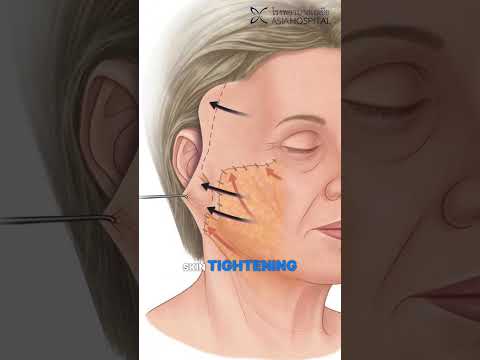
A facelift, or rhytidectomy, is a surgical procedure used to improve visible aging in the face by repositioning deeper tissues and redraping excess skin. It is most useful when the main concern is tissue descent rather than surface texture alone. Common reasons people consider the operation include jowling, loss of jawline definition, lower-face laxity and loose skin that has developed with aging, genetics, sun exposure or weight changes. Patients who are comparing providers can review facelift clinics in Thailand while researching facility credentials and treatment options.
A facelift does not treat every sign of facial aging. Fine lines, pigmentation, skin texture, upper-eyelid changes, brow position and facial volume loss may require different treatments. For that reason, a surgeon should first identify what is causing the appearance you want to change rather than simply recommending the procedure name you arrived with.
Modern facelift surgery may involve work on the skin and deeper supporting tissues, including the superficial musculoaponeurotic system, often shortened to SMAS. The exact dissection and lifting method varies by technique, anatomy and surgeon training. More extensive surgery is not automatically better; the operation should be matched to your facial structure and goals.
| Procedure | Main Area Addressed | When It May Be Discussed? | Important Limitation |
|---|---|---|---|
| Mini or limited facelift | Lower face and jawline | Milder lower-face laxity in a suitable patient | May not adequately correct significant neck laxity |
| Full facelift | Cheeks, lower face and jawline | More established tissue descent | Does not automatically treat eyelids, brow or skin texture |
| Face and neck lift | Lower face, jawline and neck | When facial and neck laxity occur together | Usually involves broader surgery and recovery planning |
| Deep-plane facelift | Deeper facial tissue planes | When the surgeon believes deeper-plane repositioning suits the anatomy | The label alone does not prove better results or greater safety |
Who May Be a Suitable Candidate for a Facelift in Thailand?
A suitable facelift candidate is usually an adult with meaningful facial or neck laxity, realistic expectations and health that permits elective surgery. There is no single correct age for a facelift. A surgeon should evaluate skin quality, tissue descent, facial proportions, previous procedures, general health and your reasons for wanting surgery.
Medical suitability matters even more when you are traveling abroad. A condition that increases bleeding, anesthesia, clotting or wound-healing risk may change the operation, require further testing, or make elective surgery inappropriate. You should disclose medical conditions, prior operations, allergies, medications, supplements, smoking or nicotine exposure and any history of abnormal bleeding or blood clots.
Facial Factors a Surgeon May Assess
- Jowling and jawline definition
- Cheek and midface descent
- Loose facial or neck skin
- Skin elasticity and thickness
- Facial asymmetry
- Previous scars, fillers or facial operations
Health Factors That May Affect Planning
- Cardiovascular and respiratory health
- Bleeding or clotting history
- Diabetes and wound-healing risk
- Smoking or nicotine exposure
- Prescription medicines and supplements
- Ability to tolerate anesthesia and recovery
Facelift Techniques You May Hear About in Thailand
Patients researching Thailand often encounter terms such as mini facelift, SMAS facelift, deep-plane facelift, lower facelift and face-and-neck lift. These labels can be useful, but they are not standardized consumer products. Two surgeons may describe related operations differently, and the same marketing term may not mean the same surgical dissection in every practice.
A traditional facelift typically uses incisions around the hairline and ear so the surgeon can reposition tissue and redrape skin. A SMAS-based procedure works with the deeper supporting layer instead of relying only on skin tension. A deep-plane approach uses a particular deeper dissection plane. Neck lifting may address loose skin and deeper neck structures when needed. Your surgeon should explain incision location, tissue layers, scar placement and whether the neck is included.
| Question | Why It Matters? | What a Useful Answer Should Explain? |
|---|---|---|
| What exactly will be lifted? | The operation should match your anatomy. | Skin, deeper tissues, neck structures and areas not being treated. |
| Where will the scars be? | Incision position affects scar visibility and aftercare. | Hairline, ear contours and any neck incision, if planned. |
| Will my neck be treated? | Lower-face improvement may look incomplete when neck laxity is substantial. | Whether the neck is included and why. |
| Why this technique? | Technique should follow anatomy, not advertising. | Expected anatomical benefit, limitations and relevant risks. |
How Much Does Facelift Surgery in Thailand Cost?
There is no official national facelift price list for Thailand in the trusted non-commercial sources used for this guide. Private hospitals and surgeons set their own fees, and the final amount can vary with the procedure, surgeon, operating facility, anesthesia, medical testing, hospital stay and aftercare. For that reason, the safest way to budget is to request a written, itemized quote after a clinical review.
For a marketplace view of current listed fees, you can compare facelift prices in Thailand on PlacidWay, then confirm every inclusion directly with the provider. For international comparison, the American Society of Plastic Surgeons currently reports an average U.S. facelift surgeon fee of $11,395. ASPS specifically states that this is not the total treatment price because anesthesia, operating-room facilities and other related expenses are excluded. It should therefore be used only as a U.S. professional-fee benchmark, not as a direct package comparison with Thailand.
Patients traveling from Australia, China or other countries should avoid comparing an all-inclusive Thai quote with a surgeon-only price at home. Ask every provider for the same categories so that you can see what is truly included. Currency conversion, additional nights, travel changes and care after returning home can materially change your total spend.
| Cost Component | What to Confirm in Writing? | Potential Extra Cost |
|---|---|---|
| Surgeon's professional fee | Named surgeon and exact procedure | Additional procedures or revision surgery |
| Anesthesia | Type of anesthesia and who administers it | Longer operating time or additional monitoring |
| Operating facility | Hospital or surgical-facility charge | Unexpected additional facility time |
| Preoperative assessment | Consultation, laboratory tests and other testing if indicated | Specialist review or additional investigations |
| Hospital stay | Number and type of nights included | Extra nights if monitoring is extended |
| Postoperative follow-up | Number of visits and emergency contact arrangements | Unplanned treatment or care after returning home |
| Travel and accommodation | Length of stay recommended by the surgical team | Flight changes, companion costs and extended hotel stay |
How to Choose a Hospital for Facelift Surgery in Thailand?
Your operating facility should be assessed separately from the surgeon. A sophisticated website, international coordinator or hotel transfer service does not tell you whether the facility has safe anesthesia processes, appropriate staffing, emergency capability and systems for managing postoperative complications.
Thailand's Healthcare Accreditation Institute (Public Organization) is responsible for setting standards and certifying the quality of hospital services through the national healthcare accreditation system. HAI accreditation can be a useful quality signal where applicable, but it does not replace confirmation that the specific facility is appropriately licensed and that the surgical team is qualified for your procedure.
International accreditation can be considered as an additional indicator when genuinely relevant, but it is not mandatory proof of safety. Many facilities operate within national regulatory systems without international accreditation. The more important question is whether the place where you will actually have surgery has appropriate authorization, trained staff, infection-control processes and a clear plan for emergencies.
| Hospital / Facility Check | What to Request? | Why It Matters? |
|---|---|---|
| Thai facility license | Facility name and current licensing information | Confirms surgery is being performed in an authorized healthcare setting |
| HAI status | Current HAI accreditation information where applicable | Provides a national quality-assurance signal |
| Emergency response | On-site capability or documented hospital transfer pathway | Complications such as bleeding can require rapid treatment |
| Anesthesia team | Name or qualification of the anesthesia professional | Facelift safety includes anesthesia safety |
| After-hours contact | A number answered outside routine clinic hours | Some postoperative problems begin after discharge |
How to Verify a Facelift Surgeon in Thailand?
Start with medical-license verification. The Medical Council of Thailand provides an English-language public service that allows patients to check a doctor's name and medical-license number. This is a basic credential check and should be completed before you pay a large deposit or arrange travel.
Next, look for specialist training in plastic and reconstructive surgery. The Society of Plastic and Reconstructive Surgeons of Thailand (ThPRS) maintains professional information and a member search. Membership alone should not be treated as a guarantee of a particular result, but it can help you investigate whether a surgeon has recognized specialist training and professional affiliation.
Procedure-specific experience also matters. If you want to see how an individual provider presents a treatment offer, this facelift package in Bangkok by Dr. Siripong Plastic Surgery is one example to compare against the credential and inclusion checks in this guide. A surgeon may be properly licensed and appropriately trained but perform relatively few facelifts. Ask how often the surgeon performs the specific technique being proposed, how revisions are handled, what complication pathway is used and who manages your care when the surgeon is unavailable.
Facelift Surgeon Verification Checklist
- Verify the doctor's license through the Medical Council of Thailand.
- Confirm specialist plastic and reconstructive surgery training where applicable.
- Check ThPRS or another relevant professional-society listing as an additional credential signal.
- Ask how frequently the surgeon performs facelifts and the proposed technique.
- Review the surgeon's own before-and-after cases with appropriate patient consent.
- Ask for the revision policy and complication-management process in writing.
- Confirm who provides care outside normal clinic hours.
- Confirm where surgery will actually take place.
- Ask how follow-up will continue after you return home.
- Request an itemized quote instead of relying on a single package total.
Facelift Risks and Safety Questions to Discuss in Thailand
Facelift surgery has recognized risks even when it is performed by an experienced plastic surgeon in an appropriate facility. The American Society of Plastic Surgeons lists potential complications including anesthesia problems, bleeding, deep vein thrombosis, cardiac or pulmonary complications, facial nerve injury, fluid accumulation, infection, numbness or other sensory changes, poor wound healing, skin loss, prolonged swelling, irregularities and hair loss near incisions.
Your personal risk is not determined by the country alone. It depends on your medical history, nicotine exposure, medications, anatomy, the extent of surgery, anesthesia, the operating environment and how complications are recognized and treated. A careful preoperative assessment should identify risks that can be reduced and risks that may make elective surgery unsuitable.
International patients should ask what happens if a problem appears after discharge or after they return home. The answer should identify who to contact, where urgent evaluation would occur, what records will be provided and whether additional treatment costs are covered or excluded.
| Potential Problem | Why It Matters? | Practical Safety Question |
|---|---|---|
| Bleeding or hematoma | A blood collection can create pressure and may require urgent treatment. | Where would I be treated if rapid swelling occurs after discharge? |
| Infection | Infection can interfere with healing and may require treatment. | Who reviews worsening redness, drainage, fever or pain? |
| Nerve-related symptoms | Sensation or facial movement can be affected. | Which symptoms are expected, and which require urgent review? |
| Poor wound healing or skin loss | Healing problems can affect scars and skin viability. | How are wound problems managed before and after I leave Thailand? |
| Blood clots | Surgery and prolonged travel can both contribute to clot risk. | What is my individual clot risk, and when am I medically ready to fly? |
What Happens Before and During Facelift Surgery in Thailand?
Your treatment pathway should begin with a medical and surgical assessment rather than payment alone. The surgeon should review your concerns, examine facial and neck anatomy, discuss previous procedures and assess whether your health makes elective surgery reasonable. Preoperative testing varies according to age, health, anesthesia plan and hospital requirements.
On the day of surgery, the team should reconfirm the planned operation, anesthesia approach and consent. Facelift incisions are commonly placed around the hairline and natural ear contours, although exact placement differs by technique. The surgeon then works on the planned tissue layers, removes or redrapes excess skin as appropriate and closes the incisions. Drains or dressings may be used in some cases.
The length of surgery and whether an overnight stay is required depend on the procedure and patient. A combined facelift, neck lift, eyelid operation or fat grafting can change operating time and recovery. Ask specifically whether the quoted procedure includes the neck or any additional facial surgery so you understand what you are consenting to.
- Clinical consultation: anatomy, goals, medical history and suitability are reviewed.
- Preoperative assessment: testing is arranged when clinically indicated.
- Surgical planning: technique, incisions, anesthesia and expected limitations are discussed.
- Operation: the planned tissues are repositioned and incisions are closed.
- Immediate recovery: monitoring focuses on bleeding, pain, airway, circulation and anesthesia recovery.
- Follow-up: wounds, swelling and overall recovery are assessed before travel clearance.
Facelift Recovery in Thailand: What to Expect Before Flying Home
The NHS advises that it takes about 2–4 weeks to recover from a facelift and that bruising is usually visible for at least two weeks. It can take much longer for swelling, scars and deeper tissues to settle fully. Your appearance at two weeks is not the same as your final result.
Early recovery commonly involves swelling, tightness, bruising and altered sensation. Dressings and, in some cases, drains may be used. Your surgeon should provide specific wound-care instructions, activity restrictions, warning signs and follow-up dates. These instructions should take priority over generic timelines found online.
For additional destination-specific planning, you can also review PlacidWay's facelift in Thailand experience guide. Do not build sightseeing or strenuous travel into the first part of your postoperative stay. Rest, short appropriate movement and access to your surgical team are more important than completing a tourism itinerary. Plan flexible flights and accommodation in case the surgeon recommends additional monitoring.
| Timeframe | Biological / Clinical Process | Possible Sensation | Activity Level | Action Required |
|---|---|---|---|---|
| First 24–72 hours | Early inflammation and monitoring for postoperative complications | Swelling, tightness, tenderness and fatigue | Rest with gentle movement as instructed | Follow discharge guidance and use emergency contacts for warning signs |
| Days 4–14 | Bruising and swelling gradually begin to settle | Numbness, firmness or asymmetry from swelling may persist | Light daily activity when approved | Attend scheduled surgical reviews |
| Weeks 2–4 | Visible recovery progresses but healing is still active | Residual swelling, tightness or altered sensation | Gradual return toward routine activity when cleared | Follow individual restrictions and travel advice |
| 1–3 months | Soft tissues continue settling and scars mature | Subtle numbness or firmness may remain | Increasingly normal activity when medically approved | Continue remote or local follow-up as arranged |
| Several months | Longer-term scar and tissue maturation | Gradual normalization | Usually close to usual routine | Discuss persistent or worsening symptoms instead of assuming they are normal |
Who Travels to Thailand for Cosmetic Surgery?
The latest finalized country-level data available from the International Society of Aesthetic Plastic Surgery covers procedures performed in 2024 and was released in 2025. ISAPS states that its survey covering procedures performed in 2025 has closed and the data is being analyzed for publication. Therefore, 2024 remains the newest finalized Thailand dataset available as of August 2026.
The 2024 ISAPS survey estimated 197,505 aesthetic procedures in Thailand, including 146,585 surgical procedures. Face and head surgery accounted for 90,440 procedures, including an estimated 9,025 facelifts, 29,260 eyelid surgeries, 20,948 rhinoplasties, 6,840 facial fat-grafting procedures and 5,130 neck lifts. These are survey estimates rather than a national government registry, so they should not be interpreted as exact procedure counts.
For medical tourism, surveyed Thai practices reported a median of 10% and an average of 20.1% of patients coming from other locations. The three most frequently cited origins were Australia, China and Cambodia. This helps explain the regional patient mix, but it does not mean that every Thai hospital sees the same nationalities or that every international patient travels for facelift surgery.
ISAPS also reported that, globally, 83.2% of facelifts in its 2024 dataset were performed on women and 16.8% on men. A current Thailand-specific age and gender breakdown for facelift patients was not published in the country table, so those demographics should not be guessed.
Selected Face and Head Procedures in Thailand
Source note: ISAPS Global Survey 2024, released in 2025. The chart compares selected procedure categories; it is not a time-series trend.
Distribution of Selected Thailand Facial Procedure Volumes
Interpretation: this histogram groups the six procedure categories shown in the line graph. It should not be used to infer quality, safety or an individual's likelihood of choosing a procedure.
| Patient / Procedure Indicator | Latest Finalized Finding | How to Read It? |
|---|---|---|
| Facelifts in Thailand | 9,025 estimated procedures | Shows procedure activity, not individual provider quality |
| Thai cosmetic procedures performed in hospitals | 55.0% | Hospital settings were common among surveyed Thai practices |
| Average patients attending from other locations | 20.1% | Reflects international participation among survey respondents |
| Frequently cited origins for Thailand | Australia, China, Cambodia | Describes broader cosmetic medical-tourism patterns, not facelift-only travel |
| Global facelift gender distribution | 83.2% women; 16.8% men | Global data only; Thailand-specific facelift gender data was not published |
Travel Planning for Facelift Surgery in Thailand
Travel changes the risk and recovery plan. You need enough time in Thailand for an in-person assessment, surgery, early postoperative monitoring and whatever follow-up your surgeon considers necessary before departure. Avoid a schedule that requires you to fly home regardless of your medical condition.
The CDC notes that air travel and surgery independently increase the risk of blood clots, including deep vein thrombosis and pulmonary embolism. Long travel can require prolonged sitting during a period when surgery has already increased clotting risk. Your individual risk depends on the operation and factors such as previous blood clots, clotting disorders, age, obesity, cancer, pregnancy or hormone use.
CDC medical-tourism guidance advises allowing adequate time between surgery and flying, and older CDC traveler guidance has suggested delaying air travel for roughly 10–14 days after major surgery in relevant circumstances. A facelift may or may not fit the same risk category for every patient, so do not treat a generic number as personal clearance. Your treating clinician should decide when you are fit to travel.
Before You Fly to Thailand
Share your medical history, clarify the consultation plan, check entry requirements for your nationality, understand insurance exclusions and avoid scheduling surgery without adequate clinical review.
During Your Recovery
Stay close enough to the surgical team for planned reviews, follow activity restrictions and keep the clinic's urgent contact details readily available.
Before Returning Home
Ask for travel clearance, an operative summary, discharge instructions, test results when relevant, emergency advice and a clear follow-up plan for your home country.
Questions to Ask Before Booking a Facelift in Thailand
A useful consultation should leave you knowing who will operate, where surgery will occur, what technique is proposed, why that technique suits you, what the major risks are and how follow-up works after you leave Thailand. If you still know only the package price and hotel details, you do not yet have enough clinical information to make an informed decision.
- What is your Medical Council of Thailand license number, and where can I verify it?
- What specialist training do you have in plastic and reconstructive surgery?
- How often do you perform the facelift technique recommended for me?
- Which facial and neck structures are you planning to treat?
- Where will my incisions be, and what scars should I expect?
- Where will the operation take place, and what is the facility's licensing or accreditation status?
- Who administers and monitors my anesthesia?
- Which complications are most relevant to my health history?
- How many postoperative visits are included before I leave Thailand?
- Who do I contact at night or on weekends if I develop a problem?
- When will you decide that I am medically ready to fly?
- What happens if I need treatment after I return home?
- What is your revision policy?
- What exactly is included and excluded from my written quote?
Frequently Asked Questions
How much does facelift surgery in Thailand cost?
A standardized official national average was not available in the non-commercial sources used for this guide. Prices vary by technique, surgeon, anesthesia, facility, hospital stay and included aftercare. Request a personalized, itemized quote in USD before comparing providers.
Is facelift surgery in Thailand safe for international patients?
Safety depends on your health, the surgeon's qualifications, anesthesia, the operating facility and postoperative care. Verify the doctor's Thai medical license, investigate specialist plastic-surgery training, confirm the facility's licensing and understand how complications would be handled.
How can I verify a plastic surgeon in Thailand?
Use the Medical Council of Thailand's public physician-verification service to check medical-license information. You can also investigate specialist plastic-surgery credentials and professional-society membership, including the Society of Plastic and Reconstructive Surgeons of Thailand.
How long does facelift recovery take?
The NHS states that recovery commonly takes about 2–4 weeks, with bruising visible for at least part of that period. Swelling, scar maturation, firmness and sensory changes can continue improving for several months.
How long should I stay in Thailand after a facelift?
There is no universally safe number of days. Your stay should cover early postoperative monitoring and the follow-up visits your surgeon requires. Do not book a fixed departure that prevents you from remaining longer if a complication or recovery concern develops.
Can I fly immediately after facelift surgery in Thailand?
You should not assume that immediate flying is appropriate. The CDC notes that surgery and long-distance travel can both increase blood-clot risk. Your surgeon should assess your recovery and individual risk factors before providing travel clearance.
What is a deep-plane facelift?
A deep-plane facelift is an approach that works within deeper facial tissue planes. It may be appropriate for some patients, but the label does not prove that it is automatically better. Technique selection should depend on anatomy and surgeon expertise.
Should I combine a facelift and neck lift in Thailand?
A surgeon may recommend treating the face and neck together when laxity affects both areas. Combining procedures can improve treatment continuity but can also increase surgical extent, operating time, recovery needs and total cost.
Will a facelift permanently stop facial aging?
No. A facelift can reposition tissues and improve existing signs of facial aging, but your skin and deeper tissues continue to age afterward. Genetics, sun exposure, smoking, weight changes and skin quality can affect long-term appearance.
What should a Thailand facelift quote include?
Ask whether the quote includes the surgeon, anesthesia, operating facility, preoperative testing, hospital stay, postoperative dressings and planned follow-up. Travel, accommodation, additional nights, complication treatment and revision surgery should be listed separately when excluded.
Is a mini facelift better for a younger patient?
Age alone should not determine the operation. A limited facelift may be suitable when laxity is mild and localized, but a surgeon should base the recommendation on your anatomy, skin quality and treatment goals rather than your age or a shorter recovery claim.
What records should I take home after facelift surgery in Thailand?
Request an operative summary, discharge instructions, relevant test results, procedure details, postoperative recommendations, emergency contact information and follow-up plan. These records can help a clinician at home understand what was done if you later need care.
Compare Facelift Options in Thailand With PlacidWay
If you are considering facelift surgery in Thailand, PlacidWay can help you compare providers, understand what is included in treatment quotes, organize the questions you need to ask and request information from clinics. Use those comparisons as part of your research, then confirm medical suitability and credentials directly with qualified healthcare professionals.
Disclaimer: This information is for educational purposes only and does not replace professional medical advice. Always consult a qualified healthcare provider before making medical decisions.
References
- Doctor License Verification – Medical Council of Thailand
- Healthcare Accreditation Institute (Public Organization) – Thailand
- Find a Member – Society of Plastic and Reconstructive Surgeons of Thailand
- Facelift (Rhytidectomy) – NHS
- Facelift Risks and Safety – American Society of Plastic Surgeons
- Facelift Cost – American Society of Plastic Surgeons
- Global Survey 2024 – International Society of Aesthetic Plastic Surgery
- Medical Tourism – CDC Yellow Book
.png)
.png)
.png)




.png)
.jpg)
.png)
.png)


.jpg)
.jpg)
.png)
.jpg)








Share this listing