
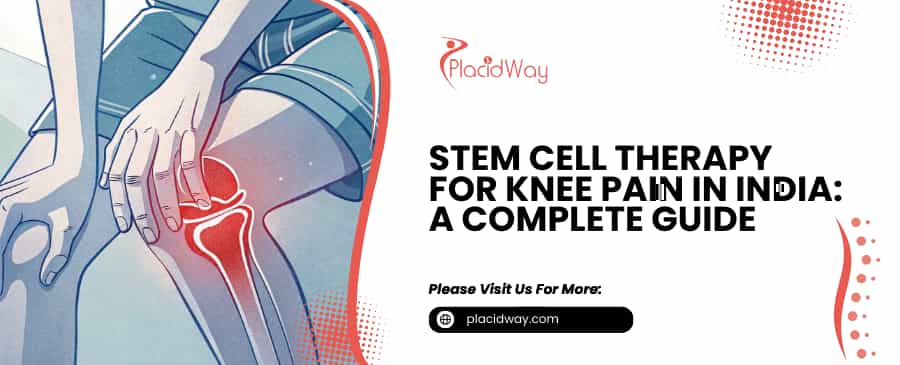
For millions suffering from chronic osteoarthritis, the promise of a pain-free life often feels out of reach due to the high risks of surgery or the prohibitive costs of regenerative medicine in the West. Stem cell therapy for knee pain in India has emerged as a globally recognized solution, offering advanced biological treatments that repair damaged cartilage without the downtime of total knee replacement. With world-class biotechnology labs and JCI-accredited hospitals in cities like Delhi and Mumbai, India combines affordability with cutting-edge medical science.
International patients are increasingly turning to India not just for cost savings, but for the comprehensive care models that integrate orthopedic expertise with regenerative protocols. Whether you are seeking to delay knee replacement surgery or address sports injuries, Indian medical centers provide access to high-potency mesenchymal stem cell (MSC) treatments that are often unavailable or restricted in other jurisdictions.
Key Takeaways: Regenerative Medicine in India
India is transforming the landscape of non-surgical orthopedics. Before you plan your medical trip, here are the essential facts regarding savings and quality:
- Massive Cost Savings: Save 65% to 75% compared to the US, UK, or Australia. A procedure costing $20,000 in New York may cost $4,000 in New Delhi.
- All-Inclusive Packages: Most quotes for international patients include airport transfers, pre-procedure MRI scans, blood work, stem cell harvesting, processing, and post-injection physiotherapy.
- No Wait Lists: Unlike the NHS or Canadian healthcare systems, private hospitals in India offer immediate appointment availability.
- Cost Snapshot:
- India: $3,000 – $6,000 (Both Knees)
- USA: $15,000 – $35,000
- Thailand: $8,000 – $12,000
- Advanced Technology: Leading centers use autologous (your own) cells, processed in sterile, cGMP-certified labs to ensure maximum cell viability and safety.
Why Choose India for Knee Stem Cell Therapy?
Choosing India for regenerative orthopedics is a strategic decision driven by three main factors: affordability, medical expertise, and technological infrastructure. Unlike general medical tourism destinations, India boasts a robust pharmaceutical and biotechnology sector. This local expertise allows hospitals to process stem cells efficiently without relying on expensive third-party imports, reducing the final cost to the patient.
Furthermore, the leading orthopedic surgeons in cities like Bangalore and Hyderabad are often trained in the UK or USA. They understand international protocols and follow strict sterility standards. The hospitals catering to medical tourists are typically accredited by the Joint Commission International (JCI), the gold standard in global healthcare, ensuring that your safety is never compromised.
India is one of the world's largest manufacturers of pharmaceuticals and medical consumables. This domestic production capability significantly lowers the overhead costs for hospitals, savings that are directly passed on to international patients seeking affordable knee surgery in India.
Understanding the Procedure: Biological Knee Repair
Stem cell therapy is not merely a painkiller; it is a regenerative process designed to heal the underlying tissue damage caused by osteoarthritis. In India, the standard of care involves using autologous mesenchymal stem cells (MSCs). "Autologous" means the cells come from your own body, which virtually eliminates the risk of rejection or disease transmission.
Harvesting the Cells
There are two primary sources for these potent cells:
- Bone Marrow Aspiration: A doctor extracts a small amount of bone marrow, typically from the hip bone (iliac crest). This is rich in stem cells that are excellent for cartilage repair.
- Adipose (Fat) Tissue: A mini-liposuction is performed, usually on the abdomen. Fat tissue yields a very high number of stem cells and is often preferred for older patients where bone marrow might be less productive.
Processing and Injection
Once harvested, the tissue is processed in a specialized lab (often onsite) to concentrate the stem cells and growth factors. This concentrated "soup" of healing cells is then injected directly into the knee joint space under fluoroscopic (X-ray) or ultrasound guidance. This ensures precise placement of the cells exactly where the cartilage damage is most severe.
Cost of Stem Cell Knee Therapy: India vs. The World
The cost difference is driven by the lower cost of living, lower wages for support staff, and domestic manufacturing of medical supplies in India, not by a lack of quality. Below is a detailed comparison for a standard bilateral (both knees) stem cell treatment protocol.
| Country | Price Range (USD) | Inclusions | Avg. Stay Required |
|---|---|---|---|
| India | $3,000 - $6,000 | Procedure, MRI, Consultation, Airport Transfer, 3-Day Hotel Stay | 3-5 Days |
| USA | $15,000 - $35,000 | Procedure Only (Consults & Imaging often extra) | Outpatient |
| UK | $10,000 - $18,000 | Procedure Only | Outpatient |
| Mexico | $4,500 - $8,000 | Procedure, Local Transport | 3-4 Days |
| Thailand | $8,000 - $12,000 | Procedure, Hospital Stay (1 night) | 5-7 Days |
| Turkey | $4,000 - $7,000 | Procedure, Hotel (3 nights), Transfers | 4-6 Days |
"The volume of procedures performed in India allows centers to maintain cutting-edge labs at a fraction of the cost per patient. A top regenerative center in Mumbai or Delhi processes thousands of samples annually, ensuring high proficiency and standardized quality control that smaller boutiques in the West cannot match."
Top Destinations for Regenerative Orthopedics
New Delhi (NCR)
The capital region is home to some of the largest private hospital chains in Asia. Stem cell therapy in Delhi is highly accessible due to the massive international airport (IGIA). Clinics here often offer "concierge medicine" services, handling everything from visa invitations to sightseeing tours for accompanying family members.
Mumbai
As the commercial hub, Mumbai attracts top medical talent. Leading JCI-accredited hospitals here are renowned for their advanced research wings and international patient centers. Knee treatment in Mumbai is ideal for patients who want access to pioneers in the field of orthobiologics who often hold dual certifications from western boards.
Bangalore
Known as the Silicon Valley of India, Bangalore is the tech hub for biotechnology. The city hosts numerous standalone regenerative medicine centers that partner with major hospitals. If you are looking for the latest advancements in cartilage cell culture, Bangalore is often the leader in innovation.
Step-by-Step Treatment Journey
- Virtual Consultation: You send your X-rays and MRI reports to the specialist via a secure portal. The doctor reviews your knee degeneration grade (Grades 1-3 are ideal candidates).
- Arrival & Diagnostics: Upon landing in India, you are whisked to the facility for fresh imaging and blood tests to confirm your eligibility and ensure no underlying infections.
- The Procedure (Day 1 or 2):
- Morning: Preparation and local anesthesia.
- Mid-Day: Harvesting of bone marrow or fat tissue.
- Afternoon: Lab processing (takes 2-4 hours).
- Evening: Re-injection of concentrated stem cells into the knee.
- Observation & Discharge: You are observed for a few hours to monitor for any reaction. Most patients return to their hotel the same evening.
- Rehabilitation Session: The next day, a physiotherapist teaches you specific low-impact exercises to stimulate the cells.
- Return Home: You can usually fly back within 3-4 days post-procedure.
Success Rates and Patient Eligibility
The success of knee stem cell therapy is heavily dependent on the severity of the osteoarthritis. Clinical data from Indian registries indicates:
- Grade 1-2 (Mild): 85-90% success rate in pain reduction and cartilage stabilization.
- Grade 3 (Moderate): 70-75% success rate. Many patients delay knee replacement by 5-10 years.
- Grade 4 (Bone-on-Bone): Lower success rate. While it may reduce inflammation, it rarely regrows sufficient cartilage to mechanical obstructions. In these cases, doctors in India might recommend Robotic Knee Replacement instead.
"We always manage expectations. Stem cell therapy aims to turn a painful, stiff knee into a functional one. For patients with early to moderate arthritis, the results can be life-changing, allowing them to return to hiking or golfing within months. However, proper patient selection is the hallmark of a reputable clinic."
Frequently Asked Questions
Is stem cell therapy for knee osteoarthritis legal in India?
Yes, stem cell therapy is permitted in India under specific guidelines set by the ICMR and CDSCO. Most reputable clinics perform 'minimally manipulated' autologous procedures (using your own cells from bone marrow or fat), which are safe and compliant with Indian medical regulations.
How much does stem cell knee treatment cost in India?
The average cost of stem cell therapy for knees in India ranges from $3,000 to $6,000 USD for both knees. This is significantly lower than the $15,000 to $35,000 typically charged in the US or Europe for similar protocols.
What is the success rate of knee stem cell therapy in India?
Clinical data from top Indian institutes suggests a success rate of 70-85% for patients with Grade 1-3 Osteoarthritis. Most patients report significant pain reduction and improved mobility within 3 to 6 months post-treatment.
How long is the recovery time after the procedure?
This is a daycare procedure with minimal downtime. Patients can usually walk immediately after the injection but should avoid strenuous impact activities for 2-4 weeks. Full benefits are typically felt 12 weeks post-procedure.
Can stem cell therapy regrow knee cartilage completely?
While stem cells can stimulate cartilage regeneration and repair micro-defects, they cannot completely regrow a fully worn-out cartilage layer in Grade 4 arthritis. The goal is to reduce inflammation, heal tissue, and delay the need for total knee replacement.
Are there any side effects to stem cell knee injections?
Since the procedure uses the patient's own biological material (autologous), the risk of allergic reaction or rejection is near zero. Minor side effects may include temporary swelling or stiffness at the injection site for a few days.
How many stem cell sessions are required for knee pain?
Most patients require only one intensive session involving cell harvesting and injection. However, some protocols may recommend a follow-up 'booster' injection of PRP (Platelet-Rich Plasma) 4-6 weeks later to enhance results.
Which city in India is best for stem cell treatment?
Delhi, Mumbai, and Bangalore are the top destinations. These cities house JCI-accredited hospitals and specialized regenerative medicine centers with advanced labs for cell processing.
Is the procedure covered by international insurance?
Generally, stem cell therapy is considered an elective or experimental procedure by many Western insurance providers and is not covered. However, the low cost in India often makes paying out-of-pocket more affordable than deductibles in the US.
Ready to Restore Your Mobility?
Don't let knee pain limit your life or your finances. PlacidWay partners with the top JCI-accredited hospitals and regenerative centers in India to bring you world-class stem cell therapy packages tailored for international patients.
Get a free, no-obligation quote today and speak directly with our medical care team to plan your journey to recovery.
Get a Free Quote for Surgery in India


.png)





-(5).png)
.png)





.jpg)
.jpg)
.jpg)
.jpg)








Share this listing