



A brighter, more even smile can carry a five-figure price tag in the United States. Dental veneers in Mexico may reduce the treatment bill substantially, but the smart decision is not simply choosing the lowest quote. You need the right material, conservative tooth preparation, a licensed Mexican dentist with a verifiable cédula profesional, and a clinic that follows Mexican oral-health and infection-control requirements.
Current market estimates commonly place ceramic veneers in parts of Mexico around $250–$550 per tooth, while comparable private U.S. quotes can be several times higher. Your actual savings depend on the number of teeth, diagnostics, laboratory work, travel, aftercare, and whether the proposed treatment is truly veneers rather than full crowns.
Quick Summary: Dental Veneers in Mexico
- Estimated ceramic veneer price: roughly $250–$550 per tooth in a sampled Mexican destination; prices are not nationally standardized.
- Possible savings: a 70% reduction is plausible when a $450 Mexican veneer is compared with a $1,500 U.S. veneer, but savings are never guaranteed.
- Best candidates: adults with healthy teeth and gums who want to correct staining, small gaps, chips, mild shape differences, or limited cosmetic misalignment.
- Typical timeline: composite veneers may be completed in one or two visits; laboratory-made ceramic veneers often require several appointments across about 5–10 days.
- Verify the dentist: request the dentist’s full legal name and Mexican cédula profesional, then check it in the Secretaría de Educación Pública’s Registro Nacional de Profesionistas.
- Verify the clinic: ask for its COFEPRIS operating notice and responsible health professional details, where applicable, plus written sterilization and complication protocols.
- Main caution: veneers are usually irreversible because enamel may be removed. Untreated decay, gum disease, severe grinding, or an unstable bite should be addressed first.
Why Patients Choose Mexico for Dental Veneers
Patients choose Mexico for dental veneers mainly because private treatment prices can be much lower than at home, especially when cosmetic dentistry is excluded from insurance. Proximity also matters. Residents of California, Arizona, New Mexico, and Texas can reach border dental destinations by car, while patients from other U.S. states and Canada can access direct flights to cities such as Cancún, Puerto Vallarta, Mexico City, and Guadalajara.
The financial advantage comes from lower operating, laboratory, staffing, and property costs—not from a different biological process. A veneer still requires diagnosis, smile design, careful tooth preparation, accurate impressions or digital scans, material selection, laboratory fabrication when applicable, adhesive bonding, bite adjustment, and follow-up. Skipping those steps can turn an inexpensive treatment into a costly revision.
Lower Private Fees
Cosmetic treatment is often paid out of pocket, so a lower per-tooth price can create meaningful savings across 6–10 veneers.
Geographic Access
Border cities suit short trips, while resort and metropolitan destinations offer airport access and broader accommodation choices.
Digital Dentistry
Some clinics use digital scans, photography, CAD/CAM design, and in-house laboratories, although equipment alone does not prove clinical quality.
Bilingual Coordination
Clinics serving international patients may provide English-speaking coordinators, written plans, transport help, and remote follow-up.
Important: Mexico has qualified dentists and well-equipped dental clinics, but quality varies in every country. Choose using verifiable credentials, diagnosis, treatment planning, and aftercare—not social-media photos or price alone.
How Much Do Dental Veneers Cost in Mexico?
Dental veneer prices in Mexico vary by material, city, dentist, laboratory, tooth condition, and package inclusions. A current PlacidWay market page for Puerto Vallarta lists approximately $250–$550 per tooth and compares that with roughly $1,500–$2,500 per tooth in the United States. These are planning estimates rather than regulated national fee schedules.
A headline saving of 70% is therefore possible, but it should be calculated from like-for-like treatment. Compare the same number of teeth, ceramic type, preparation design, laboratory standard, temporary veneers, imaging, anesthesia, nightguard, follow-up, taxes, and revision policy. A quote for composite bonding should not be compared with a premium laboratory-made lithium-disilicate veneer.
| Planning Scenario | Mexico Estimate | U.S. Comparison | What to Confirm |
|---|---|---|---|
| One ceramic veneer | About $250–$550 | About $1,500–$2,500 in the cited market comparison | Material brand/type, lab, temporary, bonding and adjustment |
| Eight ceramic veneers | About $2,000–$4,400 | About $12,000–$20,000 | Whether every proposed tooth actually needs a veneer |
| Ten ceramic veneers | About $2,500–$5,500 | About $15,000–$25,000 | Smile design, bite analysis, temporaries and warranty terms |
Illustrative 70% Savings Model by Number of Veneers
The chart below is an arithmetic model using $450 per veneer in Mexico and $1,500 per veneer in the United States. It illustrates the headline claim; it is not a personalized quote.
Illustrative Eight-Veneer Travel Budget Histogram
This modeled budget shows why the final trip cost is higher than the dental quote. Replace every value with written prices for your travel dates and treatment plan.
Smart comparison rule: ask each clinic for an itemized written quote and a tooth-by-tooth plan. The quote should identify the veneer material, number of veneers, diagnostic imaging, temporaries, laboratory, anesthesia, medications, nightguard, follow-up, remake terms, and exclusions.
Which Dental Veneer Material Should You Choose in Mexico?
The best veneer material depends on your enamel, bite, tooth color, cosmetic goal, grinding habits, and the dentist’s preparation and bonding plan. Porcelain is not one single product. Feldspathic porcelain, leucite-reinforced ceramic, lithium disilicate, and zirconia have different optical and mechanical properties. Composite resin is placed directly or indirectly and is generally easier to repair.
Recent systematic-review evidence found high long-term survival for commonly used ceramic laminate veneers, while also showing that complication patterns differ by material. Another review found better outcomes when veneers bond mainly to enamel rather than heavily exposed dentin. This supports a conservative principle: preserve healthy enamel whenever clinically possible.
| Veneer Type | Potential Advantages | Limitations | Questions to Ask |
|---|---|---|---|
| Feldspathic porcelain | Highly translucent and useful for detailed esthetic layering. | Technique-sensitive; fracture risk depends on design, thickness, bite and bonding. | Who fabricates it, how much enamel is removed, and how the bite is managed. |
| Lithium disilicate | Combines esthetics with useful strength and has substantial clinical evidence. | May require more thickness than ultra-thin feldspathic options in some cases. | Material system, thickness, lab protocol, shade strategy and repair plan. |
| Zirconia | High strength and masking ability for selected situations. | Long-term veneer-specific evidence is less mature; bonding and translucency require careful planning. | Why zirconia is preferred over glass ceramic for your teeth. |
| Composite resin | Often lower cost, fewer visits, conservative preparation and easier repair. | Generally more prone to staining, wear and surface changes over time. | Direct or laboratory-made, expected maintenance, polishing schedule and replacement cost. |
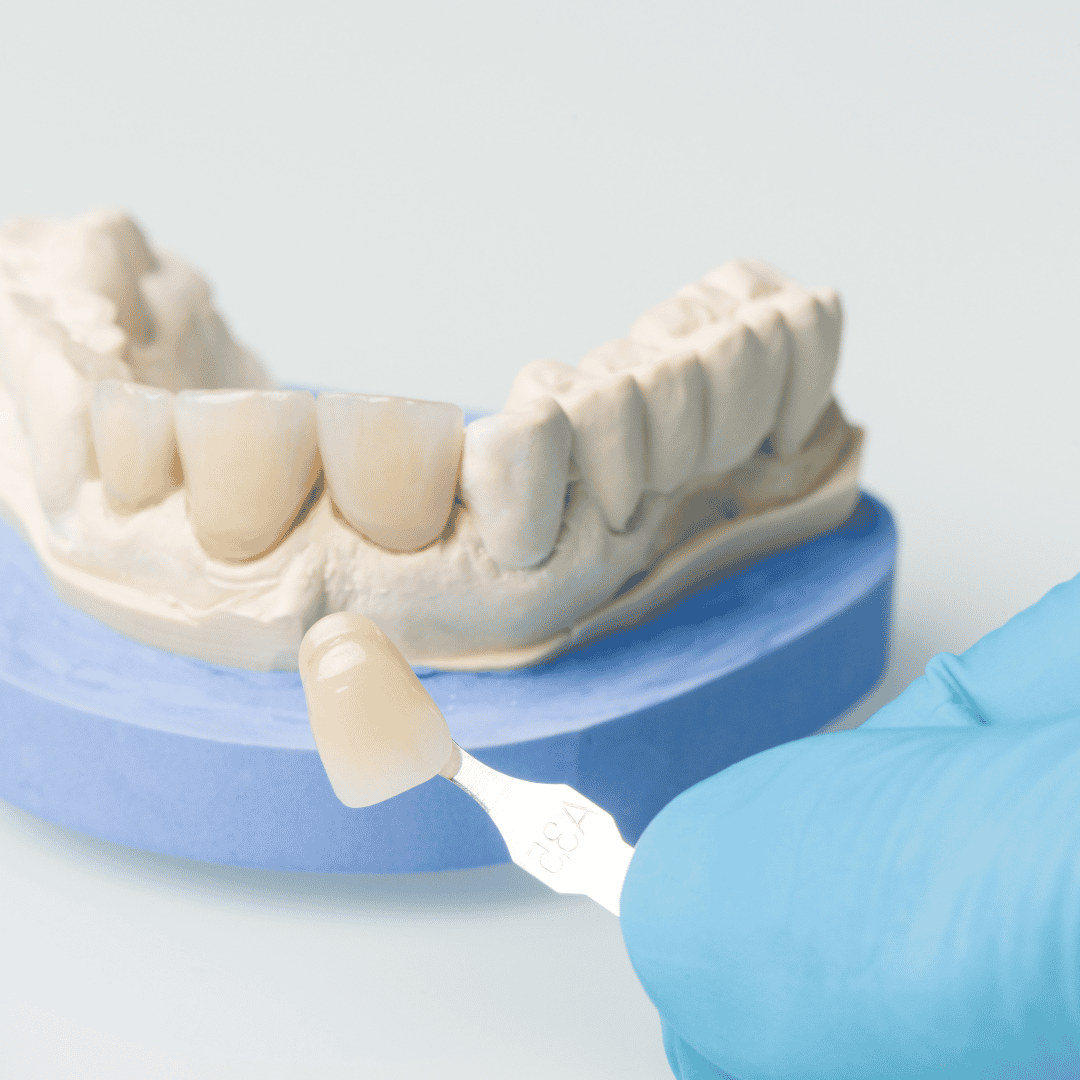
Do not confuse veneers with crowns: a veneer mainly covers the front surface, while a crown surrounds most or all of the tooth. Ask the dentist to explain and photograph the proposed preparation before treatment. Aggressive crown preparation on healthy teeth should not be described as “no-prep veneers.”
Are You a Good Candidate for Veneers in Mexico?
You may be a suitable candidate when your teeth and gums are healthy, your bite is stable, and your goals involve color, shape, small spaces, minor chips, or limited alignment concerns. Veneers are cosmetic restorations; they do not treat active gum disease, decay, infection, severe crowding, significant bite problems, or major loss of tooth structure.
A dentist should examine your gums, enamel, existing fillings, cracks, tooth vitality, bite, jaw movement, smile line, facial proportions, and grinding history. Photographs and radiographs may be needed. A digital smile simulation can help communication, but it does not prove the final biological or esthetic result.
Veneers May Be Reasonable When
- Teeth and gums are healthy.
- You have adequate enamel for bonding.
- The cosmetic issue is mild to moderate.
- Your expectations are realistic.
- You can maintain long-term dental follow-up.
Another Treatment May Be Better When
- Decay or gum disease is active.
- You grind or clench without control.
- Teeth are severely rotated or crowded.
- Large restorations or cracks weaken the tooth.
- Whitening, bonding, orthodontics, or a crown is more conservative.
Alternatives Worth Comparing Before You Travel
| Concern | Possible Alternative | Why Compare It |
|---|---|---|
| Staining only | Professional whitening | Preserves enamel and may meet your goal at lower cost. |
| Small chip or narrow gap | Composite bonding | Often requires less tooth reduction and is easier to repair. |
| Crowding or bite issue | Orthodontic treatment | Moves teeth rather than masking alignment through preparation. |
| Heavily restored or weakened tooth | Onlay or crown | May provide broader structural coverage when clinically necessary. |
What Happens During a Dental Veneer Trip to Mexico?
A well-planned veneer trip starts before you book a flight. The clinic should review recent photographs, dental records, health history, medications, allergies, grinding habits, and your cosmetic goals. A remote opinion can estimate complexity, but the final plan should follow an in-person examination and required imaging.
Laboratory-made ceramic veneers typically require a consultation and design phase, tooth preparation and scanning or impressions, temporary restorations when needed, laboratory fabrication, try-in, bonding, bite adjustment, and final review. Composite veneers may be completed faster because the dentist can shape the material directly on the teeth.
| Timeframe | Clinical Process | What You May Feel | Activity Level | Action Required |
|---|---|---|---|---|
| Before travel | Remote screening, records review and preliminary quote. | No treatment sensation. | Normal. | Send clear photos, disclose conditions and request credentials. |
| Day 1 | Examination, imaging, bite assessment, shade and smile design. | Usually minimal discomfort. | Normal. | Approve the tooth-by-tooth plan only after questions are answered. |
| Days 1–3 | Preparation, scan or impression, and temporary veneers if used. | Temporary sensitivity or gum tenderness may occur. | Light activity. | Avoid very hard or sticky foods; report severe pain. |
| Days 3–8 | Laboratory fabrication, try-in, shade evaluation and bonding. | Pressure during fitting; short-term sensitivity is possible. | Light to normal, as advised. | Check speech, floss contacts, bite and appearance before departure. |
| First 1–2 weeks | Gums settle and bite adaptation continues. | Mild sensitivity may improve; persistent pain needs assessment. | Usually normal. | Arrange local review if symptoms persist or the bite feels high. |
Do not let a flight schedule force treatment: build at least one adjustment day into the trip. Leave only after you can bite comfortably, floss between treated teeth, understand aftercare, and have copies of your records, material details, radiographs, invoice, and warranty terms.
How to Verify a Veneer Dentist’s Credentials in Mexico
Start with the dentist’s identity, not the clinic’s brand. Ask for the full legal name exactly as shown on professional documents and the cédula profesional number. Mexico’s Secretaría de Educación Pública maintains the Registro Nacional de Profesionistas, where professional licenses can be checked.
Veneers are frequently provided by general dentists with restorative training or by dentists with postgraduate education in prosthodontics, restorative dentistry, or esthetic dentistry. Marketing labels such as “cosmetic dentist,” “smile designer,” or “veneer specialist” do not replace a professional license. Ask for verifiable postgraduate credentials, continuing education, case experience, and the dentist’s role in preparation, bonding, and follow-up.
| Credential Check | What to Request | How to Verify | Red Flag |
|---|---|---|---|
| Professional license | Full name and cédula profesional. | Search the SEP Registro Nacional de Profesionistas. | Clinic refuses to identify the treating dentist before payment. |
| Postgraduate training | Degree, university, program dates and specialty license when applicable. | Confirm the institution and compare credentials with the national registry. | Unverifiable “international master” or weekend-course claims. |
| Veneer experience | Annual veneer volume, material experience and revision examples. | Ask for documented cases with consistent lighting and follow-up. | Only filtered immediate photos with no gum or bite evaluation. |
| Clinical responsibility | Who diagnoses, prepares, bonds, adjusts and handles complications. | Put names and responsibilities in the written plan. | Treatment is delegated to an unidentified or unlicensed person. |
Best question to ask: “How much healthy enamel do you expect to remove from each tooth, and what alternatives would preserve more tooth structure?” A thoughtful answer should vary by tooth rather than promise the same preparation for everyone.
How to Choose a Safe Dental Clinic in Mexico
A dental clinic should be able to explain its Mexican regulatory status and infection-control procedures in plain language. For health-service establishments, COFEPRIS provides operating-notice and responsible-health-professional processes. Mexican oral-health practice is also governed by NOM-013-SSA2-2015, which addresses prevention and control of oral diseases and includes expectations related to clinical records and protective measures.
International accreditation may provide an additional quality signal for a hospital or larger center, but it is not required for every outpatient dental office and does not guarantee a result. For veneers, the most relevant evidence is usually the dentist’s license, clinic operating status, sterilization process, material traceability, diagnostic quality, conservative preparation, laboratory relationship, documentation, and aftercare.
Regulatory Documents
Ask for the COFEPRIS operating notice and responsible health professional information appropriate to the clinic’s services.
Sterilization
Request an explanation of instrument cleaning, packaging, autoclave use, monitoring, hand hygiene, surfaces and single-use items.
Dental Laboratory
Ask whether the lab is in-house or external, who the technician is, which material is used, and how remakes are handled.
Records and Consent
Expect medical history, examination findings, radiographs when indicated, informed consent, material records, invoice and aftercare instructions.
Complication Plan
Know who answers after hours, where urgent care is provided, who pays for remakes, and how local follow-up is coordinated.
Transparent Quote
The written quote should separate treatment, diagnostics, temporaries, laboratory, medications, transport, accommodation and exclusions.
Walk away when: you are pressured to pay before the dentist is identified, asked to accept a dramatically larger plan after arrival without evidence, promised “lifetime” veneers, denied copies of records, or told that grinding, decay, gum disease, or bite problems do not matter.
Dental Veneer Risks, Complications, and Warning Signs
Dental veneers can be durable, but no veneer is permanent or risk-free. Possible problems include sensitivity, gum irritation, poor margins, color mismatch, chipping, fracture, debonding, food trapping, bite discomfort, decay around the restoration, and the need for repair or replacement. Removing too much enamel can increase sensitivity and reduce future treatment options.
The ADA advises that veneer treatment is not reversible and that decay or gum disease should be treated first. It also notes that grinding, clenching, or a deep overbite may make veneers unsuitable. Long-term studies show high survival for well-selected and well-bonded ceramic veneers, but survival does not mean every veneer remains complication-free or never needs maintenance.
| Potential Problem | Risk-Reduction Step | When to Contact a Dentist |
|---|---|---|
| Persistent sensitivity | Conservative preparation, healthy teeth, sealed margins and bite adjustment. | Pain is worsening, spontaneous, prolonged, or interrupts sleep. |
| Chip, crack or debonding | Appropriate material, enamel bonding, controlled bite and nightguard when indicated. | A veneer moves, breaks, feels sharp, or changes your bite. |
| Gum inflammation | Accurate margins, smooth contours, floss access and good hygiene. | Bleeding, swelling, pus, bad taste, or persistent tenderness develops. |
| Decay at the edge | Treat decay first, control plaque, limit frequent sugar exposure and attend reviews. | You notice pain, odor, staining at margins, or food trapping. |
| Unsatisfactory appearance | Approve shape and shade at try-in; use realistic mock-ups and unfiltered photos. | Discuss concerns before final bonding whenever possible. |
Seek urgent dental or medical care: facial swelling, fever, difficulty swallowing or breathing, uncontrolled bleeding, spreading redness, severe escalating pain, trauma, or signs of a serious allergic reaction require prompt assessment. Do not wait for a remote message response.
Who Travels to Mexico for Dental Veneers?
Mexico is a common destination for U.S. medical travelers, and dental care is among the most common reasons people travel abroad for treatment. However, reliable national 2025–2026 data breaking veneer travelers down by exact age, gender, city, and number of teeth are not publicly available. Any precise demographic percentages would therefore be speculative.
For planning purposes, clinics commonly serve several patient profiles: uninsured or underinsured U.S. adults paying for cosmetic care, Canadian patients facing high private fees, border-state residents seeking shorter trips, and international travelers combining dentistry with a longer stay. Their needs differ, so the travel model should match the treatment complexity.
Planning Profile
U.S. Self-Pay Patient
Usually compares a multi-tooth cosmetic quote with a high out-of-pocket price at home.
Planning Profile
Border-State Traveler
Prioritizes driving access, a shorter stay, and the ability to return for adjustment or repair.
Planning Profile
Fly-In Patient
Needs a realistic laboratory timeline, flexible return flight, accommodation, and local aftercare plan.
Planning Profile
Complex Smile Case
May need periodontal care, orthodontics, bite treatment, crowns, implants, or staged care rather than veneers alone.
Data note: These are practical care-planning profiles, not population statistics or estimates of market share.
How to Plan a Safe Dental Veneer Trip to Mexico
Good travel planning protects both your health and your budget. The CDC recommends researching the clinician and facility, arranging a pretravel consultation when appropriate, planning for complications, understanding insurance limitations, and obtaining copies of overseas medical records. You should also review the current travel advisory for the specific Mexican state and city rather than treating Mexico as one uniform risk category.
Avoid scheduling a full vacation itinerary around dental appointments. Alcohol, hard foods, swimming, strenuous activity, and long excursions may interfere with comfort or follow-up. Keep enough time for try-in changes and bite adjustments, and do not combine multiple major dental procedures merely to maximize the trip.
- Four to eight weeks before travel: obtain a local dental examination if possible, collect records, compare written plans, verify credentials, review travel guidance, and discuss relevant health conditions.
- Before paying a deposit: confirm refund and cancellation terms, treating dentist, number of teeth, material, estimated preparation, laboratory timeline, included services, exclusions, and complication responsibility.
- Before departure: carry medications in original containers, insurance details, clinic address, emergency contacts, passport documents, copies of records, and a payment reserve.
- During treatment: ask to see and approve the plan, mock-up or try-in; report pain or bite concerns immediately; do not accept unexplained treatment expansion.
- Before flying home: obtain records in English when possible, material details, final radiographs if taken, invoice, aftercare, warranty, dentist contact, and a written plan for local follow-up.
- After returning: arrange a local examination if symptoms persist, maintain routine care, and disclose the overseas treatment and materials to future dentists.
| Budget Item | Commonly Included? | What to Confirm in Writing |
|---|---|---|
| Dental examination and imaging | Varies | Type of imaging, diagnostic fee, and whether it is credited to treatment. |
| Temporary veneers | Sometimes | Need, material, repair process, and replacement charge. |
| Nightguard | Often separate | Whether grinding assessment is included and which guard is supplied. |
| Airfare and lodging | Usually separate | Refundability, extra adjustment days, companion costs and local taxes. |
| Repairs and remakes | Policy-dependent | Clinical eligibility, time limit, laboratory fee, travel cost and exclusions. |
Is Mexico the Smart Choice for Your Veneers?
Mexico can be a smart choice when the treatment is clinically appropriate, the dentist and clinic are verifiable, the preparation is conservative, the quote is transparent, and you have a realistic aftercare plan. The strongest value is usually found in multi-tooth cases where the treatment savings remain meaningful after airfare, lodging, time away from work, and a contingency reserve are included.
Mexico may not be the best choice when you need extensive preliminary treatment, have an unstable bite, cannot remain long enough for adjustments, lack a trusted local dentist for follow-up, or would need repeated international travel for maintenance. A lower first invoice is not true savings if the restorations require premature replacement or if healthy teeth are over-prepared.
Mexico May Fit Your Plan
- The plan is based on an examination, not only photos.
- The dentist’s license and training are verified.
- The clinic documents regulatory and sterilization processes.
- Savings remain significant after all trip costs.
- You can stay for try-in, bonding and adjustments.
Pause and Reconsider
- The clinic promises a guaranteed or permanent result.
- A large number of healthy teeth will be aggressively reduced.
- The quote changes without new clinical evidence.
- There is no written remake or complication policy.
- Your travel schedule leaves no adjustment time.
Bottom line: the smart choice is not “Mexico versus home” in the abstract. It is one documented treatment plan versus another. Compare diagnosis, tooth preservation, material, clinician, laboratory, follow-up, total cost, and revision responsibility before deciding.
Frequently Asked Questions About Dental Veneers in Mexico
Can I really save up to 70% on dental veneers in Mexico?
Yes, a 70% saving is plausible in some like-for-like comparisons. For example, $450 per ceramic veneer in Mexico versus $1,500 in the United States equals 70% less for the dental procedure. Your final saving may be lower after airfare, lodging, diagnostics, follow-up, and future maintenance.
How much do porcelain veneers cost in Mexico per tooth?
A sampled 2025–2026 market range for Puerto Vallarta is approximately $250–$550 per tooth. Mexico does not have one national veneer fee, so your price will depend on material, laboratory, city, dentist, tooth preparation, diagnostics, temporaries, and the number of veneers.
How many days should I stay in Mexico for ceramic veneers?
Many laboratory-made veneer plans require about 5–10 days, although the exact schedule varies. Allow time for examination, preparation, laboratory fabrication, try-in, bonding, and at least one adjustment. Do not book a rigid return flight that forces the dentist to rush final checks.
Are dental veneers in Mexico safe?
They can be provided safely by a licensed dentist in a compliant clinic using appropriate diagnosis, infection control, materials, bonding, and follow-up. Safety is provider-specific, not country-wide. Verify the dentist’s cédula profesional, clinic documents, sterilization process, and complication plan.
How do I verify a Mexican dentist before getting veneers?
Request the dentist’s full legal name and cédula profesional number. Check the record through Mexico’s Secretaría de Educación Pública. Also verify postgraduate qualifications, veneer experience, and who will diagnose, prepare, bond, adjust, and manage complications.
Should I choose composite or porcelain veneers in Mexico?
Composite may cost less, require fewer visits, preserve more enamel, and be easier to repair. Porcelain typically offers stronger stain resistance and refined esthetics but costs more and requires laboratory or CAD/CAM work. Your dentist should recommend material based on your teeth and bite.
Will my teeth be shaved down for veneers?
Many veneers require some enamel reduction, but the amount varies by tooth position, color, material, and desired shape. Ask for a tooth-by-tooth preparation plan. Veneers should not be marketed as reversible when enamel will be removed, and crowns should not be mislabeled as veneers.
How long do dental veneers last?
Clinical reviews report high long-term survival for well-planned ceramic veneers, but no exact lifespan applies to every patient. Material, enamel bonding, bite, grinding, hygiene, diet, trauma, preparation design, and maintenance affect longevity. Veneers may eventually need repair or replacement.
Does dental insurance cover veneers in Mexico?
Veneers are usually considered cosmetic and are commonly excluded from dental insurance. Coverage may differ when a restoration is medically necessary, but you should obtain written confirmation from your insurer before travel. Also ask whether complications or follow-up outside your home country are covered.
What is usually excluded from a Mexico veneer package?
Possible exclusions include flights, hotel, imaging, gum treatment, fillings, root-canal treatment, extractions, temporaries, sedation, medication, nightguards, extra adjustment visits, remakes, and treatment for complications. Ask for an itemized written quote rather than relying on a package headline.
What happens if a veneer breaks after I return home?
Contact the treating clinic and a local licensed dentist. Keep the broken piece if possible and avoid biting on the tooth. A warranty may cover laboratory or clinical work but often excludes travel. Confirm remake eligibility, time limits, and who pays for local emergency care before treatment.
Can I get veneers in one day in Mexico?
Some composite or CAD/CAM cases may be completed quickly, but speed should not replace diagnosis, gum evaluation, bite analysis, careful preparation, try-in, and adjustment. Complex smile designs often benefit from a staged process. Be cautious when a clinic promises same-day treatment before examining you.
Compare Dental Veneer Options in Mexico
PlacidWay can help you compare providers, understand treatment costs, ask credential and material questions, review available options, and request information tailored to your dental needs.
Submit Your Request | Get Healthcare Providers Specific to Your NeedsDisclaimer: This information is for educational purposes only and does not replace professional medical advice. Always consult a qualified healthcare provider before making medical decisions.
References
- Veneers – American Dental Association, MouthHealthy
- Medical Tourism, CDC Yellow Book 2026 – U.S. Centers for Disease Control and Prevention
- Cédula Profesional and Registro Nacional de Profesionistas – Gobierno de México
- Operating Notice and Responsible Health Professional, 2026 – COFEPRIS
- NOM-013-SSA2-2015 for Prevention and Control of Oral Diseases – Diario Oficial de la Federación
- Survival and Complication Rates of Ceramic Laminate Veneers – PubMed
- Oral Health Fact Sheet, 2025 – World Health Organization
- Mexico Travel Advisory – U.S. Department of State
.png)






.png)
.png)
.png)


.png)
.jpg)
.png)
.png)








Share this listing