
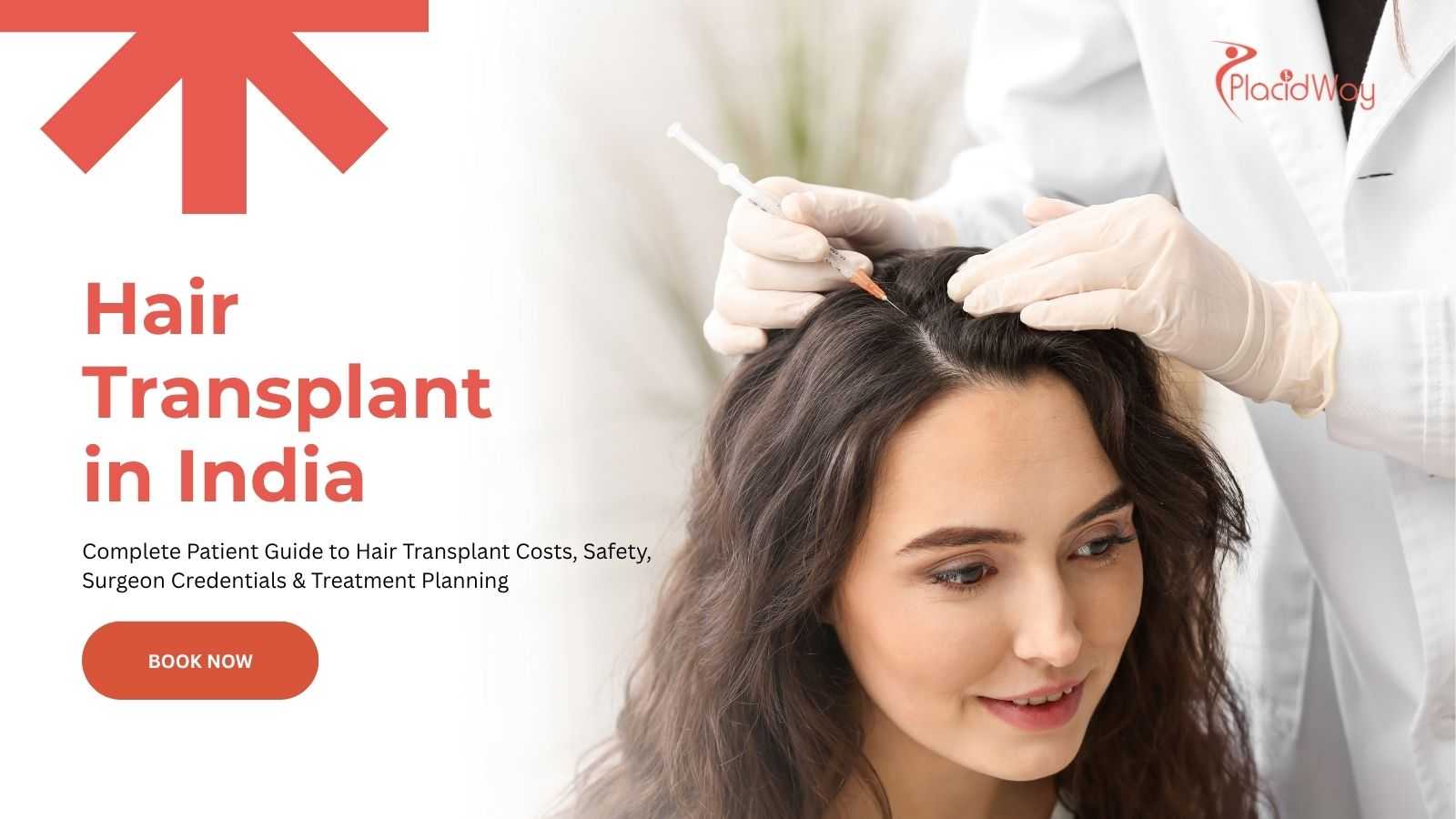
Losing your hair can deeply impact your confidence, but finding a trusted solution at home often comes with out-of-reach prices. If you are exploring affordable hair transplant packages in India to restore your hairline, you must look beyond the initial price tag to ensure a safe, natural-looking result. This guide helps you navigate the true costs of the procedure while showing you exactly which medical licenses—such as National Medical Commission (NMC) registration—to look for before choosing your clinic.
Quick Summary
- Estimated Cost: $1,200 to $3,500 USD, depending on the clinic and graft count.
- Safety Overview: Generally safe when performed by registered dermatologists or plastic surgeons in sterile environments.
- Ideal Candidate: Healthy adults with stabilized hair loss and sufficient donor hair density on the back of the scalp.
- Recovery Time: 7 to 10 days for initial scalp healing; 9 to 12 months to see final hair growth results.
- Required Certifications: Look for National Medical Commission (NMC) registration and National Accreditation Board for Hospitals & Healthcare Providers (NABH) facility accreditation.
- Important Caution: Always verify that a licensed doctor performs the surgical incisions, rather than delegating the entire procedure to unlicensed technicians.
Why Patients Choose Hair Transplants in India
Experiencing hair loss can be highly stressful, and taking the step to undergo surgical restoration is a major medical decision. Many international patients travel for this procedure because specialized care in their home countries is prohibitively expensive. India has emerged as a primary destination for hair restoration, combining advanced clinical technology with highly experienced medical professionals. Patients frequently choose this destination to access board-certified dermatologists and plastic surgeons who specialize exclusively in hair restoration. Medical facilities here handle a high volume of complex cases, allowing surgeons to refine their skills in achieving natural hairlines. Primary reasons patients travel to India for this procedure include:
- Access to experienced surgeons registered with the International Society of Hair Restoration Surgery (ISHRS).
- Significant cost savings without compromising on medical technology or clinic hygiene.
- Comprehensive care packages that often include local transport, accommodation, and translator services.
- Advanced techniques like Hair Transplant and Sapphire Follicular Unit Extraction (FUE).
- Stringent national regulatory boards, such as the NMC, ensuring doctor accountability.
Patient Demographics and Travel Trends
Recent healthcare travel data reveals distinct patterns in who travels for hair restoration. According to 2024 global medical tourism reports and ISHRS practice census data, the majority of outbound patients seeking hair transplants in India originate from regions with high domestic healthcare costs or long waiting times. The demographic profile primarily consists of males experiencing androgenetic alopecia (male pattern baldness), though female hair restoration is steadily increasing. Patients typically travel during the earlier stages of hair loss to maximize the effectiveness of their donor hair supply.
Origin of International Hair Transplant Patients in India (2024 Data)
Source: Adapted from 2024 Cross-Border Healthcare Travel Statistics.
The age distribution of these patients provides further clinical insight. Medical guidelines suggest waiting until hair loss stabilizes, typically in the late twenties or early thirties, before undergoing surgery. The 2024 data reflects this clinical recommendation clearly.
Patient Age Distribution for Hair Restoration (2024 Data)
Source: 2024 International Hair Restoration Demographic Census.
Understanding Hair Transplant Methods in India
Before scheduling surgery, you must understand the clinical techniques available. Medical facilities in India offer several methods, each suited to different types of hair loss and scalp conditions. The goal of all these procedures is to move healthy hair follicles from a donor area (usually the back of the head) to thinning or balding areas. The three primary techniques are Follicular Unit Extraction (FUE), Follicular Unit Transplantation (FUT), and Hair Transplant . Your surgeon will evaluate your scalp elasticity, donor hair density, and aesthetic goals to recommend the most suitable clinical approach.
| Procedure Type | Clinical Method | Scarring Profile | Best Suited For |
|---|---|---|---|
| FUE (Follicular Unit Extraction) | Individual follicles are extracted one by one using a micro-punch tool. | Tiny, dot-like scars that are virtually invisible under short hair. | Patients wanting short haircuts; mild to moderate hair loss. |
| FUT (Follicular Unit Transplantation) | A strip of scalp is surgically removed, and follicles are dissected under a microscope. | A linear scar across the back of the head, hidden by longer hair. | Patients requiring a massive number of grafts in a single session. |
| (Hair Transplant) | A modified FUE where follicles are extracted and immediately implanted using a specialized pen tool. | Minimal dot-like scars, similar to standard FUE. | Patients seeking higher density and exact angle control without entirely shaving the recipient site. |
Determining Your Eligibility for a Hair Transplant
Not everyone with thinning hair qualifies for surgical restoration. A proper clinical evaluation is essential to determine if you are a safe and viable candidate. Performing a transplant on an unsuitable candidate can lead to unnatural results or further hair loss around the implanted grafts. During your virtual or in-person consultation, doctors assess the biological stability of your hair loss. If you are actively shedding large amounts of hair rapidly, your doctor may recommend stabilizing the condition with medication before considering surgery.
Candidate Evaluation Checklist
You may be a good candidate if you meet these criteria:
- You have a confirmed diagnosis of androgenetic alopecia (pattern baldness).
- Your pattern of hair loss has stabilized over the last 12 months.
- You have adequate donor hair density on the back and sides of your scalp.
- You are generally in good health without unmanaged autoimmune conditions.
- You have realistic expectations regarding the final density and coverage achievable.
Cost of Hair Transplants in India
Financial transparency is crucial when planning medical travel. The cost of a hair transplant in India is significantly lower than in Western countries due to lower operational costs and a favorable exchange rate, not because of inferior medical technology. However, prices vary widely depending on the city, the clinic's infrastructure, and the surgeon's expertise. Most clinics charge based on the total number of grafts required. A single graft contains one to four individual hair follicles. An extensive procedure requiring 3,000 grafts will naturally cost more than a minor hairline correction needing only 1,000 grafts.
| Procedure Type / Size | Estimated Cost in India (USD) |
|---|---|
| Minor FUE (Up to 1,500 Grafts) | $1,200 - $1,800 |
| Standard FUE (1,500 - 3,000 Grafts) | $1,800 - $2,500 |
| Extensive FUE (3,000+ Grafts) | $2,500 - $3,500 |
| Procedure (Premium Technique) | $2,200 - $4,000 |
Comparing International Hair Transplant Costs
When evaluating your options, comparing destination costs helps put the financial benefits into perspective. Even after factoring in international flights, visas, and hotel accommodations, traveling to India for a hair transplant often yields substantial financial savings for patients from high-cost healthcare systems. The table below outlines average costs for a standard 2,500-graft FUE procedure across different global healthcare markets.
| Country | Estimated Cost for 2,500 Grafts (USD) |
|---|---|
| United States | $8,000 - $15,000 |
| United Kingdom | $6,500 - $12,000 |
| Canada | $7,000 - $13,000 |
| Australia | $9,000 - $16,000 |
| India | $1,800 - $2,500 |
Hidden Expenses to Consider Before Traveling
While the baseline surgical price is attractive, failing to account for secondary expenses can disrupt your medical travel budget. When communicating with clinics, you must ask for an itemized written quote that specifies exactly what is included in the quoted package. Many premium clinics offer "all-inclusive" packages covering airport transfers and hotel stays, but this is not a universal standard. You must confirm these details before booking your flight.
Watch Out For These Additional Costs
- Pre-operative Blood Tests: Some clinics charge separately for mandatory HIV, Hepatitis B/C, and coagulation profiles.
- Post-operative Medications: Antibiotics, painkillers, and anti-swelling drugs may not be included.
- Specialized Aftercare Products: Clinics often recommend specific medical-grade shampoos or lotions for the first month.
- Travel and Accommodation: Flights, tourist medical visas, and extended hotel stays for recovery.
- Follow-up Consultations: While virtual follow-ups are usually free, physical revisions or touch-up sessions may incur costs.
How to Choose a Safe Hair Transplant Clinic in India
Patient safety must be your absolute priority. The rapid growth of medical tourism has led to the opening of many commercial hair transplant centers. To ensure clinical safety, you must vet the facility's credentials strictly through established national regulatory frameworks. In India, healthcare facilities are monitored by both local state health departments and national accreditation bodies. Do not rely solely on social media marketing or celebrity endorsements when making your choice. Look for clinics that hold the following accreditations:
- NABH Accreditation: The National Accreditation Board for Hospitals & Healthcare Providers is the gold standard for hospital quality in India. A clinic with NABH accreditation adheres to strict protocols regarding infection control, emergency response, and patient rights.
- State Health Department License: Every legitimate clinic must be registered under the local state's Clinical Establishments Act.
- JCI Accreditation (Optional but valuable): Joint Commission International accreditation is rare for standalone hair clinics but is a strong trust signal if the procedure is performed within a large corporate multi-specialty hospital.
Verifying Your Hair Transplant Surgeon in India
The skill and medical qualification of the individual holding the surgical instrument determine the success of your procedure. Hair transplantation is a surgical procedure that requires deep knowledge of scalp anatomy, blood supply, and aesthetic design. You must verify that your primary provider is a licensed medical doctor, preferably a board-certified dermatologist or plastic surgeon. Beware of clinics operating on a "technician-only" model, where unlicensed assistants perform the actual surgical extractions and incisions while a doctor merely supervises.
Essential Surgeon Credentials to Verify
- NMC Registration: The surgeon must hold an active medical license registered with the National Medical Commission (formerly Medical Council of India).
- Specialist Qualification: Look for degrees such as MD (Dermatology) or MCh (Plastic Surgery).
- Professional Memberships: Membership in the Association of Hair Restoration Surgeons (AHRS) India or the International Society of Hair Restoration Surgery (ISHRS) indicates a commitment to ethical practices.
- Surgical Involvement: Demand written confirmation that the doctor—not an assistant—will create the recipient sites and perform the extractions.
The Step-by-Step Hair Transplant Procedure
Understanding the clinical workflow helps alleviate pre-surgery anxiety. A standard FUE or procedure is generally performed on an outpatient basis under local anesthesia. The entire process takes between six to eight hours, depending on the number of grafts required. The procedure requires patience, as the medical team must meticulously extract, preserve, and implant thousands of microscopic tissue units without damaging them.
- Preparation and Anesthesia: The donor area is shaved and sterilized. The surgeon administers local anesthesia to numb the scalp completely. You remain awake but feel no pain.
- Graft Extraction: Using a micro-punch device, the surgeon extracts individual hair follicles from the donor zone. These grafts are placed in a chilled saline or specialized holding solution to maintain cellular viability.
- Site Creation: The surgeon makes tiny, precise incisions in the balding areas, carefully controlling the angle and depth to mimic natural hair growth patterns.
- Implantation: The clinical team meticulously places the extracted grafts into the prepared incisions.
- Post-Op Bandaging: The donor area is bandaged to prevent infection, while the implanted area is left open to heal.
Recovery Timeline After Your Hair Transplant
Post-operative care dictates the final success of your surgery. The transplanted follicles are highly vulnerable during the first two weeks. You must follow all clinical instructions regarding sleeping positions, washing routines, and physical activity restrictions to ensure the grafts anchor securely into the scalp tissue. The visual results take time. You will experience a phase known as "shock loss," where the newly transplanted hairs fall out before regrowing permanently. This biological process is normal.
| Timeframe | Biological Process | Patient Sensation | Activity Level | Action Required |
|---|---|---|---|---|
| Days 1 - 3 | Graft anchoring and initial tissue healing. | Mild swelling, tightness, and minor discomfort. | Strict rest. No physical exertion. | Sleep with head elevated. Spray saline as directed. |
| Days 4 - 10 | Scabs form over grafts and donor area heals. | Itching at the donor and recipient sites. | Light daily activities. No heavy lifting or sweating. | Begin gentle clinical hair washing to remove scabs. |
| Weeks 3 - 8 | Shedding phase (Shock Loss). | Transplanted hairs fall out. Scalp looks pre-surgery. | Return to normal exercise and routine. | Protect scalp from direct sunburn. Remain patient. |
| Months 3 - 6 | New follicle generation. | Fine, baby-like hair begins to break through the skin. | Normal. | Attend virtual follow-up with your surgeon. |
| Months 9 - 12 | Maturation of hair shafts. | Hair thickens, darkens, and integrates naturally. | Normal. | Final clinical evaluation of aesthetic results. |
Potential Risks and Complications
While hair restoration is minimally invasive, it is still a surgical procedure with inherent medical risks. Choosing a highly qualified, NMC-registered surgeon significantly reduces these risks, but you must be aware of potential complications before consenting to treatment. Unsafe practices, such as over-harvesting the donor area, can leave you with permanent bald patches on the back of your head. Adherence to strict sterilization protocols is necessary to prevent severe scalp infections.
Clinical Risks to Discuss with Your Doctor
- Infection (Folliculitis): Inflammation or infection of the hair follicles, usually treatable with antibiotics.
- Donor Area Depletion: Over-harvesting by inexperienced technicians can cause permanent thinning in the donor zone.
- Necrosis: Severe tissue death due to poor blood supply, typically caused by packing grafts too densely.
- Unnatural Hairline: Poor aesthetic design leading to a straight, plug-like, or artificial appearance.
- Prolonged Swelling: Edema that drains down to the forehead and eyes, which typically resolves within a week.
Planning Your Medical Trip to India
Organizing international healthcare travel requires careful logistical planning. India provides a specific visa category for international patients, ensuring a streamlined process for those entering the country for clinical treatments. When booking your travel, factor in your recovery time. You should not fly immediately after surgery due to changes in cabin pressure and the risk of bumping your head in transit.
- Medical Visa (e-Medical Visa): Apply for an Indian e-Medical visa online using an official invitation letter provided by your accredited clinic or hospital.
- Duration of Stay: Plan to stay in India for at least 5 to 7 days. This allows time for the initial pre-op consultation, the surgery, and the first critical post-op hair wash by the clinical team.
- Travel Health: Ensure your routine vaccinations are up to date. Discuss any travel-related health concerns, such as deep vein thrombosis (DVT) risk during long flights, with your local physician.
- Climate Considerations: The Indian climate can be hot and humid. Since you must protect your scalp from sweating and sun exposure immediately after surgery, air-conditioned transport and accommodation are strictly required.
Frequently Asked Questions About Hair Transplants in India
Is a hair transplant in India safe for international patients?
Yes, it is generally safe when you choose an NMC-registered surgeon and a clinic accredited by NABH. Verifying credentials and ensuring the doctor performs the extractions and incisions minimizes risks.
Why are hair transplants cheaper in India compared to the US or UK?
The cost difference is driven by lower cost of living, reduced operational expenses, and favorable exchange rates. Top clinics use the same advanced medical equipment and protocols found in Western countries.
Can I wear a hat on my flight back home?
Surgeons typically provide a loose-fitting surgical cap for your flight home. You must avoid tight caps, beanies, or baseball hats for at least two weeks to prevent dislodging the fragile grafts.
How many days should I stay in India for the procedure?
You should plan to stay for 5 to 7 days. This allows for a pre-operative consultation, the surgery day, rest, and a final clinical check-up where the medical staff performs your first post-op hair wash.
Will the transplanted hair fall out?
Yes, you will experience "shock loss" around 3 to 6 weeks post-surgery. The transplanted hairs shed, but the follicle roots remain intact beneath the skin. Permanent new hair will begin growing at month three.
What is the difference between FUE and?
FUE involves making incisions in the scalp first, then manually placing the grafts. uses a specialized implanter pen that creates the incision and implants the follicle simultaneously, offering precise control over the hair's angle.
Do Indian clinics provide translators for international patients?
Most internationally focused clinics employ English-speaking medical staff and doctors. If you speak a different language, many premium facilities can arrange a dedicated medical interpreter for your visit.
What medical tests are required before a hair transplant?
Standard mandatory pre-op blood tests include Complete Blood Count (CBC), Bleeding/Clotting time profiles, HIV, Hepatitis B and C, and blood sugar levels to ensure you are fit for surgery.
Are the results of a hair transplant permanent?
Transplanted hair follicles are typically resistant to the DHT hormone that causes baldness. In many cases, they grow permanently. However, you may still lose your native, non-transplanted hair over time without medical maintenance.
What should I do if I experience an infection after returning home?
Top clinics provide detailed post-care protocols and a 24/7 contact line for emergencies. If you notice severe swelling, pus, or fever, you should immediately contact your surgeon and visit a local physician for antibiotic treatment.
Ready to Plan Your Hair Restoration Journey?
Navigating international clinic options, verifying doctor credentials, and understanding package costs can be complex. PlacidWay can help you compare highly rated providers, understand itemized treatment costs, and request information securely from certified clinics in India.
Request Free Clinic InformationDisclaimer: This information is for educational purposes only and does not replace professional medical advice. Always consult a qualified healthcare provider before making medical decisions.
References
- 2024 Practice Census Results – International Society of Hair Restoration Surgery (ISHRS)
- Indian Medical Register / Doctor Search – National Medical Commission (NMC)
- Healthcare Quality Standards and Accreditation – National Accreditation Board for Hospitals & Healthcare Providers (NABH)
- Medical and Wellness Tourism Statistics 2024 – Ministry of Tourism, Government of India
- Guidelines and Patient Safety – Association of Hair Restoration Surgeons (AHRS) India
- Clinical Outcomes and Complication Rates of FUE Hair Transplantation (2024 Study) – National Institutes of Health (NIH) / PubMed
- e-Medical Visa Requirements for International Patients – Government of India

























Share this listing