


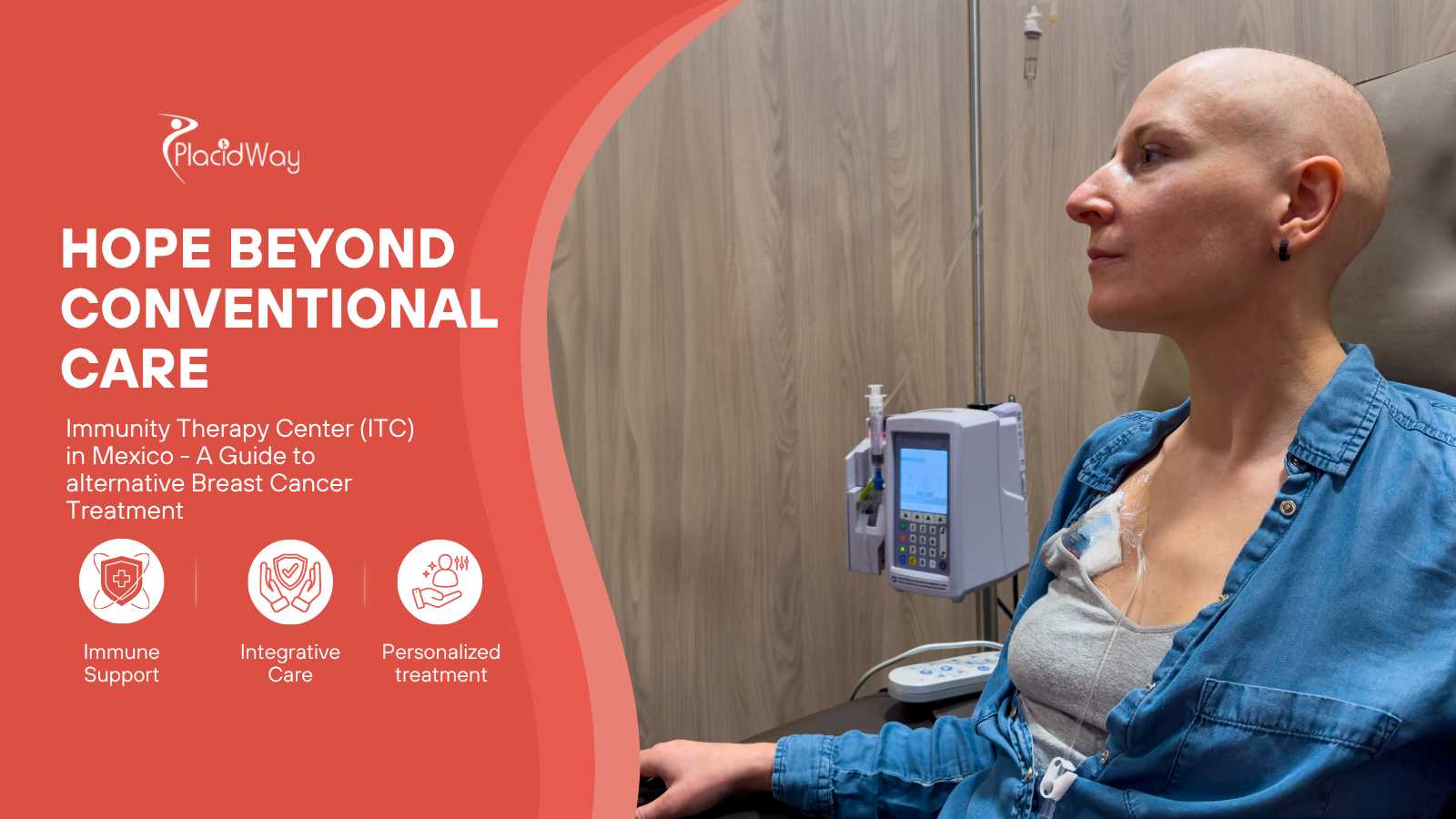
When breast cancer sends you searching beyond your local oncology plan, a clinic in Tijuana may look accessible, private, and more personal. Immunity Therapy Center offers three-week alternative and integrative programs, with provider-published prices starting at $18,995 for outpatient care. Before you travel, however, you need more than a treatment list: you need to know which therapies have clinical support, which remain experimental, what documents to verify, and how the plan will fit with evidence-based breast cancer care.
Quick Summary: What to Know Before Contacting ITC
- Location: Immunity Therapy Center is in Tijuana, Baja California, near the United States–Mexico border.
- Current provider-published price: A three-week outpatient program is listed at $18,995, while a three-week inpatient program is listed at $29,995. Your written quote may differ.
- Important terminology: The clinic’s brand name and “immune-support” therapies are not the same as FDA-approved checkpoint-inhibitor immunotherapy used for selected breast cancers.
- Best safety approach: Treat any nonstandard therapy as complementary or investigational unless your breast oncologist confirms that it can safely fit around standard care.
- Credential checks: Ask for each physician’s full legal name and Mexican cédula profesional. Verify specialist certification through the appropriate CONACEM-recognized specialty council where applicable.
- Facility checks: Request the clinic’s current operating notice or authorization, responsible physician details, emergency-transfer agreement, and applicable COFEPRIS or Baja California health-authority documentation.
- Main caution: Do not delay surgery, radiation, chemotherapy, endocrine therapy, targeted therapy, or approved immunotherapy while arranging an alternative program.
Why Patients Consider Immunity Therapy Center in Mexico
Most people do not explore alternative breast cancer treatment because they take cancer lightly. They usually start looking after a difficult diagnosis, a recurrence, treatment side effects, an uncertain prognosis, or a feeling that short appointments leave important questions unanswered. Tijuana is especially visible to patients in the United States and Canada because it is reachable through San Diego and has a long-established private medical sector.
ITC describes its model as personalized, combining physician visits, diagnostics, nutrition, intravenous therapies, hyperthermia, oxygen-based approaches, and other modalities. The clinic also says treatment is adjusted during the stay. These features may appeal to patients who want more time with the medical team or supportive care in one location. They do not, by themselves, establish that a program controls breast cancer or improves survival.
Seeking symptom support while receiving conventional care.
Wanting a structured nutrition and wellness environment.
Looking for options after progression or recurrence.
Comparing private-pay care close to the U.S. border.
Alternative, Integrative, and Immunotherapy: The Terms Are Not Interchangeable
Alternative treatment is used instead of standard medical care. Complementary treatment is used alongside standard care, usually to support symptoms, function, or wellbeing. Integrative oncology coordinates evidence-informed complementary care with oncology treatment. These distinctions matter because replacing effective breast cancer therapy with an unproven program can allow the disease to progress.
Medical immunotherapy has a specific meaning. It includes medicines that modify immune checkpoints or other immune pathways. In breast cancer, approved immunotherapy is used only for certain clinical situations, particularly some triple-negative breast cancers, and is selected using stage, pathology, biomarkers, prior treatment, and the patient’s overall health. A therapy described as “boosting immunity” is not automatically equivalent to medical immunotherapy.
| Term | How it is used | Evidence expectation | Question to ask |
|---|---|---|---|
| Standard oncology | Treats the cancer using guideline-based surgery, radiation, or systemic therapy. | Clinical trials and treatment guidelines. | What benefit is expected for my subtype and stage? |
| Complementary care | Supports symptoms or wellbeing alongside oncology care. | Evidence may focus on quality of life or side-effect relief. | Could this interfere with my medicines or radiation? |
| Investigational therapy | Tests a treatment whose safety or effectiveness is still uncertain. | A registered protocol, eligibility criteria, oversight, and outcomes. | Is this part of a registered clinical trial? |
| Alternative care | Replaces standard care. | Often limited, indirect, or absent for cancer control. | What proven treatment would I postpone or stop? |
How Evidence-Based Breast Cancer Treatment Is Selected
Breast cancer is not one disease. Your plan depends on whether the tumor is invasive or in situ, its size and location, lymph-node involvement, distant spread, grade, hormone-receptor status, HER2 status, genomic features, menopausal status, prior treatment, and your general health. That is why a treatment that sounds logical in a general description may be unsuitable for your specific cancer.
Standard treatment may include breast-conserving surgery or mastectomy, radiation therapy, chemotherapy, endocrine therapy, HER2-targeted therapy, other targeted drugs, and approved immunotherapy. Some patients need several of these approaches; others can safely avoid particular treatments after a careful risk assessment. The goal is not “treatment at any cost,” but the best balance of cancer control, side effects, function, and personal preferences.
Surgery is often central, with radiation and systemic therapy added according to recurrence risk and tumor biology.
Systemic treatment may be given before surgery, followed by surgery, radiation, and additional medicine.
Treatment focuses on controlling cancer, prolonging life, relieving symptoms, and preserving quality of life.
ITC Breast Cancer Therapies: What the Evidence Can and Cannot Show
ITC lists a broad menu of modalities rather than one fixed breast cancer protocol. Availability and suitability can change, so request the exact proposed therapies, frequency, substances, devices, and intended goals in writing. The table below separates plausible or studied mechanisms from proven patient outcomes.
| Therapy | What it involves | Evidence-based interpretation | Main safety questions |
|---|---|---|---|
| Localized or regional hyperthermia | Controlled heating of tumor tissue or a body region. | Hyperthermia has clinical evidence mainly as an adjunct to radiation or chemotherapy in selected settings. It should not be described as a stand-alone cure. | Temperature monitoring, burns, implanted devices, prior radiation, cardiovascular risk, and who manages complications. |
| High-dose intravenous vitamin C | Vitamin C delivered into a vein at concentrations not achievable by oral supplements. | Small studies suggest possible quality-of-life or toxicity benefits in some cancers, but evidence does not establish IV vitamin C as a curative breast cancer treatment. | Kidney function, G6PD testing, iron-overload conditions, fluid load, and interactions with oncology medicines. |
| Insulin Potentiation Therapy (IPT) | Insulin is given before lower-dose chemotherapy or another substance. | The proposed drug-delivery advantage has not been proven in robust breast cancer trials. Lower chemotherapy doses may also mean inadequate treatment exposure. | Severe hypoglycemia, exact chemotherapy dose, emergency glucose protocol, monitoring, and evidence for your subtype. |
| Sonodynamic therapy | Ultrasound is used to activate a sensitizing agent intended to damage tumor cells. | This remains investigational. Current clinical development has focused heavily on early-phase brain-tumor trials, not established breast cancer treatment. | Device and sensitizer authorization, published protocol, imaging guidance, adverse-event plan, and trial registration. |
| Ozone or oxygen-based therapy | Various procedures intended to alter oxygen delivery or expose blood to ozone outside the body. | Claims that cancer cannot survive in an “oxygen-rich” or “alkaline” body oversimplify tumor biology. Clinical benefit for breast cancer control is not established. | Route of administration, sterility, embolism or infection risk, respiratory exposure, and interactions. |
| Nutrition, counseling, movement, and mind-body support | Meals, dietary counseling, emotional support, relaxation, or gentle activity. | These can support wellbeing when individualized, but no special diet has been proven to eliminate breast cancer or replace oncology treatment. | Weight loss, malnutrition, supplement interactions, food safety, diabetes, and whether a registered dietitian is involved. |
Immunity Therapy Center Breast Cancer Treatment Cost
As of July 2026, ITC’s public materials list a typical three-week outpatient program at $18,995 and a three-week inpatient program at $29,995. These are provider-reported general estimates, not guaranteed quotes. Breast cancer stage, symptoms, laboratory findings, inpatient needs, additional procedures, and length of stay can change the total.
| Program | Provider-published estimate | Reported inclusions | Items to confirm |
|---|---|---|---|
| Three-week outpatient | $18,995 | Provider describes therapies, diagnostics, weekday/Saturday meals, juices, and local transportation. | Hotel, airfare, specific excluded therapies, medicines, companion costs, emergency care, and extension fees. |
| Three-week inpatient | $29,995 | Provider describes room, board, 24-hour nursing support, and a personalized therapy program. | Level of monitoring, physician coverage, hospital privileges, ICU access, transfer costs, and private-room conditions. |
Costs Commonly Left Outside a Cancer Program Quote
Pathology review, scans, physician consultation, passport, and travel insurance.
Hotel, companion meals, prescriptions, blood products, surgery, and unexpected hospital care.
Laboratory monitoring, imaging, home supplements, oncology visits, and repeat travel.
Nonrefundable deposits, currency or card fees, financing costs, and cancellation rules.
Breast Cancer Demographics and Current Mexico Data
Public clinic-specific demographic counts for ITC were not available in the sources reviewed, so it would be misleading to invent percentages for patient nationality, age, or stage. The clinic’s airport and border-transfer model is clearly designed for international travel, especially through San Diego and Tijuana. The broader breast cancer data below help show who is affected; they do not represent ITC’s patient mix.
The International Agency for Research on Cancer reported that most global breast cancer cases occur in people aged 50 or older. Its 2025 analysis also projected a substantial increase in the global burden by 2050 if current rates continue. GLOBOCAN 2024 estimates for Mexico list breast cancer as the country’s most frequently diagnosed cancer overall.
Age Distribution of Global Breast Cancer Burden
IARC analysis published in 2025; percentages are global, not clinic-specific.
Global Breast Cancer Cases: Current Burden and 2050 Projection
IARC: approximately 2.3 million cases in 2022; 3.2 million projected annually by 2050 if current rates continue.
| Mexico breast cancer indicator | GLOBOCAN 2024 estimate | How to interpret it |
|---|---|---|
| New cases | 34,055 | Breast cancer ranked first by new cancer cases in Mexico. |
| Deaths | 8,397 | Population-level estimate; it does not predict an individual outcome. |
| Five-year prevalence | 103,771 | Estimated people living within five years of a breast cancer diagnosis. |
What to Expect During an ITC Stay in Tijuana
ITC states that patients can fly into San Diego or Tijuana and that arranged transportation is available. Outpatients stay in a nearby hotel or apartment, while the inpatient option includes accommodation and nursing support. A typical schedule may involve consultations, laboratory monitoring, infusions, device-based sessions, meals, and rest periods, but you should request your actual daily timetable before booking.
| Timeframe | Clinical process | What you may feel | Activity level | Action required |
|---|---|---|---|---|
| Before arrival | Record review and proposed plan. | Uncertainty or decision fatigue. | Normal, depending on illness. | Get your oncologist’s review and confirm travel fitness. |
| Arrival days | Assessment, tests, consent, and schedule confirmation. | Fatigue from travel. | Light activity. | Reconcile medicines and identify emergency contacts. |
| Treatment weeks | Scheduled therapies and monitoring. | Varies by infusion, heat, glucose changes, and disease symptoms. | Usually light; follow medical advice. | Report fever, chest pain, breathing difficulty, confusion, severe weakness, or allergic symptoms immediately. |
| Discharge | Summary, home plan, and follow-up. | Relief mixed with uncertainty. | Depends on clinical status. | Give your home oncologist a complete treatment and medication record. |
How to Verify ITC, Its Doctors, and Its Safety Systems
The clinic identifies Dr. Carlos Bautista as its founder and medical director and says he trained at Universidad Autónoma de Baja California. A clinic biography is not the same as independent credential verification. Ask for each treating physician’s full legal name, professional license number, specialty license where relevant, and current specialty-board status.
Mexico’s Registro Nacional de Profesionistas allows you to check whether a professional title and cédula are registered. CONACEM provides a public directory for current specialist certification through recognized specialty councils. For the facility, request documents showing who is legally responsible for care, which health authority supervises the establishment, and what emergency services are available.
Doctor Verification Checklist
- Full legal name and cédula profesional
- Specialty training and specialty cédula
- Current CONACEM-recognized board certification, when applicable
- Role in breast cancer decision-making
- Experience managing emergencies and treatment interactions
- Who covers the patient overnight and on weekends
Facility Verification Checklist
- Current operating notice or authorization
- Health-authority and responsible-physician details
- Medication sourcing and cold-chain records
- Infusion safety and infection-control policies
- Emergency equipment, ambulance access, and transfer hospital
- Written adverse-event and complication policy
Breast Cancer Treatment Red Flags to Take Seriously
A clinic may offer compassionate care and still communicate claims too strongly. Slow down when marketing language moves beyond what clinical evidence can support. Ask for published studies involving patients with your breast cancer subtype, stage, prior treatments, and measurable outcomes.
A promise to cure Stage 4 disease or eliminate all cancer cells.
Advice to stop standard treatment without speaking to your oncologist.
“Success rates” without a definition, denominator, follow-up period, or independent audit.
Claims that a therapy has no side effects or cannot harm healthy cells.
Pressure to pay quickly before receiving an itemized plan and cancellation policy.
A recommendation based mainly on testimonials rather than clinical records.
When to Seek Urgent Medical Care
Get immediate medical help for chest pain, trouble breathing, fainting, new confusion, one-sided weakness, uncontrolled bleeding, a fever during low blood counts, severe allergic symptoms, sudden leg swelling, persistent vomiting, or rapidly worsening pain. Before treatment starts, know which local hospital will receive you and who will pay for emergency transport and care.
Questions to Ask ITC Before You Book
- Which parts of my proposed plan are standard, complementary, off-label, or investigational?
- What is the specific goal of each therapy: tumor response, symptom relief, treatment tolerance, or general wellbeing?
- What published human evidence supports this therapy for my breast cancer subtype and stage?
- How will you coordinate with my medical oncologist, breast surgeon, and radiation oncologist?
- Could any infusion, supplement, diet, heat treatment, or insulin-based therapy alter my standard treatment?
- What laboratory tests are performed before and during therapy, and who reviews abnormal results?
- What are the most serious complications you have managed from this program?
- Where will I be transferred if I become unstable, and do you have a written hospital arrangement?
- What outcomes do you track, for how long, and are the results independently audited?
- What exactly is included in the written price, and which items can trigger extra charges?
- What documents will I receive at discharge for my home oncology team?
- What is the refund or cancellation policy if my health changes before travel?
Aftercare and Continuity When You Return Home
A three-week program cannot replace long-term breast cancer follow-up. Before leaving Tijuana, obtain a discharge summary listing every diagnosis, therapy, dose, infusion ingredient, medicine, supplement, procedure, laboratory result, adverse event, and recommended follow-up. Ask for the records in English when needed and keep digital and printed copies.
Your home oncologist should decide how and when to repeat imaging or blood tests. Tumor-marker changes alone do not reliably prove that breast cancer has responded, and symptoms may improve without a measurable anticancer effect. Imaging should be compared using consistent methods and interpreted in clinical context.
Share the treatment record with your home oncology team and report any new symptoms.
Confirm that supplements, IV products, or lingering side effects do not alter the next oncology cycle.
Use objective imaging, examination, and laboratory criteria rather than testimonials or feelings alone.
Frequently Asked Questions About ITC Breast Cancer Treatment in Mexico
Is Immunity Therapy Center’s treatment the same as breast cancer immunotherapy?
No. ITC is a clinic brand and uses the term immunotherapy broadly for immune-support and alternative modalities. Approved breast cancer immunotherapy refers to specific medicines, such as immune checkpoint inhibitors, used for selected patients under oncology protocols. Ask exactly which drug or therapy is proposed.
Can alternative breast cancer treatment in Mexico replace surgery or chemotherapy?
An unproven alternative program should not replace treatment shown to reduce recurrence or improve survival. Whether you need surgery, chemotherapy, radiation, endocrine therapy, targeted therapy, or approved immunotherapy depends on your stage and tumor biology. Review any proposed change with a qualified breast oncology team.
How much does ITC breast cancer treatment cost in Tijuana?
ITC publicly lists a typical three-week outpatient program at $18,995 and an inpatient program at $29,995 as of July 2026. Final cost can vary. Ask whether hotel, medicines, special therapies, imaging, surgery, blood products, emergency care, and extended stays are included.
Does health insurance cover ITC treatment in Mexico?
The clinic states that most major insurance plans do not cover its alternative programs. Confirm directly with your insurer before paying. Request diagnostic and billing codes, but do not assume reimbursement. Also check whether your travel or medical-complication policy excludes planned cancer treatment abroad.
Is hyperthermia proven for breast cancer?
Hyperthermia has clinical support mainly when combined with treatments such as radiation or chemotherapy in selected situations. Evidence varies by technique and cancer setting. It should not be presented as a stand-alone cure. Ask whether the clinic’s device and protocol match the studied approach.
Can high-dose IV vitamin C kill breast cancer?
Current evidence does not establish IV vitamin C as a curative breast cancer treatment. Some studies report possible quality-of-life or side-effect benefits in selected patients. It can be unsafe with kidney disease, G6PD deficiency, or iron-overload disorders, so screening and oncology coordination are important.
Is Insulin Potentiation Therapy safer than regular chemotherapy?
IPT uses insulin with lower chemotherapy doses, but strong evidence that it provides equal cancer control with fewer harms is lacking. Insulin can cause dangerous hypoglycemia, and reduced chemotherapy exposure may be ineffective. Ask for the exact drug dose, monitoring protocol, and breast cancer outcome data.
Does ITC treat Stage 4 metastatic breast cancer?
ITC markets programs to patients with advanced cancers, but offering care is not proof of improved survival or remission. Metastatic breast cancer requires subtype-directed oncology treatment and regular objective assessment. Ask how the clinic coordinates with your oncologist and measures response without delaying effective therapy.
How long is a typical treatment program at Immunity Therapy Center?
The clinic describes three weeks as a typical program, while some patients may be advised to stay six weeks or longer. Duration does not prove effectiveness. Before travel, request the medical reason for the proposed length, daily schedule, reassessment points, additional-week cost, and stopping criteria.
Can I bring a companion to Tijuana for cancer treatment?
A companion is often practical for travel, medication tracking, communication, and emergencies. Confirm whether the inpatient price includes a companion, whether hotel rates are available for outpatients, and who provides transportation. Your companion should also have valid travel documents and emergency contact information.
How do I verify Dr. Carlos Bautista’s medical credentials?
Request his full legal name and professional license number, then search Mexico’s Registro Nacional de Profesionistas. Ask whether he holds a specialty license and current specialist certification relevant to oncology. Verify any claimed certificate directly with the issuing organization and check its expiration date.
What records should I send before requesting an ITC treatment plan?
Send the biopsy and pathology report, ER/PR/HER2 results, genomic tests when available, staging scans, operation reports, radiation summary, complete drug history, recent blood tests, allergies, current medicines and supplements, and your oncologist’s latest note. Remove unnecessary identifiers when using unsecured email.
The Patient-Safety Takeaway
Immunity Therapy Center may appeal to you because it offers extended visits, a structured stay, nutrition support, and therapies that are not routinely available in conventional clinics. Those features deserve a fair review, but they do not remove the need for scientific scrutiny. The strongest decision is one that protects access to proven breast cancer treatment while examining complementary or investigational options honestly.
Ask what each therapy is intended to achieve, what evidence supports it, what could go wrong, and how your oncology team will stay involved. A responsible provider should welcome those questions, provide complete documents, avoid guaranteed outcomes, and support coordinated care rather than asking you to choose sides.
Compare Questions, Costs, and Provider Information
PlacidWay can help you request information, compare provider responses, review package inclusions, and prepare questions for clinics. A medical decision should still be made with qualified oncology professionals who understand your diagnosis.
Request Provider InformationDisclaimer
Disclaimer: This information is for educational purposes only and does not replace professional medical advice. Always consult a qualified healthcare provider before making medical decisions. Clinic services, prices, staff, credentials, and regulatory status can change; verify all details directly before travel or payment.
References
- Treatment for Breast Cancer – National Cancer Institute
- Complementary and Alternative Medicine – National Cancer Institute
- Hyperthermia to Treat Cancer – National Cancer Institute
- Intravenous Vitamin C – National Cancer Institute
- Breast Cancer Cases and Deaths Are Projected to Rise Globally – International Agency for Research on Cancer
- Mexico Cancer Fact Sheet, GLOBOCAN 2024 – International Agency for Research on Cancer
- Specialist Certification Directory – CONACEM
.png)















Share this listing