
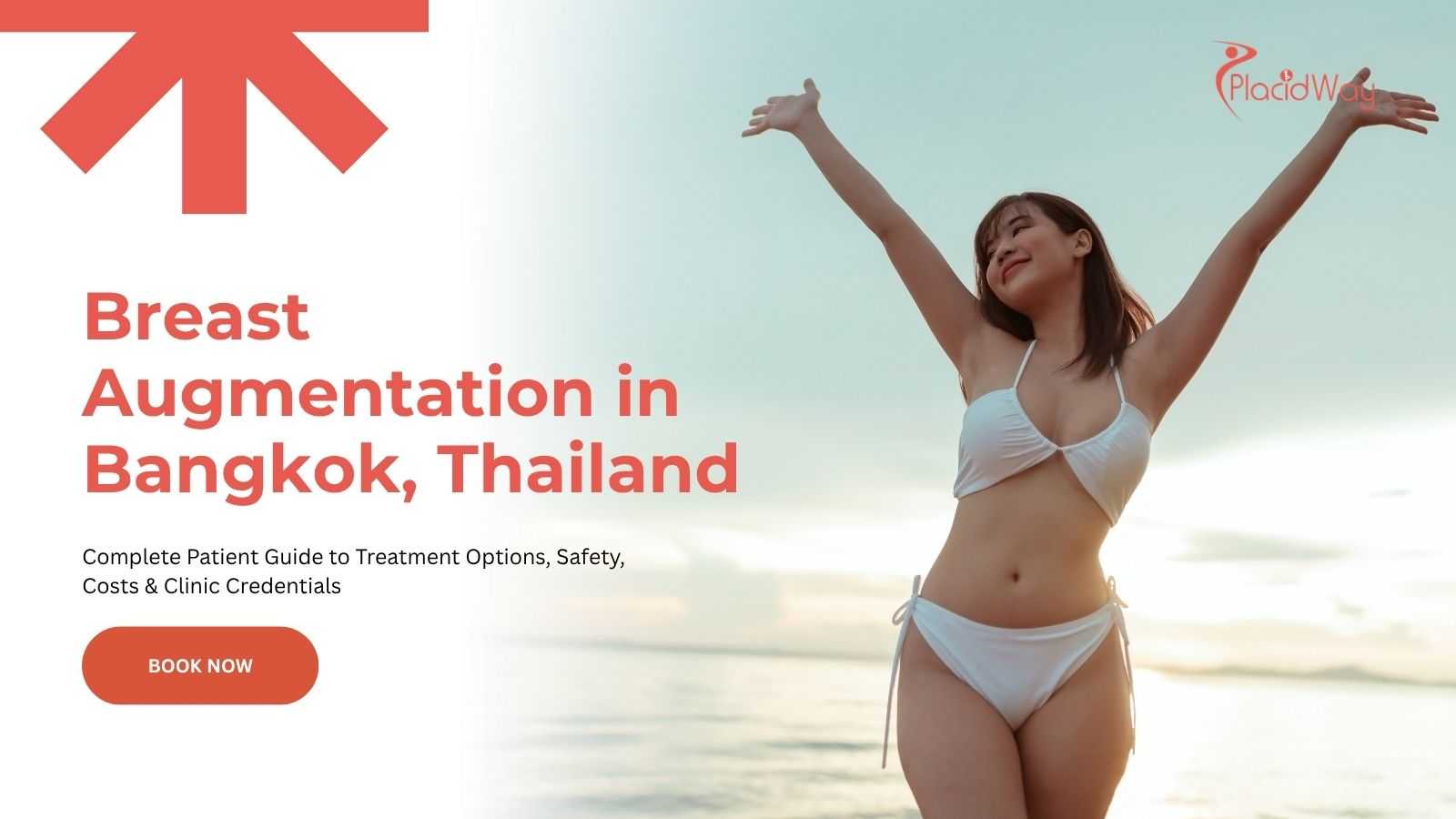
Planning breast surgery abroad often brings up anxiety about clinical safety, navigating unfamiliar medical systems, and balancing affordable prices with high-quality care. If you are exploring breast augmentation in Bangkok, Thailand, you can potentially save on expenses while accessing skilled surgical expertise, provided you know exactly how to verify hospital credentials and provider backgrounds. By checking for active Medical Council of Thailand (MCT) registration and looking for transparent surgical quotes, you can confidently choose a qualified surgeon and focus entirely on achieving a safe, natural outcome.
- Estimated Cost: Typically ranges from $3,500 to $5,500 USD, depending on the implant brand, surgical technique, and specific hospital facilities.
- Safety & Certifications: Always verify your surgeon is registered with the Medical Council of Thailand (MCT) and recognized by the Society of Plastic and Reconstructive Surgeons of Thailand (ThPRS).
- Ideal Candidate: Healthy non-smokers seeking volume enhancement who have realistic expectations and can accommodate a mandatory international travel recovery period.
- Recovery Time: Expect to spend 7 to 10 days resting in Bangkok before your surgeon clears you for a safe, complication-free flight home.
- Why Patients Choose Bangkok: A well-established combination of experienced board-certified plastic surgeons, specialized international patient coordination, and comprehensive medical facilities.
- Important Caution: Never fly immediately after major surgery; allow adequate time for post-operative monitoring to prevent severe travel-related complications like deep vein thrombosis (DVT).
Understanding Breast Augmentation in Bangkok
Breast augmentation involves placing silicone or saline implants to enhance the size, shape, or symmetry of the breasts. When pursuing this procedure internationally, understanding the local medical landscape is just as important as understanding the surgery itself. Bangkok has developed a sophisticated healthcare infrastructure tailored specifically for cross-border patients seeking complex cosmetic procedures.
International patients often wonder if flying overseas compromises their safety. In regulated environments, medical travel can be highly secure. Bangkok’s top-tier private hospitals adhere to rigorous national safety protocols enforced by the Ministry of Public Health. By navigating this ecosystem carefully, you can receive specialized care that rivals, and sometimes exceeds, the patient experience in your home country.
Why Patients Travel for Breast Surgery
Choosing to undergo a major cosmetic procedure away from home requires careful consideration. Patients consistently identify several primary motivations for selecting Thailand as their medical destination. Understanding these reasons can help you determine if medical travel aligns with your personal healthcare goals.
- Access to highly experienced surgeons who perform a large annual volume of breast enhancement procedures.
- Significant cost savings compared to domestic healthcare markets, even when factoring in travel and accommodation expenses.
- The availability of specialized international patient departments that provide in-house interpreters and dedicated nursing care.
- Privacy and discretion during the initial recovery phase, away from social and professional obligations.
- Access to premium medical devices and modern FDA-approved or CE-marked implant brands that may be more expensive domestically.
Comparing Treatment Costs Internationally
Cost remains a significant factor for patients researching medical travel. While prices in Bangkok are generally lower than in Western countries, you must understand exactly what your surgical quote includes. An initial low price might not cover anesthesia, pre-operative blood tests, post-surgical garments, or required medication.
Below is an estimated comparison of standard breast augmentation costs. Keep in mind that individual physiological factors, implant type selection, and specific hospital fees will influence your final customized quote.
| Country | Estimated Procedure Cost (USD) | Typical Inclusions |
|---|---|---|
| United States | $6,500 - $12,000+ | Procedure, surgeon fee, facility fee, anesthesia. |
| Australia | $7,000 - $15,000+ | Procedure, surgeon fee, private hospital fee. |
| United Kingdom | $6,000 - $9,500+ | Procedure, overnight stay, standard implants. |
| Bangkok, Thailand | $3,500 - $5,500 | Procedure, surgeon fee, anesthesia, 1-night hospital stay, implants. |
When reviewing financial quotes, ask the clinic if their proposal covers revision surgery policies or medical complications insurance. Transparent providers will gladly supply an itemized breakdown of all anticipated expenses.
Patient Demographics and Global Travel Patterns
Cross-border medical travel involves distinct demographic patterns. Based on documented 2024 international patient registries and cross-border healthcare data, patients traveling to Southeast Asia for aesthetic breast procedures represent diverse geographical backgrounds. Analyzing these trends provides insight into the established pathways that clinics in Bangkok manage daily.
The majority of international patients seeking breast augmentation in this region fall within the 25 to 45 age bracket. These individuals typically conduct extensive pre-trip research and prioritize destinations that offer seamless English communication alongside verified clinical safety records.
Source: Aggregated 2024 independent clinical registries for inbound cosmetic tourism.
Verifying Surgeon Credentials
The success of your procedure depends heavily on the skill and education of your chosen surgeon. Thailand has strict medical laws, but as an international patient, you must proactively verify credentials before making financial deposits. Do not rely solely on social media marketing or before-and-after photos.
A highly qualified plastic surgeon in Bangkok should possess specific regional credentials. Ensure your doctor is fully registered with the Medical Council of Thailand (MCT), which is the official national regulatory body for physicians. Furthermore, they should ideally be board-certified specialists holding active membership in the Society of Plastic and Reconstructive Surgeons of Thailand (ThPRS).
- Check for an active Medical Council of Thailand (MCT) license number.
- Look for membership in the Society of Plastic and Reconstructive Surgeons of Thailand (ThPRS).
- Ask about their specific annual case volume for breast augmentation.
- Confirm hospital privileges at licensed, multi-disciplinary medical centers.
Evaluating Hospitals and Surgical Clinics
In Thailand, healthcare facilities are regulated by the Ministry of Public Health. When researching clinics, prioritize those that hold national Hospital Accreditation (HA) from the Healthcare Accreditation Institute of Thailand. This national framework ensures strict compliance with infection control, sterilization processes, and emergency management.
While many excellent standalone clinics operate safely, full-scale private hospitals often provide an additional layer of security. Large multi-disciplinary hospitals feature on-site Intensive Care Units (ICUs) and dedicated cardiac teams. In the rare event of a severe surgical or anesthetic complication, immediate access to critical care infrastructure is vital for patient safety.
Choosing the Right Breast Implants
Medical device quality is a common concern for international patients. Reputable surgeons in Bangkok utilize the exact same high-quality, internationally approved implants found in the United States and Europe. Your surgeon will discuss your physical anatomy to determine the safest and most aesthetically pleasing implant profile.
You can typically choose between saline or cohesive silicone gel implants. Silicone gel implants are overwhelmingly preferred due to their natural feel and advanced safety profiles. Surgeons generally use established brands such as Mentor or Motiva, which carry FDA approvals or CE marks ensuring rigorous safety testing.
Silicone Implants
Filled with cohesive gel that closely mimics human tissue. They maintain their shape well and carry a lower risk of visible rippling. Require regular monitoring.
Saline Implants
Filled with sterile saltwater during surgery, allowing for smaller incisions. If a rupture occurs, the body safely absorbs the saline solution.
Surgical Incisions and Placement Options
The location of your incision and where the implant is placed within the chest cavity significantly impacts your recovery and final results. Your surgeon will base these decisions on your existing breast tissue, lifestyle, and aesthetic goals. Clear communication during your initial consultation is crucial for establishing realistic expectations.
Implants can be placed either subglandular (over the pectoral muscle) or submuscular (under the pectoral muscle). Submuscular placement generally provides a more natural slope and lowers the risk of visible implant edges, though it typically requires a slightly longer and more uncomfortable initial recovery phase.
Step-by-Step Travel and Surgery Timeline
Proper travel planning mitigates stress and promotes better healing. A common mistake medical tourists make is booking a return flight too soon. Flying with unhealed surgical wounds drastically increases your risk of blood clots and severe swelling. You must allow sufficient time for mandatory follow-up appointments.
Below is a typical timeline for international patients undergoing breast surgery in Thailand. Always follow your specific surgeon’s customized travel advice.
| Timeline | Patient Activity | Medical Benchmark |
|---|---|---|
| Day 1 | Arrive in Bangkok and rest at your hotel. | Acclimatization and hydration. |
| Day 2 | In-person clinical consultation and bloodwork. | Final implant selection and medical clearance. |
| Day 3 | Surgery day. | Procedure performed under general anesthesia. |
| Days 4-8 | Rest at hotel, minimal exertion. | Monitoring for infection or hematoma. |
| Day 9-10 | Final post-op consultation. | Suture removal (if applicable) and flight clearance. |
Medical Risks and Safety Considerations
No surgical procedure is entirely risk-free. Breast augmentation carries inherent medical risks that you must carefully evaluate before proceeding. Complications can include infection, adverse reactions to anesthesia, hematoma (blood pooling), and changes in nipple or breast sensation, which may be temporary or permanent.
A specific long-term risk is capsular contracture, a condition where the body’s natural scar tissue forms a tight, hard capsule around the implant. This can cause pain and visual distortion, often requiring revision surgery. Choosing a highly qualified surgeon and strictly adhering to post-operative care instructions can help minimize, though not entirely eliminate, these clinical risks.
Managing Deep Vein Thrombosis Risks
Deep Vein Thrombosis (DVT) is a serious condition where blood clots form in deep veins, typically in the legs. Combining major surgery under general anesthesia with long-haul international flights significantly elevates this risk. A clot breaking loose and traveling to the lungs causes a pulmonary embolism, a life-threatening medical emergency.
To mitigate travel-related risks, surgeons mandate a strict waiting period before you are allowed to board a plane. During your hotel recovery in Bangkok, you must engage in light, frequent walking to promote healthy circulation. Follow your doctor's exact protocols regarding compression garments and hydration before and during your flight home.
Never conceal your departure date from your medical team to expedite your trip. Boarding an aircraft prematurely against medical advice severely compromises your cardiovascular safety and surgical results.
Post-Operative Care in Your Hotel
Your hotel serves as your private recovery ward for the first week. Select accommodations situated close to your chosen hospital to minimize travel time for your follow-up appointments. Bangkok traffic can be heavy, and sitting in a vehicle immediately after chest surgery can be quite uncomfortable.
Ensure your room has extra pillows so you can sleep elevated at a 45-degree angle. This position is critical for reducing post-operative swelling and preventing fluid accumulation. Avoid lifting heavy luggage, pushing heavy hotel doors, or reaching above your head until your surgeon explicitly clears you for these movements.
Evaluating Medical Outcomes and Implant Lifespan
Patients must understand that breast implants are not lifetime devices. While modern implants are highly durable, the probability of requiring an eventual replacement or removal surgery increases over time. Factors influencing longevity include implant type, natural biological changes, weight fluctuations, and pregnancy.
Recent clinical registries tracking modern cohesive gel implants demonstrate excellent safety profiles, but vigilance remains essential. Regular monitoring, including physical exams and occasional ultrasound or MRI screenings, ensures the structural integrity of your implants remains intact over the decades.
Source: Extrapolated from 2025 cohort registry analysis for primary augmentation.
Long-Term Follow-Up from Your Home Country
Medical care does not conclude once you board your flight home. Upon returning to your home country, you must have a plan for long-term medical monitoring. International clinics provide surgical summaries and operative notes detailing the exact specifications and serial numbers of your implants.
Provide these detailed operative notes to your local primary care physician or gynecologist. Routine breast health screenings, including mammograms, require special techniques when implants are present. Always inform your radiologist that you have breast implants so they can utilize specialized imaging protocols.
Frequently Asked Questions
Is breast augmentation in Bangkok safe for international patients?
Breast augmentation in Bangkok can be clinically safe when performed by a board-certified surgeon in a licensed, accredited hospital. Ensure the facility is regulated by the Ministry of Public Health and the surgeon is registered with the Medical Council of Thailand.
How long must I stay in Thailand after breast augmentation?
Surgeons typically require patients to remain in Bangkok for 7 to 10 days post-surgery. This mandatory recovery window allows doctors to monitor your healing, manage any early complications, and clear you safely for high-altitude air travel.
What implants do surgeons in Thailand use?
Top-tier clinics in Bangkok utilize globally recognized, high-quality implant brands such as Mentor and Motiva. These medical devices carry FDA approval or CE marks, ensuring they undergo identical rigorous safety testing as implants used in Western countries.
How do I verify a plastic surgeon's credentials in Bangkok?
You can verify credentials by requesting the surgeon’s medical license number and checking their registration with the Medical Council of Thailand. Additionally, look for active membership in the Society of Plastic and Reconstructive Surgeons of Thailand (ThPRS).
Are hidden fees common with medical procedures in Thailand?
Reputable hospitals provide itemized, transparent quotes before you travel. However, always confirm whether your quoted package includes anesthesia fees, post-operative garments, required blood tests, and medication to avoid unexpected out-of-pocket expenses.
What happens if I experience a complication after returning home?
Managing complications remotely is challenging. Before booking, ask your Bangkok clinic about their revision policy and whether they partner with medical tourism insurance providers. Establish a relationship with a local doctor who can assist with post-operative care.
Will the language barrier affect my medical care?
Major private hospitals in Bangkok catering to international medical tourists employ highly fluent English-speaking surgeons and nurses. Many facilities also provide dedicated international coordination departments with multilingual interpreters to ensure clear medical communication.
Can I fly home immediately after breast implants?
No. Flying immediately after general anesthesia and surgery drastically increases the risk of deep vein thrombosis (DVT) and pulmonary embolism. You must wait for explicit medical clearance from your surgeon, typically granted around 7 to 10 days post-operation.
Do breast implants require long-term maintenance?
Yes. Breast implants are not considered lifetime devices. They require routine monitoring for structural integrity, often involving physical exams and occasional ultrasound or MRI scans, depending on the implant type and your doctor's recommendations.
How painful is the recovery in a hotel room?
Most patients describe the first 48 to 72 hours as causing a feeling of heavy pressure and muscle soreness, particularly with submuscular placement. Your surgical team will provide prescription medication to manage discomfort effectively during your hotel recovery phase.
Ready to Explore Your Options?
PlacidWay can help you confidently navigate your medical journey. We assist patients in comparing verified providers, understanding treatment costs, reviewing credentials, and requesting detailed information from top-rated clinics in Bangkok.
Disclaimer
Disclaimer: This information is for educational purposes only and does not replace professional medical advice. Always consult a qualified healthcare provider before making medical decisions. Individual surgical results, risks, and recovery timelines vary significantly depending on patient health and anatomical factors.
References
- ISAPS Global Statistics and Patient Demographics – International Society of Aesthetic Plastic Surgery
- Physician Licensing and Medical Regulations – Medical Council of Thailand
- Breast Augmentation Safety and Risks – American Society of Plastic Surgeons
- Deep Vein Thrombosis and Pulmonary Embolism Travel Risks – Centers for Disease Control and Prevention
- Risks and Complications of Breast Implants – U.S. Food and Drug Administration
- International Hospital Accreditation Standards – Joint Commission International























Share this listing