
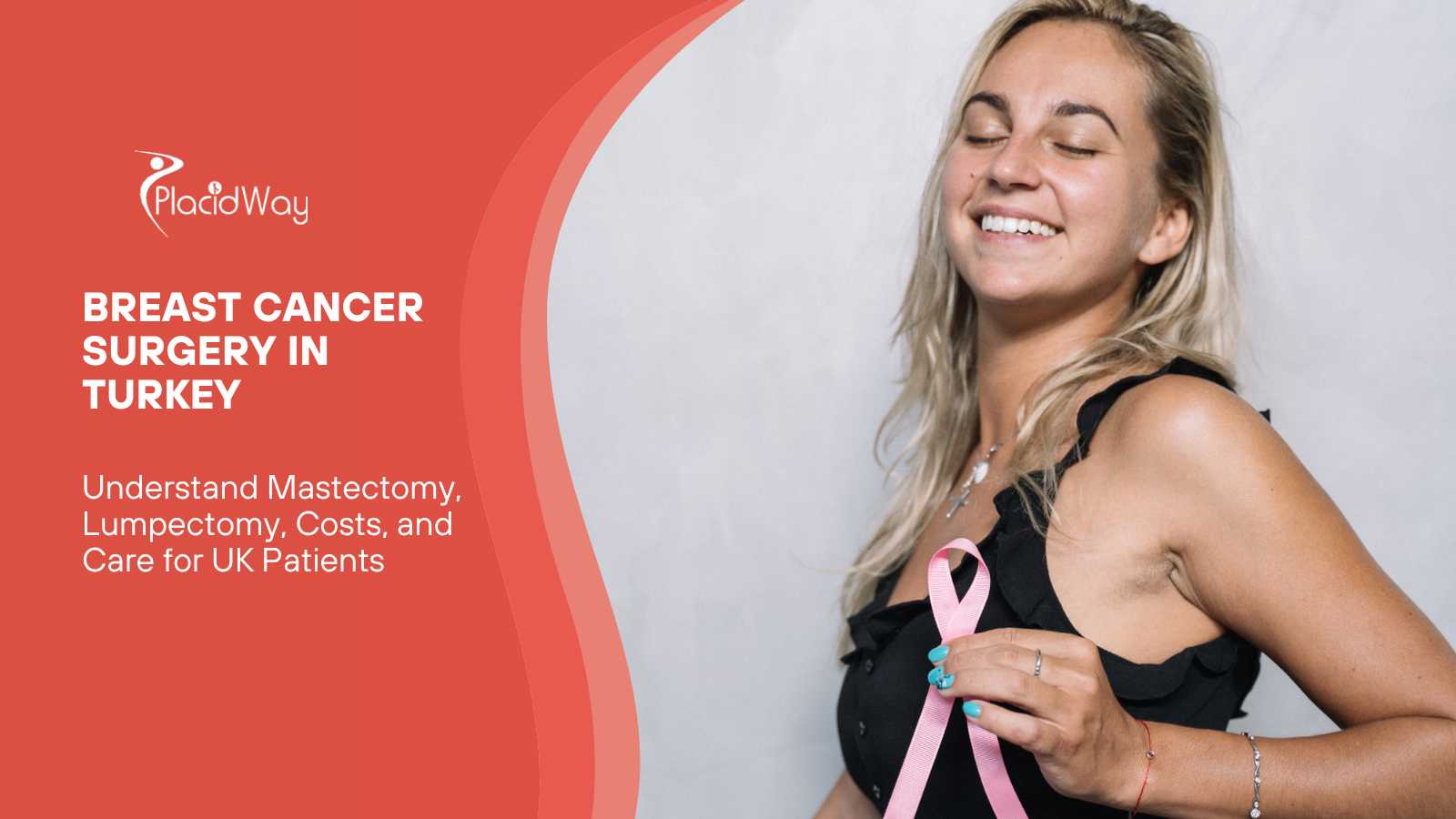
If you have been diagnosed with breast cancer in the UK and are considering breast cancer treatment in Turkey, the decision is about much more than arranging surgery abroad. You need to know whether a lumpectomy or mastectomy is appropriate for your tumour, whether radiotherapy or drug treatment will be needed afterwards, and how your care will continue once you return home.
Turkey has a regulated international-healthcare system, but prices and cancer services vary between hospitals. Before choosing treatment, check the hospital's International Health Tourism Authorization Certificate, its current accreditation status under Türkiye's 2026 health-tourism requirements, and your surgeon's Ministry of Health professional and specialty records. Your pathology and multidisciplinary treatment plan should come before travel dates or package pricing.
Quick Summary: Breast Cancer Treatment in Turkey for UK Women
- Main surgical options: Lumpectomy, also called breast-conserving surgery or wide local excision, removes the cancer with surrounding tissue. Mastectomy removes the breast and may be combined with immediate or delayed reconstruction.
- Estimated cost in USD: There is no single verified 2026 national USD price for lumpectomy or mastectomy in Turkey. Türkiye maintains health-tourism pricing rules, but the final self-pay total depends on pathology, hospital, surgery, lymph-node procedures, reconstruction, medicines and length of stay.
- Who may be suitable: Surgery depends on tumour size, location, number of cancer areas, breast size, lymph-node findings, genetic risk, previous radiotherapy, general health and your informed preferences.
- Lumpectomy and radiotherapy: Breast-conserving surgery is commonly followed by radiotherapy. UK guidance recognises breast-conserving treatment as an established alternative to mastectomy for appropriately selected patients.
- Mastectomy recovery: NHS guidance says many patients resume most usual activities at around three weeks, while complete wound healing can take around six weeks. Reconstruction can extend recovery considerably.
- Hospital verification: Check Türkiye Ministry of Health international-health-tourism authorisation and current TÜSKA accreditation requirements before selecting a hospital.
- Doctor verification: Ask for the surgeon's full name, professional licence information, specialty qualification, breast-cancer experience and hospital privileges. Türkiye's Ministry of Health provides a Doctor Information Bank.
- UK travel caution: UK GHIC and EHIC cards are not valid in Turkey, and the UK does not have a reciprocal healthcare agreement with Turkey. Planned private cancer treatment needs appropriate financial and insurance arrangements.
Lumpectomy vs Mastectomy for Breast Cancer Treatment in Turkey
Lumpectomy and mastectomy are both established breast-cancer operations, but they remove different amounts of breast tissue. A lumpectomy removes the tumour plus a margin of surrounding tissue while preserving most of the breast. Mastectomy removes substantially more breast tissue and, depending on the operation, may also remove the nipple and surrounding skin.
For appropriately selected early breast cancers, breast-conserving surgery followed by radiotherapy can provide long-term outcomes comparable with mastectomy. This does not mean the operations are interchangeable for everyone. Tumour biology, size, location, breast anatomy, margins, genetic risk and ability to complete radiotherapy all influence the decision.
| Factor | Lumpectomy / Breast-Conserving Surgery | Mastectomy |
|---|---|---|
| Breast tissue removed | Cancer plus a surrounding margin. | Most or all breast tissue, depending on technique. |
| Breast preservation | Most of the breast remains. | Breast is removed; reconstruction may be considered. |
| Radiotherapy | Usually recommended afterwards, although selected exceptions exist. | Not always required, but may still be recommended according to pathology and recurrence risk. |
| Reconstruction | Oncoplastic reshaping may sometimes be incorporated. | Immediate or delayed reconstruction may be possible. |
| Further breast surgery | May be required if cancer reaches the surgical margin. | Further breast-tissue excision is less commonly an issue, although other procedures may still be required. |
| Decision factors | Tumour-to-breast size, tumour distribution, radiotherapy suitability and patient preference. | Large or multiple tumour areas, genetic risk, previous treatment and patient preference may influence selection. |
How Doctors Decide Between Lumpectomy and Mastectomy in Turkey
Your operation should be chosen after pathology, imaging and tumour staging have been reviewed. Breast cancer is not one disease, so the size of a lump alone cannot determine whether mastectomy or lumpectomy is better.
UK NICE guidance also emphasises pretreatment assessment, tumour profiling and axillary assessment. Breast MRI is not needed routinely for every patient, but it can be appropriate when conventional imaging cannot clearly establish disease extent or in selected situations where breast-conserving surgery is being planned.
| Clinical Factor | Why It Changes Surgery Planning | Record to Send to Turkey |
|---|---|---|
| Pathology | Confirms invasive cancer, DCIS and important tumour characteristics. | Biopsy report and pathology material if second review is requested. |
| Tumour size and distribution | Affects whether the cancer can be removed while maintaining acceptable breast tissue and margins. | Mammogram, ultrasound, MRI when performed and DICOM images. |
| Lymph nodes | Can influence axillary surgery and additional treatment. | Axillary ultrasound and biopsy findings where applicable. |
| ER, PR and HER2 | Help determine systemic treatment before or after surgery. | Complete receptor and pathology report. |
| Genetic risk | A pathogenic inherited variant may alter risk-management discussions. | Genetic counselling and laboratory report if testing was performed. |
| Previous radiotherapy | May affect whether additional breast radiotherapy is feasible. | Previous radiotherapy plan and treatment summary. |
Why UK Women Consider Breast Cancer Treatment in Turkey
UK patients considering Turkey are usually comparing access, private treatment logistics, specialist expertise and treatment coordination rather than one surgical technique alone. Turkey has public, university and private hospitals serving international patients, while major cities have multidisciplinary oncology services.
However, there is no reliable 2025–2026 official dataset showing exactly how many UK women travelled to Turkey specifically for lumpectomy or mastectomy. General medical-tourism figures should not be presented as breast-cancer patient demographics.
- Patients may seek another specialist opinion about breast-conserving surgery versus mastectomy.
- Some privately paying patients compare appointment availability and surgical scheduling.
- Some women want surgery and reconstruction planned within the same hospital system.
- International departments may provide English-language coordination and medical-record transfer support.
- Treatment cost can influence self-pay decisions, although quotes must be compared item by item.
- Follow-up, radiotherapy and systemic treatment can make continuity with the UK more important than the initial operation price.
Breast Cancer Screening Context in Turkey
OECD's 2025 health profile reported that 37% of eligible women in Türkiye participated in breast-cancer screening, compared with an OECD average of 55%. This describes national screening participation and does not measure the quality of an individual hospital or surgeon.
Source: OECD Health at a Glance 2025: Türkiye.
Why Breast Cancer Remains a Major Women's Cancer
OECD's 2025 analysis reported that breast cancer represented about 28% of cancer incidence among women across OECD countries and approximately 15% of female cancer mortality. These are OECD-wide figures rather than Turkey-specific treatment outcomes.
Source: OECD Health at a Glance 2025.
Breast Cancer Surgery Costs in Turkey vs the UK
There is no responsible single 2026 USD price for lumpectomy or mastectomy in Turkey. Türkiye maintains health-tourism pricing rules and updated public-sector tariffs, but your final bill can change according to hospital type, pathology, lymph-node surgery, reconstruction, implants, medicines and complications.
The UK comparison also requires context. An eligible UK resident receiving NHS treatment does not buy a commercial mastectomy package in the same way as a self-pay international patient in Turkey. UK private treatment, meanwhile, varies between hospitals and insurance arrangements.
| Treatment Pathway | Verified Standard 2026 USD Price | Why the Total Varies |
|---|---|---|
| Turkey international self-pay lumpectomy | No single national patient total available. | Pathology, localisation, sentinel-node biopsy, hospital stay and additional treatment. |
| Turkey international self-pay mastectomy | No single national patient total available. | Mastectomy type, lymph-node procedure, inpatient stay and pathology. |
| Mastectomy plus reconstruction in Turkey | Individual quote required. | Implant versus tissue reconstruction, plastic-surgery fees, theatre time and hospital stay. |
| UK NHS treatment | Not comparable to a private self-pay package for an eligible resident. | Care is delivered through NHS eligibility and clinical pathways rather than international package pricing. |
| UK private treatment | No national standard patient total. | Hospital, surgeon, anaesthesia, reconstruction and insurance arrangements vary. |
What a Turkey Breast Cancer Surgery Quote Should Include
| Cost Item | Ask Whether It Is Included |
|---|---|
| Breast surgeon fee | Yes — obtain the surgeon's name before paying. |
| Anaesthesia and operating theatre | Confirm whether both are included. |
| Sentinel lymph-node procedure | Ask whether tracer, pathology and additional axillary surgery are separate. |
| Final pathology | Confirm receptor testing and additional pathology charges. |
| Hospital stay | Confirm standard nights and charges for additional admission days. |
| Reconstruction | Clarify plastic surgeon, implant, mesh and other materials separately. |
| Complication care | Ask who pays for readmission, infection treatment or additional surgery. |
| Follow-up | Confirm in-person and remote postoperative appointments. |
How to Choose a Breast Cancer Hospital in Turkey in 2026
For international breast-cancer surgery, begin with Turkish regulatory authorisation before considering international accreditation or online reviews. Türkiye's Ministry of Health maintains lists of healthcare facilities authorised for international health tourism.
A significant 2026 change is also important. Under the health-tourism regulation introduced in 2025, hospitals, medical centres, laboratories and dialysis centres holding International Health Tourism Authorization Certificates are required to complete TÜSKA accreditation by 31 December 2026 to continue international-health-tourism activities. Patients should check the current status rather than relying on an old certificate.
Turkey Breast Cancer Hospital Verification Checklist
- Verify the hospital's current Ministry of Health operating licence.
- Check its International Health Tourism Authorization Certificate.
- Check whether the facility appears on the Ministry's current authorised-facility list.
- Ask about its TÜSKA accreditation status under the 2026 requirement.
- Confirm a dedicated breast or oncology multidisciplinary team.
- Verify on-site pathology and breast imaging support.
- Ask whether medical oncology and radiation oncology are available within the same care network.
- Confirm 24-hour emergency care and intensive-care capability or formal transfer arrangements.
- Ask for an English-language discharge summary and complete pathology records.
- Request the hospital's complication and readmission policy.
- Consider JCI or another international accreditation only as an additional signal, not a substitute for Turkish licensing.
How to Verify a Breast Cancer Surgeon in Turkey
Verify the surgeon independently rather than relying only on the hospital biography. Türkiye's Ministry of Health provides a Doctor Information Bank through the government e-Devlet system. Ask the hospital for enough information to match the surgeon to official professional records.
Breast surgery can involve general surgery, breast-focused surgical practice and, when reconstruction is involved, plastic and reconstructive surgery. What matters is that each clinician has the appropriate Turkish specialty qualification and demonstrable experience with the part of the operation they are performing.
| Surgeon Trust Signal | What UK Patients Should Check |
|---|---|
| Professional registration | Verify the doctor's identity and professional status through official Turkish records. |
| Specialty qualification | Confirm relevant surgical specialty training. |
| Breast-cancer case experience | Ask how much of the surgeon's practice involves breast cancer rather than benign or cosmetic breast surgery. |
| Procedure volume | Ask how frequently the surgeon performs the specific operation being proposed. |
| Hospital privileges | Confirm the surgeon is authorised to perform the procedure at the selected hospital. |
| Multidisciplinary practice | Ask whether surgery is decided through a breast-cancer multidisciplinary meeting. |
| Complication management | Ask who manages bleeding, infection, seroma, wound problems or reconstruction complications. |
Questions to Ask Your Breast Surgeon in Turkey
- Why are you recommending lumpectomy or mastectomy for my exact pathology?
- Would breast-conserving surgery be oncologically appropriate?
- Will I need sentinel lymph-node biopsy or another axillary procedure?
- What happens if the lumpectomy margin contains cancer?
- Is immediate reconstruction appropriate if I need mastectomy?
- Will radiotherapy be required after surgery?
- When will final pathology be available?
- How will you communicate the results to my UK oncology team?
What Happens Before and After Breast Cancer Surgery in Turkey?
Breast cancer surgery is only one part of the treatment pathway. Your team may recommend treatment before surgery, called neoadjuvant therapy, or additional treatment afterwards, called adjuvant therapy. These decisions depend on tumour biology and stage.
| Stage of Care | What May Happen | UK–Turkey Coordination Point |
|---|---|---|
| Diagnosis | Biopsy confirms cancer and receptor status. | Send original pathology report before travelling. |
| Staging and imaging | Breast and lymph-node imaging helps define disease extent. | Send DICOM files, not only screenshots. |
| Multidisciplinary review | Team decides surgery and whether systemic treatment is required first. | Request a written recommendation. |
| Surgery | Lumpectomy or mastectomy, with appropriate axillary staging or treatment. | Confirm procedure and consent before admission. |
| Final pathology | Margins, tumour size, nodes and biomarkers guide further care. | Do not leave Turkey without knowing how results will be delivered. |
| Adjuvant treatment | Radiotherapy, chemotherapy, endocrine therapy, HER2-targeted therapy or other treatments may be recommended. | Decide before travel whether care will continue in Turkey or the UK. |
Recovery After Lumpectomy or Mastectomy in Turkey
Recovery depends on the operation, lymph-node surgery, reconstruction, complications and your general health. A straightforward breast-conserving operation can involve a different recovery pathway from mastectomy with immediate reconstruction.
NHS mastectomy guidance notes that patients may return to many usual activities after around three weeks, while wounds can take about six weeks to heal fully. These are general benchmarks rather than a medically safe flight schedule for every patient.
| Timeframe | Biological or Clinical Process | Patient Sensation | Activity Level | Action Required |
|---|---|---|---|---|
| First 24–48 hours | Initial wound healing and postoperative observation. | Pain, tiredness and restricted movement may occur. | Short gentle movement as advised. | Monitor bleeding, pain, wound and vital signs. |
| First week | Swelling and wound healing continue; drains may still be present after some operations. | Soreness, bruising, tightness or numbness can occur. | Light activity according to surgical advice. | Attend postoperative review and follow wound-care instructions. |
| Weeks 2–3 | Tissue repair continues. | Energy and arm movement may gradually improve. | Gradual return to routine as cleared. | Continue exercises and monitor swelling or infection. |
| Around 6 weeks | Mastectomy wounds may have substantially healed, although internal recovery continues. | Residual tightness, numbness or fatigue can persist. | Progress according to clinical review. | Continue oncology and rehabilitation follow-up. |
| Longer term | Scar maturation, shoulder recovery and possible adjuvant treatment continue. | Recovery varies widely, particularly after reconstruction. | Individualised. | Follow surveillance and additional treatment plans. |
Breast Cancer Surgery Risks and Warning Signs After Treatment in Turkey
Lumpectomy and mastectomy are established operations, but both can cause complications. Risks can include bleeding, infection, fluid accumulation called a seroma, pain, wound-healing problems and changes in breast or chest sensation.
Axillary lymph-node procedures can also affect shoulder movement and increase lymphoedema risk. Reconstruction introduces additional procedure-specific risks that should be discussed separately with the reconstructive surgeon.
| Possible Problem | What You May Notice | Action |
|---|---|---|
| Wound infection | Increasing redness, warmth, discharge, fever or worsening pain. | Contact your surgical team promptly. |
| Seroma | Fluid swelling around the surgical area. | Ask the breast team whether clinical assessment or drainage is required. |
| Bleeding | Sudden swelling, wound bleeding or increasing bruising. | Seek urgent assessment according to discharge instructions. |
| Lymphoedema | Persistent swelling or heaviness in the arm or hand. | Report symptoms to a breast or lymphoedema specialist. |
| Possible blood clot | Leg swelling or pain, breathlessness, chest pain or collapse. | Symptoms involving breathing, chest pain or collapse require emergency medical assessment. |
UK Follow-Up After Breast Cancer Treatment in Turkey
Continuity of cancer care should be arranged before you leave the UK. Breast surgery can lead directly to decisions about radiotherapy, chemotherapy, endocrine treatment, HER2-targeted treatment or additional surgery once final pathology is available.
UK government guidance is particularly important for self-funded patients. Turkey does not have a reciprocal healthcare agreement with the UK, and UK-issued GHIC and EHIC cards are not valid there. They should not be treated as insurance for planned breast-cancer surgery.
| Before Leaving Turkey | Why Your UK Team May Need It |
|---|---|
| Final pathology report | Determines margins, stage, lymph-node status and additional treatment. |
| Operative report | Explains exactly what tissue and nodes were removed. |
| ER, PR and HER2 results | Important for systemic-treatment planning. |
| Imaging files | Allows comparison with future examinations. |
| Implant or reconstruction documentation | Important for future surgery and imaging if reconstruction was performed. |
| Medication and discharge list | Helps avoid duplication and drug-interaction problems. |
| Recommended oncology plan | Helps UK clinicians understand what the Turkish multidisciplinary team recommended next. |
Is Breast Cancer Treatment in Turkey Right for You?
Turkey may be worth considering when the proposed treatment is clinically appropriate, independently verifiable and integrated with safe follow-up. The destination itself does not determine whether lumpectomy, mastectomy or reconstruction is the correct choice.
Treatment Abroad May Be Reasonable When
- Your pathology is confirmed.
- A multidisciplinary team has recommended the surgical approach.
- The hospital and surgeon can be independently verified.
- The written quote clearly identifies what is included.
- There is a defined complication-management pathway.
- Your UK follow-up has been considered before departure.
Seek Another Opinion Before Travelling When
- Surgery is recommended without reviewing pathology or imaging.
- You are told mastectomy automatically provides better survival.
- The hospital cannot document health-tourism authorisation.
- The surgeon's professional credentials cannot be verified.
- The clinic guarantees a cancer cure.
- Radiotherapy or systemic treatment is ignored when discussing lumpectomy.
- No plan exists for managing complications after you return to the UK.
Frequently Asked Questions About Breast Cancer Treatment in Turkey
Is Turkey a good option for breast cancer treatment for UK women?
Turkey has hospitals providing breast surgery, oncology, pathology, radiology and reconstruction for international patients. Suitability depends on the individual hospital and treatment plan rather than the country alone. Verify Ministry of Health authorisation, accreditation status, surgeon credentials, multidisciplinary care and how follow-up will continue after returning to the UK.
Is lumpectomy available for breast cancer in Turkey?
Yes, breast-conserving surgery is an established breast-cancer operation used in Turkey. Whether it is appropriate depends on tumour size, location, distribution, breast anatomy, margins and other clinical factors. Radiotherapy is usually required afterwards, so international patients should plan the complete treatment pathway rather than surgery alone.
Is mastectomy better than lumpectomy for breast cancer?
Not automatically. For appropriately selected early breast cancers, breast-conserving surgery followed by radiotherapy can offer long-term outcomes comparable with mastectomy. Your tumour characteristics, genetic risk, previous treatment and personal preferences should guide the decision. Ask a breast multidisciplinary team to explain why one approach is recommended.
How much does breast cancer surgery cost in Turkey?
There is no single verified 2026 USD price for breast-cancer surgery throughout Turkey. Costs depend on hospital, operation, pathology, lymph-node procedures, reconstruction, inpatient care and additional treatment. Request an itemized written quotation showing the exact surgery, surgeon, hospital stay, pathology and potential complication charges.
Can I have breast reconstruction at the same time as mastectomy in Turkey?
Immediate reconstruction may be possible for some patients, but it is not appropriate in every situation. Cancer characteristics, general health, planned radiotherapy and reconstructive technique can influence timing. Ask both the breast surgeon and reconstructive surgeon to explain immediate versus delayed reconstruction before agreeing to the operation.
Will I need radiotherapy after lumpectomy in Turkey?
Radiotherapy is commonly recommended after breast-conserving surgery because it reduces local recurrence risk. Selected patients may follow different protocols depending on age, pathology and recurrence risk. Ask the oncology team to define the radiotherapy plan before travelling so you know whether it will occur in Turkey or the UK.
Will I need radiotherapy after a mastectomy in Turkey?
Not every patient needs radiotherapy after mastectomy. It may still be recommended according to tumour size, lymph-node involvement, margins and other recurrence-risk factors. Final pathology frequently determines this decision, so ask how quickly results will be available and which oncology team will arrange further treatment.
How can I verify a breast cancer hospital in Turkey?
Check that the hospital is licensed and appears on Türkiye Ministry of Health's current international-health-tourism authorisation list. In 2026, also ask about TÜSKA accreditation requirements. Confirm breast multidisciplinary care, pathology, imaging, medical oncology, radiotherapy access, emergency support and documented complication-management arrangements.
How can I verify a breast surgeon in Turkey?
Request the doctor's full name, professional licence information and specialty credentials. Türkiye's Ministry of Health operates a Doctor Information Bank through e-Devlet. You should also ask about breast-cancer case experience, annual procedure volume, hospital privileges, multidisciplinary practice and who manages postoperative complications.
How long should I stay in Turkey after a mastectomy?
There is no universal safe stay period. Recovery depends on mastectomy type, lymph-node surgery, reconstruction, drains, wound healing and complications. NHS guidance says overall recovery takes several weeks, but your Turkish surgeon should determine when you are medically fit to fly after examining your postoperative progress.
Can I use my UK GHIC for breast cancer treatment in Turkey?
No. UK government travel guidance states that UK-issued GHIC and EHIC cards are not valid in Turkey. The UK also has no reciprocal healthcare agreement with Turkey. Planned breast-cancer treatment should therefore have appropriate payment arrangements and insurance, including consideration of complications and additional care.
What records should I bring back to the UK after breast cancer surgery in Turkey?
Bring the operative report, final pathology, tumour receptor results, lymph-node findings, imaging files, discharge summary, medication list and reconstruction or implant information where applicable. You should also obtain the Turkish multidisciplinary team's recommendations for radiotherapy, chemotherapy, endocrine treatment or other postoperative cancer care.
Compare Breast Cancer Treatment Options in Turkey
PlacidWay can help you request information from healthcare providers in Turkey, compare proposed breast-cancer treatment pathways and understand what different quotations include. Before deciding, ask every provider to identify the surgeon, hospital authorisation, proposed operation, pathology plan, reconstruction options, expected follow-up and complication-management process.
Disclaimer
Disclaimer: This information is for educational purposes only and does not replace professional medical advice. Always consult a qualified healthcare provider before making medical decisions.
References for Breast Cancer Treatment in Turkey
- Treatment for Breast Cancer in Women – NHS
- Mastectomy: Procedure, Recovery and Complications – NHS
- International Health Tourism Authorised Healthcare Facilities – Türkiye Ministry of Health
- 2026 Health Tourism Accreditation Requirements – Türkiye Ministry of Health
- Doctor Information Bank – Türkiye Ministry of Health / e-Devlet
- Health at a Glance 2025: Türkiye – OECD
- Healthcare and Medical Travel Information for Turkey – UK Government





















Share this listing