

Start here if a symptom has appeared
After Orthopedic Surgery in Istanbul, Turkey: who helps when you are back in the UK?
A clinic abroad can explain your operation. Your local clinical team can examine a new symptom. Knowing which to contact first protects your health and makes the bills easier to understand.
Call 999 now
If you have chest pain, sudden breathlessness, collapse, or another immediately serious symptom, seek emergency care in the UK. Do not wait for a reply from Istanbul or arrange a flight.
Seek urgent local advice today
New one-sided calf pain or swelling, increasing redness, wound discharge, fever, or pain that is worsening rather than settling needs prompt clinical assessment. Call your GP, or NHS 111 if you cannot reach a suitable service. Follow the advice you receive about urgent treatment or A&E.
For a non-urgent concern
Contact your operating clinic using its discharge number and describe what has changed. You can also speak to your UK clinician. Keep taking prescribed medicines unless a clinician tells you to change them.
If you are still in Turkey, use the hospital’s emergency contact or call 112 for an emergency. These are routes to assessment, not a way to diagnose yourself from a symptom list.
The first money question
Do I have to pay before anyone checks me?
Not if you are eligible for NHS care in the UK and use an NHS service for a clinically necessary assessment. An overseas private operation does not mean you should delay seeking urgent help at home. The clinician who sees you decides what assessment and treatment you need. It does not mean the NHS has agreed to provide your planned private rehabilitation, a preferred consultant appointment, or every element of follow-up specified by your Istanbul clinic.
Private UK appointments, scans or physiotherapy are a separate choice and may generate their own bills. Your Turkish package may include a review by the operating team, but it will not automatically pay a UK provider. Before surgery, ask both providers exactly where routine follow-up will happen and who will pay if an unexpected problem needs investigation.
One patient, one ordinary decision at a time
Mara notices her calf feels different.
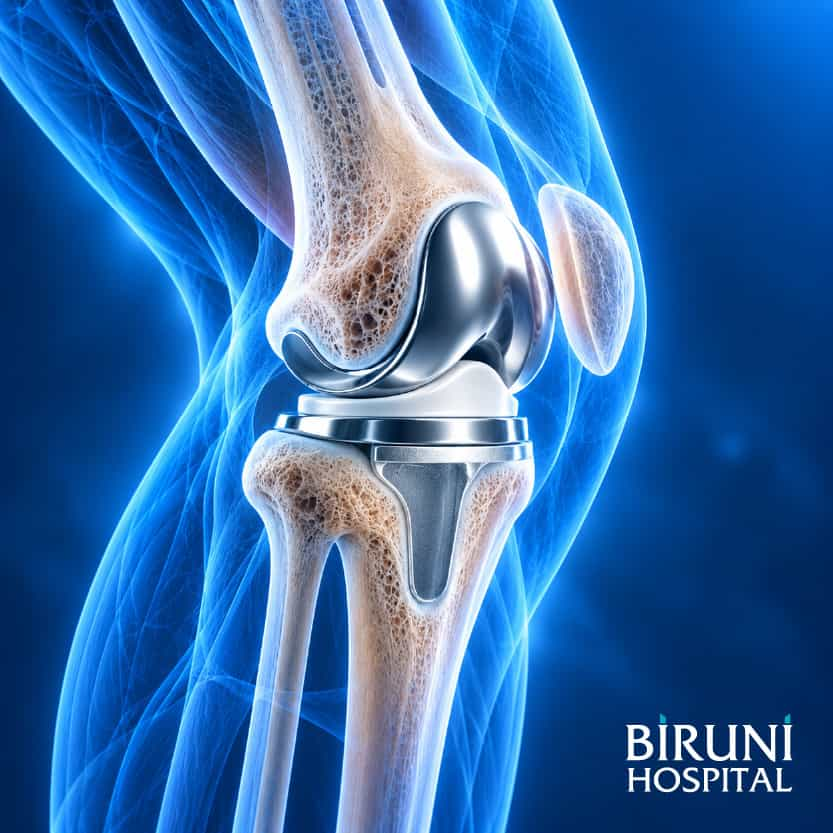
Mara is a composite patient, not a real person or a reported clinical case. She is 63, lives near Manchester and paid privately for a primary knee replacement in Istanbul. Before leaving the hospital, she received a discharge letter, medication list and a plan for physiotherapy. Her surgeon assessed her recovery and discussed her return flight. She travelled with a family member and used the mobility assistance she had arranged with her airline.
Three days after arriving home, her operated leg feels more swollen than it did the previous evening. There is new calf tenderness. Some swelling after a knee replacement can be expected, but Mara cannot tell from home whether this change is routine. She puts the clinic’s number beside her discharge papers, then calls her GP practice for a same-day assessment. That order matters. A message sent across time zones cannot replace a local examination.
At home, the next few hours
Who arranges the first check, and who gets its results?
Mara tells the GP receptionist that she recently had a knee replacement abroad and now has new one-sided calf swelling and tenderness. She gives the operation date, her current medicines and the best number to reach her. The practice advises an urgent clinical assessment. If her GP service were unavailable, NHS 111 could direct her to an appropriate local service. If breathlessness or chest pain developed while she waited, she would call 999 rather than continue waiting.
She takes her discharge letter and medication list, including the name and dose of any blood-thinning medicine. She does not stop or adjust it on her own. The UK clinician examines her and decides whether testing is needed. In this illustrative story, a local ultrasound is arranged and finds no clot. The clinician explains the result, advises her on what changes would warrant another assessment and reviews her recovery plan. A different patient’s examination could lead to a different test or treatment.
Mara asks how to obtain a copy of the assessment and scan report. She checks whether they will appear in her NHS record and requests a copy she can send to Istanbul. Her GP practice can retain the documents relevant to her ongoing care. The Turkish hospital does not automatically have access to NHS systems, and her UK doctor will not automatically receive every document held in Turkey. Mara keeps her own copies so neither team has to rely on her memory of a telephone conversation.
The cost at this point: For an eligible patient using NHS services, clinically necessary NHS assessment follows ordinary NHS rules. A private UK consultation, scan or physiotherapy session should be priced and agreed separately. Ask about any prescription or other applicable charges rather than assuming every item is included.
The message to Istanbul
What does Mara ask the operating team?
Once local care is under way, Mara contacts the hospital through the clinical aftercare channel on her discharge paperwork. She uses a secure portal if one was provided and avoids sending sensitive records through an unfamiliar address. She asks the hospital to confirm receipt, identify which clinician will review the information and explain when she should expect a response. If there is a PlacidWay coordinator involved in arranging her treatment, she may also tell that coordinator she is having difficulty reaching the clinic and ask for help identifying the correct contact. The coordinator is not her emergency service or treating clinician.
A message Mara can adapt
“I had a knee replacement at your hospital and am now back in the UK. My operated leg developed new calf swelling and tenderness. I contacted a local clinician today. An ultrasound was performed and I have been told the result. I am following the local clinician’s advice.
“Please tell me the secure way to send the assessment note and scan report. Could the orthopedic team review them alongside my operation record, confirm my existing rehabilitation instructions or explain any changes they recommend, and send me a written response for my UK clinician? Please also confirm whether this review is included in my package and whether any additional fee would apply.”
Include your name, hospital reference if available, operation date, current medicines and a reachable phone number. Send only the records the team requests through a channel you trust.
The clinic can review the surgical record and discuss its own postoperative instructions. It may request photographs of a wound if a wound concern is relevant, but a photograph or video call cannot rule out every complication. Mara asks for the clinician’s reply in writing, including who gave the advice. If language is a barrier, she asks for an English discharge document and an explanation she can share with her UK clinician.
Follow the bill, not just the symptom
Which costs belong to the package?
A quoted operation price is not a promise that every later contact or test is free. Mara’s primary knee replacement package may have covered the surgeon, standard implant, anaesthesia, hospital care and inpatient stay. What happens after discharge depends on her actual contract, the clinical reason for a service, where it takes place and any insurance terms. The examples below are a planning guide, not a statement about a particular hospital’s policy.
| Service or expense | Who usually pays? | What to confirm in writing |
|---|---|---|
| Surgery and agreed inpatient care in Istanbul | The patient, or an insurer that has expressly agreed cover | Implant specification, hospital nights, medicines, tests and what triggers an extra charge |
| Routine remote review by the operating clinic | Sometimes included, sometimes charged separately | Number of reviews, time period, clinician involved and response channel |
| Urgent assessment in the UK | NHS rules apply to eligible patients using NHS care, while private care has its own charges | Whether the proposed appointment, scan or treatment is NHS or private |
| Outpatient physiotherapy and equipment | Depends on NHS availability and package terms, otherwise often the patient | Sessions included, local provider, equipment and cancellations |
| Extra hotel nights, changed flights or a companion’s costs | Usually the patient unless applicable insurance accepts a claim | Change fees, accessible transport, insurance exclusions and evidence needed |
| Further private treatment in Turkey | Depends on a written agreement, any applicable guarantee and insurance decision | Who pays for tests, admission, a new implant, travel and care after returning home |
Mara keeps invoices and receipts alongside clinical records. An insurer may ask for evidence that a condition was declared, that the trip was covered and that a proposed expense meets its policy. She seeks any required authorisation before non-emergency private spending. For urgent care, she follows local medical advice first and addresses reimbursement afterwards.
The paperwork route
How does her UK doctor hear what Istanbul says?
Mara is the link between two healthcare systems. Before she travelled, she asked the Istanbul hospital for a discharge pack in English. It identifies the procedure and side operated on, operation date, implant make and model with identifying details where available, medicines, allergies, test results, wound instructions, mobility advice and a clinical contact. She also requested an operative report. Not every item will be ready at discharge, so she agreed when and how any outstanding document would be delivered.
After her local appointment, Mara sends the assessment note and ultrasound report to the clinic using its approved channel. She asks the clinic to return a written response to her and, with the relevant permissions and contact details, to her GP practice. She also gives her GP practice a copy herself and asks how it should be submitted for her record. If a coordinator helps with communication, Mara checks what information that person needs and whether the clinic has permission to share it. She need not circulate her entire medical history to arrange a reply.
This is a handover, not an assumption that one clinician will adopt another clinician’s plan. The UK clinician decides what is appropriate for care delivered locally. The operating surgeon remains the best source for details of the procedure performed. If their recommendations differ, Mara asks them to explain the difference in writing and discusses her immediate care with the clinician who can assess her in person.
A warranty is not an aftercare plan
Would an implant guarantee pay for another trip?
Mara asks this before her operation, not for the first time after a problem arises. An implant manufacturer’s product warranty, if applicable, concerns specified product defects under its terms. It is not a guarantee that an individual hip or knee will feel a certain way or last for a set number of years. A clinic may offer a separate policy about revisional surgery or fees. Neither should be treated as automatic cover for flights, a companion, accommodation, UK tests, rehabilitation, lost earnings or every medical complication.
She requests the actual written terms. They should identify what is covered, exclusions, the claim period, required evidence, who decides whether the terms apply, where any treatment would take place and what she would still pay. She also asks for the proposed implant’s manufacturer, model and identifying information. “Standard implant included” is a useful starting point for a quote, but it does not tell her whether another option would suit her medical needs or incur an additional fee. That is a discussion for her surgeon.
Travel insurance and private medical insurance are different again. Many policies restrict planned treatment abroad or complications arising from it. Mara discloses her planned operation and existing conditions, reads the policy wording and obtains written confirmation of any relevant cover. An insurance card, a clinic guarantee and a coordinator’s reassuring email cannot substitute for that confirmation.
Before booking, compare the whole plan
Would a different destination make follow-up easier?
For Mara, the lowest headline price would not necessarily mean the lowest total spend. She needs to compare a surgeon and hospital she can verify, a suitable implant, enough time near the hospital before flying, access to physiotherapy and a credible plan for records and follow-up in Manchester. Direct flight options from UK airports may help, but a direct flight does not make travel medically appropriate. Airport walking distances, a transfer across Istanbul and the ability to sit comfortably also matter after a joint replacement.
The following approximate private-pay ranges are in US dollars so the destinations can be compared on one basis. Mara budgets in pounds. She would check the exchange rate, card fees and the provider’s billing currency before paying. These are estimates for one primary total hip or knee replacement, not prices for every orthopedic operation or a promise of availability.
| Location | Estimated price, USD | Check beyond the quoted operation |
|---|---|---|
| Istanbul, Turkey | $7,000–$15,000 | Rehabilitation, hotel nights and flights vary |
| Antalya, Turkey | $7,000–$14,000 | Accommodation and extended physiotherapy vary |
| Warsaw, Poland | $8,000–$16,000 | Travel and post-discharge rehabilitation may be separate |
| Prague, Czechia | $9,000–$18,000 | Outpatient rehabilitation and accommodation vary |
| Budapest, Hungary | $8,000–$16,000 | Hotel, flights and extended rehabilitation may be separate |
| United Kingdom, private self-pay | $15,000–$26,000 | Diagnostics, physiotherapy and complication cover vary |
The ranges generally cover surgery, a standard implant, anaesthesia and hospital care, but exact inclusions differ. Revision surgery, complex cases and a longer stay can cost more. Mara asks each provider for an itemised written quote and its validity period. She does not treat the spread between two ranges as a guaranteed saving.
What the price cannot tell you
How does Mara judge a hospital without relying on a ranking?
She uses a weighted checklist as a way to organise questions, not to assign an invented score to a city. Clinical safety and quality standards carry 25% of her decision. She asks about infection-prevention procedures, medical assessment before surgery, access to urgent care and how the hospital manages complications. Provider qualifications, orthopedic specialisation and accreditation carry 20%. She requests the named surgeon’s credentials, relevant experience with her specific operation and the hospital’s current accreditation details, then checks claims with the issuing bodies where possible.
Aftercare, rehabilitation and follow-up support account for another 20%. Mara wants a written mobility and physiotherapy plan, a clinical contact after discharge, a clear route for urgent concerns and a practical handover to the UK. Treatment cost and price transparency make up 15%. She compares what each quote actually includes, not just the first figure on a website. Travel access from the UK contributes 10%, including flight routes, transfer time and whether a companion can help. The final 10% covers implant options, treatment suitability and care coordination.
These percentages express Mara’s priorities. They are not published performance data, and they do not establish that Istanbul, Antalya, Warsaw, Prague or Budapest is clinically better. A well-documented plan at one hospital may suit her better than a lower quote elsewhere. Equally, staying in the UK may be preferable if local follow-up or avoiding travel has greater value to her. She discusses her medical suitability for surgery and travel with her own clinician as well as the proposed surgeon.
For Istanbul in particular, she confirms which hospital campus will perform the operation, how long she should remain locally after discharge and how she will travel to the airport. She checks current entry and travel advice, airline assistance arrangements and any rules affecting her medicines. Her surgeon advises when flying is suitable for her recovery. An airline’s willingness to carry her is not medical clearance.
Plain limits
What can each person promise?
- The operating clinic can explain its records, proposed follow-up and written package terms. It cannot reliably diagnose every new symptom from another country, guarantee a result or direct a UK service to follow its instructions.
- A UK clinician can assess Mara locally and decide what care is clinically appropriate. They may not have her operative details until she supplies them. An NHS appointment does not convert her private overseas package into an NHS rehabilitation contract.
- Insurance pays only according to the relevant policy and any required approvals. Planned treatment abroad, associated complications, cancellations and travel changes may be treated differently. Mara checks each provision rather than assuming general travel cover is enough.
- A warranty or clinic guarantee applies only under its written conditions. It cannot promise that surgery will succeed, that travel will be comfortable or that unrelated expenses will be reimbursed.
- A PlacidWay coordinator can be asked to help clarify available provider information or a communication route if that support is part of Mara’s arrangement. The coordinator does not examine her, interpret her scan, provide emergency cover, approve an insurance claim or guarantee a clinic’s response. The specific coordination services available should be confirmed before she relies on them.
What Mara would arrange earlier
What makes the journey home less complicated?
Before booking, Mara tells her UK GP or usual treating clinician about her plans and asks what information would be useful when she returns. She does not assume the practice can reserve routine postoperative appointments or agree in advance to a private hospital’s care plan. She checks what local physiotherapy she could access, how quickly a private alternative could begin if needed and what either route might cost. Her Istanbul surgeon reviews her medical history, confirms whether the proposed operation is suitable and sets out the expected recovery and follow-up schedule.
Her written quote separates the operation and implant from possible extras such as preoperative tests, a different implant, additional nights, medicines after discharge, hotel accommodation and outpatient therapy. It identifies who to contact for a medical concern after hours, how English-language records are supplied and how a remote review is requested. If a complication requires a longer stay in Turkey, she knows whom to ask for an updated treatment estimate before non-emergency additional care. She leaves room in her budget for changed flights and extra accommodation without assuming either will be needed.
For the return journey, she asks the surgeon for an individual assessment of when flying is appropriate. She checks the airline’s rules for recent surgery and requests airport assistance in advance if she needs it. She considers the journey from hospital or hotel to Istanbul Airport, security queues, time seated on the aircraft and the drive home from Manchester Airport. Her family member can help carry luggage, but cannot replace clinical support. She follows her own team’s advice on movement, exercises, wound care and medicines during travel.
In her hand luggage she carries her discharge letter, implant details, medication list, prescriptions where relevant, clinic contact details and any travel or insurance documents she may need. She keeps digital copies that she can access if a bag is delayed. She also records when the next clinical review is due and who is responsible for arranging it. That preparation does not prevent every problem. It makes a new symptom easier to explain and a local assessment less dependent on guesswork.
A few days later
What does resolution look like for Mara?
Mara’s local clinician has assessed the calf symptom, explained the negative ultrasound result and told her when to seek further help. The Istanbul team has received the report and responded with its view of her postoperative plan. Mara has passed that written reply to her GP practice. She continues rehabilitation according to advice from clinicians responsible for her care, keeping a note of her symptoms and appointments. If swelling changes again, she does not treat the first scan as permanent reassurance. She seeks fresh local advice.
Her paperwork also shows what she paid. The original private surgery package was paid by Mara. Her clinically necessary NHS assessment followed the rules that apply to her eligibility for NHS care. A private physiotherapy session she chose in Manchester was billed separately. The clinic’s remote review was handled under the terms she had confirmed in advance. None of those arrangements can be assumed for another patient without checking their quote, NHS eligibility and insurance policy.
This story uses a composite patient and an illustrative clinical pathway. It cannot predict how a real symptom will be assessed or what an individual provider will charge. Its practical lesson is narrower: get urgent symptoms assessed where you are, keep both clinical teams informed through written records, and ask who pays before assuming that a package, warranty or policy covers follow-up.

























Share this listing