
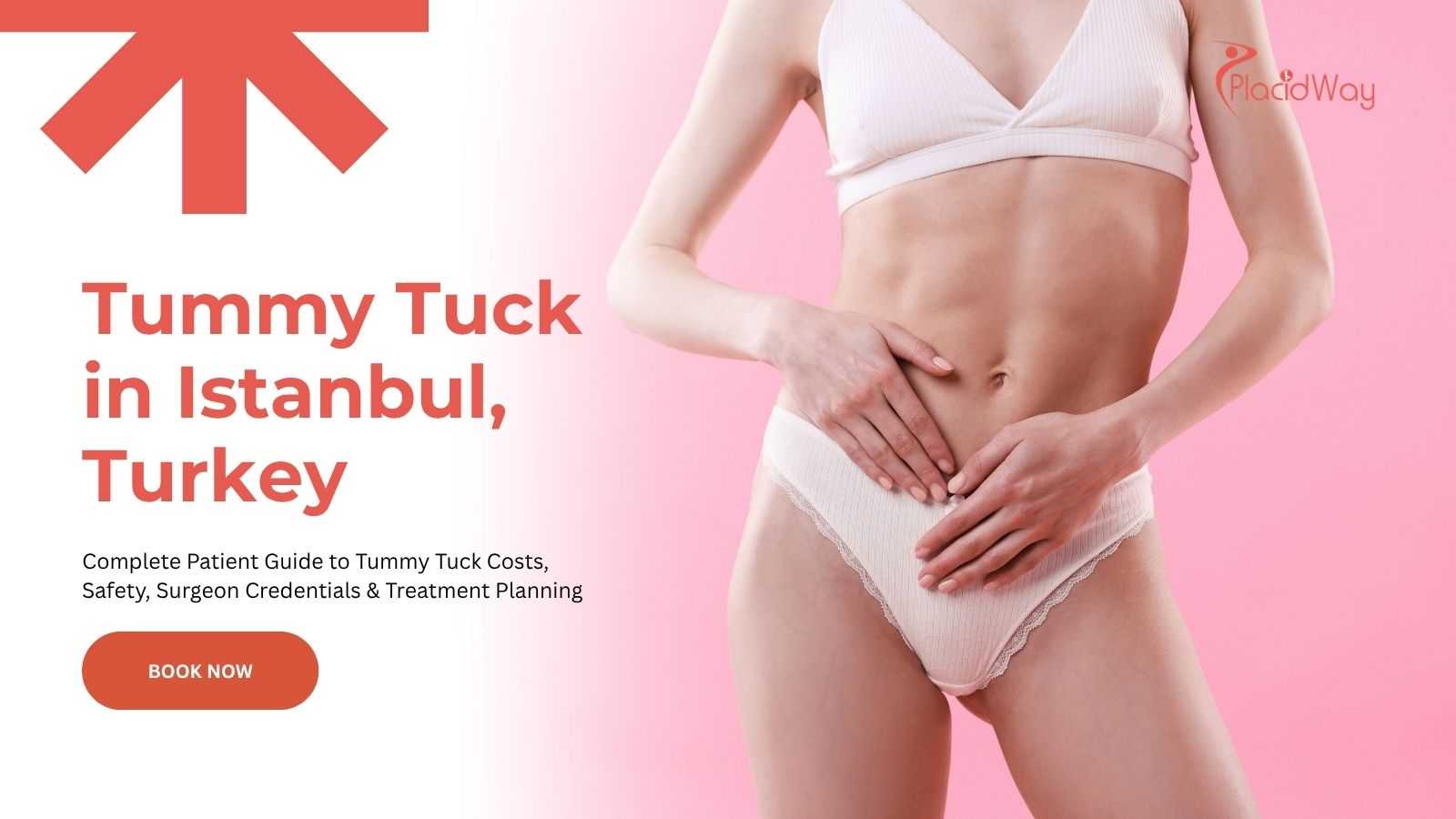
Dealing with stubborn abdominal skin after weight loss or pregnancy can be frustrating, leading many to explore an abdominoplasty procedure in Turkey. Navigating treatment abroad means you must carefully balance treatment expenses with strict safety standards, especially when comparing medical tourism packages. By understanding local costs and knowing exactly which Turkish Ministry of Health certificates and European board accreditations to look for, you can safely plan your tummy tuck surgery in Istanbul.
Quick Answer Summary
- Estimated Cost: Typically ranges from $3,000 to $5,500 USD in Istanbul, depending on procedure complexity and facility type.
- Safety Overview: Generally safe when performed by a surgeon board-certified by the Turkish Society of Plastic, Reconstructive and Aesthetic Surgeons (TSPRAS) in a Ministry of Health-licensed facility.
- Ideal Candidate: Individuals near their ideal body weight experiencing loose abdominal skin, weakened muscles, or localized fat that does not respond to diet or exercise.
- Recovery Time: Most patients return to light activities within two to three weeks, but full internal healing takes several months.
- Why Istanbul: Patients often choose this destination for the combination of experienced specialists, comprehensive care packages, and well-regulated private hospital infrastructure.
- Crucial Certifications: Always verify that your chosen clinic holds a Turkish Ministry of Health (Sa?l?k Bakanl???) license and your surgeon is registered with the Turkish Medical Association (TTB).
Understanding Abdominoplasty Procedures in Turkey
A tummy tuck, clinically known as abdominoplasty, is a surgical procedure designed to remove excess skin and fat from the abdomen. The surgery also frequently involves tightening the underlying abdominal wall muscles. Patients often seek this treatment when they have experienced significant physical changes that affect skin elasticity.
In Istanbul, specialized plastic surgeons perform several variations of this procedure tailored to different anatomical needs. The specific technique your surgeon recommends will depend entirely on the amount of loose skin you have and its location on your body.
| Procedure Type | Clinical Focus | Typical Patient Profile |
|---|---|---|
| Mini Tummy Tuck | Targets the area below the navel | Patients with minor lower abdominal skin laxity |
| Full Tummy Tuck | Addresses the entire abdominal wall | Post-pregnancy patients or moderate weight loss patients |
| Extended Tummy Tuck | Includes abdomen and flanks (sides) | Massive weight loss patients with circumferential excess skin |
Why Patients Travel for Plastic Surgery in Istanbul
The decision to travel abroad for a major medical procedure involves evaluating clinical standards alongside logistical convenience. Istanbul has developed a robust healthcare ecosystem specifically designed to accommodate international patients seeking aesthetic surgery.
One primary driver for this cross-border healthcare movement is the specialized experience of local medical professionals. High patient volumes in Turkish private hospitals mean that local surgeons often perform complex body contouring procedures frequently, contributing to specialized clinical expertise. Additionally, the regulatory environment for medical tourism has strict guidelines governing patient rights.
Advantages
- Access to board-certified specialists
- Comprehensive care pathways including aftercare
- Modern hospital infrastructure
Considerations
- Navigating language barriers during consultation
- Managing post-operative travel stress
- Coordinating long-term follow-up care back home
Cost of Treatment Across Different Regions
Understanding the financial aspects of an abdominoplasty is a critical step in your medical research. Healthcare costs vary dramatically between countries due to differences in living costs, healthcare infrastructure, and government subsidies for medical education. In Istanbul, the cost often reflects an all-inclusive package rather than just the surgical fee.
When comparing estimates, you must look closely at what is included. An advertised low price may only cover the surgeon's fee, leaving you responsible for anesthesia, operating room time, garments, and medications. Always request an itemized written quote before making any financial commitments.
| Country | Estimated Average Cost (USD) | Typical Inclusions |
|---|---|---|
| United States | $8,000 - $15,000 | Procedure only (facility and anesthesia extra) |
| United Kingdom | $7,500 - $12,000 | Procedure, standard facility fees |
| Turkey (Istanbul) | $3,000 - $5,500 | Procedure, anesthesia, hospital stay, hotel, local transfers |
Choosing a Hospital or Clinic in Istanbul
Selecting a safe environment for your surgery is equally as important as choosing your surgeon. Private healthcare in Turkey is strictly overseen, but international patients must still independently verify clinical standards. The facility where your operation takes place should be equipped to handle medical emergencies.
Look for clinics that operate within full-scale hospitals rather than standalone outpatient centers. A properly equipped hospital will have an on-site Intensive Care Unit (ICU) and an internal blood bank, which are critical safety safety nets for major body contouring surgeries.
Essential Facility Certifications
- Turkish Ministry of Health License: Mandatory for all legal medical facilities operating in Turkey.
- International Health Tourism Authorization Certificate: Required by the Turkish government for clinics treating international patients.
- ISO 9001 Certification: Indicates standardized quality management systems in healthcare.
- Joint Commission International (JCI): While not strictly mandatory, this international accreditation signals strict adherence to global patient safety and hygiene protocols.
Evaluating Surgeon Credentials and Expertise
The success of your body contouring procedure relies heavily on the clinical judgment and technical skill of your surgeon. Istanbul hosts thousands of doctors, making credential verification a vital part of your preoperative research. You should verify that your practitioner is a qualified plastic surgeon, not a general practitioner performing aesthetic procedures.
In Turkey, plastic surgery is a recognized medical specialty requiring extensive post-graduate residency training. You can verify a doctor's standing by checking their memberships in official medical registries and professional societies.
| Credential / Association | What It Means for Patient Safety |
|---|---|
| Turkish Medical Association (TTB) | The doctor is legally registered to practice medicine in Turkey. |
| TSPRAS Membership | The doctor is a recognized specialist in plastic, reconstructive, and aesthetic surgery. |
| EBOPRAS Certification | The surgeon has passed rigorous European board examinations for plastic surgery. |
| ISAPS Membership | Indicates the surgeon adheres to international safety guidelines for aesthetic surgery. |
Patient Suitability and Surgical Candidacy
Abdominoplasty is a major surgical intervention and is not suitable for everyone. Before you travel, a reputable clinic will conduct a remote medical assessment to determine your eligibility. This assessment typically involves reviewing your medical history, current medications, and photographs of your abdomen.
An ideal candidate is someone who maintains a stable weight and is in generally good health. Tummy tucks are not weight-loss procedures. If you are currently on a weight-loss journey, your surgeon will likely advise you to reach your target weight and maintain it for at least six months before undergoing surgery.
Patient Demographics and Global Travel Trends
The demographics of patients traveling for aesthetic procedures provide clinical insight into global healthcare patterns. According to 2024 healthcare tourism reports, cross-border patient volumes in Turkey reflect specific age and geographic distributions. The data indicates that body contouring appeals heavily to patients who have undergone significant life events affecting their physical anatomy, such as massive weight loss or multiple pregnancies.
Understanding these demographic segments helps medical facilities standardize pre-operative screening protocols and tailor post-operative care for specific international cohorts.
Origin of International Plastic Surgery Patients in Turkey (2024 Trends)
Data reflects the relative distribution of top inbound patient populations for aesthetic procedures.
Clinical Age Demographics for Abdominal Contouring
Clinical data gathered from aesthetic registries in 2024 highlight the dominant age brackets for this procedure. The majority of patients fall into the mid-adulthood range. This aligns closely with the biological timeline of post-partum recovery or the completion of long-term bariatric weight-loss programs.
By understanding this demographic curve, clinical teams in Istanbul emphasize cardiovascular screening for older age brackets and strict hemoglobin testing for all patients, ensuring baseline health before general anesthesia.
Age Distribution of Abdominoplasty Patients (2024 Clinical Registries)
Line graph indicating the percentage of patients seeking abdominal contouring across age groups.
Preparation Protocols Before Your Surgery
Proper preparation directly influences your surgical outcome and safety. Medical guidelines dictate that you must stop smoking completely at least four to six weeks before your abdominoplasty. Nicotine constricts blood vessels, which can lead to severe complications like tissue death along the incision line.
Your surgical team in Istanbul will provide a detailed preparation protocol. You will need to stop taking aspirin, anti-inflammatory drugs, and certain herbal supplements, as these can increase surgical bleeding. Preparing your body nutritionally by maintaining a high-protein diet can also support cellular healing.
Pre-Travel Checklist
- Obtain medical clearance from your primary care physician at home.
- Send recent blood test results to your clinic in Istanbul for preliminary review.
- Pack loose, comfortable clothing and slip-on shoes for your recovery period.
- Arrange for a travel companion if your package does not include a dedicated patient coordinator.
The Surgical Experience in Turkey
Upon arriving in Istanbul, you will typically undergo an in-person consultation with your surgeon before the operation. During this meeting, the doctor will physically examine your abdomen, review your medical history, and finalize the surgical plan. They will also draw markings on your skin to map out the incision lines.
The surgery itself is performed under general anesthesia and typically takes between two to four hours, depending on the complexity of your case. Following the procedure, you will remain in the hospital for one to two nights under continuous medical observation.
| Day | Typical Patient Activity in Istanbul |
|---|---|
| Day 1 | Arrival, hotel check-in, rest. |
| Day 2 | Hospital admission, final consultation, pre-op tests, surgery, overnight hospital stay. |
| Day 3 | Hospital recovery, pain management, first post-op check, second overnight stay. |
| Day 4 | Discharge to the hotel, resting with medical compression garments. |
| Day 5-7 | Hotel recovery, short walks to promote circulation, follow-up clinic visit. |
Recovery Expectations and Milestones
Healing from an abdominoplasty is a gradual process requiring strict adherence to medical advice. Immediately after surgery, you will experience abdominal tightness, swelling, and moderate discomfort. Your surgeon will prescribe pain medication and antibiotics to manage this phase.
You must wear a specialized medical compression garment for several weeks. This garment minimizes swelling, supports your newly tightened abdominal muscles, and helps the skin contour to your new body shape. You will be instructed to walk slightly bent forward during the first few days to avoid placing tension on your healing incisions.
Post-Operative Actions
- Hydration: Drink plenty of water to flush anesthetics from your system.
- Movement: Engage in light, short walks inside your room to prevent blood clots.
- Sleeping Position: Sleep on your back with your upper body elevated and pillows under your knees.
Potential Risks and Medical Complications
All surgical interventions carry inherent medical risks. While selecting a highly qualified, board-certified surgeon in an accredited Istanbul hospital reduces these risks, you must remain informed about potential complications. Understanding what is normal and what constitutes a medical emergency is vital for international patients.
Common surgical risks include infection, bleeding, seroma (fluid accumulation under the skin), and poor wound healing. In rare cases, patients may experience deep vein thrombosis (DVT). Your clinic should provide a clear protocol explaining exactly how complications will be medically and financially managed.
| Potential Complication | Medical Prevention Strategy |
|---|---|
| Seroma (Fluid buildup) | Use of surgical drains and strict adherence to compression garment wear. |
| Deep Vein Thrombosis (DVT) | Early mobilization (walking), compression socks, and blood thinners if indicated. |
| Infection | Pre-operative and post-operative antibiotics, strict sterile wound care. |
| Poor Scar Healing | Avoiding smoking, limiting physical strain on the incision, proper nutrition. |
Combining Procedures: The Mommy Makeover
Many patients traveling to Istanbul choose to combine their abdominoplasty with other body contouring procedures. The most common combination is a "Mommy Makeover," which typically includes a tummy tuck paired with a breast lift, breast augmentation, or liposuction. Combining treatments can be cost-effective and means you only undergo general anesthesia and the associated recovery period once.
However, combined surgeries increase the overall time you spend in the operating room. Your surgeon must evaluate whether your body can safely tolerate an extended surgical duration. Extensive combined procedures typically require a longer hospital stay and a longer time in Turkey before you are cleared to fly home.
Travel and Logistics for Medical Tourists
Planning the logistical side of your medical journey is crucial for a stress-free experience. Most patients fly into Istanbul Airport (IST) or Sabiha Gökçen International Airport (SAW). Depending on your nationality, you may need an e-Visa to enter Turkey, which can usually be obtained easily online before your departure.
When booking your flights, remember that you will be recovering from major surgery on your return journey. Requesting wheelchair assistance at the airport for your flight home is highly recommended. Your surgeon will advise you exactly how many days you must remain in Istanbul before it is safe for you to endure cabin pressure on an airplane.
Post-Operative Care After Returning Home
Your medical journey does not end when you leave Istanbul. Comprehensive aftercare is essential for achieving the final aesthetic result and preventing late-stage complications. Reputable clinics will schedule online video follow-ups to monitor your progress over the first year.
Before leaving Turkey, ensure you have a physical copy of your medical records, surgical notes, and a clear list of any medical implants or materials used during your procedure. It is also important to notify a local physician in your home country about your surgery in case you require urgent, in-person wound care or prescription refills.
Frequently Asked Questions
Is a tummy tuck in Istanbul safe for international patients?
Yes, the procedure is generally safe when performed in a Turkish Ministry of Health-licensed hospital by a board-certified plastic surgeon. However, safety depends entirely on patient screening and facility standards, so diligent pre-travel research is required.
How long should I stay in Turkey after abdominoplasty?
Most surgeons require you to stay in Istanbul for at least 7 to 10 days post-surgery. This timeline allows them to remove any surgical drains, conduct follow-up examinations, and ensure you are medically cleared to fly.
What is the difference between a mini and full tummy tuck?
A mini tummy tuck addresses only the loose skin below the belly button and requires a shorter incision. A full tummy tuck addresses the entire abdominal wall, includes muscle repair, repositions the belly button, and requires a hip-to-hip incision.
Will I have visible scars after the procedure?
Yes, the procedure leaves a permanent scar, typically located low on the abdomen so it can be concealed by underwear or bikini bottoms. The appearance of the scar usually fades over 12 to 18 months.
Can I lose weight with a tummy tuck?
No. A tummy tuck is a body contouring procedure designed to remove excess skin, not a weight-loss solution. You should be at or near your ideal, stable weight before undergoing surgery.
Why is plastic surgery more affordable in Turkey?
The affordability is primarily due to lower operational costs, favorable currency exchange rates, and government support for the medical tourism sector, not a reduction in clinical quality.
How do I verify my Turkish surgeon's credentials?
You should check if your doctor is registered with the Turkish Medical Association (TTB) and holds membership with the Turkish Society of Plastic, Reconstructive and Aesthetic Surgeons (TSPRAS) or the European Board (EBOPRAS).
What happens if I experience complications back home?
Reputable clinics offer extended online aftercare support. Before surgery, you should clarify your clinic's revision policy and ensure you have local health resources available in your home country for immediate physical care if needed.
Is medical insurance included in cosmetic surgery packages?
Standard health insurance rarely covers cosmetic procedures. However, specialized medical tourism insurance policies can be purchased independently to cover emergency medical complications related to your surgery abroad.
When can I resume normal physical exercise?
Light walking is encouraged immediately, but you should avoid strenuous exercise, heavy lifting, and abdominal workouts for at least six to eight weeks, depending on your surgeon's specific clearance.
Ready to Explore Your Options?
PlacidWay can help you compare accredited clinics, review detailed cost breakdowns, and connect with board-certified surgeons in Istanbul safely.
Request InformationDisclaimer: This information is for educational purposes only and does not replace professional medical advice. Always consult a qualified healthcare provider before making medical decisions.
References
- Global Statistics on Aesthetic Procedures (2024 Trends) – International Society of Aesthetic Plastic Surgery (ISAPS)
- Health Tourism Statistics and Regulatory Frameworks (2024) – Republic of Turkey Ministry of Health
- Tummy Tuck Safety and Clinical Risks – American Society of Plastic Surgeons (ASPS)
- Surgeon Accreditation and Patient Guidelines – Turkish Society of Plastic, Reconstructive and Aesthetic Surgeons (TSPRAS)
- Medical Licensing and Physician Verification – Turkish Medical Association (TTB)
- Medical Tourism Travel Health Guidelines – Centers for Disease Control and Prevention (CDC)






















Share this listing