

Knee replacement surgery in Turkey may be considered by older Berlin residents comparing treatment locations, self-pay costs, scheduling, and rehabilitation.
For those exploring knee replacement in Turkey for Berlin seniors, the decision should begin with a German orthopedic assessment and verification of hospital authorization, surgeon registration, implant details, and follow-up—not a package price alone.
Quick Summary: Knee Replacement Surgery in Turkey for Berlin Seniors
- Estimated cost in USD: the knee replacement cost in Turkey is estimated at approximately $5,000–$10,000 for a standard unilateral total replacement. This is a published reference range, not a medical quote or official tariff. Ask what is included in the price.
- Safety overview: verify the Turkish Ministry of Health international-health-tourism authorization, hospital license, orthopedic and traumatology specialist registration, anesthesia coverage, blood-bank access, emergency transfer plan, and implant traceability.
- Potential candidate: an adult with persistent pain and functional limitation from advanced joint disease after appropriate non-surgical care has been assessed; age alone does not decide eligibility.
- Recovery: early walking and physiotherapy may begin in hospital, but strength, swelling, balance, and stair confidence can take weeks or months to develop. Berlin follow-up must be arranged before travel.
- Why Turkey may enter the comparison: geographic proximity to Germany, international-patient infrastructure, and the availability of self-pay orthopedic programs in several cities. These are logistical factors, not proof of a particular outcome.
- Main caution: Turkey is outside the EU. Treatment, reimbursement, records, complications, and follow-up require written checks with your German insurer, hospital, and clinicians.
Why Are Berlin Seniors Comparing Knee Replacement Surgery in Turkey?
Berlin residents may investigate Turkey for self-pay pricing, appointment availability, family logistics, or comparison of hospital systems. Those reasons do not establish medical suitability. The decision should start with the diagnosis and the ability to manage surgery, flight restrictions, rehabilitation, and complications away from home.
Turkey is reachable from Berlin by direct and connecting flights, but convenience should be measured against the complete journey: testing, surgery, monitoring, physiotherapy, wound review, airport assistance, and return planning. Older adults may also need a companion, accessible accommodation, medication documentation, and transfer help.
- Compare the medical indication, not only the destination or price.
- Ask whether the procedure is total, partial, primary, bilateral, or revision knee replacement.
- Check whether implant brand, model, size, and serial or lot details will be documented.
- Confirm who will manage diabetes, heart disease, anticoagulants, osteoporosis, or other conditions before surgery.
- Plan German-language communication for consent, discharge instructions, and emergencies.
- Arrange a Berlin orthopedic or physiotherapy contact before leaving Germany.
What Does Knee Replacement Surgery Treat in Older Adults?
Total knee replacement, also called total knee arthroplasty, replaces damaged weight-bearing joint surfaces with prosthetic components. It is most commonly considered when osteoarthritis has caused pain, stiffness, deformity, and loss of function that no longer responds adequately to non-surgical treatment. Rheumatoid arthritis, post-traumatic arthritis, and other joint conditions may also be relevant.
The knee joint includes the lower femur, upper tibia, patella, cartilage, menisci, ligaments, and synovial tissues. In advanced arthritis, cartilage loss changes how the surfaces move and can cause pain during walking, standing, stairs, or rest. A surgeon evaluates the pattern of damage rather than choosing a replacement solely because an X-ray looks abnormal.
| Question | What the assessment should clarify |
|---|---|
| Where is the damage? | Which compartments of the knee are affected and whether the ligaments remain functional. |
| How limiting is the condition? | How pain affects walking, sleep, work, stairs, dressing, shopping, and social activity. |
| What has already been tried? | Physiotherapy, activity changes, weight management where relevant, medicines, injections, walking aids, or previous procedures. |
| What could change the risk? | Heart and lung disease, diabetes, smoking, anemia, infection, medication use, bone health, frailty, and home support. |
Who May Be a Candidate for Knee Replacement in Turkey?
Candidate status should be determined by an orthopedic surgeon after reviewing symptoms, examination findings, imaging, medical history, and non-surgical treatment. The American Academy of Orthopaedic Surgeons notes that recommendations are based on pain and disability rather than age alone. A Berlin senior should therefore be assessed as an individual, not accepted or rejected only because of being over 65, 75, or 80.
Frailty and support capacity matter alongside the diagnosis. A person who lives alone, has poor balance, uses several medications, or has limited physiotherapy access may need preparation before an international operation. The hospital should ask about walking ability, cognition, nutrition, home layout, falls, and post-discharge assistance.
Persistent pain and disability, advanced joint damage, realistic expectations, and medical conditions sufficiently evaluated for anesthesia and rehabilitation.
Uncontrolled diabetes, active infection, severe anemia, unstable heart or lung disease, nicotine use, or unclear medication management.
A diagnosis that does not require replacement, symptoms that have not been fully investigated, or no safe plan for surgery and rehabilitation abroad.
How Is Total Knee Replacement Performed in Turkey?
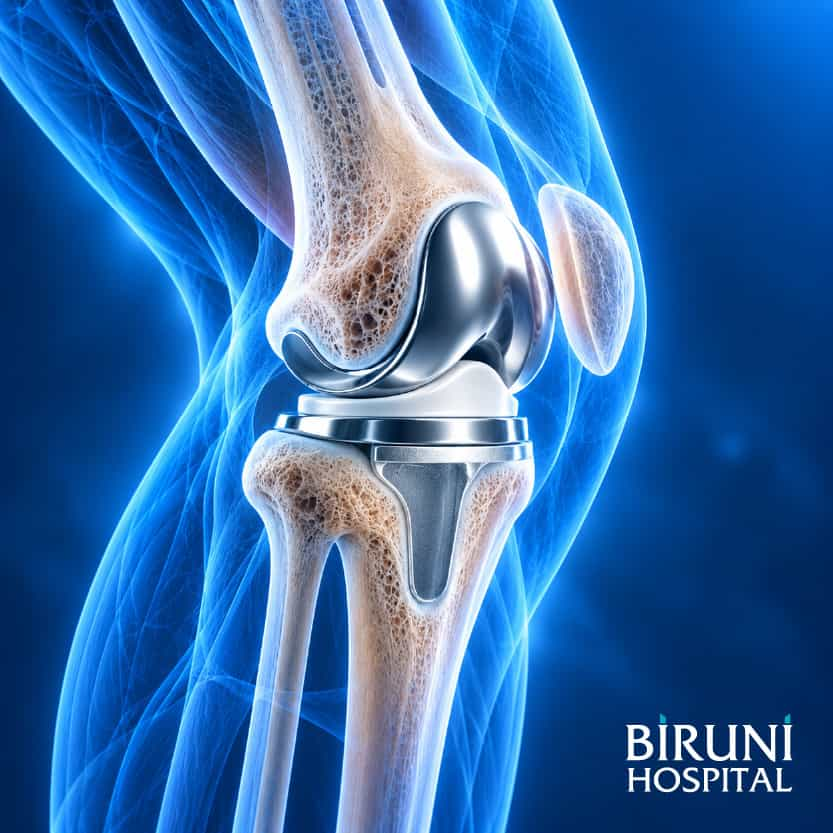
During total knee replacement, the surgeon removes damaged cartilage and a small amount of underlying bone, prepares the surfaces, places metal components, and inserts a medical-grade spacer. The kneecap may be resurfaced depending on the case. The operation is performed with anesthesia and requires monitoring for pain, bleeding, blood clots, infection, and early mobility.
The technique varies by anatomy, implant system, surgical approach, computer navigation or robotic assistance, and surgeon preference. A technology label does not replace a discussion of why it is appropriate. Ask whether the system changes the implant, incision, alignment method, cost, or rehabilitation plan.
| Stage | What may happen | What to document |
|---|---|---|
| Evaluation | History, examination, standing X-rays, laboratory tests, and anesthesia assessment. | Copies of images, reports, medication instructions, and clearance decisions. |
| Operation | Removal of damaged surfaces and placement of the selected prosthetic components. | Implant brand, model, size, lot or serial details, and operative report. |
| Hospital recovery | Pain control, wound checks, blood-clot prevention plan, walking assessment, and physiotherapy. | Discharge criteria, red flags, mobility aid instructions, and contact number. |
| Return planning | Transport, accessible accommodation, flight timing, records, and German follow-up. | Who approves travel and who takes responsibility if the plan changes. |
How Do Total and Partial Knee Replacement Compare in Turkey?
Total knee replacement treats more than one damaged compartment and is often used for widespread arthritis. Partial or unicompartmental replacement treats disease limited to one compartment when the remaining cartilage, ligaments, alignment, and symptoms fit the procedure. The choice depends on examination and imaging, not on the lower price of one option.
| Feature | Total knee replacement | Partial knee replacement |
|---|---|---|
| Area treated | Multiple or all major weight-bearing compartments. | One compartment with suitable remaining structures. |
| Eligibility | Based on disease extent, symptoms, alignment, ligaments, and overall health. | Requires a more limited damage pattern and appropriate ligament function. |
| Question to ask | What evidence shows that replacement of the affected compartments is needed? | What is the plan if disease is found outside the intended compartment? |
What Does Knee Replacement Cost in Turkey Compared With Germany?
A single national self-pay price cannot be used for every Berlin senior. A current PlacidWay Turkey article displays approximately $5,000–$10,000 for standard unilateral total knee replacement; a separate pricing page shows a similar broad range. This is a reference range, not a quote, tariff, or promise of a specific hospital charge.
German treatment costs are also not one simple comparison figure. Statutory and private insurance create different payment pathways, and planned surgery in Turkey may not be reimbursed like treatment in Germany or the EU. Ask the insurer in writing before paying a deposit.
| Cost element | Turkey self-pay question | Berlin/Germany comparison question |
|---|---|---|
| Procedure | Is the quote for total, partial, bilateral, revision, or robotic-assisted surgery? | What would the insurer cover, and what patient contribution could apply? |
| Hospital care | How many inpatient nights, tests, physiotherapy sessions, and reviews are included? | What is covered by the hospital contract and rehabilitation plan? |
| Implant | Which manufacturer and model are proposed, and what happens if the model changes? | What implant options are available through the German hospital and insurer? |
| Travel and aftercare | Add flights, companion, accessible hotel, transfers, extra nights, and delayed return. | Compare local transport, physiotherapy, home support, and emergency access. |
| Complications | Who pays for infection treatment, reoperation, readmission, or prolonged stay? | Which German provider handles urgent review after return? |
What Should a Turkey Knee-Replacement Quote Include?
A usable quote should identify the legal provider, treating surgeon, hospital, procedure, implant, expected admission, exclusions, payment milestones, cancellation terms, and aftercare responsibility. A hotel or airport transfer may appear in a package but does not answer the medical questions. Ask for the quote in USD and, if useful, a EUR conversion dated on the same day.
- Consultation, imaging review, laboratory tests, anesthesia, and medical clearance.
- Implant manufacturer, model, component sizes, and documentation provided at discharge.
- Operating room, surgeon, anesthesiologist, inpatient room, nursing, medicines, and physiotherapy.
- Blood-management plan, infection prevention, clot-prevention instructions, and mobility aids.
- Companion accommodation, accessible transfers, interpreter services, and extra-night rates.
- Fees for a changed procedure, additional imaging, revision, readmission, or emergency treatment.
- Records in English or German and the process for sending them to a Berlin clinician.
How Should Berlin Seniors Verify Turkish Hospitals?
Verify the actual hospital rather than relying on a coordinator’s brand name. Turkey’s Ministry of Health regulation states that an international-health-tourism healthcare facility must hold a healthcare-facility license and an international-health-tourism authorization certificate. Ask for the certificate number, facility name, validity, and scope, then verify it with the relevant Turkish authority.
| Credential or capability | What to request |
|---|---|
| Facility authorization | Healthcare-facility license and current international-health-tourism authorization certificate. |
| Hospital capability | Anesthesia, blood bank, intensive-care access, imaging, infection control, emergency response, and transfer arrangements. |
| Patient communication | Consent and discharge documents in a language you understand, with a named clinical contact. |
| Quality information | Current national certification or accreditation details, audit scope, and the date they were verified. International accreditation is supplementary, not a replacement for licensing. |
How Should Seniors Verify Orthopedic Surgeon Credentials in Turkey?
Ask for the surgeon’s full legal name, medical specialty, registration information, hospital appointment, knee-replacement experience, and revision-surgery experience. In Turkey, orthopedic and traumatology is the relevant specialty for knee arthroplasty. A marketing title, robotic-surgery label, or years since graduation does not by itself demonstrate current competence for your procedure.
- Confirm registration and professional standing through the appropriate Turkish records or institution.
- Ask who will perform the operation and who will be present if the planned procedure changes.
- Request an explanation of the proposed implant and alignment strategy based on your imaging.
- Ask how often the surgeon performs primary and revision knee replacements.
- Clarify whether the operating surgeon or a different clinician conducts follow-up appointments.
What Does Turkey’s International Health Tourism Authorization Mean?
Turkey’s published regulation describes authorization requirements for healthcare facilities and intermediary organizations serving international health tourists. It also refers to facility competency criteria, patient information, foreign-language communication, records, consent, and coordination. This framework can help a patient identify documents to request, but authorization does not guarantee a particular clinical result or make every hospital suitable for every patient.
What Preoperative Assessment Does a Berlin Senior Need?
Before international knee replacement, your German clinician and Turkish team should agree on the information needed to assess surgical risk. This may include medical history, medication list, allergies, previous anesthesia problems, blood tests, ECG, chest evaluation when indicated, dental or infection review where relevant, imaging, and functional assessment. The exact tests depend on age, diagnosis, and health conditions.
Medication planning matters for people taking anticoagulants, antiplatelet drugs, insulin, steroids, or medicines for heart rhythm, blood pressure, or inflammatory disease. Do not change medication based on a package instruction. Ask the prescribing clinician and anesthesiologist for a documented plan.
| Area | Questions for the clinical team |
|---|---|
| Heart and lungs | What clearance is needed, and what symptoms or test results could delay surgery? |
| Diabetes and nutrition | How will glucose, anemia, weight, nutrition, and wound-healing risks be assessed? |
| Bone and fall risk | Is osteoporosis, balance, muscle weakness, or a home-safety problem affecting the plan? |
| Support at home | Who will help with meals, bathing, transport, exercises, stairs, and appointments after returning to Berlin? |
What Is the Recovery Timeline After Knee Replacement in Turkey?
Recovery begins in hospital but continues after the international trip. The early goals are pain control, safe transfers, walking with the recommended aid, knee movement, breathing and circulation exercises, wound observation, and a clear plan for medicines. Progress differs with age, muscle strength, other illnesses, surgical complexity, and access to physiotherapy.
| Timeframe | Biological or clinical process | Patient sensation | Activity level | Action required |
|---|---|---|---|---|
| Hospital days | Early tissue healing and swelling management. | Pain, stiffness, fatigue, and bruising may occur. | Short assisted walks if cleared. | Follow physiotherapy and discharge criteria. |
| First weeks | Wound healing and gradual restoration of movement. | Swelling can change during the day. | Walker or cane may be needed. | Attend physiotherapy and wound review. |
| One to three months | Muscle control, balance, and endurance develop. | Activity-related discomfort may remain. | Progress depends on strength and stability. | Follow the German rehabilitation plan. |
| Later months | Functional improvement continues, but individual recovery varies. | Residual numbness or stiffness may be discussed. | Return to activities only after clinical advice. | Keep scheduled orthopedic follow-up. |
Do not plan a return flight solely around a package’s standard number of days. The surgeon should assess wound status, walking safety, pain control, clot-prevention plan, and the patient’s ability to manage the airport and flight before travel.
What Complications and Warning Signs Matter After Knee Replacement in Turkey?
Potential complications include infection, blood clots, bleeding, nerve or blood-vessel injury, stiffness, instability, fracture, implant loosening, persistent pain, and the need for further surgery. Older age may coexist with conditions that affect risk, but age is only one factor. The treating team should explain risks specific to the patient and proposed implant.
| Concern | Questions before travel | When to seek urgent assessment |
|---|---|---|
| Wound or infection | Who reviews drainage, redness, fever, or wound separation? | Increasing redness, drainage, fever, severe pain, or wound opening. |
| Blood clot or lung problem | What prevention plan applies during the stay, transfer, and flight? | New leg swelling, chest pain, sudden breathlessness, or fainting. |
| Loss of function | Who assesses severe stiffness, instability, or inability to bear weight? | A sudden change, fall, deformity, severe swelling, or inability to move safely. |
How Should Flights and Mobility Be Planned for Berlin Seniors?
Air travel after major joint surgery requires individualized clearance. A patient may need a wheelchair service, aisle seating, assistance with luggage, an accessible vehicle, and enough time for security and transfers. The safest timing depends on wound condition, mobility, pain control, clot risk, and the surgeon’s assessment—not a generic travel promise.
- Ask the surgical team when air travel may be considered for your case.
- Book flexible travel and avoid non-refundable plans before medical clearance.
- Tell the airline about mobility needs and request airport assistance in advance.
- Choose an accessible hotel with an elevator, bathroom support, and short transfer time.
- Travel with medication in labeled original packaging and carry copies of prescriptions.
- Confirm travel insurance exclusions for planned surgery and postoperative complications.
What Follow-Up Is Needed After Returning to Berlin?
Before leaving Turkey, obtain the operative report, implant documentation, imaging, discharge summary, medication instructions, physiotherapy plan, wound instructions, and emergency contact. Ask the Turkish hospital how records will be sent securely to a German clinician and who answers clinical questions after the patient leaves the country.
Arrange a German orthopedic or primary-care appointment before travel if possible. The Berlin clinician may assess the wound, swelling, range of motion, walking aid, medication plan, clot prevention, and rehabilitation progress. Plan physiotherapy in advance.
What Do Recent Knee-Replacement and Berlin-Age Data Show?
Recent comparative data show that Germany had one of the higher hip and knee replacement rates among countries with available OECD data in 2023, while the OECD average knee-replacement rate was 156 procedures per 100,000 population. These figures describe health-system activity, not the suitability of Turkey for an individual Berlin senior and not a prediction of personal outcome.
German official population data show an average age of 44.9 years in 2024, compared with 44.7 in 2022. Berlin’s age structure includes substantial numbers of older residents, but no public dataset identifies how many Berlin seniors travel to Turkey for knee replacement, what their outcomes are, or why they choose a particular hospital. Information about that specific travel cohort is not available.
Line graph: Germany average age, 2022–2024
Source: German Federal Statistical Office, population by territory and average age. This is demographic context, not a surgical outcome measure.
Histogram-style comparison: Berlin residents aged 65–69
Source: German Federal Statistical Office GENESIS table 12411-0014. The chart provides age context only; it does not measure knee-replacement demand or medical tourism.
The practical conclusion is not that older Berlin residents should travel. It is that age, joint disease, mobility, and support needs make individualized assessment especially important. Compare the same clinical questions with a German pathway before deciding where surgery should occur.
What Is a Practical Decision Checklist for Berlin Seniors?
- Confirm the indication in Germany: obtain an orthopedic opinion, imaging review, and discussion of alternatives.
- Define the operation: total, partial, bilateral, primary, revision, computer-assisted, or robotic-assisted.
- Check the Turkish facility: verify healthcare licensing and international-health-tourism authorization.
- Check the surgeon: confirm orthopedic and traumatology specialization, registration, experience, and who will operate.
- Review the implant: identify brand, model, component sizes, documentation, and revision policy.
- Compare full costs: include surgery, hospital, tests, implant, physiotherapy, flights, companion, accommodation, extra nights, insurance, and complications.
- Plan return safety: obtain travel clearance, airport assistance, accessible transport, and a contingency plan.
- Arrange Berlin follow-up: schedule wound, orthopedic, physiotherapy, and primary-care support before departure.
Frequently Asked Questions About Knee Replacement in Turkey for Berlin Seniors
Is knee replacement surgery in Turkey suitable for Berlin seniors?
It may be suitable for some patients, but eligibility depends on diagnosis, pain, function, medical conditions, anesthesia risk, support, and rehabilitation planning. Age alone does not decide suitability. Obtain a German orthopedic assessment and a Turkish surgical evaluation before choosing international treatment.
How much does knee replacement surgery in Turkey cost for patients from Berlin?
Published Turkey treatment information commonly presents a broad USD range, but no single price applies to every patient. Total cost depends on procedure type, implant, hospital stay, tests, physiotherapy, travel, accommodation, complications, and follow-up. Request a written itemized quote before paying.
What Turkish hospital authorization should I verify before knee surgery?
Ask for the hospital’s healthcare-facility license and current international-health-tourism authorization certificate issued under the Turkish Ministry of Health framework. Verify the legal facility name, certificate details, scope, and validity. Also check anesthesia, intensive-care, blood-bank, emergency, and rehabilitation arrangements.
Does German health insurance pay for knee replacement in Turkey?
Coverage cannot be assumed. Planned treatment in Turkey may be treated differently from care in Germany or within the EU, and private policies have their own exclusions. Ask your German statutory or private insurer for written confirmation about authorization, reimbursement, complications, transport, and postoperative care.
How long should Berlin seniors stay in Turkey after knee replacement?
There is no safe universal stay length. The surgeon should assess wound condition, pain control, walking ability, swelling, clot-prevention plan, and the patient’s ability to manage the airport and flight. Plan flexible accommodation and extra time rather than booking a fixed return date too early.
Can a Berlin physiotherapist continue rehabilitation after Turkish knee replacement?
A German physiotherapist may continue rehabilitation, but the arrangement should be made before travel. Bring the operative report, discharge summary, implant record, restrictions, exercise plan, wound instructions, and contact details. The Berlin clinician should know which findings require referral back to the surgeon or urgent assessment.
What implant information should a Turkish knee hospital provide?
Request the manufacturer, implant system, component sizes, lot or serial details where available, operative report, and implant documentation. Ask what happens if the proposed model is unavailable or changes during surgery. Keep these records with your German medical documents for future reviews or revision discussions.
What risks are important for older adults having knee replacement abroad?
Risks include infection, blood clots, bleeding, stiffness, instability, fracture, persistent pain, implant problems, and additional surgery. Older adults may also have heart, lung, kidney, diabetes, bone-health, balance, or medication issues. International travel adds distance from familiar clinicians and may complicate urgent follow-up.
Can robotic-assisted knee replacement in Turkey improve my result?
Robotic or computer-assisted systems may be used for planning or alignment in selected cases, but the technology does not guarantee a better personal result. Ask what clinical problem it addresses, who operates the system, whether it changes the implant or cost, and how outcomes and complications are monitored.
What should I arrange in Berlin before knee replacement in Turkey?
Arrange insurer confirmation, a German medical review, medication instructions, a companion plan, accessible transport, home support, physiotherapy, follow-up appointments, and a contingency budget. Confirm how the Turkish team will send records and who will assess wound problems, swelling, fever, severe pain, or reduced mobility after return.
References for Knee Replacement Surgery in Turkey and Berlin Seniors
- https://www.orthoinfo.org/treatment/total-knee-replacement/
- https://www.nhs.uk/tests-and-treatments/knee-replacement/
- https://www.oecd.org/en/publications/2025/11/health-at-a-glance-2025_a894f72e/full-report/hip-and-knee-replacement_a4d0ff34.html
- https://shgmturizmdb.saglik.gov.tr/EN-108974/regulation-on-international-health-tourism-and-tourist-health.html
- https://www.cdc.gov/yellow-book/hcp/health-care-abroad/medical-tourism.html
- https://www.destatis.de/EN/Themes/Society-Environment/Population/Current-Population/Tables/population-by-territory-and-average-age-basis-2022.html
- https://genesis.destatis.de/datenbank/online/statistic/12411/table/12411-0014























Share this listing