


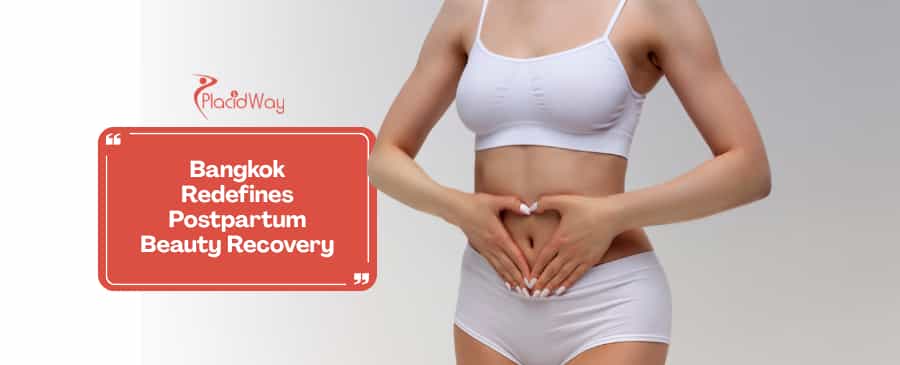
For many mothers, post-pregnancy body changes involve more than just loose skin; they frequently include a separation of the abdominal muscles known as diastasis recti. Surgical correction is often sought when diet and targeted exercise fail to restore the core's original structural integrity. Medical tourism in Bangkok has gained immense global popularity as board-certified surgeons pioneer advanced, minimally invasive techniques to address these very concerns.
One such remarkable advancement is the internal corseting technique, designed to functionally repair the abdominal wall while prioritizing superior cosmetic outcomes. The highly sought-after "zero-scar" aesthetic typically refers to methods that utilize endoscopic technology or strategically hidden micro-incisions to leave virtually undetectable marks. Most patients experience a significantly firmer abdominal contour without enduring the extensive, hip-to-hip scarring associated with older surgical methods.
- Muscle Repair: Sutures are used to physically pull separated abdominal muscles back together.
- Core Restoration: Typically improves core strength and posture while reducing lower back pain.
- Aesthetic Enhancement: Creates a flatter, more contoured stomach profile.
- Minimal Visibility: Incisions are generally placed below the bikini line or inside the navel.
Internal corseting is essentially a permanent, internal suturing technique (plication) that acts much like the laces of a corset, tightly securing the abdominal fascia to flatten the stomach from the inside out.
The Evolution of Zero-Scar Aesthetic Tummy Tuck Techniques in Thailand
The landscape of cosmetic surgery has shifted dramatically over the past two decades, with Southeast Asia emerging as a powerhouse of surgical innovation. Thai surgeons are consistently pushing the boundaries of what is possible, focusing heavily on reducing patient downtime and minimizing visible surgical trauma. This dedication has led to the rapid evolution of specialized post-pregnancy procedures that cater to international aesthetic standards.
Moving away from traditional methods that required massive skin excision, modern tummy tuck clinics in Bangkok now integrate state-of-the-art endoscopic cameras into their practice. By operating through tiny portals, surgeons can generally achieve thorough muscle plication with minimal disruption to surrounding healthy tissues. This progressive shift represents a monumental leap in offering sophisticated, patient-centric body contouring solutions.
- 1990s: Standard abdominoplasty with large incisions was the primary option for most patients.
- 2000s: Introduction of mini-tummy tucks reduced incision lengths but offered limited muscle repair.
- 2010s: Endoscopic techniques began gaining traction for dedicated diastasis recti correction.
- Present Day: Advanced internal corseting yields the "zero-scar" aesthetic by hiding minimal incisions expertly.
Studies indicate that up to 60% of women experience diastasis recti postpartum, making specialized internal muscle repair one of the most highly requested cosmetic interventions globally.
Why Choose Medical Tourism in Bangkok for Diastasis Recti Repair
The decision to travel abroad for medical procedures requires careful consideration, but the Thai capital has firmly established itself as a premier destination for healthcare excellence. The city boasts a unique confluence of world-class infrastructure, internationally trained medical professionals, and a deeply ingrained culture of premium patient hospitality. For individuals seeking a post-pregnancy tummy tuck in Thailand, the comprehensive care experience is difficult to match elsewhere.
Furthermore, local specialists possess extensive expertise in managing complex abdominal wall repairs while maintaining a keen eye for aesthetic finesse. They regularly treat a diverse, international patient base, ensuring they understand varying anatomical needs and beauty standards. This combination of high-volume surgical experience and meticulous attention to detail generally results in exceptionally high patient satisfaction rates.
- Access to internationally accredited hospital facilities and cutting-edge operating theaters.
- Surgeons who frequently hold board certifications from the US, UK, or Australia.
- Comprehensive care packages that integrate pre-operative planning and post-operative nursing.
- The opportunity to recover in a serene, stress-free environment away from daily responsibilities.
When researching facilities, look for hospitals that hold Joint Commission International (JCI) accreditation, as this ensures strict adherence to international safety and hygiene protocols.
Analyzing the Post-Pregnancy Tummy Tuck Cost in Bangkok
One of the primary driving forces behind the influx of overseas patients is the availability of highly competitive pricing without compromising on medical safety or quality. Achieving an affordable tummy tuck in Bangkok allows patients to access elite surgical care that might otherwise be financially prohibitive in their home countries. The transparent pricing models typically found in Thai hospitals help patients plan their medical journeys with financial confidence.
While the exact price will fluctuate based on the specific surgical techniques employed and the surgeon's level of expertise, the overall savings are generally substantial. The costs usually encompass hospital fees, anesthesia, surgical equipment, and initial follow-up consultations. Below is an analytical comparison demonstrating why this destination remains a top choice for value-conscious medical tourists.
| Procedure Name | Average Cost in Thailand | Average Cost in USA/UK |
|---|---|---|
| Traditional Tummy Tuck | $3,500 - $5,500 | $8,000 - $12,000 |
| Endoscopic Internal Corseting | $4,000 - $6,500 | $9,000 - $14,000 |
| Mini Tummy Tuck | $2,500 - $4,000 | $5,500 - $8,500 |
| Post-Pregnancy Mommy Makeover | $8,000 - $12,000 | $15,000 - $25,000 |
Ideal Candidates for Minimally Invasive Abdominoplasty in Thailand
It is important to understand that not every post-partum mother is an immediate candidate for minimally invasive internal corseting without traditional skin excision. Ideal candidates are typically those who suffer primarily from muscle separation rather than significant amounts of overhanging, inelastic abdominal skin. Patient selection is absolutely crucial to achieving the desired "zero-scar" aesthetic safely and effectively.
During preliminary virtual consultations, surgeons will meticulously evaluate your medical history, current BMI, and specific anatomical concerns. Women who maintain a stable, healthy weight and exhibit good skin elasticity generally experience the most favorable outcomes. Patients are always advised to be near their ideal body weight before traveling for any tummy tuck in Thailand.
- Individuals with clinically diagnosed diastasis recti causing functional discomfort.
- Women who have completed their families and do not plan future pregnancies.
- Patients with excellent skin tone that can naturally retract after internal suturing.
- Non-smokers who are in overall good health with realistic surgical expectations.
Patients with severe obesity, active infections, uncontrolled diabetes, or a history of complicated abdominal surgeries are typically contraindicated for minimally invasive abdominoplasty. Always disclose your complete medical history to your provider.
The Step-by-Step Internal Corseting Procedure in Bangkok Hospitals
Understanding the surgical workflow can greatly alleviate anxiety for international patients preparing for their procedure. Upon receiving medical clearance, the surgery generally takes place under general anesthesia to ensure total patient comfort and optimal operating conditions. The surgical team is focused entirely on precision, minimizing tissue trauma at every stage of the operation.
The core of the internal corseting technique involves accessing the abdominal fascia and utilizing heavy-duty, permanent sutures to plicate the separated muscles together. By operating through minimal access points, surgeons avoid the large horizontal incisions that characteristic older procedures. Once the muscles are secured in a tightly woven pattern, the tiny incisions are meticulously closed with fine sutures.
- Step 1: Administration of general anesthesia by a certified anesthesiologist.
- Step 2: Creation of small, strategically hidden incisions (often umbilical or suprapubic).
- Step 3: Insertion of the endoscope to visualize the abdominal wall without wide exposure.
- Step 4: Tightening and suturing the rectus abdominis muscles into a central, corseted position.
- Step 5: Careful closure of incisions and application of post-operative compression garments.
Advanced Surgical Technology Used by Tummy Tuck Clinics in Bangkok
The impressive aesthetic results achieved by local surgeons are heavily supported by continuous investments in world-class medical technology. Premium tummy tuck clinics in Bangkok are outfitted with advanced operating theaters that rival or exceed those found in Western countries. This commitment to technological integration directly facilitates the minimally invasive approaches required for hidden-scar outcomes.
The use of high-definition fiber-optic cameras allows surgeons to magnify the internal abdominal structures on large surgical monitors, ensuring absolute precision when placing internal sutures. Furthermore, specialized surgical instruments designed for articulation within tight spaces enable complex maneuvers through incredibly small entry points. This synergy of technology and skill is what makes the "zero-scar" aesthetic a reality for many.
- High-Definition Endoscopes: Provide crystal-clear internal visualization without large cuts.
- Articulating Suture Devices: Allow for complex knot-tying in confined anatomical spaces.
- Radiofrequency Coagulation: Minimizes bleeding and bruising during the surgical dissection.
- Advanced Bio-Materials: Use of high-tensile strength sutures designed to provide lifelong support.
Some advanced clinics now use barbed suture technology for internal muscle plication, which distributes tension more evenly across the abdominal wall and generally reduces post-operative pain.
Recovery Journey After an Aesthetic Tummy Tuck in Thailand
The post-operative recovery phase is a critical component of the overall success of your cosmetic journey. Because the internal corseting technique involves significant muscle manipulation, patients must be prepared for a period of restricted mobility and careful healing. Fortunately, recovering in a comfortable, service-oriented environment often makes the initial stages of healing much more pleasant.
Most patients experience moderate discomfort and swelling during the first week, which is typically well-managed with prescribed medications. Strict adherence to wearing a specialized compression garment is required to support the newly repaired muscles and facilitate skin retraction. Following the surgeon's specific guidelines regarding rest and gradual movement is essential to achieving optimal, long-lasting results.
- Days 1-3: Maximum rest required; mild walking to prevent blood clots is usually encouraged.
- Days 4-7: Discomfort typically begins to subside; drains (if used) are often removed.
- Weeks 2-3: Patients can generally resume light, non-strenuous daily activities.
- Weeks 6-8: Clearance is usually given to gradually resume more intensive cardiovascular and core exercises.
Plan to stay in Thailand for at least 10 to 14 days post-surgery. This buffer is critical for attending follow-up appointments and ensuring you are completely medically cleared before enduring a long-haul flight.
Comparing Traditional Abdominoplasty vs Internal Corseting in Bangkok
When exploring options for a tummy tuck in Thailand, it is vital to understand the distinctions between traditional abdominoplasty and newer internal corseting techniques. Traditional surgery involves a long incision just above the pubic area, allowing the surgeon to remove significant amounts of loose skin while also repairing the muscles. This approach remains the gold standard for patients with extensive skin laxity and stretch marks.
Conversely, endoscopic internal corseting targets the structural muscle separation directly, requiring much smaller incisions and relying on the skin's natural elasticity to conform to the new contour. While the minimally invasive route offers a much faster recovery and a "zero-scar" aesthetic, it cannot address severe skin overhang. Your surgeon will ultimately recommend the safest, most effective modality based on your specific anatomical presentation.
- Incision Size: Traditional requires a hip-to-hip scar; internal corseting uses micro-incisions.
- Skin Removal: Traditional removes excess skin; corseting relies on natural skin retraction.
- Downtime: Traditional generally requires 4-6 weeks; corseting often allows light activity in 2-3 weeks.
- Best For: Traditional is for major skin laxity; corseting is ideal for isolated muscle separation.
Real Patient Experiences with Affordable Tummy Tuck in Bangkok
The psychological impact of restoring one's body after pregnancy is profound, and the stories of international patients frequently highlight this emotional journey. Women travel from across the globe, seeking not just aesthetic improvement, but the restoration of core strength and physical confidence. Reading about the real experiences of others can provide valuable insight into what to expect from medical tourism in Bangkok.
Many patients are eager to share how the specialized techniques utilized by Thai surgeons dramatically exceeded their expectations, particularly regarding scar visibility. The combination of expert surgical care, luxury hospital environments, and significant cost savings consistently results in life-changing testimonials. Below are summarized accounts of patients who chose this transformative path.
Sarah M. (Australia)
After twins, my abdominal muscles were completely separated. I opted for endoscopic repair in Bangkok. The results are incredible, and my scars are virtually invisible beneath my bikini line. The hospital care was vastly superior to anything I've experienced back home.
Elena R. (United States)
I was terrified of the massive scar from a traditional tummy tuck. My Thai surgeon recommended internal corseting because my skin elasticity was still good. The recovery was tough the first week, but my core feels stronger than it did before I was pregnant.
Chloe T. (United Kingdom)
Finding an affordable tummy tuck in Bangkok allowed me to get the surgery I desperately needed for my severe diastasis recti. The medical team was incredibly professional, and the internal plication technique completely flattened my stomach without leaving a huge mark.
Aisha K. (UAE)
The level of discretion and privacy at the clinic was outstanding. The zero-scar aesthetic approach gave me back my pre-baby body. The pain was manageable, and the nursing staff monitored me around the clock during my hospital stay.
Safety and International Quality Standards in Thai Medical Facilities
Patient safety is the absolute cornerstone of any reputable medical tourism endeavor. Concerns about traveling abroad for surgery are rapidly dispelled when examining the stringent regulatory frameworks governing top tummy tuck clinics in Bangkok. These institutions are frequently designed to mirror or surpass the operational standards established by leading healthcare bodies in the West.
Many facilities proudly display accreditations from the Joint Commission International (JCI), which mandates rigorous evaluations of patient safety protocols, infection control, and surgical outcomes. Furthermore, the leading cosmetic surgeons in Thailand have typically undergone fellowship training in Europe or North America. This global exchange of medical knowledge ensures that patients receive care grounded in the latest evidence-based practices.
- Strict adherence to international sterilization and infection control protocols.
- Mandatory comprehensive pre-operative health screenings for all international patients.
- Use of FDA-approved (or equivalent) surgical materials and anesthetic drugs.
- Transparent communication regarding surgical risks and realistic cosmetic outcomes.
Thailand was the first country in Asia to achieve JCI accreditation, and today it is home to over 60 JCI-accredited hospitals and healthcare facilities, cementing its status as a global medical hub.
Preparing for Your Cosmetic Surgery Trip to Thailand
Thorough preparation is the key to ensuring a smooth, stress-free medical journey across international borders. Long before you board a flight, extensive virtual consultations should be conducted to establish clear communication with your chosen surgical team. Providing accurate medical records, high-quality photographs, and a detailed health history will allow your surgeon to formulate an exact, personalized surgical plan.
Mentally and physically preparing for a post-pregnancy tummy tuck in Thailand also involves organizing your post-operative logistics meticulously. Patients should secure comfortable accommodations close to their hospital, arrange for a travel companion if possible, and mentally prepare for the realities of post-surgical healing. A well-organized itinerary minimizes anxiety, allowing the body to focus entirely on recovery.
- Gather and submit comprehensive medical records and recent blood test results.
- Cease smoking and the use of blood-thinning medications weeks prior to surgery.
- Pack loose, comfortable clothing that opens in the front to accommodate swelling and garments.
- Set up virtual communication apps to stay in constant contact with your clinic's international coordinator.
Many premium hospitals in Bangkok assign dedicated "International Patient Coordinators" who speak multiple languages and assist with navigating the medical system from the moment you arrive.
How PlacidWay Assists Your Tummy Tuck Medical Tourism Journey in Bangkok
Navigating the complex landscape of international healthcare can seem daunting for first-time medical tourists. Partnering with a dedicated medical facilitator ensures that you are connected with reputable, thoroughly vetted healthcare providers. PlacidWay serves as a vital bridge, empowering patients to make informed, confident decisions regarding their post-pregnancy body contouring goals.
By streamlining the research and communication process, patients can focus entirely on their health and upcoming recovery. Our platform is designed to provide transparent, comprehensive information to help you select the ideal surgical team for your specific needs. Here is how our services add immense value to your aesthetic journey:
- Connecting you directly with internationally accredited hospitals and board-certified surgeons.
- Facilitating the seamless transfer of medical records and virtual consultations.
- Providing access to transparent, comparative pricing models across various top-tier clinics.
- Offering comprehensive educational resources to help you understand specific surgical techniques.
- Guiding you through the necessary pre-operative checklist and international healthcare protocols.
- Assisting in the collection of multiple surgical quotes so you can make an empowered choice.
Frequently Asked Questions About Tummy Tucks in Bangkok
Making the decision to undergo elective surgery abroad involves asking the right questions to ensure absolute clarity and peace of mind. Patients frequently have inquiries regarding the specifics of minimally invasive techniques, the realities of recovery, and logistical planning. Providing clear, straightforward answers is a crucial part of our commitment to patient education.
Below is a curated list of the most common questions international patients ask when considering diastasis recti repair and abdominal contouring. Reviewing these FAQs will help you build a solid foundation of knowledge before initiating direct contact with a medical provider.
How long does recovery take for a tummy tuck in Thailand?
Most patients experience an initial recovery period of two to three weeks before resuming light activities. Complete internal healing and final contour settling typically take several months.
Is the internal corseting technique completely scarless?
The term zero-scar aesthetic refers to strategically hidden or minimally invasive endoscopic scars rather than the absence of any surgical mark. Surgeons generally place small incisions below the bikini line to ensure they remain virtually undetectable.
Can I combine an affordable tummy tuck in Bangkok with other procedures?
Yes, many international patients opt to combine their abdominal repair with other post-pregnancy treatments, often referred to as a mommy makeover. However, your surgeon will carefully evaluate your health to ensure a prolonged surgery is safe.
What is the success rate of diastasis recti repair in Thailand?
When performed by board-certified specialists, internal muscle plication generally yields excellent functional and cosmetic outcomes. Proper post-operative care and avoiding heavy lifting are crucial to maintaining these structural repairs.
How long should I stay in Bangkok after my tummy tuck surgery?
Surgeons typically recommend staying in the country for at least 10 to 14 days following your procedure. This timeframe allows for necessary follow-up appointments and ensures you are cleared for safe international air travel.
Will pregnancy after internal corseting reverse the results?
Future pregnancies can re-stretch the repaired abdominal muscles and skin, potentially compromising the surgical outcome. Medical professionals generally advise waiting to undergo this procedure until you have finished expanding your family.
Are tummy tuck clinics in Bangkok internationally accredited?
Many top-tier facilities catering to medical tourists in Thailand hold prestigious international accreditations, such as the Joint Commission International (JCI). This certification indicates strict adherence to global safety and quality standards.
What type of anesthesia is used for minimally invasive abdominoplasty?
Surgeons generally utilize general anesthesia to ensure complete patient comfort and optimal surgical conditions during the muscle repair. The specific anesthetic protocol will be discussed during your pre-operative medical consultation.
How soon can I resume exercise after post-pregnancy abdominal surgery?
Light walking is encouraged immediately to promote circulation, but strenuous exercise and core workouts are typically restricted for six to eight weeks. Always wait for explicit clearance from your healthcare provider before returning to the gym.
Why is the post-pregnancy tummy tuck cost in Bangkok lower than in the West?
The price difference primarily reflects the lower cost of living, administrative overhead, and operational expenses in Thailand. Despite the lower costs, the medical expertise and hospital technologies remain on par with global standards.
Ready to explore your options for a beautifully contoured, post-pregnancy body? Let PlacidWay connect you with world-class surgeons specializing in the zero-scar aesthetic.
Medical Disclaimer: This article is for informational purposes only and is not medical advice. Always consult a qualified healthcare provider before any medical decisions. Results may vary. Read Full Disclaimer here.
References
- American Society of Plastic Surgeons. Tummy Tuck (Abdominoplasty). https://www.plasticsurgery.org/cosmetic-procedures/tummy-tuck
- Mayo Clinic. Tummy Tuck: What you can expect. https://www.mayoclinic.org/tests-procedures/tummy-tuck/about/pac-20384892
- Cleveland Clinic. Diastasis Recti: Causes, Symptoms & Treatment. https://my.clevelandclinic.org/health/diseases/22346-diastasis-recti
.png)






.png)

.png)

.jpg)
.png)
.png)









Share this listing