


For many patients from the Middle East, achieving facial harmony is a deeply personal journey. The desire for a defined, elegant lower face that beautifully frames striking features has led to a surge in specialized cosmetic procedures. If you are seeking flawlessly sculpted facial contours, jaw contouring and V-line surgery offer transformative results. By reshaping the underlying bone and soft tissue, these procedures transform a square, broad, or asymmetric lower face into a sleek, refined silhouette.
Today, medical tourism in Thailand has become the gold standard for these highly complex maxillofacial surgeries. Thailand combines world-class medical infrastructure, elite surgical expertise, and a deep understanding of diverse ethnic facial anatomies. For Middle Eastern patients, this means receiving culturally tailored aesthetic results in a luxurious, hospitable environment. In this comprehensive guide, we will explore the three most effective surgical techniques used by leading surgeons, alongside crucial insights into cultural customization and navigating your medical travel experience.
1. Mandibular Angle Reduction: The Foundation of the V-Line
The first and arguably most critical technique in facial contouring is Mandibular Angle Reduction. Many patients naturally possess a prominent, flared, or square jawline caused by a sharp, wide angle at the back of the jawbone (the mandible). While a strong, square jaw is often associated with traditional masculinity, it can create a harsh or overly broad appearance for those seeking a softer, more elegant aesthetic.
During a mandibular angle reduction, the surgeon creates discreet incisions entirely inside the mouth, typically along the lower gum line. This intraoral approach ensures there is absolutely no visible scarring on the face. Utilizing advanced 3D planning and specialized oscillating micro-saws, the surgeon carefully shaves or cuts away the protruding bone at the corner of the jaw. By smoothing out this sharp angle into a gentle, continuous curve from the ear down to the chin, the lower face instantly appears narrower and more delicately proportioned.
Key Benefits for Middle Eastern Bone Structure
- Customizable Curvature: Middle Eastern patients often prefer a sharply defined jawline rather than a completely flat, over-feminized curve. Surgeons in Thailand excel at performing a "curved osteotomy" that preserves a natural, elegant angle while reducing excessive width.
- Correction of Asymmetry: It is highly common for one side of the jaw to be larger than the other. This technique allows for precise, millimeter-specific adjustments to create perfect facial symmetry.
- Seamless Integration: The procedure seamlessly blends the back of the jaw with the chin, creating a continuous, sweeping contour that enhances the natural prominence of Middle Eastern cheekbones.
In modern Jaw Contouring and V-Line Surgery clinics in Bangkok, Thailand, the use of 3D Cone Beam Computed Tomography (CBCT) is mandatory. The jawbone houses the inferior alveolar nerve, which provides sensation to the lips and chin. 3D mapping allows the surgeon to see the exact pathway of this nerve, ensuring the bone is sculpted safely without risking nerve damage, numbness, or loss of sensation.
2. Genioplasty and T-Osteotomy: Perfecting the Chin
While modifying the back of the jaw reduces facial width, achieving a true "V" shape requires meticulous attention to the front of the face: the chin. If a patient undergoes mandibular reduction but possesses a wide, flat, or receding chin, the face will look disproportionate, resembling a "U" shape rather than a "V" shape. This is where the T-Osteotomy (a specialized form of Genioplasty) comes into play.
T-Osteotomy is widely considered the most advanced and effective chin-contouring technique available today. Similar to mandibular reduction, the procedure is performed entirely through incisions inside the mouth. The surgeon makes a T-shaped horizontal and vertical cut into the chin bone. The middle vertical segment of the bone is completely removed, and the remaining two side pieces of the chin are pushed inward to meet at the center. Once aligned to create a narrower point, these pieces are secured in place using microscopic titanium plates and screws.
Enhancing the Profile and Projection
The beauty of the T-Osteotomy lies in its versatility. Middle Eastern facial aesthetics often favor a slightly projected chin to balance prominent noses and strong cheekbones. During the T-Osteotomy, the surgeon can not only narrow the chin but also slide the bone forward (to correct a weak chin), slide it backward (to correct an overbite appearance), or shorten its vertical height (to correct an overly long face).
The titanium plates and screws used to secure the bone during a T-Osteotomy are incredibly tiny and entirely biocompatible, meaning the body will never reject them. They will not set off airport metal detectors, and you will not be able to feel them through your skin. While they can be left in the face permanently without issue, some patients choose to have them removed in a minor, quick procedure six to twelve months later.
3. Cortical Bone Resection and Soft Tissue Contouring
The third crucial technique utilized by a top Jaw Contouring and V-Line Surgery specialist in Bangkok, Thailand, addresses the thickness of the jawbone itself and the overlying soft tissues. Sometimes, reducing the angle and narrowing the chin is not enough to create a slim profile, especially if the patient has a very thick jawbone structure or excessive muscle and fat in the lower cheeks.
Cortical Bone Resection: The human jawbone consists of multiple layers. The outermost layer is known as the cortical bone. In patients with heavily widened lower faces, surgeons will carefully peel or shave off the outer cortical layer of the mandible. Think of this as thinning the walls of the jawbone rather than cutting the corners. This technique physically reduces the volume and thickness of the lower face, creating a dramatic slimming effect when viewed from the front.
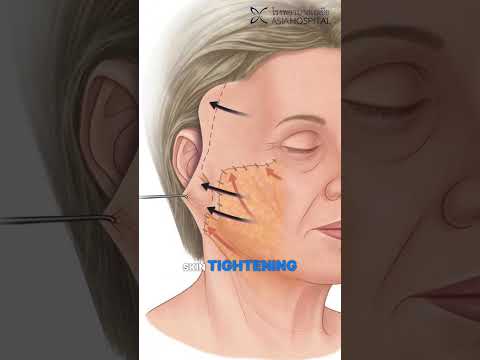
Masseter Muscle and Buccal Fat Reduction: Bone is only one part of the equation. Overlying the jaw angle is the masseter muscle (the primary chewing muscle), and sitting inside the cheeks is the buccal fat pad. If these soft tissues are thick, they can completely hide the newly sculpted bone beneath. During V-line surgery, an expert surgeon will often perform a partial resection of the inner masseter muscle to reduce its bulk. Additionally, removing a precise amount of buccal fat helps to instantly hollow out heavy lower cheeks, creating a chiseled, model-like shadow directly beneath the cheekbones.
The masseter muscle is one of the strongest muscles in the human body based on its weight. Years of clenching the jaw, grinding teeth during sleep (bruxism), or heavy chewing can cause this muscle to undergo hypertrophy (severe enlargement), contributing significantly to a wide, square lower face. Combining surgical muscle reduction with bone contouring ensures long-lasting, comprehensive slimming.
4. Tailoring the Aesthetic for Middle Eastern Facial Anatomy
One of the most critical factors driving Middle Eastern patients toward medical tourism in Thailand is the sophisticated understanding of ethnic facial variations possessed by Thai surgeons. Facial contouring is not a one-size-fits-all procedure. The traditional "Asian V-Line" aesthetic, which originated in South Korea and East Asia, focuses on creating an extremely fragile, delicate, and narrow lower face with almost no visible jaw angle. However, applying this exact template to a Middle Eastern patient can result in an unnatural, unbalanced appearance.
Middle Eastern beauty standards typically celebrate a blend of striking definition and regal elegance. Patients generally desire a "Diamond" contour or a softly defined "V" shape that maintains a degree of structural integrity to balance larger, more expressive eyes, prominent brows, and higher-bridged noses. Thai surgical teams undergo extensive cross-cultural aesthetic training to ensure they enhance, rather than erase, the patient's ethnic identity.
| Aesthetic Feature | Traditional East Asian V-Line | Middle Eastern Tailored Contour |
|---|---|---|
| Mandibular Angle | Completely shaved off to create a smooth, steep, uninterrupted line from ear to chin. | Softened but preserved. A distinct but gentle angle is left to maintain facial definition and regal structure. |
| Chin Projection | Often shortened and set back to create a very small, delicate lower face. | Slightly projected forward to balance strong nasal profiles and prominent cheekbones. |
| Chin Shape | Extremely narrow and pointed (Sharp V). | Narrowed but elegantly rounded or slightly squared at the tip (Soft V or Diamond). |
| Soft Tissue | Maximal reduction for a completely flat, slender cheek. | Targeted fat removal to create a subtle, attractive shadow under the cheekbones (buccal fat pad removal). |
5. The Advantage of Navigating Medical Tourism in Thailand
Choosing to travel for complex facial surgery is a major decision, but medical tourism in Thailand has been refined into a seamless, high-luxury experience designed explicitly for international patients. Middle Eastern travelers find Thailand particularly appealing due to the country's warm hospitality, widespread availability of Halal cuisine, and dedicated international patient departments in major hospitals that provide Arabic translation services.
The Jaw Contouring and V-Line Surgery cost in Bangkok, Thailand, represents a significant financial advantage without compromising on safety or technological advancement. In Western nations or the Middle East, complex maxillofacial surgeries involving multiple techniques (mandibular angle reduction, T-osteotomy, and cortical resection) can be prohibitively expensive, often exceeding $25,000 to $35,000 USD. In contrast, comprehensive Jaw Contouring and V-Line Surgery in Bangkok, Thailand, typically ranges from $7,000 to $12,000 USD. This price difference frequently covers not only the surgery and anesthesia but also luxury hospital stays, VIP airport transfers, and post-operative medications.
Furthermore, if you prefer a tranquil recovery environment away from the bustling metropolis, you can opt for Jaw Contouring and V-Line Surgery clinics in Phuket, Thailand. Here, patients can recover in discrete, resort-style accommodations with spectacular ocean views, combining profound physical transformation with a deeply restorative wellness retreat.
Understanding Post-Operative Recovery Protocols
Recovery from V-Line surgery requires patience and strict adherence to postoperative protocols provided by your Jaw Contouring and V-Line Surgery specialist in Bangkok, Thailand. Because the incisions are intraoral, maintaining meticulous oral hygiene is paramount to prevent infection. Patients are required to use prescribed antiseptic mouthwashes after every meal.
For the first few weeks, you will adhere to a strict liquid to soft-food diet (smoothies, pureed soups, soft puddings) to prevent strain on the healing jawbone and masseter muscles. Swelling is the most significant aspect of recovery. While the majority of the acute swelling peaks at around 48 to 72 hours and subsides within the first two weeks, residual swelling can take three to six months to fully resolve. Thailand’s top-tier hospitals facilitate advanced post-operative care, utilizing specialized facial compression garments and lymphatic drainage therapies to accelerate healing and minimize discomfort before you board your flight home.
Ready to Sculpt Your Perfect Facial Contours?
Embarking on a journey for complex facial surgery requires absolute trust, precise coordination, and the guidance of seasoned experts. You don't have to navigate the complexities of medical tourism in Thailand alone. PlacidWay is your trusted global medical travel partner, dedicated to seamlessly connecting you with fully accredited, world-renowned maxillofacial surgeons and state-of-the-art clinics.
From securing transparent pricing and organizing virtual consultations to ensuring quality standards and providing ongoing logistical support tailored to Middle Eastern patients, PlacidWay handles every detail of your medical journey. Take the first step toward the confident, beautifully contoured profile you deserve.
Get Your Free Quote Today







.png)



.jpg)
.png)
.jpg)









Share this listing