


For patients researching minimally invasive laser spine surgery in Cancun, the most significant advantage is a blend of advanced medical technology and dramatic cost reduction. The procedure in Cancun costs $7,500 to $12,500 USD, offering a 60% to 75% savings compared to the $30,000–$50,000 average out-of-pocket cost in the US. Packages typically cover the surgeon's fee, operating room, laser/endoscopic equipment, and hospital stay, performed by board-certified neurosurgeons in internationally accredited facilities.
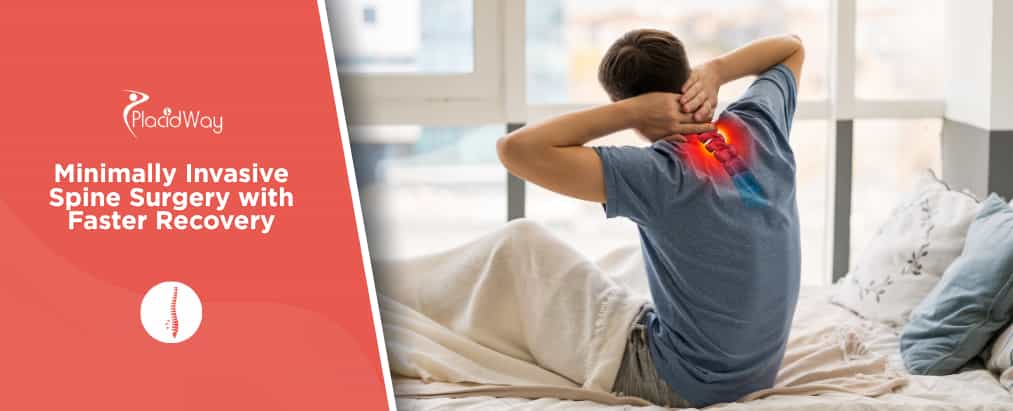
Chronic back pain and radiating nerve pain can completely erode your quality of life, turning basic daily activities into agonizing tasks. According to the World Health Organization, low back pain is the single leading cause of disability worldwide. For millions of patients suffering from herniated discs, sciatica, or spinal stenosis, conservative treatments like physical therapy and epidural injections eventually stop working. When this occurs, surgical intervention becomes the next logical step to decompress nerves and restore mobility.
However, accessing advanced spine care in the United States and Canada often involves prohibitive barriers. Uninsured or underinsured patients face out-of-pocket costs exceeding $40,000. Even with insurance, high deductibles, co-pays, and lengthy wait times for specialist consultations can delay vital pain relief for months or even years. As a result, thousands of patients are seeking highly specialized care across international borders.
Minimally invasive laser spine surgery in Cancun has emerged as a premier solution for medical tourists seeking world-class neurological and orthopedic care. Situated along the beautiful Caribbean coast, Cancun is not just a resort destination; it is home to Joint Commission International (JCI) accredited hospitals and highly specialized, fellowship-trained spine surgeons who utilize the exact same state-of-the-art laser and endoscopic technologies found in top North American medical centers.
This comprehensive guide is designed to help you navigate this critical healthcare decision. By reading this article, you will learn:
- What laser spine surgery actually entails?
- A transparent cost breakdown of Cancun medical packages
- The detailed step-by-step surgical and recovery process
- Essential safety protocols to ensure you choose a highly qualified surgeon for your procedure
Quick Facts at a Glance
Essential benchmarks for patients researching minimally invasive spinal procedures in Mexico.
- Average Cost in Cancun
- $7,500 – $12,500
- Average Cost in the USA
- $30,000 – $50,000+
- Hospital Stay
- 1 – 2 Nights
- Required Time in Cancun
- 7 – 10 Days
- Incision Size
- Less than 1 inch (usually)
- Initial Recovery Timeline
- 2 – 6 Weeks
What is Minimally Invasive Laser Spine Surgery?
Historically, back surgery required a large incision down the center of the back, stripping the paraspinal muscles away from the vertebrae to grant the surgeon visual access. This "open" method inherently leads to significant blood loss, prolonged hospitalization, and extensive muscular rehabilitation. Advances in medical technology have shifted the paradigm toward minimally invasive techniques.
In a laser-assisted procedure, the surgeon inserts a tubular retractor—a narrow tube—through a tiny incision (often less than an inch) to reach the affected area of the spine. An endoscope (a microscopic camera) is fed through the tube, projecting a high-definition, magnified image of the nerves and discs onto a monitor. The surgeon then utilizes surgical lasers to vaporize specific disc material, bone spurs, or thickened ligaments that are pinching the nerve roots.
Variations of Minimally Invasive Spine Procedures
It is important to understand that "laser spine surgery" is a broad consumer term. In clinical practice in Cancun, your neurosurgeon will tailor the specific minimally invasive technique to your exact pathology:
- Endoscopic Laser Discectomy: Used primarily for herniated or bulging discs. The laser energy shrinks or removes the protruding portion of the disc that is pressing against the sciatic nerve.
- Laser Foraminotomy: Addresses foraminal stenosis (narrowing of the bone canals where nerves exit the spinal cord). The laser is used to precisely clear away soft tissue and debris widening the nerve pathway.
- Laser Facet Ablation (Rhizotomy): Designed for chronic joint pain in the spine. The laser disables the sensory nerve endings in the facet joints, effectively turning off the pain signals sent to the brain.
Why are international patients gravitating toward Cancun for these specific procedures?
Beyond the obvious appeal of a serene recovery environment, Cancun has developed a sophisticated medical infrastructure explicitly designed for international patients. Clinics boast multilingual staff, highly streamlined concierge services, and partnerships with specialized imaging centers to ensure precise preoperative diagnostics.
Cost Comparison: Cancun vs. USA
The financial barrier to spine surgery in North America is staggering. For many patients, the decision to seek minimally invasive laser spine surgery in Cancun is driven by the necessity of finding affordable, high-quality care without liquidating their retirement savings. The table below outlines the average costs for outpatient/short-stay spine procedures across different regions.
Note: Precise costs vary depending on the complexity of the case (single-level vs. multi-level decompression) and the specific hospital chosen.
What is Included in a Cancun Spine Surgery Package?
One of the most frustrating aspects of the US healthcare system is surprise billing—receiving separate invoices from the facility, the surgeon, and the anesthesiologist weeks after discharge. Top clinics in Cancun utilize an "all-inclusive package" model providing absolute financial transparency. Packages generally include:
- Pre-operative consultations and routine blood work (X-rays/EKG).
- The primary neurosurgeon's and surgical assistant's fees.
- Anesthesiologist fees and all intra-operative medications.
- Operating room time and the use of specialized laser/endoscopic equipment.
- 1 to 2 nights in a private, patient-focused hospital room.
- Ground transportation between the Cancun International Airport (CUN), your hotel, and the hospital.
What is Typically Excluded?
- Pre-operative MRI scans (you must obtain an MRI in your home country first so the surgeon can confirm your eligibility).
- Airfare to and from Cancun.
- Hotel accommodation for your 5-to-8-day recovery period after hospital discharge.
- Post-operative physical therapy in your home country.
Why is it so much cheaper? Is quality compromised?
The lower cost is not achieved by using inferior equipment or cutting safety corners. The price difference is driven entirely by macroeconomic factors. The cost of living, commercial real estate, and administrative labor in Mexico are significantly lower than in the US. Furthermore, the US healthcare system is burdened by massive administrative overhead for insurance billing and exorbitant medical malpractice insurance premiums. By operating on a direct cash-pay model, Cancun hospitals bypass these bureaucratic costs and pass the savings directly to international patients.
Step-by-Step Spine Surgical Process in Cancun
Traveling abroad for neurosurgery requires meticulous planning. Understanding the exact sequence of events helps reduce anxiety and ensures you are fully prepared for the logistics of international medical travel.
- Remote Medical Review (Weeks Prior): Before booking flights, you must submit a recent MRI (less than 6 months old) and a detailed medical history to the international patient coordinator. The spine surgeon in Cancun will evaluate your imaging to determine if you are a candidate for a minimally invasive laser approach or if an alternative procedure is required.
- Arrival and Pre-Op Testing (Day 1): You fly into Cancun International Airport. A clinic representative meets you and transports you to the hospital or your hotel. You will undergo standard pre-operative testing (blood tests, EKG) and have a comprehensive, in-person consultation with your surgeon and anesthesiologist to review the surgical plan.
- Surgery Day (Day 2): You arrive at the hospital fasting. The minimally invasive laser spine surgery typically takes between 1 to 2 hours per spinal level. Depending on the complexity, it may be performed under general anesthesia or local anesthesia with conscious sedation. The surgeon performs the decompression, closes the small incision with dissolving sutures or medical glue, and applies a sterile dressing.
- Hospital Observation (Days 2-3): You will wake up in a private recovery room. Nurses will monitor your vital signs, manage post-operative pain intravenously, and perform neurological checks (ensuring you can feel and move your toes). Many patients report an immediate reduction in their radiating leg or arm pain upon waking up. You are usually encouraged to stand and take light steps within hours of the surgery.
- In-Country Recovery (Days 4-8): You are discharged to your recovery hotel in Cancun. During this period, you are advised to rest, take short, frequent walks around the hotel to promote blood flow, and avoid bending, lifting, or twisting (the "BLT" restrictions).
- Final Clearance and Departure (Day 9 or 10): You return to the clinic for a final wound check and consultation. The surgeon assesses your healing, provides a "fit-to-fly" certificate, and gives you a detailed post-operative care plan to hand over to your local physician. You are then transported back to the airport.
Safety, Quality, and Surgeon Credentials
When dealing with the spinal cord and central nervous system, patient safety must be the absolute highest priority. A common concern regarding minimally invasive laser spine surgery in Cancun is whether the medical standards align with those in North America.
Verifying Surgeon Credentials
Top medical tourism providers in Cancun employ highly decorated neurosurgeons and orthopedic spine specialists. To ensure your safety, your chosen surgeon should possess the following credentials:
- Board Certification: The surgeon must be certified by the Consejo Mexicano de Cirugía Neurológica (Mexican Board of Neurological Surgery) or the equivalent orthopedic board.
- International Memberships: Look for surgeons who are members of international organizations such as the North American Spine Society (NASS) or the World Federation of Neurosurgical Societies (WFNS).
- Specialized Fellowship Training: General orthopedic surgeons should not perform complex spine surgery. Your doctor should have completed a dedicated fellowship in spine surgery or minimally invasive neurosurgery.
Accreditation and Technology
Premium medical facilities in Cancun are often accredited by the General Health Council (CSG) in Mexico, which aligns its safety standards with international benchmarks. Many actively pursue or hold Joint Commission International (JCI) accreditation.
Furthermore, these hospitals utilize state-of-the-art intraoperative technology to mitigate risks. This includes intraoperative fluoroscopy (real-time X-ray guidance) to ensure precise instrument placement, neuromonitoring to track nerve function during the procedure, and advanced Zeiss or Leica surgical microscopes. The lasers utilized (often Holmium or Nd:YAG lasers) are the same FDA-approved devices utilized in the United States.
Risk Mitigation Strategies
Safety is also about proper patient selection. Ethical surgeons in Cancun will reject patients who are not appropriate candidates for laser surgery. If a clinic guarantees a 100% cure rate without thoroughly reviewing your MRI, this is a massive red flag. Real medical professionals operate on evidence-based medicine and will frankly discuss the statistical probability of success based on your unique spinal anatomy.
Recovery Timeline and Aftercare
Because minimally invasive laser spine surgery spares the large paraspinal muscles from being severed, the recovery trajectory is generally much faster and less painful than traditional open spine surgery. However, the spine still needs dedicated time to heal.
Phased Recovery Timeline
- Weeks 1–2 (Acute Healing): The focus is on incision care and pain management. You may experience mild muscle spasms or soreness at the incision site. Radiating nerve pain may disappear immediately or fluctuate as the decompressed nerve heals from chronic inflammation. Walking is the best and only recommended exercise.
- Weeks 3–6 (Early Mobility): You may return to sedentary office work and light driving. Bending, lifting anything over 5-10 pounds, and twisting the spine remain strictly prohibited.
- Weeks 6–12 (Strengthening): At this stage, your surgeon will likely clear you to begin formal physical therapy. A physical therapist will guide you through core strengthening exercises designed to stabilize the spine and prevent future disc herniations.
- Months 3–6 (Full Recovery): Most patients are cleared to return to higher-impact activities, sports, and manual labor, assuming they have completed their physical therapy protocols successfully.
Warning Signs to Watch For Post-Op
While recovering, it is vital to monitor for signs of potential complications. Contact medical professionals immediately if you experience:
- A sudden, severe return of your original nerve pain or weakness in the legs.
- Loss of bowel or bladder control (a medical emergency known as Cauda Equina Syndrome).
- Fever above 101°F (38.3°C) or chills.
- Clear fluid leaking from the surgical incision (potential cerebrospinal fluid leak).
- Redness, excessive warmth, or pus-like drainage at the incision site (signs of infection).
How to Choose the Right Spine Surgeon in Cancun?
Choosing to undergo spine surgery abroad is a major life event. Protect your health and your financial investment by using this practical 6-step evaluation checklist before transferring any funds.
- Demand a Comprehensive MRI Review: A legitimate surgeon will never provide a definitive quote or surgical plan without viewing your recent MRI.
- Verify the Surgeon's Specialty: Ensure the doctor is a dedicated neurosurgeon or orthopedic spine specialist, not a general surgeon. Request their CV.
- Check Hospital Accreditation: Confirm that the facility where the surgery will take place is an established hospital with an Intensive Care Unit (ICU), not just a small outpatient clinic.
- Require Transparent, Itemized Pricing: Get a detailed quote in writing. Ensure it explicitly covers the surgeon's fee, hospital stay, anesthesia, and any required medical hardware.
- Assess Language and Communication: Excellent communication is vital for informed consent. Ensure the surgeon speaks fluent English or that the clinic provides a dedicated, medically trained translator during all consultations.
- Plan Local Follow-Up Care: Before flying to Cancun, establish a relationship with a local primary care physician or physical therapist who is willing to oversee your long-term rehabilitation and handle suture removal if necessary.
Red Flags to Avoid
Be extremely wary of clinics that use high-pressure sales tactics to rush your booking. Additionally, avoid providers who market "laser surgery" as a magical cure-all for every type of back pain. Laser energy is a highly specific tool used for precise tissue ablation; it cannot correct massive spinal deformities or stabilize a structurally unstable spine.
Risks, Limitations, and Contraindications
Like any medical procedure, minimally invasive laser spine surgery carries inherent risks. The decision to undergo surgery should only be made after carefully weighing the potential benefits against these risks.
Clinical Risks of Spine Surgery
According to the National Institutes of Health (NIH), general risks associated with spinal decompression surgery include infection, bleeding, deep vein thrombosis (DVT), and adverse reactions to anesthesia. Specific risks to spine surgery include nerve damage (which could cause numbness or weakness), dural tears (a leak of the fluid surrounding the spinal cord), and the failure of the surgery to relieve the patient's pain (failed back surgery syndrome).
Who Should NOT Pursue Laser Spine Surgery?
Laser and endoscopic techniques are phenomenal for specific pathologies, but they are not suitable for everyone. This procedure is generally contraindicated for patients who have:
- Severe Spinal Instability: Conditions like high-grade spondylolisthesis require mechanical stabilization (spinal fusion with screws and rods), which cannot be achieved with lasers alone.
- Severe Scoliosis or Kyphosis: Major structural deformities require traditional open reconstructive surgery.
- Complex Multi-Level Disease: Extensive degeneration across many vertebrae may be better served by a more comprehensive surgical approach.
- Active Infections or Severe Osteoporosis: Poor bone density can compromise surgical outcomes and healing.
The Challenge of Follow-Up Care
The primary limitation of medical tourism is geographic distance. If you develop a post-operative complication three weeks after returning home, you cannot easily visit your Cancun surgeon. You must be prepared to seek care through your local emergency room or local physician, which may result in out-of-pocket costs if you do not have adequate domestic health insurance.
5-Step Action Plan for Spine Surgery in Cancun, Mexico
If conservative treatments have failed and you are ready to explore your surgical options abroad, follow this structured, five-step framework to ensure a safe and organized medical journey.
- Obtain a Current MRI: Schedule an MRI of your spine in your home country. Ensure you get a digital copy of the imaging on a CD or via a secure digital link, along with the radiologist's written report.
- Request Multiple Evaluations: Use established medical tourism platforms like PlacidWay to submit your MRI to 2 or 3 highly rated neurosurgical clinics in Cancun. Compare their surgical recommendations and cost estimates side-by-side.
- Schedule a Video Consultation: Speak directly with the proposed spine surgeon via video call. Discuss your symptoms, the proposed technique (laser, endoscopic, microdiscectomy), and ask specific questions about their personal complication rates.
- Arrange Your Support System: Spine surgery recovery requires assistance. Secure a travel companion to accompany you to Cancun to help with luggage, mobility, and moral support during the flight home.
- Book Travel and Establish Aftercare: Once you select a clinic, book your flights. Simultaneously, schedule an appointment with a local physical therapist for 4-6 weeks post-surgery to ensure your rehabilitation starts on time.
Frequently Asked Questions
Make an Empowered Decision
Living with debilitating spinal nerve pain should not be a life sentence simply because domestic healthcare costs are out of reach. When analyzing the logistics and benefits of minimally invasive laser spine surgery in Cancun, the region stands out as a highly viable, deeply regulated hub for neurological excellence. By offering a combination of board-certified expertise, modern endoscopic technology, and transparent pricing that saves patients up to 75%, Cancun empowers individuals to take immediate control of their health.
The success of your medical journey depends on diligent preparation. Ensure you secure a recent MRI, strictly evaluate surgeon credentials, and commit fully to the vital post-operative physical therapy required to protect your spine long-term. Your mobility is your most valuable asset—make the choice to invest in it wisely.
Take the First Step Toward a Pain-Free Life
Stop waiting for relief. Connect with internationally accredited neurosurgical centers in Cancun today. Review top surgeon profiles, compare all-inclusive packages, and request a free, no-obligation evaluation of your MRI.
The information in this article is for educational purposes only and does not constitute medical advice. Individual results vary based on health status, case complexity, and other factors. Always discuss your specific situation with a licensed healthcare professional before making treatment decisions. PlacidWay connects patients with verified healthcare providers but does not provide medical services directly.
- World Health Organization (WHO): Low Back Pain Fact Sheet
- Mayo Clinic: Minimally Invasive Spine Surgery - Patient Information
- National Institutes of Health (NIH): Outcomes of Endoscopic and Minimally Invasive Lumbar Decompression
- Wikipedia: Minimally Invasive Spine Surgery (Surgical Techniques)
- PlacidWay Medical Tourism: Spine Surgery Abroad Options, Clinics, and Costs
.png)





.png)

.png)
.png)








Share this listing