The Jar She Could No Longer Open: Rebecca Hayes’s Rheumatoid Arthritis Biologic Therapy Story from the United States to Colombia

Publish date: Modified date: Medically reviewed by: Dr. Alejandro Fernando on Aug 31, 2026 Author: Pinki Sharma

Rebecca Hayes%e%%s Rheumatoid Arthritis Biologic Therapy Story

Patient Profile

Name: Rebecca Hayes

Age: 52

Condition: Rheumatoid arthritis with progressive inflammatory joint damage

Treatment: Advanced Stem Cell Therapy (Mesenchymal Stem Cell Protocol)

Destination: Medellin, Colombia

Journey at a Glance

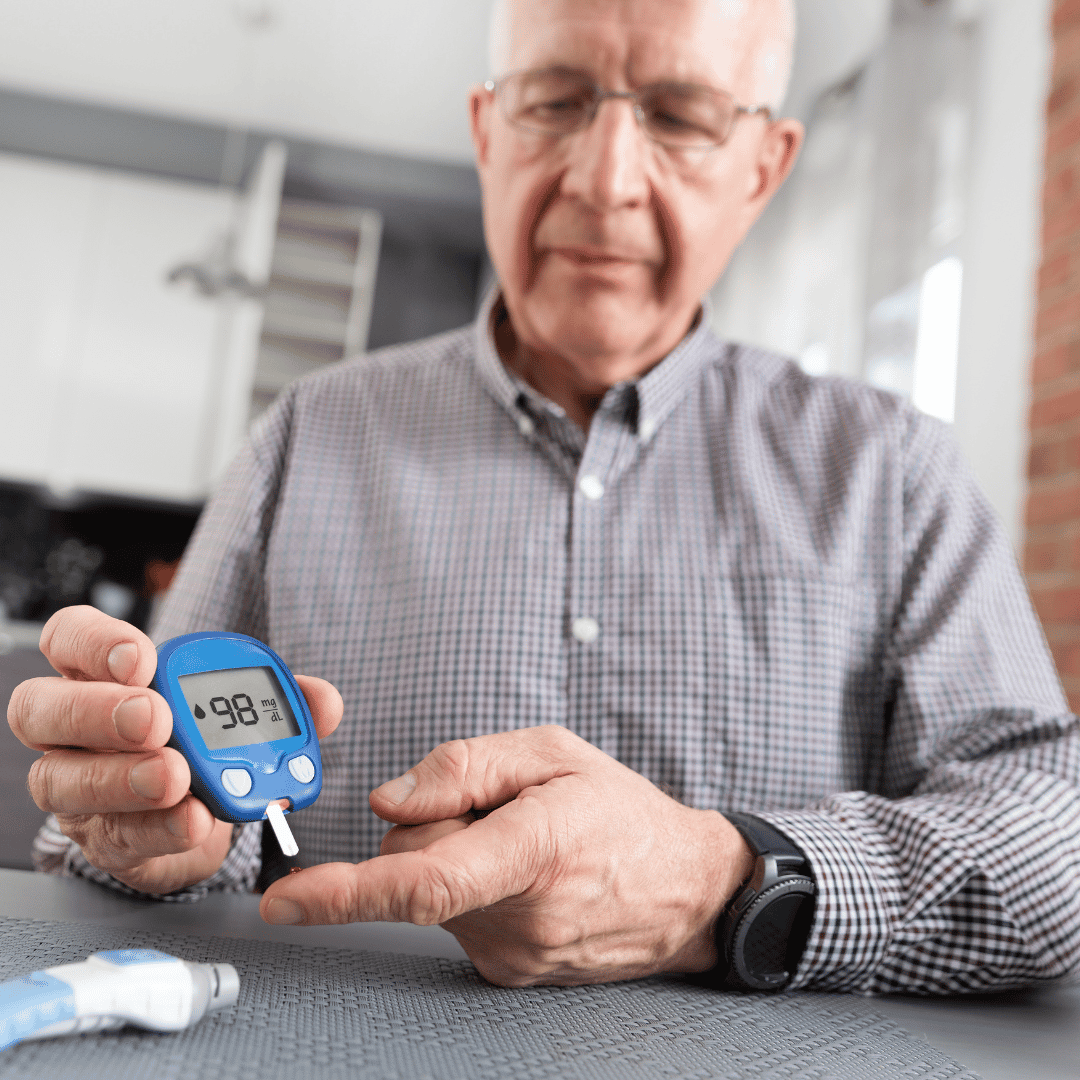
Main problems: Persistent joint pain, swelling, and stiffness (hands, knees, wrists, ankles); Morning stiffness lasting 1–2+ hours; Progressive loss of grip strength and fine motor control; Fatigue and systemic immune dysfunction

Previous care: Multiple appointments with primary care physicians; Prior authorizations for conventional biologic therapy denied or delayed by insurance companies; Long-distance travel to regional rheumatologists with diminishing returns

Travel driver: Cost & Access Advantage: Standard biologic therapies in the US cost $2,000–$4,000/month indefinitely; in Medellin, a comprehensive regenerative stem cell protocol designed to modulate the immune system biologically costs $8,000–$12,000 total.

Treatment explored: Intravenous and intra-articular Mesenchymal Stem Cell (MSC) therapy to address systemic inflammation

Personal goal: Reduce systemic inflammation, halt joint degradation, and maintain independence in everyday hand movements.

You stopped buying jars that require twisting.

You gave up the heavy garden shears.

You started wearing slip-on shoes.

You stopped volunteering to chop vegetables.

You learned to open doors with your forearm.

You moved the ibuprofen to the bedside table.

You accepted the morning stiffness as normal.

You stopped raising your hand in meetings.

You started typing with fewer fingers.

You learned to ignore the dull ache in your wrists.

"Let me just get that for you."

"You should take it easy today."

"It's probably just the weather changing."

Your world has quietly become smaller.

The hardest part is not the pain or the cost, but the waiting for an intervention that actually repairs the biology.

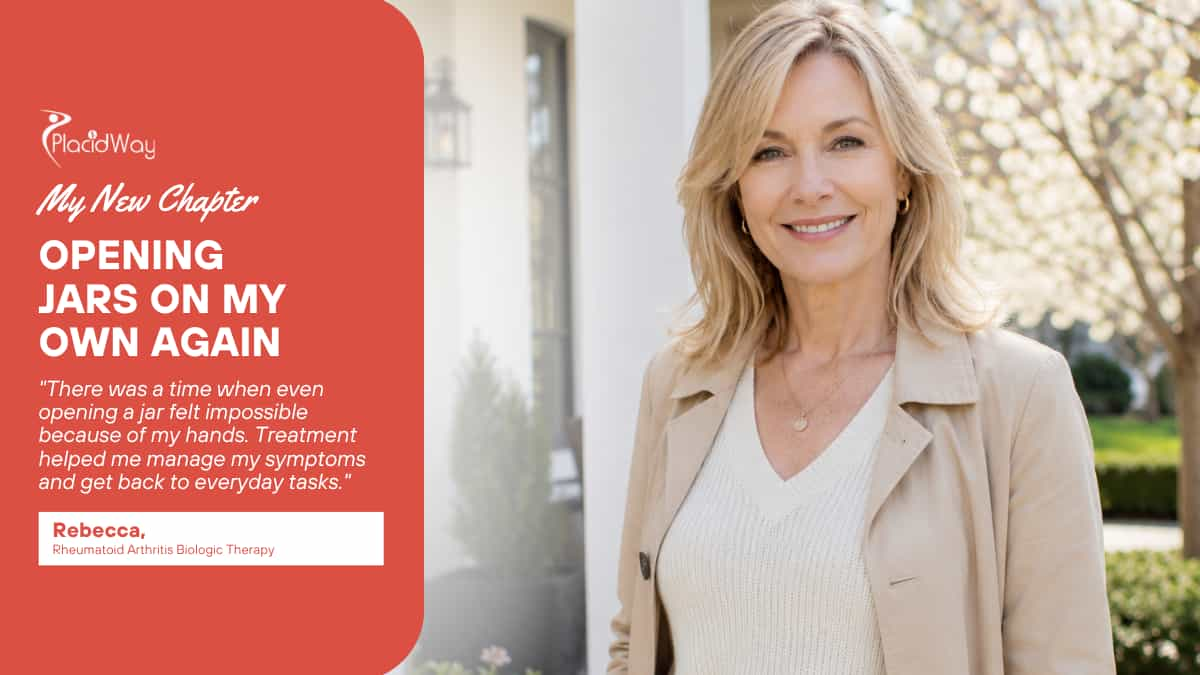
Meet Rebecca Hayes.

Rebecca Hayes is not a real PlacidWay patient.

She is a fictional composite built from the situations and questions rural American patients frequently face.

She is fifty-two and lives in a non-metropolitan county in Kansas.

She used to prune her own rosebushes every spring.

She renovated a vintage camper van with her own hands.

She baked bread for her family every weekend.

She managed the accounts for a local logistics firm without a second thought.

The escalation happened slowly.

She told herself she was just getting older.

Ice packs.

Compression gloves.

Turmeric supplements.

Acupuncture sessions.

Higher doses of ibuprofen.

Urgent care visits.

Rheumatoid arthritis is a chronic autoimmune inflammatory disorder that typically requires early, aggressive intervention to prevent irreversible joint damage and maintain functional capacity. The standard clinical recommendation involves initiating biologic therapies when conventional synthetic treatments fail, though this pathway is frequently constrained by step-therapy protocols and insurance authorization delays.

The verdict on her conventional treatment plan finally arrived in a brief letter:

"Your prior authorization for targeted biologic therapy has been denied."

When will it be approved?

The gap between the prescription and the pharmacy.

Waitlists for rheumatology consultations in non-metropolitan regions commonly exceed six months, with nearly sixty percent of rural Americans living in areas experiencing severe specialist shortages. Accessing advanced therapies often requires navigating multi-tiered appeals processes that can delay disease-modifying treatment by an entire year.

But Rebecca Hayes doesn't experience the healthcare system as a national statistic.

She experiences it as dropping a full coffee cup on the kitchen floor because her fingers simply refused to close.

"I don't understand why they won't approve it."

She experiences it as sitting in a running car outside the grocery store, waiting for her hands to unfreeze enough to grip the steering wheel.

"We can appeal, but it takes time."

She experiences it as quietly crying in the shower where her husband cannot hear her.

"Just tell me what you need me to do."

She has already tried to be patient.

Rebecca Hayes is not an impulsive consumer looking for a quick fix.

She drove a hundred and forty miles to a regional specialist on a Tuesday morning.

She paid out-of-pocket for diagnostic joint ultrasounds when her deductible reset.

She spent hours navigating online support forums looking for ways to safely stretch medication doses.

She called the insurance authorization department five times in one week.

"I am doing everything they asked me to do."

"Why does it feel like begging for care?"

Her internal dialogue shifted from a question of endurance to a question of strategy:

From "Can I tolerate this pain?"

To "How much of my life am I prepared to organise around fixing the root cause?"

The domestic alternative is a math problem.

The immediate domestic alternative is to simply bypass the insurance denial and pay cash for the conventional biologic therapies in the United States.

It is not that she and her husband lack savings entirely, but that draining their retirement account to fund a recurring medication cost of three thousand dollars every single month leaves them dangerously exposed to any future financial shock.

The realization hit her during breakfast:

"We have the money in the savings account."

"Paying once for a regenerative treatment isn't the same as paying a pharmacy forever."

She isn't searching for international medicine yet.

When she finally opened a new browser tab, her initial searches were practical:

How to relieve severe morning joint stiffness
Stem cell therapy for severe rheumatoid arthritis
How much do regenerative IVs cost without insurance
Mesenchymal stem cells autoimmune disease
Stem cell clinics in Mexico or Colombia

The algorithm begins serving articles about highly specialized regenerative and rheumatology centers in Medellin, Colombia.

"I won't fly to South America just because a clinic claims to have a miracle cure."

That instinct is entirely correct.

Why does Medellin keep appearing in the research?

Medellin hosts a high concentration of specialized medical infrastructure, with several facilities maintaining internationally certified cellular laboratories and drawing on medical professionals trained in advanced regenerative protocols.

The question is never whether a destination country is objectively good.

Countries do not culture stem cells or treat autoimmune disorders.

Specialist rheumatologists do, sterile laboratories do, and specialized infusion centers do.

It always came down to a simple, fundamental truth:

There is something concrete to verify here.

Official advisory guidance suggests that patients exploring international cellular healthcare should independently research facility credentials, meticulously verify laboratory certifications, and consult with their domestic primary care provider before traveling.

Her first question was predictably about the cost.

An indicative comprehensive package in Medellin—including rheumatological evaluation, serological testing, ultrasound diagnostics, and a comprehensive Mesenchymal Stem Cell (MSC) infusion protocol—commonly varies between USD 8,000–12,000, depending on the cellular dosage and the required diagnostic baseline.

"If something seems like a bargain, you pay for it in hidden ways."

"What exactly am I getting?"

Twelve things the advertised price may or may not cover.

Does this price include the initial serological blood panels?
Are the joint ultrasounds billed separately?
Which specific source of stem cells (Wharton's Jelly vs. autologous) is included?
Does the laboratory provide a Certificate of Analysis for cell viability?
Is the initial IV infusion performed in a monitored clinical setting?
Are localized intra-articular joint injections included for my hands and wrists?
Does the package cover structured follow-up telemedicine consultations?
How frequently will the Colombian rheumatologist monitor my inflammatory markers?
What happens if the baseline labs indicate I am not a candidate for cellular therapy?
Are medical translation services included during the diagnostic phase?
Who coordinates the transition of medical records back to my local physician?
Does the fee cover airport transfers and accessible transportation to the clinic?

The advertised number is only the beginning of the conversation.

Price should never answer a medical question.

A lower cost does not alter the clinical complexity of initiating an advanced biological therapy.

The logistics of continuous care must bridge a gap of several thousand miles.

What does a clinical stem cell protocol actually involve?

Managing progressive rheumatoid arthritis with regenerative medicine requires the precise administration of millions of viable mesenchymal stem cells to modulate the hyperactive immune system and reduce systemic inflammation. It is an ongoing relationship between a patient, a specialist, and a powerful biological tool, not a single transaction.

"How do I safely fly home after a major systemic cellular infusion?"

The operational reality they rarely put on the front page.

The unglamorous operational reality involves mandatory post-infusion monitoring, managing profound systemic fatigue, and strict rest protocols.

Current official guidance on flying after intravenous and intra-articular cellular therapies varies depending on the specific protocol used, the volume of cells administered, and the physician's assessment of flight readiness.

The variation itself is the lesson.

This constraint must be part of the plan before committing, not afterward.

"Wait. Does that mean I might be stuck in a hotel room for a week?"

Possibly, depending on your body's immediate inflammatory response to the cells and the mandatory rest periods.

Who provides the necessary medical clearance for my return flight?

Will the Colombian clinic supply a detailed discharge summary in English?

What happens if I spike a fever on day three in the hotel?

How do I manage the severe fatigue during a long layover in Miami?

Does the hotel in Medellin have accessible rooms if my joints flare post-injection?

Are there specific travel insurance policies that cover complications from elective cellular procedures?

How do I schedule routine inflammatory marker blood work in Kansas when the prescribing doctor is in Colombia?

Will my local primary care physician agree to order the necessary liver function and immune tests?

What is the clinical protocol if I develop a severe reaction back home?

Who do I call if my joints flare up three months after the trip?

This isn't medical tourism in the usual sense.

Mark isn't just coming along to carry the luggage.

He will carry the luggage so she doesn't strain her injected joints.

He will need to monitor her temperature in the hotel room when Rebecca Hayes is exhausted from the infusion.

He will notice if she begins developing an unexpected localized reaction.

He will be responsible for navigating the airport assistance lines with the stack of medical paperwork.

He needs to know the exact escalation protocol if an adverse immune response occurs during the initial infusion in Medellin.

International medical travel requires verifying that comprehensive medical complication insurance has been secured to cover unforeseen interventions abroad.

They are part of the clinical care system too.

Then comes the uncomfortable conversation about clinical risk.

Initiating cellular therapies inherently increases the risk of acute inflammatory flares, failure of the cells to engraft, and the distinct possibility of biological non-responsiveness, meaning zero clinical improvement.

She learns to quickly identify and distrust the vocabulary of medical salesmanship:

Completely safe. A cure for autoimmune disease. Guaranteed success.

Informed consent means understanding far more than the hoped-for outcome.

Her consultation questions become significantly better.

Her inquiries shift from simply asking about price to demanding absolute clinical accountability.

How many international RA patients does this specific clinic treat with MSCs annually?
What are the specific diagnostic thresholds you require before approving stem cell therapy?
Will you accept my recent US blood work, or must I repeat all labs locally?
How do we handle the risk of a post-infusion flare during my flight back?
What is the precise protocol for the initial monitoring period following the IV drip?
Do you mix the cells with PRP for the targeted joint injections?
What secure telehealth platform is used for our monthly follow-up appointments?
How do we coordinate with my local primary care doctor if I develop an infection?
What happens if the stem cells fail to lower my inflammatory markers after six months?
What would you see in my baseline diagnostics that would make you tell me not to proceed?

They don't only want a clinician willing to prescribe the therapy:

They want someone willing not to.

Have I truly exhausted my options at home?

Before committing to international travel, a patient must critically evaluate their domestic landscape.

Current guidelines state that patients facing initial medication denials have the right to initiate formal appeals, request peer-to-peer physician reviews, and access domestic clinical trials that may offer advanced biologics without cost.

Can we schedule a formal peer-to-peer review with the insurance medical director regarding the standard biologics?

Are there any domestic clinical trials for mesenchymal stem cells that I qualify for?

Do I qualify for a compassionate use or manufacturer assistance program?

Is there a cancellation waitlist I can join to see the regional specialist sooner?

If I travel abroad for the regenerative therapy, will you agree to order my monthly monitoring labs here?

International medical care should be compared with Rebecca Hayes's real alternatives, not with a worst-case assumption about the domestic system.

The night before the final decision.

They sit at the same kitchen table, now covered in documents.

The printed itinerary for a week in Medellin. The translated credentials of the Colombian regenerative team. The detailed quote for the comprehensive stem cell package. The printout of the clinic's laboratory certification. The drafted email to her local primary care doctor.

"It feels strange to be looking at flights instead of insurance appeal forms."

"It feels like we are finally doing something other than waiting."

The research didn't make them more afraid; it made them more capable of deciding.

What Rebecca Hayes actually wants isn't a medical package.

When her sister asks what she is hoping for, the expected answer is that she wants cheap stem cells.

The real answer is much smaller.

She wants to prune her rosebushes without wincing.
She wants to hold her coffee cup with one hand.
She wants to type an email without resting her wrists on the desk.
She wants to stop feeling like a burden to her husband.
Not a medical tourism package. Not a vial of concentrated cells. Not a trip to Medellin. Not a cheaper clinic bill.

The true answer is rooted in a fundamental human desire:

Agency.

And underneath that:

Independence.

Medical travel might be the answer, or it might not be.

Medellin might be the answer.

It might not be.

You might decide the logistical burden of an international flight is too stressful.

You might win the insurance appeal after a third grueling attempt.

You might find a local rheumatologist who advocates for compassionate use programs.

You might decide to manage the condition conservatively until you qualify for a clinical trial.

You might conclude that the risk of a post-infusion reaction abroad outweighs the benefit.

Or you might carefully pack your bags, board a flight to Colombia, and take active control of your autoimmune management.

Any of those can be an informed decision.

The goal is not to persuade you to leave the country, but to ensure that frustration does not make the decision for you.

It is time to ask better questions.

Maybe you've stared at a swollen joint and wondered how much worse it will get.

Maybe you've listened to hold music for an hour waiting for an authorization department.

Maybe you've tried to calculate how long your savings will last if you pay cash for biologics.

Maybe you've started avoiding the hobbies that once defined your weekends.

Maybe you've wondered if looking across a border makes you resourceful or reckless.

You do not need to decide today.

What specific diagnostics are missing from my current medical file?

How long am I willing to let joint damage progress while waiting for a domestic appointment?

Does my primary care doctor support a collaborative approach with an international specialist?

Am I prepared to handle the strict rest and recovery protocols of cellular therapy?

What is the exact total cost of a year of domestic care versus the comprehensive travel package?

Who is responsible for my clinical monitoring on day thirty, day sixty, and day ninety?

What happens if I simply do nothing?

You are not just comparing prices.

You are comparing paths forward.

Hope isn't the promise of an easy fix.

Hope isn't the promise that your joints will instantly stop aching.

Hope isn't the promise that the logistics of international medicine will be effortless.

Hope isn't the promise that every stem cell treatment will work perfectly on the first attempt.

Hope is having enough transparent information to make a medical decision that actually feels like yours.

It is knowing exactly what your diagnostic baseline is.

It is understanding the clinical mechanisms of regenerative cellular therapies.

It is recognizing that geographical borders do not dictate the boundaries of specialized medical expertise.

It is building a continuous chain of care that stretches from a clinic in Colombia to your living room in Kansas.

It is refusing to let administrative delays dictate your physical mobility.

You transition from a posture of passive waiting to active inquiry:

You are capable of evaluating medical credentials. You are capable of asking difficult logistical questions. You are capable of demanding transparency from international laboratories. You are capable of protecting your own physical future. You are capable of saying no if the terms do not align with your safety.

Your question has fundamentally changed.

From "I suppose I'll just have to keep waiting." to:

"What other informed options do I have?"

PlacidWay — Your Way to Hope.

PlacidWay helps patients systematically explore global healthcare options, compare accredited specialist facilities, and understand the intricate logistics of international medical travel. We provide the structural information necessary to evaluate complex treatments abroad, but we never replace the vital clinical assessment of your own medical team. For someone facing the daunting reality of progressive rheumatoid arthritis, exploring stem cell therapy in Medellin isn't a guaranteed promise, but it is one verified route worth understanding.

Your Way to Hope.

Medical disclaimer

This article is purely educational and does not recommend that any individual undertake international medical travel for cellular therapy. Individual medical suitability and procedural risk require comprehensive professional assessment. The reader should always consult their own primary care clinician or local rheumatologist, verify the current regulatory status of any international facility, and obtain appropriate travel and medical complication insurance before making treatment decisions.


The Jar She Could No Longer Open: Rebecca Hayes’s Rheumatoid Arthritis Biologic Therapy Story from the United States to Colombia

About Article

  • Treatment: Stem Cell Therapy
  • Country: Colombia
  • Overview This educational overview follows Rebecca Hayes, a composite American patient exploring Rheumatoid Arthritis Care in Medellin, Colombia. It summarizes daily-life effects, previous care and why treatment abroad is being considered. Candidacy, safety, recovery and follow-up remain central to informed decision-making.

Trusted Medical Tourism Platform Since 2007

60+
Countries
2k+
Clinics
19.5k+
Reviews
2.5k+
Qualified Doctors
1.1M+
Patients Served Since 2007