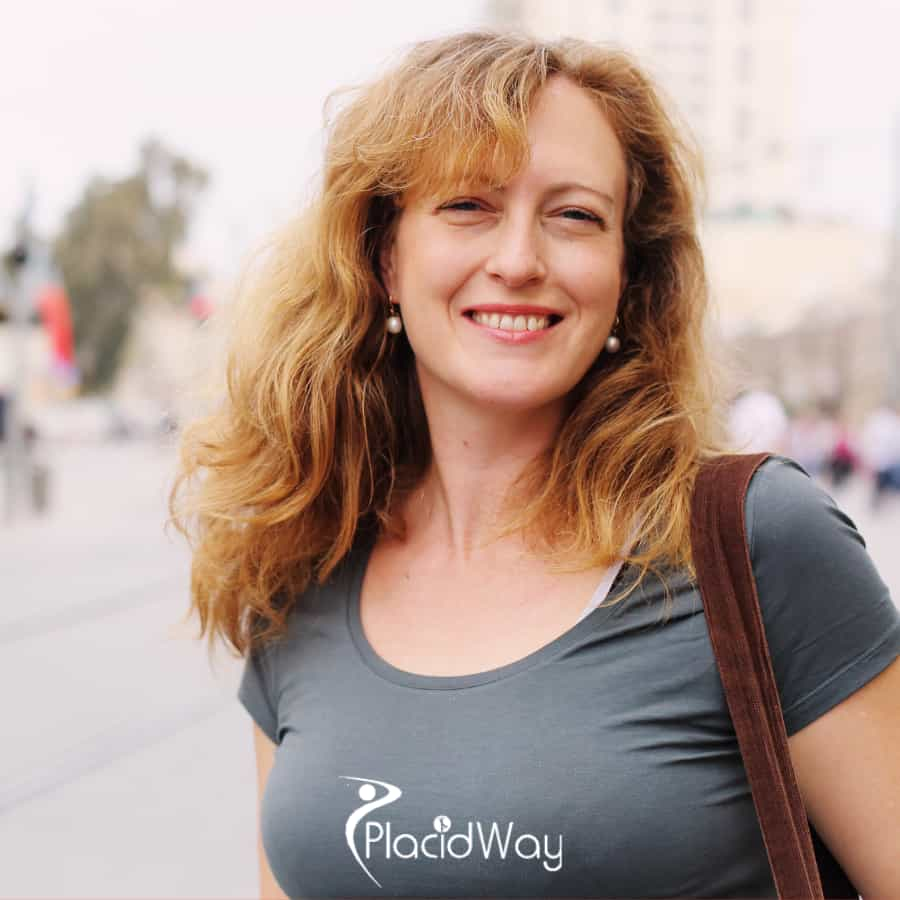
Giulia Romano Almost Skipped the Client Meeting Because of Her Smile — An Italian Patient’s Dental Implants in Zagreb

Publish date: Modified date: Medically reviewed by: Dr. Octavio Delacruz on Sep 14, 2026 Author: Rizal Aditya

Italian Patient’s Dental Implants in Zagreb

Patient Profile

Name: Giulia Romano

Age: 48

Condition: Aesthetic dental dysfunction; severe enamel erosion and visible malocclusion

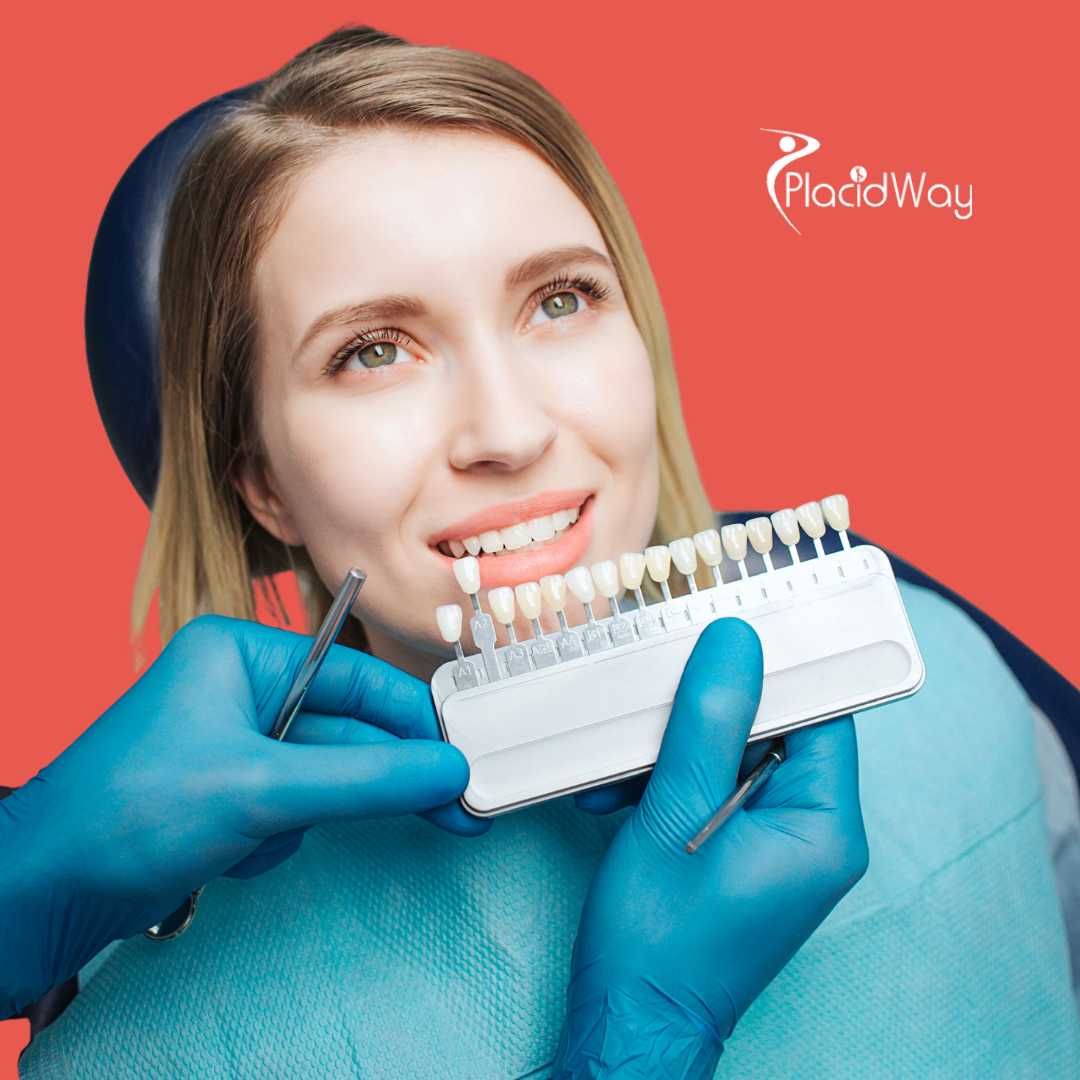
Treatment: Dental Care (Comprehensive smile makeover including custom porcelain veneers and minor alignment)

Destination: Zagreb, Croatia

Journey at a Glance

Main problems: Visible tooth discoloration, chipped enamel, and a misaligned smile causing severe social withdrawal; declining client-facing professional roles due to diminished confidence.

Previous care: Multiple consultations with Milan cosmetic dentists ending in prohibitive EUR 12,000–18,000 quotes; long waitlists; reliance on ineffective over-the-counter whitening serums.

Travel driver: Seeking timely, cost-effective specialist evaluation and equivalent EU-standard clinical outcomes without a twelve-month wait.

Treatment explored: Multi-stage aesthetic dental restoration leveraging digital scanning and custom porcelain prosthetics.

Personal goal: Reclaim professional visibility, complete the restorative work efficiently, and confidently lead Q4 business pitches.

Dental Esthetics and Smile Restoration: How Italians Are Reclaiming Confidence Through Cosmetic Dentistry in Zagreb

You stop opening your mouth completely when you laugh.

You practice the closed-lip smile in the rearview mirror before driving to work.

You learn to hold your coffee cup near your chin during morning meetings.

You decline the panel invitation because the lighting on stage is too harsh.

You tell yourself you just prefer listening.

You tell yourself the camera adds unnecessary stress.

You crop yourself out of the family vacation photos before sharing them in the group chat.

"You used to have such a bright laugh."

"Are you feeling alright today?"

"We'd love for you to present this."

Your professional world has quietly become smaller.

The hardest part is not the daily management of your appearance, nor the eventual cost:

It is the waiting.

Meet Giulia Romano.

Giulia Romano is not a real dental patient of any particular clinic.

She is a fictional composite built from the exact clinical compromises and financial pressures Italian professionals face every single day.

Giulia is forty-eight and lives in Milan.

She builds commercial real estate portfolios for a regional firm.

She leads weekly project reviews.

She takes the early train to Turin for site inspections.

She runs a highly competent, well-ordered life.

The deterioration was slow enough to ignore.

The enamel wear happened quietly over a decade of coffee and stress.

Whitening toothpastes.

Over-the-counter bleaching trays.

Drugstore enamel repair serums.

Changing lip colors to minimize contrast.

Practicing a rigid speaking posture.

Aesthetic dental dysfunction, including severe enamel erosion and visible malocclusion, is typically addressed through comprehensive restorative dentistry when structural integrity or psychosocial well-being is demonstrably compromised . This intervention requires the physical removal of compromised tissue and the bonding of synthetic material to restore natural oral mechanics.

Her Milan dentist delivered the verdict plainly:

"You need a complete restoration with porcelain veneers and minor alignment."

When?

Italian private dental care operates almost entirely out-of-pocket, with comprehensive cosmetic and restorative work frequently quoting between EUR 12,000 and EUR 18,000, while premium clinics in major metropolitan areas routinely maintain waitlists of six to twelve months for complex, multi-specialist scheduling . Public healthcare pathways restrict dental intervention to severe acute trauma or designated vulnerable populations, leaving cosmetic restorations wholly dependent on private funding.

But Giulia doesn't experience the Lombardy dental sector as a national statistic.

She experiences it in the staff kitchen when she covers her mouth to chew a biscotti.

"I am just careful with a sensitive tooth," she lies to her junior analyst.

She experiences it in the car when her partner of twelve years, Marco, touches her hand.

"You don't want to take a photo together?" he asks gently.

She experiences it at her desk staring at a treatment plan that costs more than her first car.

"I can't justify spending that on myself."

She has already tried to be patient.

She is not an impulsive shopper looking for a quick fix.

She has already tried to navigate the system.

She called three different prosthodontic specialists in Milan.

She asked the clinic coordinators about installment plans.

She logged into her corporate insurance portal to read the fine print.

She discovered the annual cosmetic dental cap was EUR 400.

She sat on a waitlist for a preliminary consultation that took four months to happen.

"I should just accept getting older."

"Maybe it isn't actually that noticeable."

She shifted her internal metric:

From "Can I tolerate this?" to:

"How much of my life am I prepared to organise around it?"

The local alternative fails on a quiet nuance.

She considered taking a personal loan to pay the Milan clinic outright.

She considered draining the savings account currently earmarked for a long-delayed kitchen renovation.

But price should never be the sole mechanism forcing a clinical compromise.

There is a fundamental difference between having the credit capacity for a local premium clinic and feeling that such an expenditure is financially responsible for your family's future.

"We can afford it if we restructure," Marco says late one evening at the dining table.

"But borrowing isn't the same as affording it," Giulia replies.

She isn't searching for a cross-border clinic yet.

She begins typing variations of her frustration into the browser late at night.

Fix worn enamel Milan Cheaper alternatives to veneers Italy Does public health cover dental restoration Cosmetic dentist payment plan Lombardy Smile makeover cost Croatia

Zagreb enters the algorithm through a forum post from a colleague in Turin.

Giulia voices her completely correct instinct:

"I am not going abroad just for a discount."

Her skepticism is healthy and necessary.

Why does Zagreb keep appearing in the results?

The clinical corridor between northern Italy and Croatia is heavily established because Croatian dental faculties have aligned with EU directives since accession, meaning practitioners operate under standardized European medical frameworks while benefiting from significantly lower localized operating costs .

The vital shift in thinking is that the question is never whether Croatia is good.

Countries do not practice dentistry.

Prosthodontists do.

Maxillofacial surgeons do.

Clinical teams do.

This means there is something highly concrete to verify rather than a vague national generalization to trust.

Patients considering cross-border healthcare should independently verify the specific registration and disciplinary history of their chosen clinician through the host country's official regulatory body prior to exchanging any clinical deposits .

Her first question was predictably about the cost.

A comprehensive smile makeover involving custom porcelain veneers, professional whitening, and necessary preparatory treatments in Zagreb is commonly quoted at an indicative range of EUR 5,000 to EUR 9,000, varying heavily based on the number of prosthetic units required, the choice of ceramic materials, and the need for prior structural stabilization .

Giulia remembers her father's quiet voice:

"Never buy the cheapest parachute."

"What exactly am I getting?"

Twelve things the advertised price may or may not cover.

Are the temporary veneers included while the permanent ones are milled?
Does the quote cover the initial panoramic X-ray and full 3D scan?
Are we using lithium disilicate e.max or standard zirconia?
Is the ceramic lab on-site or outsourced to another facility?
Who pays for the immediate revision if the shade match is slightly off upon fitting?
Does the fee cover airport and hotel transfers, or am I navigating taxis alone?
Are my daily consultations actually with the prosthodontist or merely a patient coordinator?
What happens financially if an underlying root infection is discovered during preparation?
Will the protective night guard required for long-term aftercare cost extra?
Is local anesthesia billed separately per dental quadrant?
Do I receive the physical manufacturer guarantee certificates for the materials used?
Is there a dedicated Italian translator present during the actual procedure?

The advertised number is only the baseline.

It does not account for the variables of individual human anatomy.

The final figure is only established once the clinical reality is exposed.

What does a comprehensive restoration actually involve?

A comprehensive cosmetic restoration is an invasive structural process requiring the irreversible reduction of healthy enamel under local anesthesia, followed by the bonding of custom-fabricated prosthetics over multiple prolonged chair sessions . It is not a cosmetic polish, but a permanent alteration of the mouth's architecture.

"How am I supposed to manage the travel logistics?"

The unglamorous operational reality is rarely on the brochure.

The marketing materials rarely feature the physical toll of compressed treatment.

Current clinical guidelines present conflicting consensus on the ideal recovery window between preparation and final fitting, suggesting that individual gum healing rates and inflammatory responses cannot be perfectly scheduled to a rigid timeline .

The variation itself is the lesson.

This biological constraint must be factored into the itinerary before booking non-refundable flights, not discovered in a panic on day three.

"Wait. Does that mean I might have to stay longer than a week?"

Possibly, depending on how your gums respond to the temporary crowns.

Where is the clinic located relative to the booked accommodation?

Can I comfortably eat solid food during the provisional phase?

Who exactly do I call if I experience severe sensitivity at 2 AM?

Are the follow-up appointments scheduled back-to-back with no rest days?

Is the clinic fully open on weekends if the lab needs extra time for a color correction?

Will I be fit to sit on a train or drive three hours back to Milan immediately after the final bonding?

What if the temporary veneers dislodge while I am sitting in the hotel room?

Do I have a quiet, comfortable place to manage the inevitable tissue swelling?

Will I simply be too exhausted to walk around the city?

This isn't tourism in the usual sense.

It is a physical medical intervention happening in a foreign jurisdiction.

The environment must actively support the recovery.

Marco isn't just coming along as a tourist.

Marco isn't just taking time off work to carry the luggage.

He is the one who will navigate the unfamiliar pharmacy when Giulia needs specific anti-inflammatories.

He is the one who will communicate logically with the clinic coordinator while she is exhausted in the chair.

He is the one monitoring her comfort levels during the multi-hour preparation sessions.

Patients utilizing cross-border medical services must ensure they hold appropriate travel insurance that explicitly covers complications arising from elective cosmetic procedures, as standard travel policies routinely exclude planned interventions entirely .

He is part of the care system too.

Then comes the uncomfortable conversation about risk.

Any reduction of natural tooth structure carries inherent risks, including irreversible nerve damage leading to root canal therapy, secondary decay beneath poorly fitted margins, and chronic temporomandibular joint discomfort .

Giulia learns to distrust certain phrases:

Completely safe. No risk. Guaranteed success.

Informed consent means understanding the probability of failure just as clearly as the hoped-for outcome.

Giulia's consultation questions become sharper.

She is no longer asking if she can afford it or if it will hurt.

What is your exact clinical protocol for managing unexpected root canal requirements discovered during preparation?
How many identical full-mouth restorations did this specific prosthodontist perform last month?
What material specifically are the temporaries made from to protect my exposed dentin?
If a veneer fractures three months after I return to Milan, exactly how is the warranty fulfilled physically?
Do you provide the complete digital files, CAD designs, and X-rays for my local dentist?
Who handles the emergency after-hours line when the clinic is closed?
What brand of dental cement do you use for the final bonding process?
Are the bite adjustments done subjectively or with digital occlusion analysis?
Can I speak directly to a former patient from Italy who had this exact procedure?
What clinical contraindications would make you tell me not to proceed?

She doesn't only want a clinician willing to do the work.

She wants a professional willing to recognize the limits of their craft.

She wants someone willing not to.

Have I exhausted my options at home?

Italian citizens maintain the right to access cross-border healthcare under the EU Directive 2011/24/EU, but national state reimbursement for elective aesthetic dentistry is generally excluded entirely unless severe functional impairment is rigorously documented .

Before booking any flights, Giulia must interrogate her current situation.

Can my current dentist perform this in manageable stages over two years?
Can the structural erosion issues be managed effectively without the full cosmetic overlay?
Is there a cancellation list I can join for a faster local appointment in Milan?
Will my local dentist explicitly agree to handle the long-term maintenance of work done abroad?
Does my Milan clinic offer a revised payment structure if I drop the non-essential whitening?

Cross-border dentistry should be compared with Giulia's real alternatives, not with a worst-case assumption about the Italian system.

The night before the decision looks different.

The dining table is no longer covered in vague anxiety, but in physical documents.

Printed email threads with the Zagreb clinic coordinator. The drafted ten-day logistical itinerary. The translated medical credentials of the prosthodontist. The itemized breakdown of accommodation costs.

"You seem calmer than you did before," Marco notes, reviewing the flight times.

"I finally know what we're dealing with," she answers.

The intensive research didn't make them more afraid.

It made them far more capable of deciding.

What Giulia actually wants isn't dental porcelain.

"Are you excited for the new smile?" her sister asks on a Sunday phone call.

"Yes, it will be nice to have it fixed," Giulia says automatically.

But that isn't the real goal:

Schedule a ten-day trip to Zagreb, complete the smile makeover, return to Milan, and lead the Q4 business pitches without covering her mouth.

She wants to accept the industry panel invitation.

She wants to pose for photos with Marco without overthinking her jaw angle.

She wants her professional presence to accurately reflect her actual competence.

Not the veneers. Not the e.max material. Not the VIP transfer package. Not Zagreb.

Relief.

And underneath that:

Visibility.

Zagreb might be the answer, or it might not be.

A flight to Croatia might be the right answer for you.

It might not be.

You might decide the travel logistics are simply too disruptive for your current workload.

You might choose to finance the procedure in Milan for the unparalleled convenience of local aftercare.

You might determine your current situation is actually physically manageable.

You might decide to only address the structural decay now and skip the cosmetic veneer overlay.

You might wait until your corporate insurance policy updates next year to see if terms change.

If you do choose to book the consultation abroad, you do so because the clinical standards meet your strict requirements, not because the price forced your hand.

Any of those paths can be an informed, competent decision.

The goal of examining this option isn't to persuade you to travel.

The goal is to ensure frustration doesn't make the decision for you.

Hope isn't the promise that everything will be fixed.

Maybe you've stopped laughing openly at dinner parties.

Maybe you've memorized exactly how much it costs to fix your teeth in Italy.

Maybe you've spent hours scrolling through before-and-after photos on clinic websites.

Maybe you're exhausted by the sheer idea of managing a cross-border medical trip.

Maybe you just want to feel like yourself again.

You do not need to decide today.

Do I have the energy to arrange follow-up care in Italy?

Is the cost savings worth the physical demand of compressed treatment?

Have I verified the clinical credentials independently?

Does my partner truly understand their role in the recovery timeline?

What is my specific, non-negotiable standard for clinical communication?

Am I running toward a solid solution, or just running away from the Milan waitlist?

Who is ultimately responsible if something goes wrong?

You are not merely comparing prices.

You are comparing paths forward.

Hope isn't the promise that the dental work will be flawless.

Hope isn't the guarantee of an effortless week in a foreign city.

Hope isn't the assumption that lower costs mean zero compromises.

Hope is having enough accurate information to make a decision that feels entirely yours.

You are capable of asking difficult clinical questions. You are capable of demanding total transparency regarding materials and warranties. You are capable of organizing complex travel logistics. You are capable of saying no if the clinic environment feels rushed. You are capable of reclaiming your presence.

The silent resignation ends here:

From "I suppose I'll just have to keep waiting."

To "What other informed options do I have?"

PlacidWay — Your Way to Hope.

PlacidWay helps individuals safely navigate the complexities of cross-border medical travel by providing a structured platform to explore international clinics, compare transparent treatment packages, and prepare rigorous questions for practitioners. We do not provide clinical advice or recommend specific dental treatments. For someone like Giulia, traveling to Zagreb for restorative dentistry isn't a guaranteed promise; it is one legitimate route worth understanding thoroughly.

Your Way to Hope.

Medical disclaimer

This article is provided for educational and informational purposes only and does not recommend that any individual undertake cross-border medical or dental treatment. Individual clinical suitability, recovery timelines, and procedural risks require comprehensive assessment by a licensed healthcare professional. Readers should always consult their own local clinician or medical adviser before committing to elective surgery abroad, independently verify the current regulatory status of any international practitioner, and ensure they obtain appropriate medical travel protection or insurance.


Giulia Romano Almost Skipped the Client Meeting Because of Her Smile — An Italian Patient’s Dental Implants in Zagreb

About Article

  • Treatment: Dentistry
  • Country: Croatia
  • Overview Enamel erosion, chipped teeth and visible misalignment have changed how Giulia Romano speaks and smiles during client meetings. High quotes in Milan lead her to evaluate a staged smile makeover in Zagreb. Her questions move beyond appearance to tooth preservation, bite function, veneer preparation, material choice, laboratory quality, treatment reversibility, maintenance costs and a clear plan if adjustments are needed after returning to Italy.

Trusted Medical Tourism Platform Since 2007

60+
Countries
2k+
Clinics
19.5k+
Reviews
2.5k+
Qualified Doctors
1.1M+
Patients Served Since 2007