

Midlife Hormonal Transition Guide
Perimenopause Symptoms: Signs, Timing and Which Tests Help
Perimenopause symptoms usually begin with a change in cycle length, then add hot flashes, disturbed sleep and mood change. Hot flashes last a median of 7.4 years in the SWAN cohort (JAMA Internal Medicine, 2015). Trial averages; individual results vary and are not guaranteed. At Healthi Life in Bangkok, a physician reads symptoms first and tests second.
Clinical Snapshot
Key facts
Understanding how menstrual cycles shift before menopause helps clarify what changes are expected during midlife and when clinical evaluation adds clarity. The summary below brings together staging definitions, vasomotor symptom averages, diagnostic guidance, and structured check-up options so patients and travelers can review the core milestones side by side.
| Item | Fact | Source |
|---|---|---|
| Definition | The years of irregular cycles before the final menstrual period | STRAW+10, Menopause 2012 |
| Earliest sign | Cycle length varying by 7 days or more | STRAW+10, Menopause 2012 |
| Hot flash duration | Median 7.4 years across the transition | SWAN, JAMA Intern Med 2015 |
| Diagnosis | In women over 45, from symptoms without laboratory tests | NICE guideline NG23 |
| Testing in Bangkok | Healthi Life offers the Her Hormonal Transition pack for women aged 45 to 65 | Healthi Life check-up menu |
Early Shifts
What are the first perimenopause symptoms?
The first perimenopause symptom for most women is a change in the menstrual cycle. The Stages of Reproductive Aging Workshop (STRAW+10) defines the early transition as a persistent difference of seven days or more in the length of consecutive cycles, and the late transition by a gap of 60 days or longer between periods (Harlow et al., 2012).
Cycles can shorten before they lengthen. Bleeding may become heavier, lighter or more unpredictable. Some women skip a month and then have two periods close together. These changes come from ovulation becoming irregular, which makes estradiol and progesterone vary more than they did in earlier years.
Other early symptoms include breast tenderness, premenstrual symptoms that feel stronger than before, and sleep that is lighter than usual. None of these proves perimenopause, because thyroid disease, iron deficiency and stress produce similar changes.
Symptom Patterns
Which symptoms are most common?
Hot flashes and night sweats are the most familiar symptoms, and the SWAN cohort found them in a large share of women during the transition. Other common symptoms are trouble sleeping, low or unstable mood, vaginal dryness, lower sexual interest, joint aches and difficulty concentrating.
Not every woman has all of them, and not every woman has any. Severity ranges from barely noticeable to disruptive for work and sleep. The Healthi Life menu describes the Her Hormonal Transition pack for women aged 45 to 65 who notice hot flashes or changes in cycle, sleep or mood, which matches the symptom groups above.
A practical habit is to keep a two-month diary. Record the first day of each bleed, nights with sweats or waking, mood dips and energy. A physician can read a diary faster than a memory, and it shows a pattern that a single blood draw cannot.
Timeline & Duration
How long do perimenopause symptoms last?
Vasomotor symptoms last a median of 7.4 years across the menopause transition in the Study of Women's Health Across the Nation, with a longer total duration in women who started having them while still premenopausal (Avis et al., 2015). Trial averages; individual results vary and are not guaranteed.
The stage before the final period often lasts several years. STRAW+10 notes that the early transition has no fixed length and that the late transition typically lasts one to three years. After the final period, symptoms may continue for some time.
For a traveler planning care in Bangkok, this timeline matters in one way: symptoms that have lasted months are worth a consultation, and a repeat visit a few months later can show whether the pattern is changing.
Diagnostic Role
Which tests help with perimenopause symptoms?
Tests help a physician rule out other causes and record a baseline, but they do not confirm perimenopause. NICE guideline NG23 makes perimenopause a symptom-led diagnosis in women over 45. NICE suggests an FSH test only for women aged 40 to 45 with symptoms, or under 40 if premature ovarian insufficiency is suspected (NG23).
Several tests earn their place in practice:
- Thyroid markers (TSH and free T4), because an overactive or underactive thyroid can mimic flushes, fatigue and mood change.
- A complete blood count and ferritin, since iron deficiency causes tiredness and can follow heavy bleeding.
- Fasting glucose, HbA1c and a lipid set, because cardiovascular and metabolic risk shifts around the time of menopause.
- FSH, LH, estradiol and progesterone, taken on Day 2 to 5 of the cycle where cycles still occur, when the physician judges they add information.
- Vitamin D and calcium, which relate to bone health.
At Healthi Life in Bangkok, the Her Hormonal Transition pack bundles these groups with a physician consultation and a written action plan. The pack helps look at contributing factors and is not a diagnosis. Published prices are on the clinic price list linked at the end.
Center & Credential Overview
Center, Physicians & Certificate
Healthi Life Longevity Center

Healthi Life Longevity Center Certificate
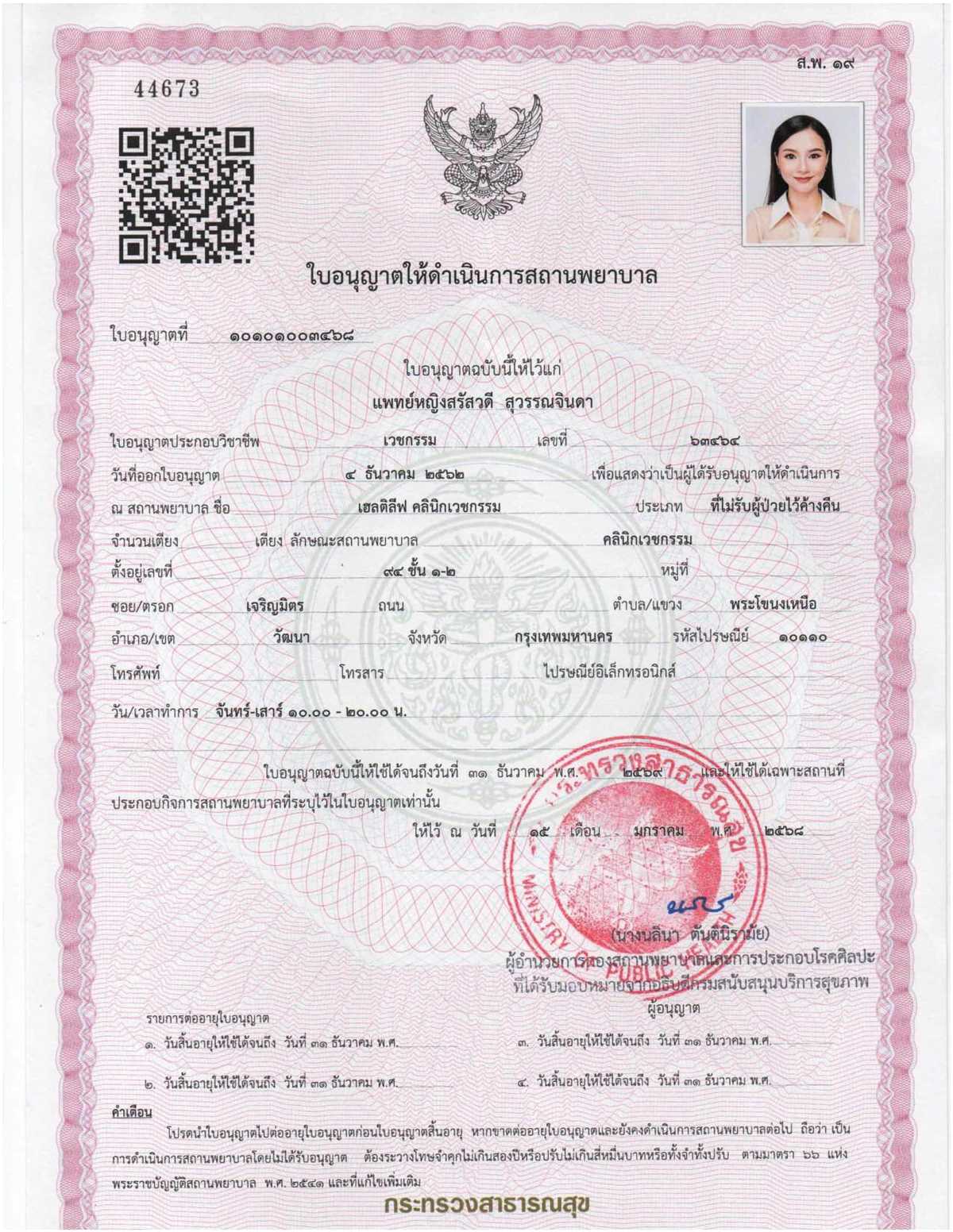
Dr. Sarassawadee Suwanjinda, MD (Dr. Petch)

Dr. Napat Hunsajarupan, MD (Dr. First)

Timely Medical Review
When should you see a doctor?
See a doctor if bleeding is very heavy, if you bleed between periods or after sex, if bleeding returns after 12 months without a period, or if symptoms interfere with sleep or work. These patterns need assessment because other conditions cause them, and some are treatable.
Seek urgent care for chest pain, shortness of breath or sudden severe symptoms, which are not perimenopause symptoms and need emergency attention.
Women with a family history of early menopause, women who have had ovarian surgery or chemotherapy, and women under 40 with absent periods should be assessed promptly. Early loss of ovarian function has its own work-up and its own implications for bone and heart health.
Management Options
What can a physician offer?
A physician can confirm that symptoms fit the transition, check for other causes, and discuss options. Options range from sleep and exercise habits, alcohol and caffeine changes, and non-hormonal medicines to menopausal hormone therapy, which is a prescription medicine decided case by case. The 2022 hormone therapy position statement of The Menopause Society describes it as an effective treatment for hot flashes and night sweats and sets out risks that depend on age, time since menopause and health history (Menopause, 2022).
Whether a given option suits you depends on your history, your family history and your own preferences. Healthi Life does not decide this from an article, and the clinic confirms at the consultation what it can and cannot offer.
Clinical Caveats
Risks and limits
Even with thorough symptom tracking and targeted lab panels, midlife hormonal assessment has practical boundaries that affect how results are interpreted and how care is planned:
- Symptoms overlap with thyroid disease, anemia, depression and sleep disorders, so assuming perimenopause can delay another diagnosis.
- Hormone values fluctuate within a month, so a single result can mislead.
- Hormonal contraception hides the cycle pattern and changes FSH.
- Online symptom checklists cannot diagnose and are not validated for individual use.
- Tests lead to follow-up questions that may add cost.
Consultation Prep
Questions to ask any clinic
Preparing clear questions before an appointment helps align clinical reasoning, testing relevance, package inclusions, and post-visit follow-up—especially when traveling internationally for care:
- Will a physician review my symptoms before ordering tests?
- Which tests do you advise at my age, and why?
- Which other conditions will you exclude first?
- How do you interpret FSH when my cycles are irregular?
- Is the consultation included in the package price?
- How will results and the written plan reach me if I travel home?
Answers At A Glance
FAQ
What are the earliest signs of perimenopause?
The earliest sign is usually a change in cycle length of seven days or more between consecutive periods, per the STRAW+10 staging system. Breast tenderness, lighter sleep and stronger premenstrual symptoms often follow. These signs overlap with thyroid and iron problems, so a physician should confirm the cause.
At what age does perimenopause start?
Most women begin the transition in their 40s, and some start earlier. Healthi Life recommends its Her Hormonal Transition pack for women aged 45 to 65 who notice hot flashes or changes in cycle, sleep or mood. Symptoms before age 40 call for a medical assessment of ovarian function.
How long does perimenopause last?
The transition varies. The SWAN cohort reports a median of 7.4 years of hot flashes (Avis et al., 2015); individual courses vary and are not guaranteed. The late stage before the final period typically lasts one to three years, according to STRAW+10.
Can a blood test confirm perimenopause?
Not by itself. FSH and estradiol swing from month to month, and NICE guideline NG23 treats it as a symptom-led diagnosis in women over 45. Blood tests still help exclude thyroid disease and iron deficiency and create a baseline a physician can compare later.
Are hot flashes the main symptom?
No. Hot flashes and night sweats are the most familiar, but many women first notice cycle changes, disturbed sleep, mood change or trouble concentrating. Vaginal dryness and joint aches also occur. A two-month symptom diary helps a physician see which pattern is yours.
Can I get tested for perimenopause as a visitor in Bangkok?
Before a visit, keep a two-month diary of cycle dates, night sweats and sleep, and bring it with your medicine list. The Her Hormonal Transition pack pairs a blood panel with a physician consultation and a written plan. Ask at booking how that plan reaches you after you leave Thailand.





























Share this listing