

Regenerative Medicine · Clinical Overview
Mesenchymal Stem Cells: Sources, Properties and Evidence
Mesenchymal stem cells (MSCs) are adult cells found in bone marrow, fat and umbilical cord. Three minimum criteria define them (ISCT, 2006). At Healthi Life in Bangkok, the joint MSC program starts at THB 86,000, and several uses are investigational.
At a glance
Key facts
| Item | Fact | Source |
|---|---|---|
| Definition | Plastic-adherent cells with CD73, CD90 and CD105 markers that form bone, fat and cartilage in culture | Dominici et al. 2006 |
| Common sources | Bone marrow, adipose tissue, umbilical cord | Galipeau and Sensebe 2018 |
| Healthi Life source | Wharton’s jelly of donated umbilical cord | Healthi Life stem cell menu |
| Cell state at Healthi Life | Fresh, never frozen | Healthi Life stem cell menu |
| Mode of action | Thought to act mainly through released signaling molecules | Healthi Life stem cell menu |
| Status of several uses | Investigational, outcomes vary and are not guaranteed | Healthi Life stem cell menu |
01 · Cellular identity
What are mesenchymal stem cells?
Mesenchymal stem cells are a class of adult stem cell found in connective tissue, able to self-renew and to develop into several cell types in the laboratory. Pittenger and colleagues described adult human MSCs from bone marrow that could become bone, cartilage and fat cells, in a Science paper in 1999.
Because many laboratories used different methods, the International Society for Cellular Therapy (ISCT) published minimal criteria in 2006 (Dominici and colleagues, Cytotherapy). A cell population should stick to plastic in culture, carry the surface markers CD73, CD90 and CD105 while lacking blood-cell markers, and be able to form bone, fat and cartilage cells in the dish. The Healthi Life menu states that its cells are identity-confirmed by CD73, CD90 and CD105.
Caplan, who first used the term, later argued in Stem Cells Translational Medicine that the name should change. His view is that these cells act as signaling cells that respond to injury, rather than as stem cells that replace damaged tissue. That debate affects how a treatment is described to patients, so it is worth knowing.
02 · Tissue origins
Where do mesenchymal stem cells come from?
Mesenchymal stem cells come from several tissues, mainly bone marrow, adipose (fat) tissue and the umbilical cord. Galipeau and Sensebe (Cell Stem Cell, 2018) note that MSCs differ between donors and between tissue sources, which is why the source matters when reading any study.
Bone marrow was the first source and needs a procedure to collect it. Fat tissue is collected by a small surgical or liposuction step. Umbilical cord tissue is collected at birth and does not require any procedure on an adult donor.
At Healthi Life in Bangkok, the source is Wharton’s jelly from donated umbilical cords. The menu says cords are donated at birth by pre-screened, consenting healthy mothers, with no harm to mother or newborn, and no fetal, embryonic or animal sources. The cells are allogeneic, meaning they come from a donor, and they are prepared by GMP-grade, ISO-accredited partner laboratories.
03 · Biological behavior
What are the properties of these cells?
MSCs divide readily in culture, can form several tissue-type cells in the laboratory and release a mix of signaling molecules. The menu describes them as immunologically well tolerated, acting as immunomodulators, and producing growth factors and cytokines studied for their role in tissue support.
The signaling role is now thought to matter more than direct replacement. The Healthi Life menu says MSCs are studied to act mainly through paracrine signaling, meaning they release molecules that may support the body’s own repair processes rather than replacing tissue. It adds that these mechanisms are research-stage and not a claim of clinical outcome.
Umbilical-cord MSCs have been described as having a high proliferation rate and low immunogenicity, which is why donor cells are used in this setting. Low immunogenicity does not mean no immune response. Allogeneic cells are screened and prepared under controlled conditions, and the physician checks eligibility first.
04 · Research landscape
What do clinical studies report?
Clinical studies of MSCs report mixed results that depend on the condition, the cell source and the dose. Le Blanc and colleagues reported a phase II study in The Lancet in 2008 using MSCs for steroid-resistant, severe acute graft-versus-host disease after transplant. That setting is a hospital medical specialty and is not what Healthi Life offers.
Galipeau and Sensebe, in Cell Stem Cell in 2018, reviewed the clinical challenges. They describe variation between donors, tissue sources and manufacturing, differences between what is seen in the laboratory and in people, and inconsistent trial results. These are the reasons many MSC uses remain unproven.
For the uses Healthi Life offers, which are aesthetic and anti-aging goals, joint and cartilage comfort and fertility support, the menu describes the applications as investigational. Trial averages; individual results vary and are not guaranteed. Ask any clinic for the specific published data that matches its cell source, dose and route.
05 · Program protocol in Bangkok
How does Healthi Life use mesenchymal stem cells?
At Healthi Life, MSC programs are physician-led and begin with a consultation. The clinic confirms the visit sequence, timing and follow-up for your program at the consultation.
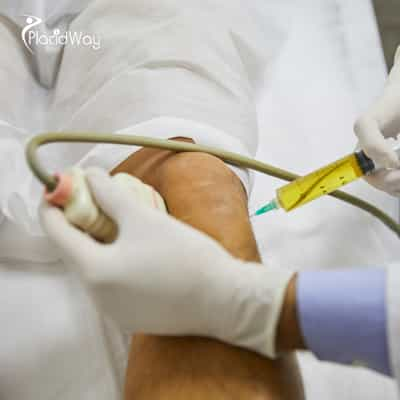
Cells are given as an IV infusion for body programs. For joint programs, a physician may use an intra-articular injection into the joint. The joint program uses chondrogenic MSCs, which the menu describes as the same cells guided toward the cartilage lineage in culture before they are introduced into the joint.
The menu states that cells are fresh and are administered on the day of preparation without a freeze-thaw cycle. The physician sets the dose. The clinic does not offer MSC programs for serious medical conditions, and the programs are not a treatment or cure for any disease.
06 · Menu pricing
Published stem cell prices at Healthi Life
| Program | Price | Note from the menu |
|---|---|---|
| Joint Mobility Restoration, one joint | THB 86,000 / THB 123,000 / THB 157,000 | Knee: 5M, 10M or 15M chondrogenic MSC |
| Joint Mobility Restoration, two joints | THB 155,000 | Both knees in one session, 5M each |
The same menu prices apply here, in Thai baht, with the final amount confirmed by the clinic at the consultation.
07 · Center, medical team & certification
Clinic & Certificate Overview
Healthi Life Longevity Center
Longevity and regenerative medicine center in Bangkok offering physician-led cellular programs, initial consultations and structured follow-up guidance.
Dr. Sarassawadee Suwanjinda, MD (Dr. Petch)
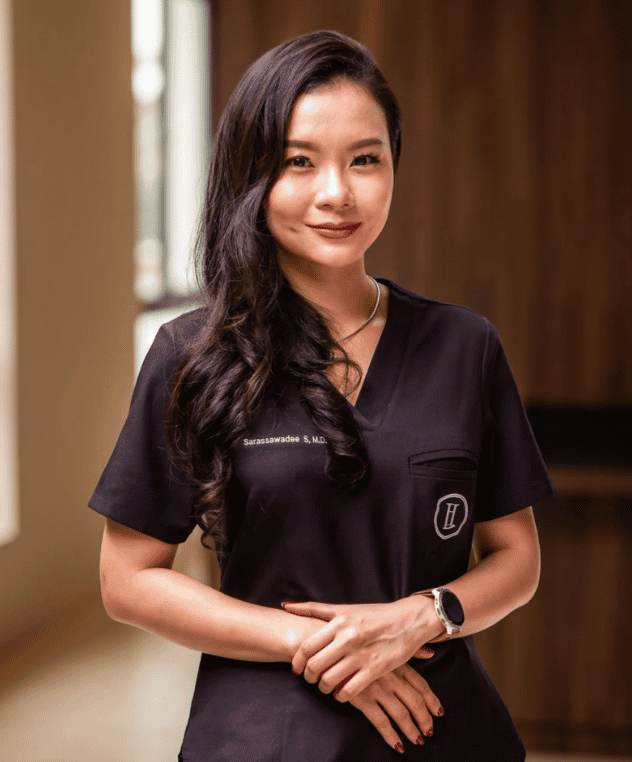
Physician supporting patient evaluations, medical screening and individualized care planning within regenerative and longevity protocols.
Dr. Napat Hunsajarupan, MD (Dr. First)
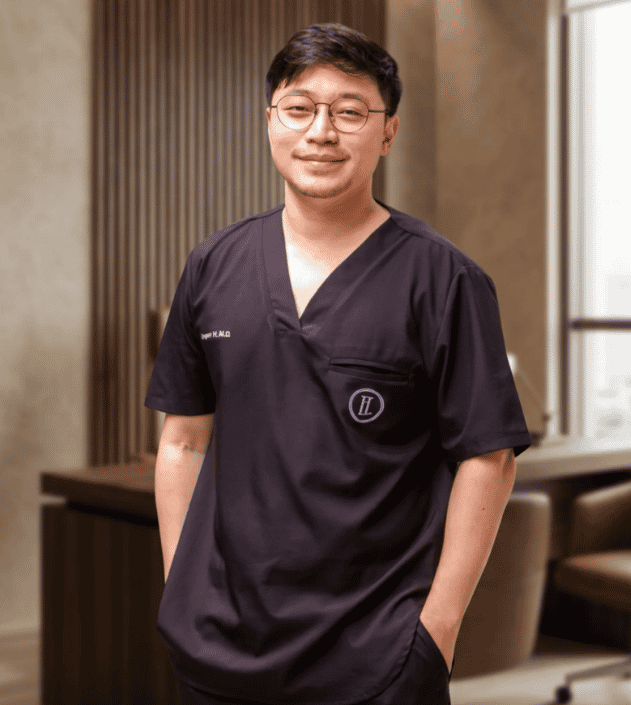
Physician involved in clinical assessment, eligibility review, dosing decisions and treatment guidance across regenerative programs.
Healthi Life Longevity Center Certificate
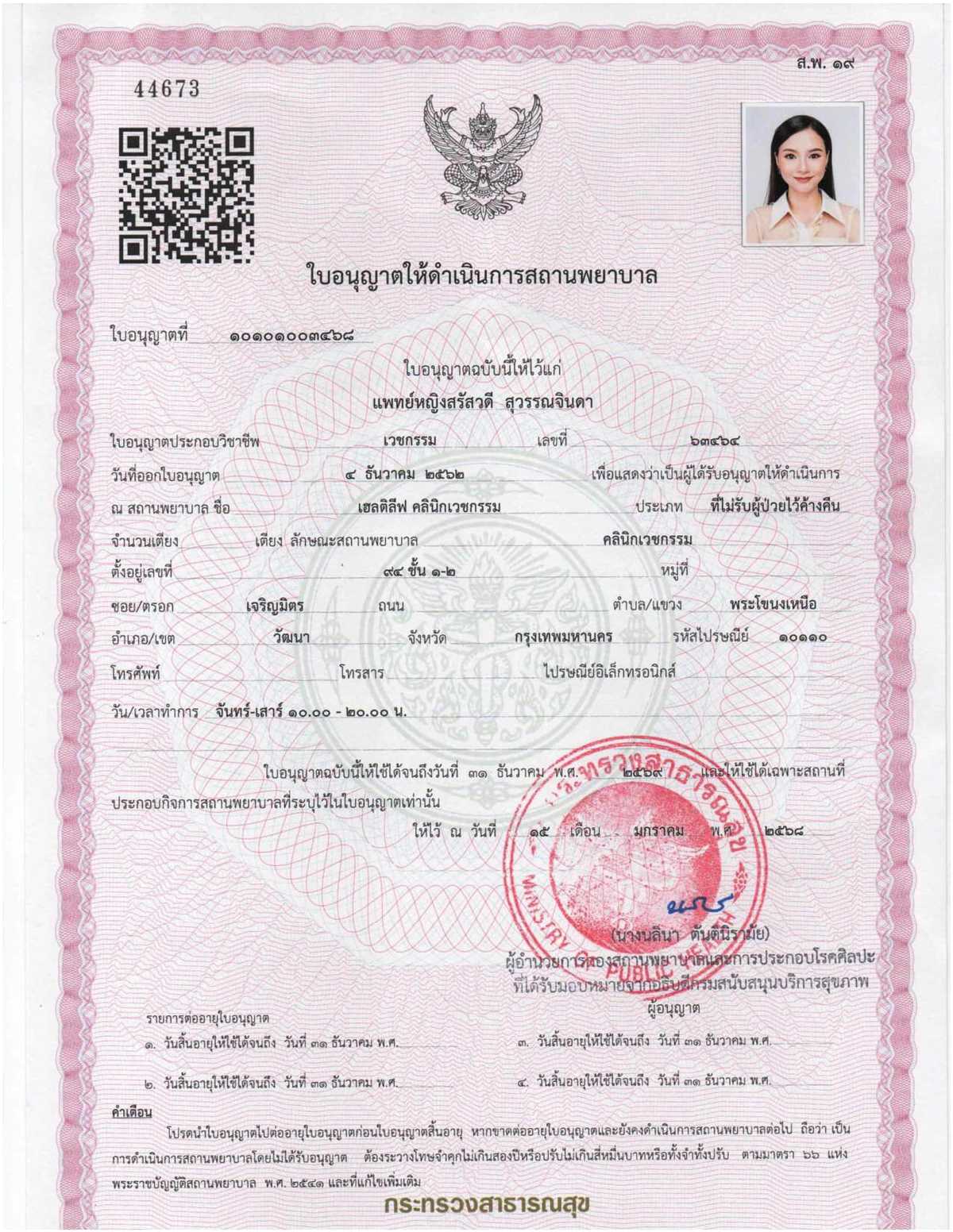
Official documentation reflecting facility credentials and program standards; patients should always confirm scope and applicability during consultation.
08 · Safety & contraindications
Risks and limits
MSC treatment carries risks that depend on the product and route. The menu notes that some mild fatigue or warmth may occur in the first 24 to 48 hours. Infusions and injections carry the usual needle risks, such as pain, bruising and infection.
The main limit is evidence. Many uses are investigational, results differ between products and doses, and a trial using one source of cells does not prove that another source works the same way. A physician screens eligibility and contraindications before any program. General examples; the clinic confirms at the consultation which conditions apply: cancer history, pregnancy or an active infection.
09 · Consultation checklist
Questions to ask any clinic offering MSC treatment
- What is the cell source, and is the donor screened for infection?
- Which laboratory prepares the cells, and under what quality standards?
- How is cell identity confirmed, and are viability and sterility tested?
- What is the dose, and what published data supports it for my goal?
- Is this use investigational, and what are the known risks?
- What does the price include, and what follow-up is planned?
10 · Clickable answers
FAQ
What are mesenchymal stem cells? Click to expand
Mesenchymal stem cells are adult cells found in tissues such as bone marrow, fat and umbilical cord. They stick to plastic in culture, carry CD73, CD90 and CD105 markers and can form bone, fat and cartilage cells in the laboratory. Their main action is thought to be signaling rather than replacing tissue.
Where do mesenchymal stem cells come from? Click to expand
They can be taken from bone marrow, adipose tissue or umbilical cord. At Healthi Life in Bangkok, the source is Wharton’s jelly from umbilical cords donated at birth by screened, consenting mothers. The cells are donor-derived, processed by accredited partner laboratories and given fresh, without freezing.
How much do mesenchymal stem cell programs cost in Bangkok? Click to expand
At Healthi Life, the Joint Mobility Restoration program is THB 86,000, THB 123,000 or THB 157,000 for one joint, depending on cell dose, or THB 155,000 for two knees at 5M cells each. The physician sets the dose, and the clinic confirms the final price at the consultation.
Are mesenchymal stem cell treatments proven? Click to expand
Some research settings have trial data, such as phase II studies in graft-versus-host disease. For aesthetic, joint and anti-aging goals, the Healthi Life menu says applications are investigational and outcomes vary. Trial averages; individual results vary and are not guaranteed. Ask any clinic for published data on its specific product.
What are the side effects of mesenchymal stem cells? Click to expand
Risks depend on the product and route. The Healthi Life menu notes mild fatigue or warmth in the first 24 to 48 hours, and needle sites can bring pain, bruising or infection. A physician screens eligibility and contraindications before any program.
Can foreigners receive mesenchymal stem cell treatment in Bangkok? Click to expand
The deciding factor for a visitor is dose and program: the joint program is THB 86,000 for one knee at 5M cells and THB 157,000 at 15M cells. Bring your medical history, medicines and recent results so the physician can judge eligibility. The clinic confirms the schedule and any follow-up after you leave Thailand at the consultation.



























Share this listing