
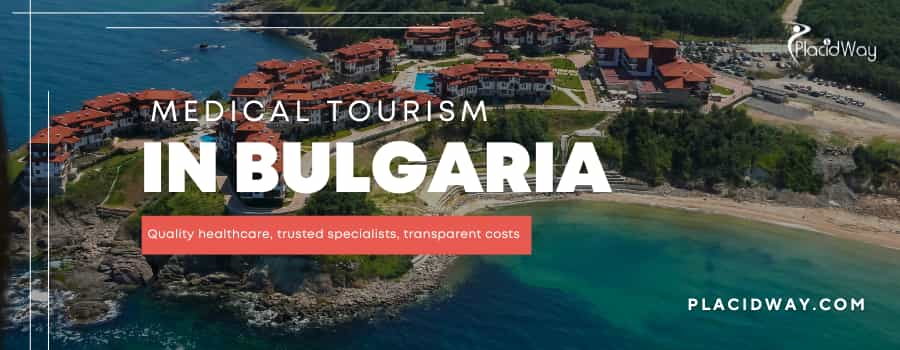
Evaluating Medical Tourism in Bulgaria: Clinics, Safety, and Your Journey
A couple in London sits at their kitchen table late on a Tuesday evening, surrounded by printed emails and clinic brochures. They are navigating their third year of fertility struggles, feeling the emotional weight of delays and the financial strain of local private care. Their current focus is coordinating work leave with a flight to Sofia for In Vitro Fertilization (IVF), worrying about how the stress of travel might impact the delicate timing of their treatment cycle.
Consider a different patient in Berlin, mapping out a two-part trip to the Bulgarian coast. He requires full-mouth dental implants but cannot afford the extensive restorative work in Germany. His primary concern is no longer just the upfront price, but managing the logistics of a return flight to Varna six months later for the final crowns, while ensuring his local dentist will handle routine cleanings afterward.
Now picture a teacher in Toronto evaluating cosmetic surgery options across Europe. She is looking into breast augmentation and a rhinoplasty in a private Bulgarian clinic. Her spreadsheet compares surgeon credentials, but her deeper hesitation centers on post-operative care. She wonders how she will manage her heavy luggage through an international airport during those vulnerable first two weeks of recovery.
All three people are dealing with medical tourism in Bulgaria, but their actual journeys, decisions, and experiences differ significantly.
"How do I look past the attractive price points to evaluate which Bulgarian clinic, timeline, and logistical plan actually fits my personal health requirements and physical limitations?"
The Real Motivations Behind Your Healthcare Search
Evaluating healthcare across borders rarely begins with a simple desire to travel. It usually stems from a specific domestic frustration, a changing life circumstance, or a quiet realization that your local options no longer fit your reality.
Maybe you have spent months on a waiting list for an orthopedic surgery consultation. The daily pain in your knee is affecting your mobility, and the prospect of traveling to Eastern Europe for a faster procedure suddenly feels like a necessary alternative to waiting another year.
Perhaps you have received a local quote for dental veneers that equals a down payment on a house. You want high-quality ceramic work and a functional bite, but the numbers simply do not align with your family budget.
Maybe you are a woman who has carefully researched rhinoplasty for over a decade. You finally have the funds and the time off work, but you want a surgeon whose specific aesthetic approach matches your natural facial structure, leading you to look beyond your own city.
Perhaps you and your partner are feeling the pressure of time regarding family planning. The regulatory environment or strict eligibility criteria for IVF in your home country have pushed you to explore specialized fertility clinics in Sofia that offer different protocols.
Maybe you are seeking a highly private environment for breast augmentation. You prefer to undergo the procedure, recover quietly in an unfamiliar city without running into acquaintances, and return home only when you feel physically ready.
Which sounds most like you?
"I cannot wait another year in pain just to get an initial surgical consultation."
This reader is prioritizing speed and accessibility over proximity. The primary trade-off involves exchanging the comfort of a local hospital bed for the immediate availability of an international orthopedic specialist.
"I want my smile restored, but I refuse to compromise my retirement savings to do it."
This reader is balancing cost against long-term value. They must carefully weigh the upfront savings of Bulgarian dental implants against the total journey cost, including multiple flights and potential local maintenance fees.
"I need an IVF clinic that looks at my specific medical history, not just my age bracket."
This reader values personalization and capability over standardized domestic care. Their decision hinges on finding a fertility specialist who offers tailored protocols, rather than just evaluating the cost of flights to Eastern Europe.
"I want to undergo my cosmetic procedure away from the eyes of my community."
This reader is prioritizing privacy and dedicated recovery time over convenience. The challenge lies in ensuring a safe, supported healing environment far away from their usual local support system.
This is why choosing medical tourism in Bulgaria should begin with your situation, not a generic ranking, slogan, or price comparison.
One Destination. Several Different Real-World Paths.
Medical tourism in Bulgaria is not a singular, uniform product. It represents a varied landscape of private specialized centers, coastal dental retreats, and complex surgical hospitals. The environment you step into depends entirely on the procedure you need and the path you choose.
Current European healthcare research suggests that clinical capabilities differ substantially between capital cities and regional towns. In Sofia, you will often find large, multi-disciplinary private hospitals and advanced IVF clinics equipped with international liaison departments. In coastal cities like Varna or Burgas, the model often shifts toward boutique dental clinics designed around seasonal travel schedules.
Official guidance notes that accreditation and oversight vary by facility. Professional registration with the Bulgarian Medical Association is standard, but specialized clinics may carry additional certifications for specific fields. In practice, this can vary wildly between a clinic treating hundreds of international patients monthly and a smaller local practice attempting to attract foreign clients.
Capability, quality, timing, and support can differ substantially between providers, locations, or models. A provider offering excellent, high-volume dental veneers may not have the infrastructure to support a patient recovering from complex orthopedic surgery. This is a planning consideration, not a guarantee.
Here is what those differences can feel like in real life.
Coastal Dental Hubs: When Restorative Needs Meet Travel Logistics
A patient lands at Varna airport in the late afternoon. They are scheduled for the first phase of complex dental implants the following morning. Their chosen clinic organized the airport transfer, easing the immediate stress of arrival in a new country.
This option attracts patients looking to combine significant dental restoration with a lower cost of living during their stay. It solves the problem of prohibitive local dental fees. The expectation is a streamlined process where English-speaking coordinators manage appointments, temporary prosthetics, and local accommodations seamlessly.
However, the less obvious reality is the requirement for phased treatments. True dental implants require bone healing time. This means the patient must fund, schedule, and endure a second international trip months later for the final crowns. If local healing complications arise back home in the UK or Germany, finding a domestic dentist willing to adjust foreign work can become an unexpected operational challenge.
Before you decide, ask:
- Who holds clinical responsibility if an implant fails to integrate after I return home?
- Are the implant brands used officially supported by dental practitioners in my home country?
- How many actual travel days, including recovery time before flying, are required for phase one?
- What happens if the oral surgeon determines I need unexpected bone grafting upon physical examination?
- Is there a dedicated out-of-hours contact number for pain management during my hotel recovery?
Convenience can change the calculation. It should not end the research.
Capital Fertility Centers: When Time and Regulations Drive the Choice
A couple checks into a quiet apartment in Sofia. They have a binder full of translated medical records, blood test results, and correspondence with a leading Bulgarian embryologist. Tomorrow marks the beginning of their stimulation protocol for IVF.
Sofia attracts fertility patients primarily because of its concentration of advanced reproductive technology and differing regulatory frameworks. It solves the frustration of age limits, strict eligibility criteria, or multi-year waiting lists back home. Patients choose this route expecting highly personalized protocols, often at a fraction of the cost found in North America or Western Europe.
Yet, fertility treatment abroad involves immense emotional and logistical dependencies. Medication must be meticulously timed, and bodies do not always respond according to a fixed travel itinerary. The hidden cost often lies in unexpected extended stays if egg retrieval is delayed, or the profound stress of navigating hormonal treatments in an unfamiliar city.
What matters here isn’t the marketing brochure’s success rate.
- Does this specific clinic report its success data to a verified, independent European monitoring body?
- What is the exact protocol if my cycle needs to be canceled due to poor response while I am in Bulgaria?
- Who manages my early pregnancy scans and support once I return to my home country?
- How are language barriers handled during highly emotional or complex medical consultations?
- What are the strict legal guidelines regarding donor anonymity and embryo storage in Bulgaria?
Same destination. Completely different emotional and clinical journey.
Private Aesthetic Hospitals: When Surgical Goals Require Careful Follow-Up
A patient wakes up in a private hospital room following a combined rhinoplasty and breast augmentation. The nursing staff is attentive, and the room feels more like a hotel than a clinical ward. Outside the window, the city is quiet.
This environment caters to those seeking significant cosmetic changes with board-certified plastic surgeons. It solves the barrier of high domestic surgical fees. The appeal is undergoing transformation discreetly, recovering in a dedicated facility, and returning home only when the initial swelling has subsided.
The trade-off lies in the strict physical limitations of postoperative travel. Airlines have rigid rules about flying after major surgery due to the risk of deep vein thrombosis (DVT) and pressure changes affecting incisions. A patient must secure absolute medical clearance to fly, meaning they are temporarily tethered to a foreign city while in their most vulnerable physical state.
Before you decide, ask:
- How many days must I remain in the country before the surgeon legally clears me for commercial air travel?
- What are the specific escalation procedures if I develop an infection or complication after flying home?
- Does the quoted price include extended hotel stays if my recovery is slower than anticipated?
- Who removes my sutures, and do I need to find a local practitioner willing to do this upon my return?
- How do I safely manage my luggage and airport transfers while under strict lifting restrictions?
An attractive clinic interior can make the experience easier. It cannot replace the critical requirement for safe postoperative logistics.
The Person Beside You Carries Part of This Decision
There is often another person missing from guides like this: the one sitting in the waiting room.
Whether it is a spouse tracking IVF medication schedules, a friend helping a rhinoplasty patient wash their hair, or a partner managing heavy luggage after an orthopedic surgery, companions bear a significant burden. They are not merely travel buddies; they are active caregivers operating outside their own comfort zones.
This person takes on real-life responsibilities. They remember the post-op instructions when the patient is groggy from anesthesia. They figure out the local pharmacy system to fill unexpected prescriptions. They coordinate with taxi drivers, manage food deliveries to the hotel, and provide the emotional reassurance required when a procedure feels overwhelming.
A responsible decision process must help companions understand their role before the journey begins. They need to know exactly who to call if the patient develops a fever at 2:00 AM in a Bulgarian hotel. They require access to emergency escalation pathways and a clear understanding of expected timelines.
If a clinic only communicates with the patient and ignores the caregiver’s need for clarity, that is a red flag. Better decisions consider everyone affected, not only the person making the purchase or undergoing the treatment.
Beyond the Price Tag: Redefining How You Measure Bulgarian Clinics
The most common question people ask is, "Are the clinics in Bulgaria safe and affordable?"
This question feels natural. When you are looking at medical procedures that cost half of what they do at home, you want immediate reassurance. However, a simple "yes" fails to capture the true complexity of international healthcare. Safety is not a blanket condition of a country; it is a specific, measurable protocol within individual clinics.
To make an informed choice, you must replace the broad question with specific research inquiries:
- How does this specific surgeon handle a complication that occurs after I have left the country?
- What is the exact communication pathway between my Bulgarian specialist and my primary care doctor at home?
- Are the clinic’s sterilization and safety protocols audited by an independent, recognized authority?
- What legal recourse or insurance coverage exists if a surgical revision is necessary?
- How often does this specific medical team perform my exact procedure on international patients?
A young patient seeking dental veneers may simply need to verify the dentist's credentials and material origins. A high-risk patient seeking orthopedic surgery needs to evaluate the hospital's intensive care capabilities and emergency transfer agreements. Different people require fundamentally different answers.
Verifying the Claims
When evaluating options, you will encounter statements designed to build immediate confidence.
"We are a top-rated European clinic offering world-class, certified treatments."
Trust requires identifying who is responsible and where that claim can be independently checked. Look past the website badges. For medical procedures, verify registration with the Bulgarian Ministry of Health. For dentists, check the Bulgarian Dental Association. For IVF, look for alignment with the European Society of Human Reproduction and Embryology (ESHRE) guidelines.
Trust comes from identifiable accountability and verifiable professional standing, not slick marketing copy.
Before you commit, try the 4-Point Bulgaria Medical Tourism Test
- The Complication Drill: If you experience severe pain two days after returning home, exactly who do you call, and who pays for the local medical assessment?
- The Materials Check: Can the clinic provide the exact manufacturer and serial number of your dental implants or breast implants for your local records?
- The Continuity Plan: Does your local doctor or dentist know about this trip, and have they agreed to take over your routine maintenance upon return?
- The Flight Clearance: Is your return flight booked with the explicit, written approval of your surgeon regarding recovery timelines and altitude risks?
That is the Bulgaria Medical Tourism test.
Show the Topic Through Different Reader Eyes
"I am looking to restore my smile, but I only have a short window of time away from work."
The Route: Focusing on clinics that offer detailed virtual consultations to pre-plan every step of the dental implant process before booking flights.
The Key Factor: Investigating the exact number of required trips and the mandatory healing time between bone grafting, implant placement, and crown fitting.
The Warning: Do not let a tight work schedule pressure you into accepting rushed dental procedures that ignore necessary physiological healing times.
"I am traveling alone for a cosmetic procedure and feel anxious about the aftermath."
The Route: Selecting comprehensive aesthetic hospitals that include on-site recovery suites and dedicated 24-hour nursing care in their packages.
The Key Factor: Verifying exactly how airport transfers and baggage handling are managed when you are physically restricted from lifting anything.
The Warning: Do not assume a cheap nearby Airbnb is a safe substitute for monitored medical recovery when you have no companion.
"We are seeking IVF but our home clinic warned us against traveling."
The Route: Seeking secondary virtual consultations with board-certified Bulgarian endocrinologists to compare exact treatment protocols.
The Key Factor: Securing complete copies of your existing medical records and understanding exactly how donor selection is legally managed in Bulgaria.
The Warning: Avoid clinics that promise guaranteed pregnancy outcomes or pressure you to bypass standard preliminary testing.
"I need orthopedic surgery to stay active, but I worry about the flight home."
The Route: Choosing a larger multidisciplinary hospital in Sofia with dedicated physical therapy departments for immediate post-op mobilization.
The Key Factor: Understanding airline policies on flying with casts, recent incisions, or restricted mobility, and securing proper DVT prophylaxis.
The Warning: Never book a rigid return flight based on the best-case surgical scenario; orthopedic recovery requires flexible travel arrangements.
Same destination. Four completely different research journeys.
The True Financial Impact of Cross-Border Care
Eventually, almost everybody asks.
It is entirely reasonable to ask about the price. The primary driver for most medical tourism is financial. But the quoted price of a dental veneer or a breast augmentation in a clinic brochure is merely the starting point of the financial equation.
What will the whole journey cost?
- The Initial Price: The surgical fee, facility charge, and anesthesia quoted by the clinic.
- Preparation Requirements: Private medical clearances, blood tests, or diagnostic imaging required before you leave home.
- Travel and Logistics: Multiple round-trip flights (especially for phased dental work), medical travel insurance, and specialized airport transfers.
- Companion Needs: Food, lodging, and transport for the person traveling with you to provide essential care.
- Time Commitments: Lost wages or consumed holiday leave for both the patient and the caregiver.
- Unexpected Delays: The cost of changing flights and extending hotel stays if you are not medically cleared to fly on time.
- Follow-up Requirements: Paying a local domestic specialist out-of-pocket to remove stitches, perform check-ups, or adjust dental work.
- Rework or Revisions: The financial burden of returning to Bulgaria if a complication occurs, as domestic doctors may refuse to touch foreign surgical work.
The cheapest procedure may not create the cheapest total journey.
The Reality of Healing in a Hotel Room
The brochures show smiling patients walking through ancient European streets.
The reality is waiting in a sterile reception area, holding a folder of translated documents. It is the anxiety of waking up in a recovery room where the monitors beep just like they do at home, but the nurses speak a different language in the hallway.
It is spending four days in a comfortable hotel bed, watching foreign television, while your companion goes down to the local pharmacy to interpret medication instructions. It is the careful, slow walk through the airport terminal, acutely aware of your incisions or your new dental work, hoping the security line moves quickly.
It involves minor victories: the swelling going down, the successful first video call with your surgeon after returning home, the realization that the pain was worth the outcome.
That is still travel and medical care. Just a very different kind.
The Questions You Will Wish You Had Asked
"I wish I'd asked how many return trips were actually required for my bone grafts to heal before the implants could be placed."
"I wish I'd known that my local GP would be hesitant to prescribe antibiotics for an infection related to a surgery performed abroad."
"I wish we'd planned for the sheer exhaustion of navigating an international airport connection three days after an IVF retrieval."
"I wish I'd checked if the clinic provided a fit-to-fly certificate officially recognized by my specific airline."
"I wish I'd asked who specifically answers the clinic's emergency WhatsApp number on a Sunday evening."
"I wish I'd known how heavy my suitcase would feel when I was strictly forbidden from lifting anything over five pounds."
"Enjoy a seamless, stress-free medical holiday in beautiful Bulgaria."
Real-life questions provide far better guidance than promotional messages designed to minimize the inherent seriousness of medical procedures.
Assessing Your Personal Readiness
Bulgaria medical tourism may be worth investigating when:
- You have a clear, documented diagnosis and understand exactly what procedure you require.
- You can independently verify the credentials and local registration of the specific doctor treating you.
- You have a dedicated, capable companion who can travel with you and manage logistics.
- Your travel budget includes a significant contingency fund for unexpected delays or extra hotel nights.
- You have discussed your plans with a domestic healthcare provider who is willing to support your aftercare.
Who Should Think Especially Carefully?
Medical tourism in Bulgaria—or any comparable option—may make less sense when:
- You have complex underlying health conditions (like uncontrolled diabetes or severe heart disease) that increase surgical risk.
- You are looking for a procedure on a severely constrained budget with zero room for emergency expenses.
- You intend to travel completely alone for major cosmetic or orthopedic surgery.
- Your timeline forces you to fly back home immediately after the procedure, against standard medical advice.
- You cannot find reliable translation of the clinic's legal consent forms and liability waivers.
- The clinic attempts to diagnose your condition solely via email without requiring a thorough physical evaluation.
I’m not comfortable proceeding.
A responsible guide should make it easier to recognize when pausing, delaying, or staying home is the safest and most logical decision.
What brings you here?
You need comprehensive dental restoration but are overwhelmed by local quotes.
Research verified dental clinics in Varna or Sofia, focusing strictly on the required timeline between extraction, grafting, and implantation.
You are exploring IVF options due to age limitations at home.
Request consultation calls with specialized fertility clinics to discuss exact protocols, donor regulations, and specific success rates for your age bracket.
You are seeking privacy and expertise for a cosmetic procedure.
Evaluate board-certified plastic surgeons, prioritizing those who offer dedicated post-operative care facilities and clear fit-to-fly guidelines.
You require orthopedic surgery to regain your quality of life.
Focus entirely on large, multi-disciplinary hospitals that are equipped with intensive care units and comprehensive physical therapy programs.
You are a companion trying to prepare for the trip.
Request the clinic's step-by-step logistical itinerary, including out-of-hours contact information, emergency protocols, and local pharmacy access.
That is not simply a directory. It is a decision environment.
Returning to Your Next Step
Maybe you will close your laptop tonight, deciding that the logistical hurdles of traveling for dental implants are too stressful to manage right now.
Maybe you and your partner will schedule a virtual consultation with a fertility specialist in Sofia tomorrow, feeling a cautious sense of momentum.
Perhaps you will decide to delay your cosmetic surgery for another year, giving yourself time to save a larger contingency fund and arrange for a friend to travel with you.
Medical tourism in Bulgaria should not be reduced to a simple promise of saving money or transforming your life instantly. It requires recognizing your individual circumstances, mitigating practical risks, securing a reliable support system, and planning for the long-term consequences of your care.
The best clinic is not the one with the most attractive social media presence.
It is the one where:
- the right medical capability,
- the right transparent communication,
- the right supportive environment,
- and a realistic path to safe follow-up care
can come together for your particular situation.
Instead of asking: "Where is healthcare in Bulgaria the cheapest?"
Ask: "What is the next informed step that realistically fits my situation?"
Your Way to Hope
Navigating healthcare decisions across borders can feel overwhelming. At PlacidWay, we understand that this choice is rarely just about a procedure—it is about finding a path forward when local options no longer fit your life.
Maybe it is the right time to explore options in Bulgaria. Maybe it isn't. Our goal is not only to connect you with facilities, but to help you and your family evaluate those options with clarity, trust, and realistic expectations.
Are you ready to gather the information you need to make a safe, informed decision?
Request Information for Your JourneyReferences
- Treatment Abroad - National Health Service (NHS)
- Medical Tourism Guidelines - Centers for Disease Control and Prevention (CDC)
- Healthcare Regulation and Facility Registration - Republic of Bulgaria Ministry of Health
- Guidelines for Cross-Border Reproductive Care - European Society of Human Reproduction and Embryology (ESHRE)
- Professional Medical Registration Standards - Bulgarian Medical Association
Disclaimer: The information provided in this guide is for educational and planning purposes only and does not constitute medical or legal advice. Healthcare regulations, treatment protocols, and travel advisories can change. Always consult with a qualified domestic healthcare professional and verify all clinic credentials, accreditations, and airline travel restrictions independently before making any medical decisions or financial commitments.






















Share this listing