


Why US Women Flock to Seoul for 2026 Breast Tech
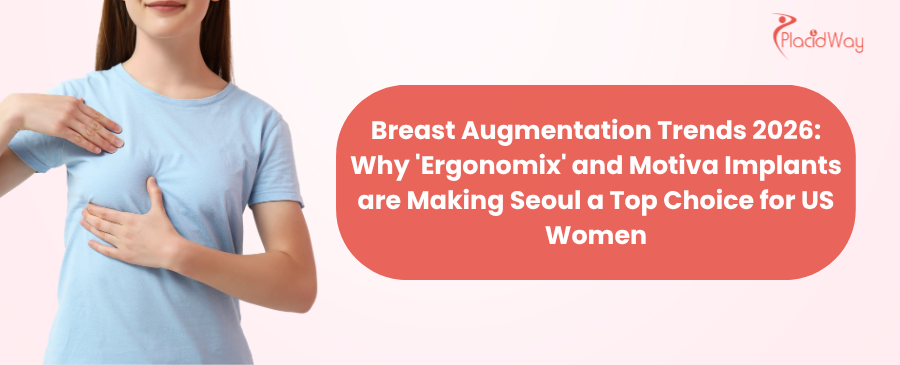
Driven by a 2026 demand for natural aesthetics, thousands are crossing the globe for a Breast Augmentation in Seoul. Exorbitant domestic costs push US women to South Korea’s medical hubs for elite Motiva Ergonomix implants, unmatched surgical precision, and rapid recovery.
The 2026 Shift Towards Natural Breast Augmentation in Seoul
The landscape of cosmetic surgery is undergoing a monumental paradigm shift as we approach 2026. The era of exaggerated, overly augmented profiles has officially given way to the "stealth aesthetics" movement. Modern American women, particularly Millennials and Generation Z, are now prioritizing anatomical proportionality, dynamic movement, and undetectable enhancements over sheer volume. This definitive shift in aesthetic desires has triggered a massive surge in medical tourism, specifically pointing towards the undisputed global capital of advanced plastic surgery: Seoul, South Korea.
South Korea’s medical infrastructure is uniquely positioned to dominate this evolving market. Korean aesthetic philosophy has long championed nuanced, highly customized, and natural-looking results, making their surgical approaches inherently aligned with current global breast surgery trends. By integrating hyper-specialized surgical techniques with next-generation implant technology, medical professionals in Seoul are delivering outcomes that feel entirely indigenous to the patient's body. Consequently, international patients are traveling thousands of miles to secure an aesthetic standard that is increasingly difficult—and prohibitively expensive—to attain within the United States.
Did You Know?
South Korea maintains the highest rate of aesthetic procedures per capita globally. In recent years, inbound medical tourism specifically for advanced breast contouring and implant surgeries has skyrocketed by over 45% among North American women.
What Makes Motiva Ergonomix Implants a Global Phenomenon?
At the epicenter of this international surgical boom is the revolutionary Motiva Ergonomix implant. Unlike traditional silicone or saline implants, which maintain a static, often rigid shape regardless of the patient's posture, Ergonomix implants represent the pinnacle of bioengineering. They are formulated with a proprietary viscoelastic silicone gel that responds dynamically to gravity. When a woman stands, the implant naturally settles into a teardrop shape; when she lies down, it distributes evenly into a round shape, perfectly mimicking the behavior of natural breast tissue.
Furthermore, the technological sophistication of these devices extends far beyond their structural dynamics. Motiva implants feature a patented SmoothSilk surface—a unique nanotexture that boasts unparalleled biocompatibility, drastically reducing the risk of capsular contracture and late seroma, which are common complications in older implant models. Additionally, they incorporate Q Inside Safety Technology, an FDA-cleared RFID microchip embedded within the implant that allows physicians to instantly scan and verify the implant's serial number, volume, and manufacturing data from outside the body. This unprecedented combination of aesthetic fluidity and rigorous safety protocols makes Motiva the definitive choice for 2026.
Why US Patients are Bypassing Domestic Clinics for South Korea
The exodus of American women seeking cosmetic enhancements abroad is primarily driven by profound economic and systemic barriers within the US healthcare framework. Domestically, surgical costs have hyper-inflated, exacerbated by exorbitant facility fees, anesthesiologist bills, and the soaring premiums of medical malpractice insurance. Because breast augmentation is universally categorized as an elective procedure, health insurance provides absolutely zero financial relief. Patients in cities like New York, Los Angeles, or Miami frequently face upfront quotes exceeding $15,000 for premium surgeries, effectively pricing out a vast segment of the population.
In stark contrast, Seoul presents an irresistible value proposition without compromising on medical excellence. The highly centralized and subsidized nature of South Korea's medical education system, coupled with intense market competition, allows top-tier facilities to offer all-inclusive surgical packages at a fraction of the American price. US patients quickly recognize that flying to South Korea is not about seeking "cheap" surgery; it is about escaping an inflated domestic pricing model to access the world’s most advanced implants and elite, board-certified surgical expertise while simultaneously enjoying a luxury medical vacation.
Inside Seoul’s Ultra-Modern Plastic Surgery Infrastructure
The architectural and technological scale of Seoul’s aesthetic medical sector is nothing short of extraordinary. The city's elite medical districts are dominated by monumental, hyper-modern "medical towers" dedicated entirely to plastic surgery and dermatology. These facilities operate more like luxury five-star hotels combined with advanced research hospitals than traditional clinical practices. International patients are provided with a seamless ecosystem where pre-operative diagnostics, comprehensive blood panels, state-of-the-art operating theaters, and lavish inpatient recovery suites are all housed within a single, highly secure building.
Inside the operating rooms, South Korean surgeons utilize technology that often eclipses what is standard in Western clinics. Because of the sheer volume of global patients they treat, these medical hubs are incredibly fast adopters of surgical innovation. High-definition endoscopic cameras are standard for breast augmentations in Seoul, allowing surgeons to make micro-incisions in the axillary (armpit) fold. This technique ensures zero scarring on the breast itself and allows for millimeter-perfect pocket dissection. This level of atraumatic precision significantly reduces bleeding, bruising, and post-operative pain, enabling international patients to recover and fly home much faster.
"The 2026 aesthetic patient demands technological perfection and entirely natural results. South Korea’s medical infrastructure has masterfully integrated next-generation implants like Motiva with unparalleled endoscopic surgical precision, creating an irresistible value proposition for American women. PlacidWay is immensely proud to connect informed patients to this pinnacle of global healthcare excellence."
— Pramod Goel, CEO of PlacidWay
Breaking Down the Cost: US vs. South Korea Breast Surgery
A core frustration for patients in the United States is the opaque, fragmented billing process that plagues domestic healthcare. A patient might receive a primary quote from a surgeon, only to be hit with surprise invoices for the operating room, post-operative garments, anesthesiology, and follow-up medications weeks later. The South Korean medical tourism model fundamentally rejects this practice by utilizing comprehensive, all-inclusive pricing structures. This radical transparency allows international patients to plan their financial investments with absolute certainty prior to boarding their flights.
When analyzing the direct financial comparison, the economic advantage of traveling to Seoul becomes undeniable. Even when factoring in the cost of premium round-trip international airfare and two weeks of recovery in a high-end boutique hotel, the total expenditure remains drastically lower than a standard procedure in a major US metropolitan area. This financial efficiency opens the door to premium implant technologies that many patients would otherwise be unable to afford.
The Role of 3D Virtual Technology in Korean Breast Clinics
A major hurdle for patients traveling internationally is the anxiety of the unknown, particularly regarding post-surgical aesthetics. Elite South Korean medical facilities have entirely mitigated this fear through the universal adoption of advanced 3D virtual simulation technology. During comprehensive virtual or in-person consultations, high-definition 3D scanners map the patient's exact anatomical torso. Advanced software then generates a highly accurate, interactive 3D model, allowing the surgeon to virtually "insert" various sizes and profiles of Motiva Ergonomix implants.
This collaborative, visual approach transforms the patient experience from a leap of faith into a calculated, co-designed outcome. Women can view their projected results from multiple angles, adjusting volumes in real-time until they achieve their ideal silhouette. By establishing absolute visual clarity before a single incision is made, South Korean clinics boast incredibly high patient satisfaction rates. This technological integration is a testament to a broader medical culture that prioritizes meticulous planning, patient autonomy, and flawless execution over rushed surgical volumes.
Did You Know?
The use of highly advanced endoscopic cameras during breast surgeries in South Korea eliminates the need for "blind dissection." This provides surgeons with magnified visual control, completely avoiding nerve damage and resulting in recovery times that are up to 50% faster than traditional techniques.
Safety and Board Certification Standards in South Korea
The allure of affordable cosmetic enhancement is meaningless without rigorous safety standards, and South Korea’s medical regulatory environment is among the strictest in the modern world. Becoming a board-certified plastic surgeon in this nation is a feat of intense academic and clinical endurance. It requires graduating in the top percentile of medical school, followed by over a decade of grueling residencies and specialized aesthetic fellowships. The competitive nature of the industry ensures that only the most exceptionally skilled practitioners rise to the top of the international medical tourism sector.
Furthermore, the South Korean government heavily regulates facilities that cater to international medical tourists. To legally accept foreign patients, medical centers must undergo intensive government audits and hold specific certifications that dictate uncompromising safety standards. These mandates include the presence of in-house board-certified anesthesiologists at all times, mandatory independent backup power generators for operating theaters, comprehensive air shower sterilization systems, and rigorous emergency protocols. Patients traveling from the United States can rest assured that the clinical environments in Seoul rival, and frequently exceed, the safety benchmarks set by American accrediting bodies.
How PlacidWay Connects Patients to Elite Care in Seoul
While the advantages of flying to South Korea for advanced breast contouring are overwhelmingly clear, coordinating an international medical journey independently can be a daunting logistical challenge. Language barriers, the difficulty of authenticating medical credentials from abroad, and navigating complex surgical timelines can easily overwhelm a prospective patient. The internet is flooded with marketing noise, making it incredibly difficult to separate elite, board-certified institutions from sub-par clinics. This is exactly where the strategic intervention of a dedicated medical tourism facilitator becomes an indispensable asset.
PlacidWay serves as the ultimate bridge between US patients and Seoul’s premier medical infrastructure. By acting as an objective, highly experienced connector, PlacidWay curates an exclusive network of rigorously vetted, internationally accredited providers. Patients can utilize the platform to seamlessly compare comprehensive clinic profiles, review transparent pricing models, and coordinate direct, translated virtual consultations with top-tier surgeons. From facilitating medical visas and luxury recovery accommodations to ensuring VIP airport transfers, PlacidWay manages the complexities of global healthcare so that women can focus entirely on achieving their aesthetic goals in absolute safety and comfort.









Share this listing