


Cyprus Solves 2-Year UK Egg Donor IVF Backlog
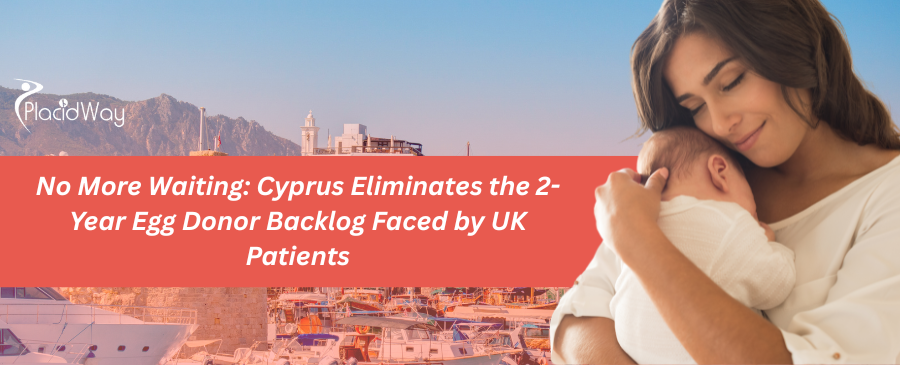
Facing a two-year domestic wait, UK couples are rapidly turning to IVF with egg donation in Cyprus. This Mediterranean hub offers zero wait times, massive anonymous donor pools, and advanced reproductive technology to instantly solve Britain's devastating fertility clinic backlog in 2024.
The Escalating Fertility Crisis: Why UK Patients Face 2-Year Wait Times
The reproductive healthcare landscape in the United Kingdom has reached a critical bottleneck, leaving thousands of hopeful parents in a state of emotional and biological limbo. Following the 2005 legislative changes that legally removed the right to anonymity for egg and sperm donors in the UK, the domestic supply of willing donors plummeted drastically. Today, strict regulatory frameworks governed by domestic authorities mean that women who require donor eggs to conceive are frequently placed on agonizingly slow waiting lists. For patients relying on the National Health Service (NHS) or even exorbitant private domestic clinics, the current average wait time to be matched with a suitable egg donor can easily stretch between 18 to 24 months.
In the realm of fertility, time is an unforgiving adversary. A two-year delay is not merely an administrative inconvenience; it represents a profound medical detriment. As female patients age, specifically those navigating their late thirties or early forties, the uterine environment and overall reproductive health can shift, decreasing the eventual chances of successful implantation. The psychological toll of watching the biological clock tick away while languishing on a stagnant waiting list has driven a massive exodus of British patients seeking immediate, viable alternatives across international borders.
Did You Know?
Industry data reveals that UK citizens now comprise nearly 40% of all international fertility patients traveling to the Mediterranean. This unprecedented surge is driven almost entirely by the urgent need to bypass domestic backlogs and access the massive, immediate pool of highly screened egg donors available in the region.
How Cyprus Erased the Egg Donor Backlog for International Patients
While the UK struggles with donor scarcity, the island nation of Cyprus has masterfully engineered a thriving, highly regulated reproductive tourism sector that guarantees immediate action. The secret to this efficiency lies in the region's progressive yet secure legal framework, which actively encourages young, healthy women from diverse ethnic and educational backgrounds to participate in egg donation programs. Because local laws permit complete donor anonymity, the psychological and legal barriers that deter potential donors in the UK are virtually nonexistent in this Mediterranean haven.
Consequently, medical facilities across the island maintain vast, highly curated databases of available donors. When a UK patient begins their consultation process, they are not placed on a waitlist; instead, they are immediately presented with a comprehensive portfolio of donor profiles. Intended parents can meticulously select a donor based on specific physical characteristics, blood type, educational background, and even hobbies. This immediate matching process ensures that medical protocols can begin within weeks, rather than years, allowing patients to seize control of their family-planning timelines with renewed hope and zero delays.
The Legal Landscape: Anonymous vs. Non-Anonymous Egg Donation
The stark contrast in wait times between the UK and international destinations is directly tethered to the legal philosophy surrounding donor identity. In Britain, the law stipulates that any child born from a donated egg or sperm has the legal right to request the identifying information of their donor upon reaching the age of 18. While this legislation was enacted with the intention of genetic transparency, its practical application deterred thousands of potential donors who feared future legal, financial, or emotional complications from children they biologically assisted but did not raise.
Conversely, Cyprus operates under a strict legal doctrine of donor anonymity. The identity of the donor is legally protected and permanently shielded from the intended parents and the resulting child, just as the parents' identities are shielded from the donor. However, anonymity does not equate to a lack of information. Intended parents are provided with exhaustive, non-identifying medical histories, genetic screening results, and psychological evaluations of the donor. This system strikes an optimal balance: it protects the privacy of the young women donating their eggs, thereby sustaining a massive donor pool, while providing intended parents with all the critical health and demographic data necessary to make an informed, confident choice.
"For couples facing the ticking clock of fertility, a two-year domestic waiting list is not just a bureaucratic inconvenience; it is a profound barrier to parenthood. Cyprus has revolutionized reproductive medical tourism by combining zero wait times with elite embryology and compassionate care."
"At PlacidWay, we witness daily how bypassing these domestic backlogs through secure, cross-border healthcare turns the dream of building a family into an immediate reality. We empower patients to take control of their timelines without compromising on medical excellence."
— Pramod Goel, CEO of PlacidWay
Understanding the Advanced IVF Infrastructure in Cyprus
The allure of this Mediterranean destination extends far beyond its favorable legal climate; it is fundamentally underpinned by a world-class medical infrastructure. The multi-million-dollar influx of medical tourism has allowed local fertility centers to invest heavily in next-generation reproductive technologies that routinely outperform standard domestic clinics. Facilities are equipped with state-of-the-art embryology cleanrooms that utilize advanced HEPA filtration systems to create the ultimate sterile environment for embryo cultivation.
Furthermore, the technological integration within these clinics is unparalleled. Standard procedures often include advanced techniques like Intracytoplasmic Sperm Injection (ICSI), continuous time-lapse embryo monitoring incubators (such as the EmbryoScope), and Artificial Intelligence-assisted embryo grading. By utilizing high-resolution, continuous imaging, embryologists can identify the most chromosomally robust embryos for transfer without disturbing their incubation environment. This relentless commitment to technological superiority ensures that international patients receive the highest standard of scientific care available on the global market today.
Cost Comparison: UK Private Fertility Clinics vs. IVF in Cyprus
Financial transparency is another critical factor driving the exodus of UK patients. Domestic private fertility treatment is notoriously expensive, with costs heavily inflated by administrative overhead, domestic taxation, and the sheer scarcity of donors. In the UK, a single cycle of IVF utilizing donor eggs can easily bankrupt a family, with fragmented billing structures hiding the true cost of essential medications, specialized lab techniques, and donor compensation fees until the end of the process.
By contrast, the medical tourism model in the Mediterranean relies on comprehensive, all-inclusive package pricing. Because the cost of living, real estate, and operational overhead is significantly lower, world-class clinics can offer premium treatments at a fraction of the domestic price. These packages typically cover the donor's compensation and screening, the IVF/ICSI procedure, embryo cultivation, and the final transfer, allowing patients to budget accurately without fear of hidden medical invoices.
The Success Rates of Egg Donor IVF in Cyprus
When evaluating international fertility options, clinical pregnancy success rates are the ultimate metric. In Cyprus, the success rates for IVF utilizing donor eggs are exceptionally high, frequently exceeding 70% to 80% per transfer cycle. This statistical dominance is primarily driven by the age and rigorous health screening of the donor demographic. Because the donors are typically healthy, highly fertile women between the ages of 20 and 28, the harvested eggs possess superior chromosomal integrity and optimal energy reserves necessary for successful fertilization and blastocyst development.
By utilizing high-quality donor eggs, older intended mothers can effectively bypass the age-related decline in oocyte quality that typically hinders domestic IVF attempts. The recipient mother's age becomes far less critical to the outcome, provided her uterine lining is appropriately prepared through localized hormone therapy. Combined with the stress-free environment of a Mediterranean retreat, which naturally lowers maternal cortisol levels, the physiological conditions for successful embryo implantation are meticulously optimized, leading to higher live birth rates.
Did You Know?
Egg donors in the Mediterranean undergo some of the strictest medical vetting in the world. Candidates face exhaustive genetic karyotyping, infectious disease panels, and psychological evaluations. Statistically, only about 1 in 10 applicants is accepted into premium donor databases, ensuring intended parents receive the highest caliber of genetic material.
Navigating Cross-Border Fertility Care with PlacidWay
While the prospect of immediate donor matching and reduced costs is highly appealing, the logistics of arranging cross-border medical care can feel overwhelming for couples already exhausted by their fertility struggles. The internet is flooded with information, making it difficult to independently verify international accreditations, confirm hidden costs, or authenticate the true clinical success rates of foreign medical facilities. This is where the strategic intervention of a globally recognized medical tourism facilitator becomes an indispensable asset.
Acting as an objective, trusted connector, PlacidWay meticulously curates a network of elite, board-certified fertility specialists and accredited facilities abroad. They empower UK patients to compare comprehensive provider profiles, review transparent pricing packages, and secure direct virtual consultations with internationally credentialed embryologists. By handling the complexities of credential verification and facilitating seamless communication between the patient and the foreign medical team, PlacidWay ensures that intended parents can focus entirely on their treatment protocol and ultimate goal of building a family in a safe, vetted environment.
What to Expect During Your Fertility Journey in the Mediterranean
Embarking on a fertility journey abroad is designed to be as medically efficient as it is emotionally restorative. The concept of "fertility tourism" leverages the therapeutic benefits of the destination itself. Upon arriving at the sun-drenched coastal airports, international patients are typically greeted by VIP medical concierges and transported to luxury seaside accommodations. The initial phase of the protocol—preparing the uterine lining—can often be started at home in the UK, meaning the actual time required on the island is usually condensed to a highly manageable 7 to 10 days.
During this time, patients attend scheduled clinic visits for ultrasounds and the highly anticipated embryo transfer, while spending their downtime absorbing vital Vitamin D and enjoying the anti-inflammatory benefits of the local Mediterranean diet. This fusion of cutting-edge reproductive science with a relaxing holiday atmosphere dramatically reduces the intense anxiety normally associated with IVF cycles. Patients leave the clinical sterility of the UK behind, returning home from their Mediterranean journey relaxed, rejuvenated, and fully prepared for a positive pregnancy test.






.png)

.png)




.png)
.png)
.png)
.png)










Share this listing