
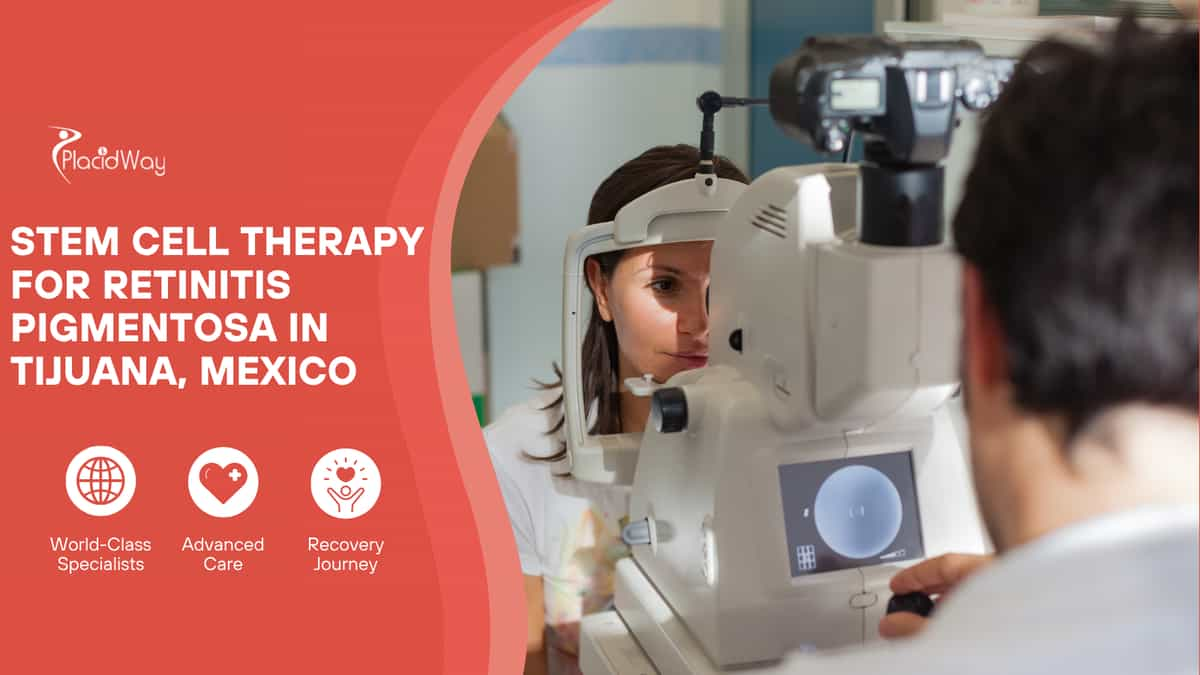
Receiving a diagnosis of retinitis pigmentosa (RP) can feel like navigating an uncertain and frightening path as your peripheral vision narrows and your night sight gradually fades. We deeply understand the emotional weight and fear of losing independence that accompany this progressive genetic disorder. While standard ophthalmology often focuses on monitoring the decline with limited proactive options, advanced regenerative medicine offers a new avenue of support. This specialized stem cell therapy package at Regenerative Medicine - Stem Cells by ITC in Tijuana, Mexico, is carefully designed to provide trophic, nourishing support to your remaining retinal cells in a compassionate, heavily regulated clinical setting.
When you arrive at our modern facility, conveniently located just a short drive across the border from San Diego, California, our dedicated medical team will guide you through a deeply personalized care experience. This comprehensive package covers your entire treatment journey, integrating your preliminary diagnostic evaluations, the targeted administration of high-potency stem cells, and essential post-procedure monitoring. Regenerative therapy for RP utilizes the unique biological properties of mesenchymal stem cells to target neuroinflammation and foster a healthier microenvironment within the eye. The primary objective is to slow the ongoing degeneration of your photoreceptors and stabilize your remaining visual field.
Preliminary estimates for this comprehensive ocular package typically range from $6,500 to $12,500 USD, though your exact pricing and medical eligibility must be determined through a thorough clinical assessment by our treating specialists. You can expect an initial stay of approximately three to four days in Tijuana, allowing for an unhurried, safe, and closely monitored medical experience. Your visual health, systemic safety, and personal comfort are our absolute highest priorities as we explore the promising potential of regenerative therapies to help protect your daily quality of life and autonomy.
Package Price and Estimated Treatment Costs
Understanding the financial commitment required for advanced cellular therapy is an essential part of your decision-making process. We believe in complete transparency, which is why we want to provide you with a clear baseline of what to expect. Because every patient's cellular requirements and ocular health conditions are deeply personal and unique, a one-size-fits-all price is impossible to guarantee without direct diagnostic review.
Below is an estimated breakdown of what you might expect to invest for this specialized care package. The cost of cellular therapy in Tijuana, Mexico, is significantly more accessible than comparable experimental protocols in the US or Canada, largely due to lower overhead costs and streamlined administrative structures, rather than any compromise in medical quality or safety. Please note: The figures provided below are estimated starting costs for our baseline protocols. Your final package price will depend heavily on the required cellular dosage and the specific administration methods prescribed by the attending physician.
| Treatment or Service Item | Estimated Cost Range (USD) |
|---|---|
| Initial Specialist Medical Consultation & Assessment | Included in Base Package |
| Stem Cell Processing, Purification & Laboratory Preparation | Included in Base Package |
| Clinical Administration Procedure (Retrobulbar, Intravitreal, or IV) | Included in Base Package |
| Post-Procedure Nursing Care & Vital Signs Monitoring | Included in Base Package |
| Bilingual Patient Coordination & Local Transportation Assistance | Included in Base Package |
| Total Estimated Baseline Package | $6,500 - $12,500 USD |
Disclaimer: The package price serves strictly as a general educational guide. Comprehensive medical review of your specific ophthalmic records and health history is required for the medical team to issue a finalized, binding quote.
Standard Package Inclusions
When traveling internationally for specialized health services, knowing precisely what is included allows you to plan your trip with clarity and confidence. We have structured this package to cover all primary clinical components necessary for a safe and comforting treatment experience. Here is what is mostly included in the standard procedural package price:
- Pre-Procedure Medical Evaluation: Thorough physical evaluation and review of vital signs upon arrival at the center.
- Specialist Consultations: Direct, one-on-one time with our lead regenerative medicine physician to review your goals, examine your history, and explain the therapeutic steps.
- Stem Cell Preparation: Complete laboratory handling, biological processing, purification, and quality control of the administered stem cell product.
- Procedure Administration: The clinical application of stem cells performed by qualified medical professionals using standard sterile protocols.
- Facility and Nursing Fees: All clinical room charges, disposable medical supplies, local anesthetics, and nursing support throughout your stay at the clinic.
- Immediate Post-Treatment Observation: Dedicated monitoring period in a comfortable recovery setting to ensure vital stability before discharge.
- Bilingual Patient Coordination: Dedicated assistance from English-speaking team members to help with translation, scheduling, and local border transit logistics.
Package Exclusions
To maintain complete financial clarity and prevent unexpected out-of-pocket costs during your journey, it is equally important to understand what is not part of the standard baseline package. The following items and services are excluded from the medical package price and remain the responsibility of the patient:
- Travel and Airfare: Flights, train tickets, or driving expenses to reach the San Diego/Tijuana region.
- Accommodations: Hotel or lodging costs in Tijuana or neighboring San Diego, California.
- Daily Personal Expenses: Meals, shopping, personal phone plans, and leisure activities during your stay.
- Pre-Travel Diagnostic Imaging: Initial visual field tests, OCT scans, or ERG reports conducted by your home eye specialists prior to traveling.
- Unrelated Medical Treatments: Consultations, lab work, or medications for health conditions completely separate from your retinitis pigmentosa care.
- Long-Term Daily Medications: Prescription eye drops, dietary supplements, or general maintenance drugs purchased for long-term home use.
- Medical Travel Insurance: Insurance coverage for trip disruptions, flight changes, or emergency medical evacuation.
Ideal Candidate Information
Determining whether regenerative therapy is a safe and potentially viable option for you requires a deeply personalized and honest clinical review. Stem cell therapy is not a universal remedy, and it is vital to approach this decision with well-informed, realistic expectations. Candidates who may be considered for this procedure include individuals diagnosed with retinitis pigmentosa who are seeking a supportive, complementary strategy to actively manage their condition.
Potential candidates frequently include patients in the early to moderate stages of RP who have noticed progressive loss of peripheral vision and night blindness, but still possess a functional level of viable retinal structure. Because stem cells work by providing neurotrophic support to existing cells, the presence of surviving photoreceptors is crucial. Ideal candidates understand that the primary objective of cellular therapy is to slow disease progression and stabilize the visual field, rather than offer an immediate or guaranteed cure.
Equally important is identifying who is not a suitable candidate. Individuals with end-stage retinitis pigmentosa, where extensive scarring has permanently destroyed all cellular architecture and completely eliminated light perception, will not derive meaningful benefit from this therapy. Furthermore, for patient safety, individuals with active systemic infections, active oncological conditions (cancer), severe unmanaged systemic illnesses, or known blood clotting disorders are generally not cleared for treatment. A preliminary review of your medical records by our physicians is mandatory to confirm candidacy before travel commitments are made.
Required Medical Records for Evaluation
To facilitate a thorough remote review and determine if you are a viable candidate for cellular therapy, our medical team requires specific, recent documentation regarding your ocular and general health. Gathering these records in advance allows our doctors to assess the physical state of your retina and design a safe protocol. You will normally be asked to provide:
- Recent Ophthalmic Examination Reports: Comprehensive clinical notes from your primary ophthalmologist or retina specialist, ideally completed within the past 3 to 6 months.
- Visual Field Tests: Recent perimetry tests or Electroretinography (ERG) results that clearly map your current field of vision and electrical retinal activity.
- Optical Coherence Tomography (OCT) Scans: High-resolution cross-sectional images of your retina that demonstrate macular thickness and the integrity of the photoreceptor layers.
- Comprehensive General Medical History: A detailed summary of past surgeries, ongoing chronic conditions (such as hypertension or diabetes), and previous major health events.
- Complete Medication and Supplement List: A full list of all current prescription medications, blood thinners, over-the-counter drugs, and eye supplements you take regularly.
Step-by-Step Procedure Overview
To feel comfortable and confident in your healthcare choices, it helps to understand exactly what occurs during the procedure in simple, plain language. Retinitis pigmentosa involves a genetic breakdown where the light-sensing cells of the retina (the rods and cones) gradually die off, leading to a loss of vision. Traditional medicine focuses heavily on managing the resulting symptoms.
Stem cell therapy utilizes the unique bio-active properties of adult mesenchymal stem cells (MSCs) to address the harsh environment within the eye. Rather than instantly replacing damaged eye tissue directly, these cells act largely through a process called "paracrine signaling." This means they release a steady stream of beneficial molecules, including potent growth factors, anti-inflammatory proteins, and neurotrophic signals. This process encourages surviving retinal cells to repair themselves, function more efficiently, and withstand the genetic stress of the disease.
On the day of your procedure, you will be comfortably seated in a clean, state-of-the-art clinical environment. Depending on your individualized protocol, stem cells may be administered via a systemic intravenous (IV) infusion, or through highly targeted localized delivery techniques (such as retrobulbar or intravitreal injections). Local anesthesia or numbing agents are applied meticulously whenever localized delivery is used to ensure you remain pain-free and calm. The active clinical process usually takes between one to two hours, followed by a dedicated rest and observation period.
Your Treatment Timeline
Traveling for medical care requires a well-organized plan so you feel supported from start to finish. We have structured your medical itinerary into clear, manageable steps to ensure your journey is calm and predictable:
Phase 1: Remote Assessment & Pre-Travel Planning
Before leaving home, you will submit your recent visual field tests, eye records, and medical history online. Our physicians review your documents to confirm eligibility, outline a proposed protocol, and provide a clear pricing breakdown. Once you decide to move forward, our patient coordinators assist in scheduling your visit dates.
Phase 2: Arrival & Initial Consultation (Day 1)
You arrive in the San Diego/Tijuana border area and proceed to the clinic. You will meet face-to-face with your attending physician for a detailed consultation, physical exam, and a final review of your treatment steps. The medical team answers all your questions to ensure complete peace of mind before you rest for the evening.
Phase 3: Clinical Treatment Day (Day 2)
You return to the clinic for your stem cell administration. Nursing staff will record baseline vitals and ensure your comfort. The treatment is carried out under strict sterile protocols. Afterwards, you will relax in our recovery room under medical monitoring for a couple of hours before being cleared to return to your hotel.
Phase 4: Post-Procedure Check & Medical Clearance (Day 3 or 4)
A follow-up appointment is conducted at the clinic to check your vital signs, evaluate your immediate recovery status, and review post-treatment instructions. Once the physician verifies that you are stable and recovering smoothly, you receive formal clearance to travel home.
Phase 5: Home Recovery & Long-Term Follow-Up (Months 1 to 6)
Back home, you resume your normal routines, avoiding heavy physical strain initially. Our patient care coordinators stay in regular contact with you to track your progress, while you continue routine visual monitoring with your local ophthalmologist.
Expected Length of Stay
For patients traveling to Tijuana for this therapy, we recommend planning an overall trip length of approximately 3 to 4 days. This timeframe accommodates your initial face-to-face evaluation, the treatment procedure itself, and a mandatory post-procedure rest day before heading home.
It is vital to understand that travel clearance depends entirely on the treating physician’s evaluation and your personal pace of recovery. Rushing home immediately after a medical treatment can induce unnecessary physical stress. If the physician feels an additional day of observation is beneficial, your health will always take precedence over pre-planned schedules. Maintaining flexible travel arrangements is highly recommended.
Recovery and Post-Operative Aftercare
Recovery following minimally invasive stem cell therapy is generally smooth, but allowing your body adequate time to rest is critical. Biological changes at the cellular level occur slowly over several weeks and months. Following structured aftercare guidelines helps ensure your comfort and safety.
The First 24 to 72 Hours:
Immediately following your procedure, you may feel mild fatigue or slight aching at the IV or injection sites. This is a normal systemic response as your body processes the treatment. Rest is your primary objective during these initial days. Avoid strenuous activities, heavy lifting, or spending extended periods in harsh, glaring sunlight without UV-blocking sunglasses.
The First Month:
As you ease back into daily activities, continue to refrain from intense exercise or heavy physical exertion for at least two weeks. If localized ocular procedures were performed, you must meticulously follow all instructions regarding avoiding rubbing your eyes to prevent any localized irritation. Continue taking all regular medications prescribed by your primary home doctors unless specifically advised otherwise.
Long-Term Care (Months 1 to 6):
Because regenerative mechanisms take time, visual changes are evaluated gradually. We advise patients to perform periodic home vision checks and attend scheduled follow-ups with their primary home ophthalmologist to monitor visual field stability. Our clinic remains in periodic communication to record your updates and feedback.
Risks and Possible Complications
Like any medical procedure, stem cell therapy carries potential risks and clinical considerations. We believe that complete transparency is essential for ethical healthcare, ensuring you have all the facts necessary to make an informed, confident decision. This list of potential complications is not exhaustive, and your treating physician will discuss your individual risk profile during your informed consent session.
Immediate physical risks associated with administration include localized bruising, redness, mild swelling, or low-grade pain at the IV or injection site. Minor systemic symptoms, such as temporary low-grade fever, fatigue, or mild headaches, can occasionally occur as an immune response to cellular infusion. Although rare under strict sterile protocols, there is always a minor risk of localized infection. If localized ocular procedures are utilized, there are rare but serious ophthalmic risks, including elevated intraocular pressure, retinal tears, or ocular infection, which must be carefully monitored.
From a clinical perspective, it is critical to understand that stem cell therapy for retinitis pigmentosa is considered an emerging, investigational medical approach. Outcomes vary significantly based on genetics, age, and baseline disease severity. There is an inherent clinical risk that the procedure may yield no measurable improvement in central or peripheral vision, or may fail to halt the natural progression of the disease. Our team never minimizes these uncertainties and works to ensure you have a balanced, realistic understanding before proceeding.
Expected Results and Reasonable Outcomes
Setting realistic, evidence-aligned expectations is crucial when exploring advanced therapies for progressive genetic eye conditions. When living with retinitis pigmentosa, wanting to restore lost sight is completely natural. However, responsible medical practice requires establishing clear, achievable treatment goals.
The primary therapeutic objective of stem cell therapy in RP is retinal tissue preservation and visual field stabilization. Rather than promising a complete reversal of vision loss or a cure for blindness, the treatment aims to provide trophic nourishers that may help slow down the ongoing rate of photoreceptor degeneration. Patients may reasonably hope for a stabilization of their current visual field, reduced localized inflammation, and in some cases, mild improvements in light perception, contrast sensitivity, or dark adaptation.
Results, if observed, typically develop gradually over a period of 3 to 6 months following administration as cellular signals interact with host tissues. Because human biology and genetic mutations are inherently complex, no medical provider can promise specific visual outcomes, guaranteed percentage increases in acuity, or permanent structural changes. We encourage all patients to view cellular therapy as a supportive, complementary tool within a broader commitment to long-term eye health management.
About the Medical Center: Stem Cells by ITC
Choosing where to receive supportive healthcare is a significant decision. Regenerative Medicine - Stem Cells by ITC (Immunity Therapy Center) is a highly respected medical facility located in Tijuana, Baja California, Mexico. This destination is a safe, highly frequented medical tourism hub conveniently situated just minutes across the border from San Diego, California, welcoming thousands of North American patients seeking advanced and alternative care each year.
The clinic is specifically designed to cater to international patients, offering a clean, modern, and deeply welcoming clinical environment. Stem Cells by ITC adheres to strict local health regulations established by COFEPRIS and prioritizes stringent sterilization, patient safety protocols, and personalized care. Their medical team has a focused interest in regenerative medicine, prioritizing patient safety, transparent communication, and ethical treatment applications.
Furthermore, the fully bilingual staff is highly trained to ensure that language is never a barrier. From your initial inquiry to your final post-operative check, they are dedicated to providing you with a comforting, understandable, and deeply supportive clinical experience, ensuring you feel heard and respected from the moment you walk through their doors.
Frequently Asked Questions About Stem Cell Therapy
1. Is stem cell therapy a guaranteed cure for retinitis pigmentosa?
No, stem cell therapy is not a cure for retinitis pigmentosa. Currently, modern science has not discovered a permanent cure for RP. Stem cell administration is utilized as a supportive therapeutic intervention aiming to provide cellular nourishment and potentially slow down disease progression, but results vary per individual.
2. Does the procedure cause significant pain or discomfort?
The treatment is designed to be minimally invasive and comfortable. Intravenous administration involves a standard IV needle insertion, similar to routine blood work. If localized ocular delivery is recommended, strong local numbing agents are utilized to ensure you feel little to no physical pain during the process.
3. How long does it take to see potential visual improvements?
Biological recovery and paracrine signaling happen gradually. Unlike immediate corrective surgery, potential benefits from cellular therapy—such as improved light perception or visual field stabilization—typically unfold slowly over 3 to 6 months following the procedure.
4. Where do the stem cells used in this package come from?
The clinic utilizes adult mesenchymal stem cells, typically sourced from ethically screened, allogeneic umbilical cord tissue (Wharton's Jelly) due to their high potency and immune-privileged status. The specific cellular product is chosen based on stringent safety protocols and physician recommendation.
5. How does stem cell therapy differ from genetic therapies like Luxturna?
Gene therapies (like Luxturna) are highly specific treatments designed to correct one exact genetic mutation (such as the RPE65 gene) and are only effective for patients with that specific defect. Stem cell therapy offers a broader, mutation-agnostic approach, providing neurotrophic and anti-inflammatory support to retinal cells regardless of which specific genetic mutation is causing the RP.
6. Is it safe to travel back home shortly after the treatment?
Yes, provided you receive formal clearance from the treating physician during your post-procedure follow-up. The medical team will check your vital signs and general stability before confirming you are safe to travel long distances.
7. Should I continue seeing my primary eye doctor at home?
Yes, absolutely. Stem cell therapy is intended to complement, not replace, your regular ophthalmic care. You should maintain all scheduled check-ups, diagnostic visual field scans, and routine care prescribed by your home eye care specialist.
8. Are there upper age restrictions for undergoing this package?
Age alone is generally not a strict disqualifying factor. Candidacy depends primarily on your overall systemic health, immune function, and the structural condition of your retinas, rather than your exact chronological age.
9. What if I have co-existing eye conditions like cataracts?
Co-existing conditions are evaluated during the pre-travel record review. While minor cataracts do not automatically prevent treatment, conditions like uncontrolled glaucoma or severe active eye infections must be managed before cellular therapy can be safely considered.
10. Is this specific treatment procedure FDA-approved in the United States?
No, stem cell applications for retinitis pigmentosa are considered investigational and are not currently approved by the US FDA as standard clinical treatments. The procedure is provided in Mexico under the regulatory oversight and health guidelines established by the Mexican health authority, COFEPRIS.
Take the Next Gentle Step Toward Supporting Your Vision
Navigating choices for progressive visual health requires thoughtful guidance and reliable medical facts. If you would like to find out whether you are a suitable candidate for this package and receive a personalized review of your eye records, our empathetic coordination team is here to assist you without pressure or obligation.
Request Free QuoteMedical Disclaimer
The content provided on this page is for general informational and educational purposes only and does not constitute professional medical advice, formal diagnosis, or direct treatment recommendations. Always seek the advice of your physician, ophthalmologist, or other qualified healthcare provider with any questions you may have regarding a medical condition or treatment plan.
References
- What Is Retinitis Pigmentosa? – American Academy of Ophthalmology (AAO)
- Retinitis Pigmentosa – National Eye Institute (NEI)
- Stem Cell Therapies for Retinal Diseases – PubMed
- Mesenchymal Stem Cells for the Treatment of Retinitis Pigmentosa – PubMed
- Travel Health Information for Mexico – Centers for Disease Control and Prevention (CDC)






















Share this listing