
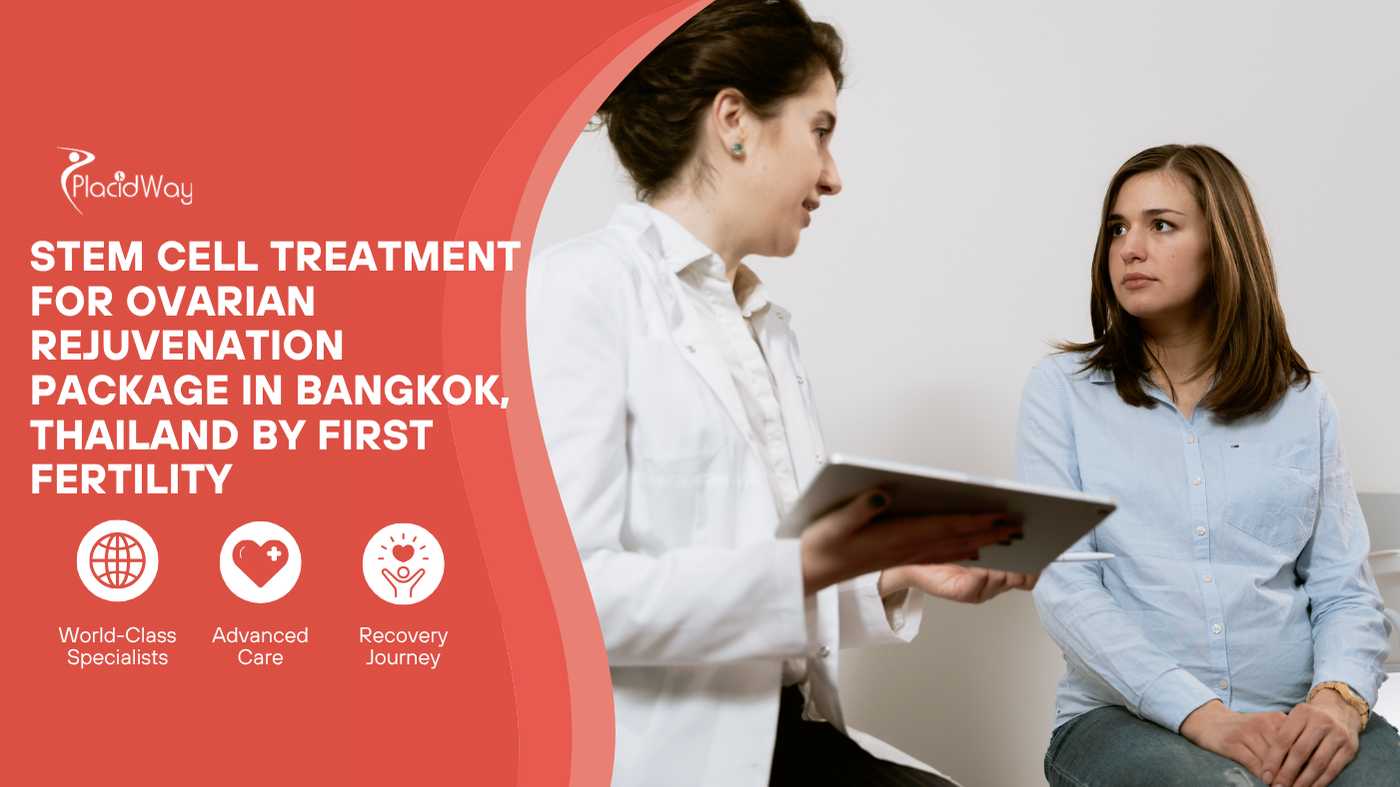
Navigating fertility challenges can feel overwhelming, but emerging regenerative therapies offer a new avenue of hope for women seeking to support their ovarian function. The stem cell ovarian rejuvenation package at First Fertility PGS Center in Bangkok, starting at $4,090, utilizes advanced regenerative medicine to potentially stimulate dormant ovarian follicles. Designed for patients navigating early menopause or low ovarian reserve, this specialized treatment requires a comprehensive preliminary assessment and a short, comfortable stay in Thailand. Please note that individual eligibility, specific protocols, and final pricing are entirely dependent on your personal medical evaluation by the clinical team.
Fast Facts About Stem Cell Therapy for Ovaries in Thailand
- Estimated Starting Cost: $4,090 USD, offering significant savings compared to North American and European fertility clinics.
- Clinical Expertise: Procedures are performed at First Fertility PGS Center, an established facility recognized for advanced reproductive technologies and preimplantation genetic screening.
- Patient Qualifications: Typically suitable for women with Premature Ovarian Insufficiency (POI), low Anti-Müllerian Hormone (AMH), or those exploring IVF with previous poor response.
- What to Expect: A minimally invasive procedure involving the extraction of your own (autologous) stem cells, which are then processed and carefully injected into the ovaries.
- Pre-Travel Requirements: Requires recent hormone panels (FSH, LH, AMH, Estradiol) and a pelvic ultrasound to confirm baseline ovarian status before travel clearance is granted.
Estimated Pricing and Global Cost Comparison for Ovarian Stem Cell Therapy
Medical travel to Thailand offers access to cutting-edge reproductive medicine at a fraction of the cost typically found in Western nations. Below is an overview of how Bangkok compares to other popular medical destinations for regenerative fertility treatments.
| Country | Estimated Cost (USD) |
|---|---|
| Thailand (First Fertility) | $4,090 (Starting Price) |
| United States | $9,000 - $14,000 |
| United Kingdom | $7,500 - $10,000 |
| Australia | $8,000 - $11,000 |
*Note: The detailed cost breakdown below is an estimated projection pending your official medical assessment. Variations in anatomy, required stem cell volume, and specific protocols may alter the final price.
| Procedure Item | Estimated Cost | Description |
|---|---|---|
| Initial Consultation & Scans | Included | In-person doctor consultation and baseline pelvic ultrasound. |
| Stem Cell Extraction & Prep | Included | Harvesting and laboratory processing of autologous stem cells. |
| Ovarian Injection Procedure | Included | Ultrasound-guided minimally invasive injection into the ovaries. |
| Anesthesia / Sedation | Included | Twilight sedation to ensure absolute comfort during the process. |
| Total Estimated Price | $4,090 USD | Starting price; subject to clinical evaluation. |
What is Included in Your Bangkok Ovarian Rejuvenation Package?
- Comprehensive pre-procedure consultation with a fertility specialist at First Fertility PGS Center.
- Pre-operative pelvic ultrasound to map ovarian positioning.
- Extraction of autologous (your own) cellular material under local anesthesia or mild sedation.
- State-of-the-art laboratory processing, isolation, and concentration of stem cells.
- Transvaginal, ultrasound-guided injection of the concentrated stem cells directly into both ovaries.
- Mild intravenous (IV) sedation administered by a qualified anesthesiologist.
- Standard clinical facility fees, nursing care, and specialized medical supplies.
- Post-procedure recovery room monitoring for up to two hours.
- Follow-up consultation (in-person or virtual) to discuss post-treatment protocols.
Services and Expenses Not Covered in This Package
- International airfare and domestic transportation to and from Bangkok.
- Hotel accommodations, daily meals, and personal travel expenses.
- Comprehensive pre-travel blood tests required prior to clinical clearance (e.g., FSH, LH, AMH).
- Subsequent In Vitro Fertilization (IVF) cycles, embryo freezing, or medications for ovulation induction following the rejuvenation.
- Treatments for unforeseen medical complications requiring extended hospitalization.
- Medical travel insurance and visa processing fees.
Who is an Ideal Candidate for Ovarian Stem Cell Treatment?
This specialized therapy is not a universal solution for all fertility challenges. It is typically explored by women who are seeking alternatives to donor eggs. You may be a suitable candidate if you fall into one of the following categories:
- Diminished Ovarian Reserve (DOR): Women who have tested with critically low AMH and high FSH levels.
- Premature Ovarian Insufficiency (POI): Patients under the age of 40 experiencing early onset of menopausal symptoms and ceased ovulation.
- Poor Responders to IVF: Women who have undergone previous IVF cycles but produced very few or poor-quality eggs despite high-dose stimulation.
- Perimenopausal Women: Individuals approaching menopause who wish to attempt natural conception or autologous IVF one last time.
- Good General Health: Candidates must be free of active pelvic infections, ovarian cysts or tumors, and severe bleeding disorders.
Medical Tests and Records Required Before Your Journey
To ensure your safety and determine if this procedure is scientifically viable for your specific biology, the medical team will require the following documentation prior to your arrival in Thailand:
- Recent Hormone Panel: Bloodwork showing Day 2 or Day 3 levels of FSH, LH, Estradiol (E2), and a recent AMH (Anti-Müllerian Hormone) test.
- Transvaginal Ultrasound Report: A recent scan (within the last 3 months) detailing Antral Follicle Count (AFC) and confirming the absence of cysts, fibroids, or anatomical blockages.
- Complete Blood Count (CBC) and Coagulation Profile: To ensure it is safe to perform the extraction and injection procedures without abnormal bleeding risks.
- Infectious Disease Screening: Standard tests for HIV, Hepatitis B, Hepatitis C, and Syphilis.
- Past Fertility Records: Detailed notes from any previous IVF cycles, including stimulation protocols used, number of eggs retrieved, and embryo quality reports.
Step-by-Step Guide: How Ovarian Stem Cell Rejuvenation Works
Ovarian stem cell rejuvenation is a multi-step process utilizing regenerative medicine to potentially awaken dormant follicles. The procedure is performed entirely in a sterile clinical environment and generally takes a few hours from start to finish. Here is a clear, jargon-free breakdown of what happens on the day of treatment:
1. Patient Preparation and Sedation
Upon arrival at the clinic, you will be prepped by the nursing team. An anesthesiologist will administer a light intravenous (IV) sedation. This ensures you remain completely relaxed, pain-free, and unaware of the procedure, while still breathing naturally on your own without general anesthesia.
2. Cell Harvesting (Extraction)
Depending on the specific protocol chosen by your physician, stem cells are typically harvested from your own body most commonly from a small sample of bone marrow (often the iliac crest) or adipose (fat) tissue via a minor mini-liposuction technique. Because these cells belong to you, there is no risk of allergic reaction or tissue rejection.
3. Laboratory Processing and Purification
While you rest comfortably, the extracted tissue is immediately transferred to the clinic’s on-site laboratory. Using a specialized centrifuge and filtration process, the embryologists and lab technicians isolate the mesenchymal stem cells and growth factors, concentrating them into a powerful regenerative serum.
4. Ultrasound-Guided Ovarian Injection
Using a transvaginal ultrasound for precise real-time imaging much like the egg retrieval process in IVF the fertility specialist guides a very fine needle through the vaginal wall directly into the ovaries. The concentrated stem cell serum is carefully injected into multiple areas of both ovaries to maximize potential tissue regeneration.
Your Medical Tourism Timeline: From Consultation to Follow-up
Planning medical travel requires a clear understanding of your itinerary. Below is a standard timeline to help you coordinate your trip to Bangkok.
- Weeks Before Travel: Submit all required medical records remotely. Attend a video consultation with the Bangkok medical team to confirm your candidacy and finalize the treatment date.
- Day 1 (Arrival in Bangkok): Arrive in Thailand and settle into your accommodation. Rest and hydrate.
- Day 2 (Clinic Visit): Attend your in-person pre-operative consultation at First Fertility PGS Center. Undergo final blood tests, an ultrasound scan, and sign consent forms.
- Day 3 (Procedure Day): Arrive at the clinic fasting. The extraction, processing, and injection take place over a few hours. You will spend 1 to 2 hours in the recovery room before being discharged to your hotel with a companion.
- Day 4 & 5 (Rest and Recovery): Rest at your hotel. You may experience mild cramping or spotting, which is normal. The clinic is available for any immediate concerns.
- Day 6 (Final Check-up & Departure): A final ultrasound or consultation to ensure there is no internal bleeding or complications. Once cleared, you may fly home safely.
- 1 to 6 Months Post-Procedure (Remote Follow-up): You will be advised to take monthly blood tests (AMH, FSH) in your home country and share the results with the Bangkok team to monitor ovarian response.
Recommended Length of Stay in Bangkok for Recovery
While the procedure itself is performed on an outpatient basis, international patients must factor in sufficient time for pre-op testing, the procedure, and safe recovery before flying. Travel clearance ultimately depends on the treating physician’s assessment and your individual healing speed.
- Minimum Recommended Stay: 5 to 7 days in Bangkok.
- Pre-Procedure Buffer: Arriving at least 24 hours before your clinic appointment helps reduce travel fatigue.
- Post-Procedure Observation: Flying too soon after pelvic injections increases the risk of deep vein thrombosis (DVT) and discomfort. A minimum of 48-72 hours of post-procedure ground recovery is strictly advised.
- Follow-Up Clearance: You must receive official medical clearance from the clinic before undertaking a long-haul international flight.
Healing and Aftercare: What to Expect Post-Procedure
Because ovarian rejuvenation is minimally invasive, the physical recovery is generally rapid. However, allowing your body time to heal is crucial for safety and optimal results.
- Immediate Recovery (0-24 Hours): You will likely feel groggy from the sedation. Mild pelvic cramping, similar to menstrual pain, and light vaginal spotting are completely normal. You should rest in bed and avoid any strenuous activity.
- Short-Term Healing (1-3 Days): Cramping typically subsides within 48 hours. Over-the-counter pain relievers recommended by your doctor can manage discomfort. You must abstain from sexual intercourse, swimming, or using tampons to prevent infection.
- Full Physical Recovery (1 Week): Most women resume all normal daily activities, including light exercise, within a week.
- Biological Response (1 to 6 Months): The actual "rejuvenation" of the ovaries is not instantaneous. If the therapy is successful, hormonal changes and potential follicle growth typically begin to appear 2 to 6 months after the procedure.
Understanding the Potential Risks and Complications
All medical procedures, including minimally invasive ones, carry inherent risks. While serious complications from ovarian injections are rare, it is vital to make an informed decision. Your physician will discuss your individual risk profile during the consultation. Potential risks include, but are not limited to:
- Infection: Any needle puncture carries a small risk of introducing bacteria into the pelvic cavity, potentially causing a pelvic infection.
- Bleeding: Minor spotting is normal, but there is a rare risk of significant internal bleeding from the ovaries or surrounding blood vessels.
- Damage to Surrounding Organs: In very rare cases, the needle may inadvertently puncture the bladder or bowel.
- Anesthesia Reactions: Mild nausea, dizziness, or rare allergic reactions to the sedatives used during the procedure.
- Lack of Desired Results: The most significant risk is that the procedure may not yield any improvement in AMH levels or follicle production. Stem cell therapy is considered experimental in reproductive medicine, and success is never guaranteed.
Realistic Expectations: What Stem Cell Therapy May Achieve for Fertility
Managing expectations is a critical part of the fertility journey. Stem cell ovarian rejuvenation is designed to support the ovarian microenvironment, potentially waking up dormant follicles that are no longer responding to natural hormones.
- Hormonal Shifts: Some patients typically see an improvement in their hormone profiles, noting a decrease in FSH and a modest increase in AMH over a 3-to-6-month period.
- Menstrual Regulation: Women experiencing perimenopause or POI may often witness the temporary return or regulation of their menstrual cycles.
- IVF Enhancement: The primary goal for many is to improve the outcome of a subsequent IVF cycle. The therapy may help patients produce a few viable eggs where previous cycles yielded none.
- No Guarantees: It is essential to understand that this treatment cannot create new eggs out of nothing, nor can it guarantee a pregnancy or a live birth. Results vary vastly depending on the patient's age, baseline ovarian reserve, and underlying genetics.
Why Choose First Fertility PGS Center in Bangkok?
Choosing the right facility is paramount when traveling internationally for specialized medical care. First Fertility PGS Center in Bangkok is a prominent clinic dedicated to comprehensive reproductive health and modern fertility solutions.
- Advanced Laboratory Technology: The center features state-of-the-art cleanroom laboratories equipped for complex cell processing and embryology.
- Focus on Genetics: As their name suggests, they specialize in Preimplantation Genetic Screening (PGS), ensuring that any embryos created post-rejuvenation can be thoroughly tested for chromosomal health.
- International Patient Care: The facility is heavily tailored toward medical tourism, offering multi-lingual support staff, seamless communication, and coordinated care for international travelers.
- Holistic Fertility Approach: Their clinical teams integrate traditional IVF protocols with innovative regenerative therapies to provide customized, multi-faceted treatment plans.
Frequently Asked Questions About Stem Cell Ovarian Rejuvenation
1. Is ovarian stem cell therapy painful?
No. The extraction and the ovarian injections are performed under intravenous sedation or local anesthesia. You will not feel pain during the procedure, though mild, period-like cramping is common for a day or two afterward.
2. How soon after the procedure can I try to get pregnant or start IVF?
Physicians typically recommend waiting 2 to 3 months before initiating an IVF stimulation cycle or attempting conception. This window allows the stem cells and growth factors time to potentially stimulate follicle development.
3. Are the results of ovarian rejuvenation permanent?
No. Any improvements in ovarian function are generally considered temporary. If the treatment is successful, the enhanced fertility window typically lasts between 6 to 12 months, making it crucial to plan subsequent IVF cycles promptly.
4. Does this treatment use embryonic stem cells?
Absolutely not. This procedure relies entirely on autologous stem cells—meaning they are harvested solely from your own body (bone marrow, fat tissue, or blood), bypassing any ethical concerns or rejection risks.
5. Is this the same as PRP (Platelet-Rich Plasma) therapy?
While they are both regenerative therapies, they are different. PRP uses concentrated platelets from a simple blood draw. Stem cell therapy involves extracting actual stem cells (usually from bone marrow or adipose tissue), which is a more complex cellular protocol.
6. Can this treatment cure menopause?
It is not a cure for menopause. It may temporarily restore menstruation or alleviate menopausal symptoms in some women with Premature Ovarian Insufficiency, but it does not permanently reverse the biological aging of the ovaries.
7. Will I need to take medications after the procedure?
You will likely be prescribed a short course of antibiotics to prevent infection and mild analgesics for cramping. Hormone supplements are generally paused to accurately measure your natural ovarian response in the following months.
8. How will I know if the treatment was successful?
Success is measured through follow-up blood tests tracking AMH, FSH, and Estradiol, as well as pelvic ultrasounds counting the Antral Follicle Count (AFC) around 2 to 3 months post-procedure.
9. Is there an age limit for this procedure?
While there is no strict legal age limit, clinical viability decreases significantly for women over 45. The medical team will evaluate your baseline tests to determine if the potential benefits justify the procedure.
10. Why should I choose Bangkok for this treatment?
Bangkok is a global hub for medical tourism, offering internationally trained specialists, highly advanced laboratories, and strict clinical protocols, all at a cost significantly lower than many Western healthcare systems.
Ready to Explore Your Fertility Options?
Every fertility journey is unique. If you are considering regenerative therapies to support your ovarian health, the next step is a personalized assessment. Reach out today to connect with a patient coordinator and discover if the First Fertility team in Bangkok is the right partner for your journey.
Request Free QuoteMedical Disclaimer: The information provided on this page is for general informational and educational purposes only and should not be construed as medical advice. Always consult with a qualified healthcare provider regarding any medical conditions, diagnoses, or treatment decisions. Stem cell therapies for fertility are considered experimental, and individual outcomes will vary.
Authoritative References
- National Center for Biotechnology Information (NCBI) - Stem Cell Therapy in Premature Ovarian Insufficiency
- ClinicalTrials.gov - Study of Autologous Stem Cells for Ovarian Rejuvenation
- American Society for Reproductive Medicine (ASRM) - Testing and Interpreting Measures of Ovarian Reserve
- World Health Organization (WHO) - Infertility Fact Sheet and Global Perspectives
- Centers for Disease Control and Prevention (CDC) - Patient Safety Guidelines for Medical Tourism























Share this listing