
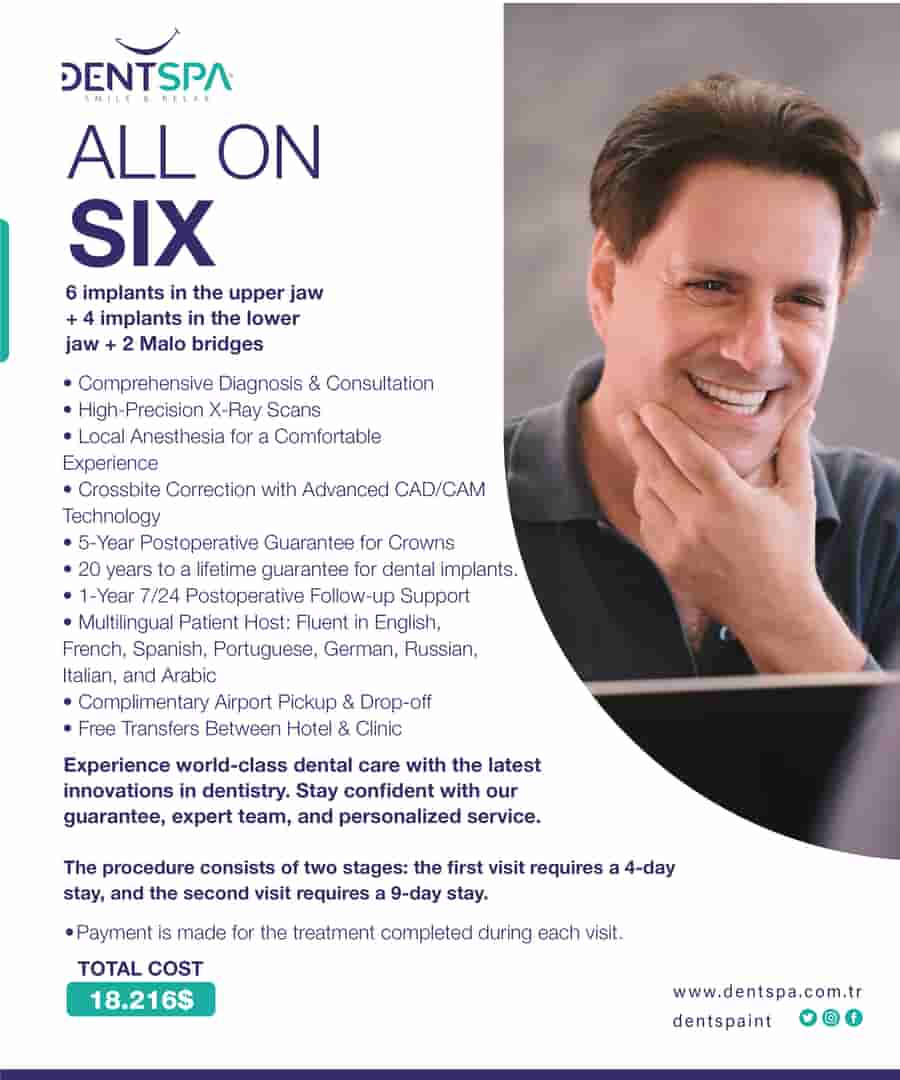
Say goodbye to slipping dentures and hello to a confident new smile. An All on 6 package in Istanbul Turkey offers full arch support with starting prices around five thousand dollars. Most patients stay roughly seven days per visit. Final pricing and eligibility strictly depend on a thorough medical assessment.
Quick Facts at a Glance
- Two Visit Requirement You must travel twice with a three to six month healing period in between.
- Global Standards Procedures are performed in clinics holding international accreditations and stringent hygiene protocols.
- Bone Density Prerequisite Adequate jawbone volume is required to safely anchor six distinct titanium posts.
- Diagnostic Needs A fresh 3D CBCT scan is absolutely mandatory before any surgical planning begins.
- Travel Logistics Wait at least forty eight hours after surgery before flying to avoid severe sinus pressure.
How Much Does an All on 6 Dental Implants Package Cost in Istanbul Turkey
Understanding your financial commitment is a vital step in planning your dental journey abroad. Patients frequently choose international care due to the stark contrast in out of pocket expenses compared to domestic providers. Below is a realistic look at how global markets compare for full arch restorations.
| Region | Estimated Price Range USD | Primary Market Driver |
|---|---|---|
| United States | $24,000 to $35,000 | High overhead and localized lab fees |
| United Kingdom | $18,000 to $25,000 | Private sector clinical premiums |
| Mexico | $9,000 to $14,000 | Proximity to North American patients |
| Istanbul Turkey | $5,000 to $8,500 | Lower operational costs and government tourism incentives |
To give you complete transparency, we have broken down a typical treatment plan into its individual components. Keep in mind that specific brands and your unique anatomical needs will influence these figures.
| Procedure Item | Estimated Cost USD | Details |
|---|---|---|
| Consultation and 3D Tomography | $0 to $150 | Essential diagnostic imaging to map jawbone density and nerve placement. |
| Tooth Extractions | $40 to $80 per tooth | Removal of failing natural teeth to prepare the arch for implants. |
| Six Titanium Implants | $2,400 to $4,500 | Surgical placement of six biocompatible anchors into the jawbone. |
| Temporary Prosthesis | $300 to $600 | A lightweight acrylic bridge worn during the healing phase. |
| Final Fixed Bridge | $2,000 to $3,500 | The permanent ceramic or zirconia arch fitted during the second visit. |
| Estimated Total Package | $5,000 to $8,500 | Varies heavily based on implant brand selection and necessary grafting. |
Medical Disclaimer Please note that the costs outlined above are estimates. Final pricing requires clinical evaluation by a licensed prosthodontist or oral surgeon.
What Exactly Is Included and Excluded in Your Treatment Plan
Traveling for complex dental work requires seamless logistical support. Medical centers package their services to eliminate friction for international visitors. It is critical to review exactly what your proposed plan covers to avoid unexpected out of pocket expenses upon arrival.
Standard Inclusions
- ✓ VIP airport transfers for both trips
- ✓ Boutique hotel accommodation with breakfast
- ✓ Clinical coordination and translation services
- ✓ Panoramic X rays and 3D CBCT scans
- ✓ Postoperative medications and local anesthesia
Common Exclusions
- ✗ International round trip flights
- ✗ Complex sinus lifts or block bone grafting
- ✗ Intravenous sedation or general anesthesia
- ✗ Meals outside of the hotel breakfast
- ✗ Travel insurance and medical complication coverage
Why Might You Need a Sinus Lift Before We Can Place Six Implants
The primary difference between a four implant system and a six implant system relies heavily on the posterior jaw. Placing six anchors requires dense healthy bone near the back of the mouth. When back teeth are missing for long periods the sinus cavity expands downward and the jawbone resorbs causing a severe lack of structural foundation.
If a surgeon attempts to place titanium posts into thin bone they risk penetrating the sinus membrane which can lead to chronic infections and total implant failure. A sinus lift gently pushes the membrane upward and packs the space with bone grafting material to create a solid base.
Key Indicators That You Need Grafting
- Long Term Tooth Loss You have been missing your molars for more than twelve months.
- Periodontal Disease Severe gum infections have actively destroyed your natural bone structure.
- Anatomical Variations You naturally possess enlarged sinus cavities sitting close to the upper jaw line.
- Thin Ridge Width Your jawbone is too narrow to fully encase a standard titanium screw without exposed threads.
What Are the Differences Between Zirconia and Titanium Prosthetics
Choosing the material for your permanent bridge determines the visual aesthetics weight and long term durability of your restoration. While the roots surgically embedded in your jaw are always made of biocompatible titanium the visible teeth attached to them come in several different materials.
Modern dentistry heavily favors monolithic zirconia or porcelain fused to metal for full arch restorations. Zirconia offers unparalleled strength and light transmission mimicking natural enamel closely but it is heavier. Acrylic over a titanium bar provides a lighter more cost effective solution but requires more maintenance over the decades.
| Material Type | Aesthetics | Durability and Wear |
|---|---|---|
| Monolithic Zirconia | Highly translucent and incredibly lifelike | Maximum resistance to chipping and staining |
| Porcelain Fused to Metal | Excellent color matching with an opaque base | Strong but porcelain can chip under heavy grinding |
| Acrylic on Titanium Bar | Good appearance but lacks natural light reflection | Lighter in the mouth but wears down faster over time |
When Do You Need to Return to Istanbul Turkey for Your Final Teeth
A genuine biological process called osseointegration dictates the timeline of your treatment. When titanium posts are inserted into the jaw your bone cells must literally grow into the microscopic grooves of the metal to lock it securely in place. If this process is rushed the posts will loosen under the pressure of chewing.
Because of this biological rule international patients must divide their care into two distinct visits separated by a waiting period. During the first visit the surgical foundation is laid. You then return home to heal before making a second trip to finalize the aesthetics.
The Staged Travel Timeline
- Visit One The Surgical Phase You will stay in the city for five to eight days. The oral surgeon performs extractions places all six implants and fits you with a lightweight temporary aesthetic bridge before you fly home.
- The Healing Phase at Home You will spend three to six months in your home country eating a modified diet while the titanium fuses deeply with your facial bones.
- Visit Two The Restorative Phase You will return for roughly seven days. The dentist takes final digital impressions checks integration stability and securely attaches your custom permanent ceramic arch.
How Do We Manage Your Bite Alignment During the Temporary Bridge Phase
Leaving the clinic with a complete smile on day one is standard but those temporary teeth are strictly for appearance and light function. The temporary acrylic bridge you wear back home is specifically designed to sit above the gumline preventing excessive pressure on the newly placed screws beneath.
Eating hard or chewy foods during this phase forces the temporary bridge to rock back and forth. This micro movement disrupts bone healing leading to fibrous tissue forming around the implant instead of rigid bone. Following strict dietary protocols is entirely in your hands once you board your flight home.
Safe Healing Diet
- Scrambled eggs and soft omelets
- Flaky baked fish and mashed potatoes
- Well cooked pastas and soft grains
- Blended protein shakes and smoothies
Foods to Strictly Avoid
- Tough red meats and steaks
- Raw carrots apples and hard vegetables
- Sticky candies caramels and chewing gum
- Crusty bread hard rolls and nuts
How Does Flying Affect Your New Implants Immediately After Surgery
Navigating international travel immediately following invasive oral surgery requires careful management of cabin pressure changes. If your treatment involved manipulating the upper jaw or inserting bone grafts near the sinus cavities flying too soon poses a distinct physical challenge.
According to Boyle's law gases expand as atmospheric pressure drops at cruising altitudes. This expansion places immense pressure on freshly grafted sinus tissues leading to acute facial pain nosebleeds or compromised sutures. Clinical guidelines mandate specific waiting periods before boarding an aircraft.
Aviation Rules for Dental Patients
- Standard Placements Wait a minimum of forty eight hours after standard implant placement before flying to allow initial clot stabilization.
- Sinus Lift Additions If sinus lifting was performed you must wait five to seven days before flying to prevent membrane tearing.
- Decongestant Protocols Surgeons typically prescribe oral decongestants to keep nasal passages clear and equalize pressure during ascent and descent.
- In Flight Hydration Cabin air is incredibly dry. Drink water constantly to maintain healthy saliva flow over your fresh sutures.
What Happens if an Implant Fails After You Return Home
While success rates for modern osseointegration sit above ninety five percent the reality of cross border medical care means you must have a contingency plan for complications. The most common risk is early integration failure where the bone rejects the titanium post during the months you are waiting at home.
Reputable clinics recognize this small but real statistical risk and provide structured guarantees to protect your investment. However it is critical to understand the logistical difference between a local dental warranty and an international one.
Understanding International Clinic Guarantees
- Free Hardware Replacement If an implant fails to integrate the clinic will typically replace the titanium screw and perform the necessary corrective surgery at zero clinical cost.
- Patient Travel Burden Most guarantees cover the medical labor and materials but specifically exclude the cost of emergency flights and accommodations needed to return to the facility.
- Compliance Clauses Your warranty remains valid only if you follow postoperative instructions including attending virtual follow ups and maintaining pristine oral hygiene.
- Smoking Restrictions Active tobacco use severely restricts blood flow to the gums. Most clinics completely void their implant warranties if the failure is linked to post surgical smoking.
Frequently Asked Questions
How long does the All on 6 surgery actually take?
The surgical procedure typically takes between three to five hours per jaw depending on whether extractions and bone grafting are required beforehand. Most patients undergo the procedure under local anesthesia combined with oral sedatives for maximum comfort.
Is the procedure excessively painful?
You will not feel sharp pain during the surgery due to profound local anesthesia. Postoperative discomfort peaks around day three manifesting as swelling and a dull ache which is heavily managed with prescribed painkillers and anti-inflammatory medications.
Can I get this treatment if I have severe bone loss?
Severe bone loss does not automatically disqualify you but it does mandate preliminary procedures. You will likely require sinus lifts or block bone grafting to rebuild the foundation before the six anchors can be safely positioned.
How do I clean underneath the permanent bridge?
Daily maintenance requires using a specialized water flosser and interdental brushes to flush debris from the tiny gap between the artificial gums of the bridge and your natural gum tissue to prevent plaque buildup.
Why do clinics insist on a 3D scan before quoting a final price?
A standard two-dimensional X-ray cannot show the width or density of your jawbone. A 3D CBCT scan is the only way a surgeon can accurately locate nerves chart sinus cavities and verify if costly bone grafting is required.
Do I have to go without teeth during the healing phase?
No. You will be fitted with a temporary acrylic prosthesis that allows you to smile and speak normally. However this temporary setup is fragile and requires you to maintain a soft food diet until your return trip.
Are the materials used internationally the same as those used locally?
Yes. Top tier facilities utilize globally recognized implant brands from Switzerland Germany and the United States. Ensure you ask the clinic for the specific brand name and request the implant passport showing the serial numbers.
Can I choose the color and shape of my new teeth?
Absolutely. During your second visit the aesthetic design phase allows you to select the shade and shape of your monolithic zirconia crowns to ensure they complement your facial structure and look highly natural.
Will the metal implants set off airport security alarms?
No. Dental implants are manufactured from non-magnetic titanium alloys which do not trigger standard airport metal detectors or cause issues during modern MRI scans.
Ready to explore your options without any pressure or commitment?
Request Free QuoteMedical Disclaimer The content provided on this page is intended strictly for general informational and educational purposes. It does not constitute medical advice diagnosis or treatment planning and should never replace a professional consultation with a qualified healthcare provider.
References
- https://www.ncbi.nlm.nih.gov/pmc/articles/PMC4253286/ (NCBI Osseointegration and Dental Implants)
- https://www.ada.org/en/resources/research/science-and-research-institute/oral-health-topics/dental-implants (American Dental Association Implant Guidelines)
- https://www.mayoclinic.org/tests-procedures/dental-implant-surgery/about/pac-20384622 (Mayo Clinic Dental Implant Surgery Overview)
- https://www.ncbi.nlm.nih.gov/pmc/articles/PMC5601489/ (NCBI Maxillary Sinus Floor Augmentation)
- https://www.aaid-implant.org/dental-implants/what-are-dental-implants/ (American Academy of Implant Dentistry Basics)

























Share this listing