
True Story of Stem Cell Therapy for Diabetic Neuropathy in Plovdiv Bulgaria
Living with the agonizing pain of nerve damage can feel like an endless battle. For many individuals, conventional pharmaceutical treatments only mask the symptoms without addressing the underlying nerve degradation. This true story of stem cell therapy for diabetic neuropathy in Plovdiv Bulgaria, shared by a patient at Phoenix Clinic, offers a groundbreaking perspective on regenerative medicine. By harnessing the body's natural healing mechanisms, advanced therapies are restoring profound hope to those suffering from chronic pain.
Patients who once struggled to walk are discovering renewed mobility and drastic reductions in neuropathic pain. Global medical tourism is rapidly changing the landscape of healthcare, providing accessible, cutting-edge solutions for peripheral nerve damage. Explore how modern regenerative treatments in Eastern Europe are providing viable, long-term relief for diabetic complications.
Video Chapters & Quick Navigation
The Harsh Reality of Diabetic Peripheral Neuropathy
Diabetic neuropathy is one of the most debilitating and widespread complications associated with long-term metabolic dysfunction. When blood sugar levels remain elevated over extended periods, the delicate capillary networks that supply oxygen and vital nutrients to the nerves—known medically as the vasa nervorum—become severely damaged. This microvascular complication slowly starves the peripheral nerves, particularly those located in the lower extremities. Patients often initially notice a slight tingling in their toes, which gradually escalates into a profound medical crisis.
As the condition progresses, the protective myelin sheath surrounding the nerve fibers begins to deteriorate, leading to misfired electrical signals. This results in the hallmark symptoms of severe diabetic peripheral neuropathy: burning sensations, sharp electric shock-like pains, deep aching, and eventually, total numbness. This loss of sensation is particularly dangerous because it leaves the patient highly vulnerable to unnoticed foot injuries, ulcers, and severe infections. The physical toll is immense, but the psychological burden of living with relentless, chronic pain can be equally devastating, often leading to severe sleep deprivation and clinical depression.
The urgency to find effective long-term solutions for diabetic nerve pain management is at an all-time high. Millions of individuals wake up every day feeling as though their feet are wrapped in burning coals or tight, restrictive socks. It is a condition that slowly strips away independence, making simple daily activities like walking to the mailbox or standing in the kitchen feel like monumental tasks. Finding a treatment that targets the root cellular damage, rather than just dulling the brain's pain receptors, is the holy grail of modern diabetic care.
The Frustrating Limitations of Conventional Nerve Pain Treatments
In standard Western medicine protocols, the primary approach to managing diabetic neuropathy relies heavily on pharmaceutical intervention. Doctors typically prescribe a cascading regimen of neuropathic pain relievers, anti-seizure medications like gabapentin or pregabalin, and tricyclic antidepressants. While these medications can provide a temporary buffer against the agonizing pain signals reaching the brain, they come with a significant array of systemic drawbacks.
First and foremost, these traditional medications are purely palliative. They do absolutely nothing to halt the progression of nerve death, nor do they repair the microscopic damage occurring at the cellular level. As seen at in the patient's testimony, reliance on heavy prescription drugs often leaves individuals feeling constantly fatigued, dizzy, and trapped in a state of cognitive fog. The body also rapidly builds a tolerance to these drugs, requiring ever-increasing dosages just to maintain baseline comfort.
Furthermore, the long-term use of synthetic painkillers places a massive filtration burden on the liver and kidneys—organs that are already under significant stress in diabetic patients. This frustrating cycle of symptom management without true healing pushes many proactive patients to seek alternative medical pathways. The desperate search for restorative medicine leads individuals to look beyond their local clinics, exploring international frontiers where advanced regenerative therapies are fully legalized, heavily researched, and readily available to the public.
The Breakthrough Science of Stem Cell Therapy for Nerve Regeneration
Regenerative medicine has completely shifted the paradigm of how we approach chronic neurodegenerative conditions. At the forefront of this medical revolution is mesenchymal stem cell (MSC) therapy. Unlike conventional drugs, stem cell therapy for diabetic neuropathy actively targets the damaged tissue environment, aiming to repair and regenerate the physiological structures that have been destroyed by chronic hyperglycemia. These highly potent cells act as the body's internal repair system.
How Mesenchymal Stem Cells Repair Nerve Damage
When high-quality mesenchymal stem cells are introduced into a patient's system, they perform several complex biological functions simultaneously. First, they engage in powerful immunomodulation. Diabetic neuropathy is characterized by localized chronic inflammation that continuously damages nerve endings. MSCs release anti-inflammatory cytokines that quickly calm this hostile environment, stopping the ongoing destruction of the peripheral nerves.
Secondly, stem cells secrete a vast array of neurotrophic factors—specialized proteins that encourage the survival, development, and function of neurons. As detailed during the clinical explanation at , this paracrine signaling promotes axonal growth and helps rebuild the protective myelin sheath. Furthermore, MSCs stimulate angiogenesis, which is the formation of new, healthy blood vessels. By restoring robust blood flow to the extremities, the nerves finally receive the oxygen and nutrients necessary to heal themselves naturally.
A Patient's Journey: Finding Hope at Phoenix Clinic
Theoretical science is fascinating, but the true impact of these treatments is best understood through real patient experiences. The individual featured in this powerful testimonial reached a point where traditional medicine had completely failed him. Suffering from advanced diabetic neuropathy, his mobility was severely restricted, and his nights were plagued by relentless burning sensations in his lower legs. Facing the terrifying prospect of permanent disability, he began researching global options for regenerative medicine.
This exhaustive search led him to the Phoenix Clinic, a premier medical facility located in Plovdiv, Bulgaria. Known for its rigorous adherence to European Union medical standards and its specialized focus on cellular therapies, the clinic offered exactly what he needed: a scientifically backed, comprehensive stem cell protocol. The decision to travel abroad for medical treatment is never taken lightly, but the promise of genuine nerve repair heavily outweighed the logistical challenges of international travel.
Upon arriving at the clinic, the patient was met with a level of personalized care that starkly contrasted with his previous healthcare experiences. The medical staff conducted extensive diagnostic testing, including advanced nerve conduction studies, to map the exact severity of his neuropathy. As he notes at , the transparency, empathy, and deep expertise of the medical team immediately put his anxieties to rest. It was clear that he was not just another number in a medical system, but a priority case receiving highly tailored medical intervention.
Why Plovdiv, Bulgaria is Emerging as a Hub for Regenerative Medicine
When discussing medical tourism for stem cell therapy, countries like Mexico or Panama often dominate the conversation. However, Eastern Europe—specifically Bulgaria—is rapidly emerging as the superior destination for patients seeking advanced regenerative therapies. Plovdiv, renowned as one of the oldest continuously inhabited cities in Europe, seamlessly blends ancient historical charm with state-of-the-art medical infrastructure. This unique combination offers patients a healing environment that is both culturally enriching and scientifically advanced.
Bulgaria operates under strict European Union medical directives. This is a crucial distinction for international patients. It means that medical facilities, laboratories, and cellular processing centers must adhere to some of the highest quality control and safety standards in the world. Facilities like the Phoenix Clinic utilize highly sterile, GMP-certified laboratories to culture and prepare stem cells, ensuring maximum cell viability and zero risk of contamination. Patients receive EU-level healthcare quality without the astronomical price tags associated with similar treatments in Germany or Switzerland.
Furthermore, the logistical experience of traveling to Plovdiv is designed with patient comfort in mind. Major medical tourism facilitators coordinate comprehensive packages that include VIP airport transfers from Sofia, luxury hotel accommodations, and dedicated patient coordinators who translate and assist with every step of the journey. The serene environment of Plovdiv allows patients to relax fully, lowering stress hormones like cortisol, which creates an optimal internal environment for the newly introduced stem cells to integrate and thrive.
The Comprehensive Treatment Protocol at Phoenix Clinic
The success of regenerative medicine relies entirely on the precision of the treatment protocol. At Phoenix Clinic, the approach to treating diabetic neuropathy is multi-faceted and highly customized. The process begins long before the actual infusion. A deep analysis of the patient’s metabolic health, current blood sugar management, and inflammatory markers is conducted to ensure the body is primed to receive the stem cells.
Step-by-Step Cellular Administration
The core of the therapy involves the administration of expanded mesenchymal stem cells. Depending on the patient's specific profile, these cells may be ethically sourced from Wharton’s Jelly (umbilical cord tissue) known for its immense regenerative vitality, or harvested autonomously from the patient. The administration is typically a dual approach. First, an intravenous (IV) systemic infusion is performed. This allows the stem cells to circulate throughout the entire body, aggressively targeting systemic inflammation and seeking out areas of vascular damage.
Following the systemic infusion, localized targeted injections are often administered near the affected peripheral nerves in the lower extremities. As documented at in the video timeline, this targeted delivery ensures a high concentration of regenerative cells right where the damage is most severe. The procedure is minimally invasive, generally painless, and requires no extensive downtime or rehabilitation in a hospital bed.
Comparing Global Costs for Stem Cell Treatments
One of the primary driving factors for patients traveling to Bulgaria is the extreme cost-effectiveness of the care. In countries like the United States or the United Kingdom, stem cell therapies for neuropathy are often deemed "experimental" by major insurance companies, leaving patients to bear the entire financial burden out-of-pocket. These out-of-pocket costs in North America can be devastatingly high, completely pricing out the average patient who desperately needs relief.
Bulgaria offers a vastly different economic reality. Due to lower operational costs, favorable exchange rates, and a healthcare system optimized for medical tourism, patients can access identical, if not superior, cellular treatments for a fraction of Western prices. This affordability does not come at the expense of quality; the savings are simply a result of global macroeconomic differences.
| Treatment Location | Estimated Cost (USD) | Regulatory Standard | Inclusions |
|---|---|---|---|
| United States | $15,000 - $25,000 | FDA (Highly Restricted) | Treatment only. Excludes diagnostics. |
| United Kingdom | $12,000 - $20,000 | MHRA | Treatment only. High wait times. |
| Mexico (Tijuana) | $6,000 - $10,000 | COFEPRIS | Treatment, standard lab work. |
| Plovdiv, Bulgaria | $5,000 - $8,500 | EU Medical Directives | VIP Transfers, Diagnostics, Full Therapy. |
As clearly demonstrated, choosing a reputable clinic in Bulgaria provides a financially sustainable pathway to world-class regenerative healthcare. It allows patients to invest in their healing without depleting their life savings, proving that high-quality regenerative medicine for diabetic neuropathy can be globally accessible.
Long-Term Recovery and Maximizing Patient Outcomes
Stem cell therapy is a powerful biological catalyst, but it is not an overnight magic trick. Healing damaged nerve fibers is a complex physiological process that requires time. Patients are thoroughly educated by the medical staff at Phoenix Clinic regarding the realistic timeline of their recovery journey. During the first few weeks post-infusion, patients commonly report subtle shifts—a warming sensation in the feet due to improved blood flow, and a slight decrease in the sharp, stabbing nighttime pains.
The most profound changes generally occur between the three to six-month mark. As neovascularization takes full effect and the myelin sheaths begin to repair, patients often experience a significant return of normal sensation and a dramatic reduction in neuropathic pain scores. At , the featured patient joyfully shares how he was able to take long walks around the ancient Roman ruins of Plovdiv pain-free—a feat that was physically impossible for him just months prior.
To maximize these outcomes, patients are advised to maintain strict glycemic control. Stem cells provide the building blocks for repair, but a high-sugar environment can hinder their efficacy. By combining the regenerative power of advanced stem cell therapy with a commitment to metabolic health and proper dietary support, patients can achieve durable, life-changing relief from diabetic neuropathy.
Ready to Break Free from Neuropathy Pain?
Discover if regenerative stem cell therapy at Phoenix Clinic in Bulgaria is right for you. PlacidWay Medical Tourism connects you directly with top-rated international specialists. Take the first step toward restoring your mobility and living pain-free.
REQUEST YOUR FREE CONSULTATION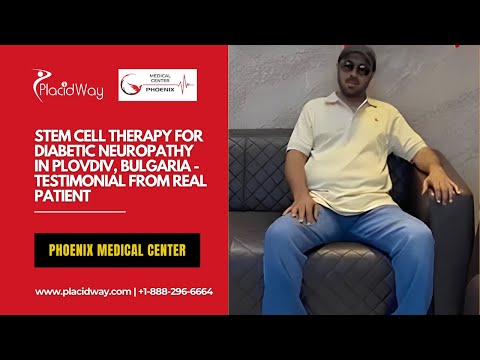













.jpg)











Share this listing