


The Complete Guide to Affordable Cataract Surgery in Mexico
Millions of adults face the gradual clouding of their vision, but exorbitant healthcare prices often delay necessary treatment. Seeking affordable cataract surgery in Mexico has become a life-changing alternative for uninsured or underinsured patients. This video explores how world-class ophthalmologists south of the border utilize FDA-approved technology to restore crystal-clear sight. You no longer need to empty your retirement savings to afford premium intraocular lenses. Discover why medical tourism for eye care offers an ideal blend of safety, exceptional quality, and significant financial relief.
Video Chapters & Quick Navigation
The Growing Demand for Affordable Cataract Surgery in Mexico
As the global population ages, vision impairment caused by cataracts has become one of the most pressing health concerns of our time. A cataract occurs when the natural lens inside the eye becomes cloudy, obstructing light and causing progressively blurry vision. This condition is not preventable, and surgery is the only definitive cure.
For decades, patients simply relied on their local healthcare systems to address this inevitable aspect of aging. However, the skyrocketing costs associated with comprehensive eye care in the United States and Canada have forced many to seek alternatives. Finding affordable cataract surgery in Mexico is no longer a niche concept; it is a mainstream medical choice.
Medical tourism for eye surgery has grown exponentially as patients realize they do not have to compromise on quality to save money. By traveling just across the border, individuals are reclaiming their independence and their sight. They are returning home with restored vision and significantly healthier bank accounts.
The Physiological Impact of Untreated Cataracts
When proteins in the eye’s natural lens begin to break down and clump together, the visual field becomes obscured. Initially, you might only notice a slight dulling of colors or increased glare from oncoming headlights at night. Over time, this cloudiness thickens, severely limiting daily activities like reading, driving, and recognizing faces.
Leaving a cataract untreated does not merely diminish your quality of life; it poses serious physical risks. Decreased visual acuity is directly linked to an increased risk of falls, fractures, and even cognitive decline in elderly patients. Timely intervention through safe cataract extraction across the border can prevent these dangerous secondary complications.
Unpacking the High Cost of Eye Care in the United States
To truly understand the appeal of the Mexican medical tourism market, one must examine the fundamental flaws within the North American healthcare pricing model. In the United States, medical pricing is famously opaque, with hospitals and clinics charging inflated baseline rates. Even with comprehensive insurance, patients are often blindsided by hidden facility fees and high deductibles.
While Medicare and private insurance typically cover the cost of basic cataract surgery, there is a massive catch. They generally only pay for traditional monofocal lenses, which only correct vision at a single distance. If a patient wishes to upgrade to premium lenses to eliminate the need for reading glasses, they must pay the difference entirely out of pocket.
These out-of-pocket costs can easily range from $3,000 to $6,000 per eye in an American clinic. For a retiree living on a fixed income, spending upwards of $10,000 for bilateral premium lens replacement is completely unfeasible. This financial barrier is the primary catalyst driving the search for affordable vision correction abroad.
The Burden of High Deductibles and Co-Pays
Even for those who settle for standard monofocal lenses, domestic surgery is rarely free. High-deductible health plans require patients to spend thousands before insurance coverage even kicks in. Additionally, separate bills from the surgeon, the anesthesiologist, and the surgical center can quickly accumulate.
By contrast, Mexican clinics operate on a transparent, all-inclusive pricing model. The quote a patient receives prior to their trip encompasses the surgeon's fee, the surgical facility, anesthesia, and the lens itself. This level of financial predictability is a massive relief for patients accustomed to billing surprises.
Why Choose Mexico for Advanced Vision Correction?
Mexico has deliberately positioned itself as a global leader in medical tourism, with dentistry, bariatrics, and ophthalmology leading the charge. The country boasts an impressive infrastructure of modern, purpose-built medical facilities. These centers are designed specifically to cater to international patients, offering concierge-level services that rival luxury hotels.
The caliber of medical professionals in Mexico is world-class. Many Mexican ophthalmologists for foreigners have completed extensive fellowships in the United States, Canada, or Europe. They are board-certified, deeply experienced, and actively participate in international medical associations to stay abreast of the latest surgical advancements.
Furthermore, language barriers are virtually nonexistent in these top-tier clinics. From the reception staff to the lead surgical teams, English is spoken fluently. This ensures that patients fully understand their diagnosis, their surgical options, and their post-operative care instructions.
Stringent Safety and Hygiene Protocols
A common but outdated misconception is that medical care south of the border lacks proper regulation. In reality, clinics catering to international patients adhere to incredibly strict sterilization and safety standards. Many are accredited by the Joint Commission International (JCI), the highest global benchmark for healthcare quality.
The operating theaters are equipped with cutting-edge HEPA filtration systems to prevent infection. Surgical instruments are sterilized using hospital-grade autoclaves that meet international safety mandates. Patients can rest assured that the clinical environment is just as safe, if not safer, than their local community hospital.
State-of-the-Art Technologies: Laser-Assisted and Phacoemulsification
The success rate of modern cataract removal is astonishingly high, thanks to rapid advancements in microsurgical technology. The best eye clinics in Mexico do not use outdated methods; they invest heavily in the exact same cutting-edge platforms used in Beverly Hills and Manhattan. This commitment to technology guarantees precise, minimally invasive procedures.
Phacoemulsification remains the gold standard for cataract extraction worldwide. During this procedure, the surgeon makes a microscopic incision in the cornea. An ultrasonic probe is then inserted to emit high-frequency sound waves, effectively breaking the clouded lens into tiny fragments.
Once emulsified, the pieces are gently vacuumed out of the eye capsule. Because the incision is so small, it typically seals itself without the need for stitches. This promotes rapid healing and minimal discomfort during the recovery phase.
Femtosecond Laser-Assisted Cataract Surgery (FLACS)
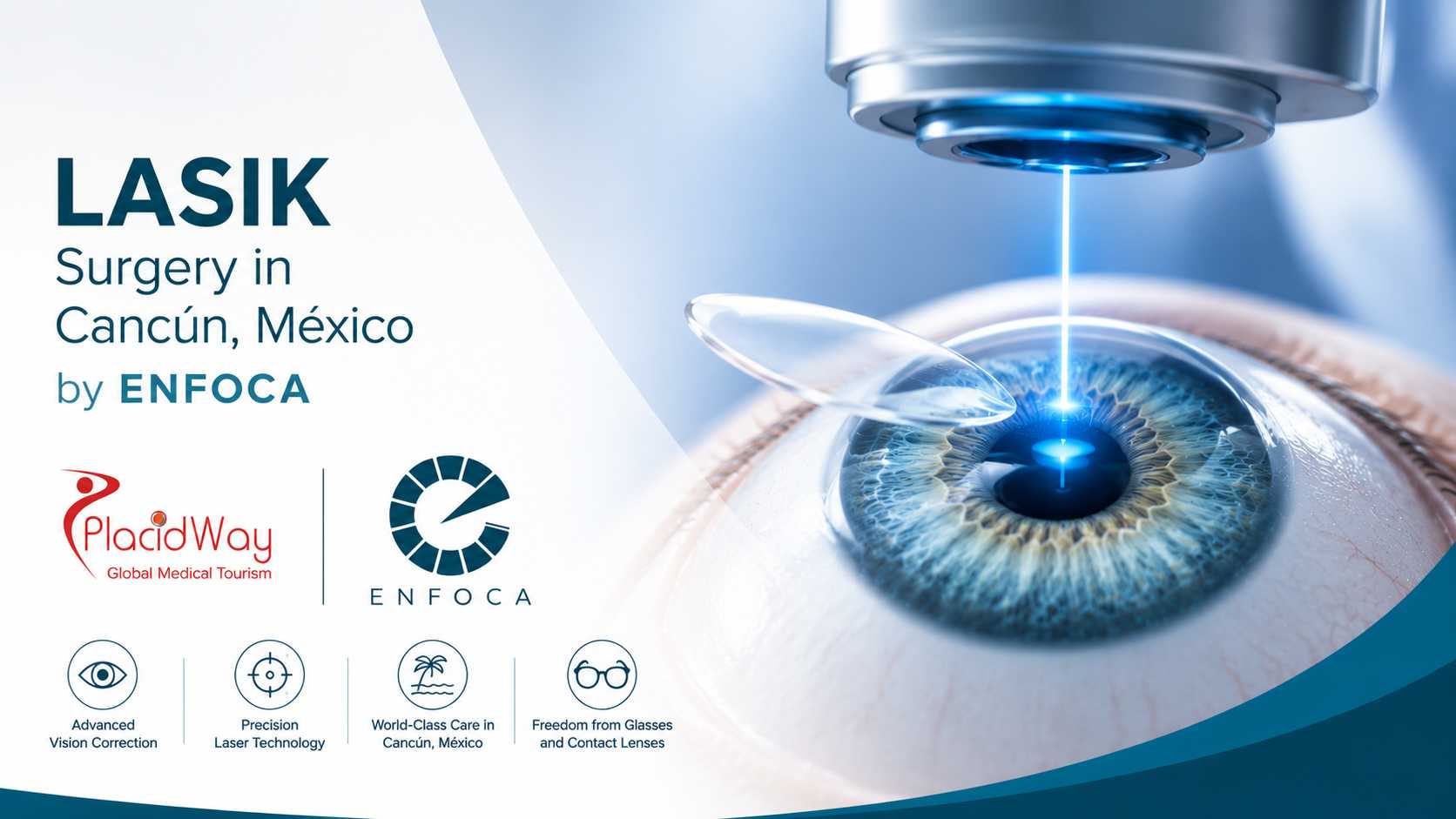
For patients seeking the utmost precision, many Mexican clinics offer Femtosecond Laser-Assisted Cataract Surgery. Instead of using a manual surgical blade, the ophthalmologist uses a computer-guided laser to create the corneal incision and soften the cataract. This allows for unparalleled accuracy, particularly when treating patients with astigmatism.
The laser technology also ensures that the new artificial lens is centered perfectly within the eye capsule. While FLACS commands a premium price in the United States, the cost of laser cataract removal in Mexico makes this advanced technology highly accessible to average earners.
Exploring Premium Intraocular Lens (IOL) Options
The most exciting aspect of modern cataract surgery is the opportunity to permanently correct pre-existing vision issues. When the clouded natural lens is removed, it must be replaced with an artificial Intraocular Lens (IOL). Patients traveling to Mexico have access to a vast array of premium lenses manufactured by global leaders like Alcon, Johnson & Johnson, and Bausch + Lomb.
Selecting the right lens is a collaborative process between the patient and the surgeon. Detailed preoperative biometric mapping is conducted to measure the exact dimensions and curvature of the eye. This data allows the surgeon to recommend the specific lens type that will best align with the patient’s lifestyle and visual goals.
By capitalizing on the lower cost of medical care in Mexico, patients can frequently afford premium lenses that would be financially out of reach at home. This transforms a standard medical procedure into a life-enhancing vision upgrade.
Monofocal vs. Multifocal IOLs
Standard monofocal lenses are designed to provide clear vision at a single set distance, usually far away. While excellent for driving or watching television, patients will still require reading glasses for close-up tasks like using a smartphone. These are the most budget-friendly options available.
Multifocal IOLs, however, feature specialized concentric rings that allow the eye to focus seamlessly across multiple distances. Patients who opt for premium intraocular lenses in Mexico often find they can eliminate their dependence on prescription glasses entirely. This newfound visual freedom is often described as feeling decades younger.
Toric Lenses for Astigmatism
Astigmatism is a common condition where the cornea is irregularly shaped, causing distorted vision at all distances. Traditional cataract surgery does not correct this curvature. However, Toric IOLs are custom-engineered to offset the specific shape of an astigmatic eye.
Placing a Toric lens requires immense surgical skill to ensure the lens is aligned precisely on the correct axis. The elite Mexican ophthalmologists for foreigners possess the vast experience necessary to handle these complex alignments with flawless execution.
Top Destinations: Tijuana, Cancun, and Mexico City
Mexico is a vast and diverse country, offering multiple hubs for exceptional medical tourism. The destination a patient chooses often depends on their geographic location in North America and their personal travel preferences. Each major medical hub offers unique logistical and lifestyle advantages.
Tijuana is undeniably the most convenient option for patients residing in California and the American Southwest. Located just minutes across the San Diego border, it allows patients to fly domestically into California and drive across. The best eye clinics in Tijuana often provide medical fast passes to ensure a swift, hassle-free return journey through border customs.
For those living on the East Coast or in Canada, Cancun provides direct, affordable flights and a tropical recovery environment. Having eye surgery in Cancun allows patients to combine their medical procedure with a relaxing vacation. Recovering while enjoying the gentle Caribbean breeze is highly appealing to medical tourists.
The Metropolitan Excellence of Mexico City
Mexico City is the bustling, cosmopolitan heart of the nation's healthcare sector. It is home to massive, highly specialized ophthalmic research hospitals and some of the most esteemed surgeons in Latin America. Patients seeking the absolute highest level of complex eye care often gravitate to this vibrant capital.
While navigating a massive city might seem intimidating, medical tourism facilitators handle every detail. Comprehensive packages include VIP airport transfers, bilingual chaperones, and comfortable accommodations near the hospital. The process is completely streamlined to eliminate patient stress.
Cost Comparison: Breaking Down the Savings
The primary motivation for crossing borders for medical care is undeniable financial relief. To truly grasp the value proposition, one must look at a direct, side-by-side cost analysis. The savings are not marginal; they represent a fundamental shift in healthcare affordability.
It is important to remember that lower prices in Mexico do not equate to inferior care or cheap materials. The reduced costs are entirely a reflection of Mexico's lower cost of living, reduced real estate overhead, and much more affordable medical malpractice insurance. These systemic economic differences are passed directly to the patient as massive discounts.
| Procedure / Lens Type | Average Cost in USA (Per Eye) | Average Cost in Mexico (Per Eye) | Estimated Savings |
|---|---|---|---|
| Standard Monofocal Lens | $3,500 - $5,000 | $1,200 - $1,800 | Up to 70% |
| Premium Toric Lens (Astigmatism) | $4,500 - $6,500 | $1,900 - $2,500 | Up to 65% |
| Premium Multifocal Lens | $5,000 - $7,500 | $2,200 - $3,000 | Up to 60% |
When factoring in the cost of treating both eyes, patients routinely save between $5,000 and $10,000. Even after accounting for flight tickets, luxury hotel stays, and dining out, the overall expenditure is drastically lower than staying home. This economic reality makes medical tourism an incredibly savvy financial decision.
The Patient Experience and Post-Operative Recovery
Embarking on a medical journey abroad might initially cause anxiety, but modern facilitators have perfected the patient experience. The process begins long before you board a plane, starting with remote digital consultations. By sharing your local medical records and eye scans, Mexican specialists can assess your candidacy and provide a firm, accurate price quote.
Upon arrival at the destination clinic, you will undergo an exhaustive battery of physical examinations and high-definition eye mapping. This ensures that the surgical plan is perfectly tailored to your unique ocular anatomy. The surgical procedure itself is remarkably swift, generally taking less than 20 minutes per eye under local anesthesia.
Patients are typically wide awake but completely relaxed and pain-free due to the anesthetic eye drops. After resting in a comfortable recovery suite for an hour, patients are cleared to return to their hotel to rest. Vision is usually noticeably improved by the very next morning, though full stabilization can take a few weeks.
Crucial Post-Operative Care Guidelines
Successful healing requires strict adherence to the surgeon's post-operative instructions. You will be provided with a regimen of antibiotic and anti-inflammatory eye drops to prevent infection and control swelling. These must be administered precisely as directed over the following month.
Patients are advised to avoid strenuous activities, heavy lifting, and bending over, as these actions can increase intraocular pressure. It is also critical to wear a protective eye shield while sleeping to prevent accidental rubbing. Swimming and hot tubs must be strictly avoided to minimize the risk of bacterial contamination.
Returning Home with Clear Vision
Most patients are cleared to fly back to their home countries within three to five days after surgery. Follow-up appointments are scheduled with the Mexican clinic before departure to confirm the initial healing phase is progressing flawlessly. Once home, any local optometrist can easily monitor your long-term progress.
The impact of successful cataract surgery is profoundly transformative for daily life. Colors appear vibrant again, nighttime driving becomes safe, and the persistent fog over your visual field is permanently lifted. By stepping outside of a broken domestic healthcare system, you take proactive control of both your health and your financial future.
Ready to See Clearly Again?
Do not let high healthcare costs steal your vision. PlacidWay Medical Tourism partners with Mexico's most elite, internationally accredited eye clinics. Let us help you find the perfect specialist for your cataract surgery and secure exclusive pricing on premium lenses.
GET A FREE QUOTE TODAY





.png)
.png)






.png)









Share this listing