


Crossing Borders: Mohammed's Cancer Journey with Stem Cell Therapy in Beijing, China
A devastating medical diagnosis can make the world feel incredibly small, but the search for life-saving treatment often requires us to look beyond our own borders. Crossing borders for Mohammed's cancer journey with stem cell therapy in Beijing, China, represents a beacon of hope for international patients seeking advanced oncology treatments that are either unavailable or prohibitively expensive in their home countries.
When conventional chemotherapy and radiation reached their limits, Mohammed and his family refused to give up. Their global search for cutting-edge regenerative medicine led them to the heart of Asia. Beijing has rapidly emerged as a global powerhouse for biomedical research, offering highly advanced cellular therapies and customized immunotherapy protocols. Watch to see how innovative medical tourism is breaking down geographical barriers and providing international patients with renewed hope, state-of-the-art medical care, and a genuine chance at life.
Video Chapters & Quick Navigation
The Diagnosis and the Global Search for Advanced Oncology Treatments
When a patient is diagnosed with a severe or late-stage malignancy, the immediate path usually involves a standard protocol of surgical intervention, aggressive chemotherapy, and targeted radiation. For many, these treatments are highly effective and life-saving. However, when cancers prove refractory—meaning they do not respond to standard treatments—patients are often left with devastatingly few options in their home countries. This is exactly where Mohammed found himself before embarking on his international medical journey.
As detailed at in the video, Mohammed's initial prognosis offered very little room for optimism under conventional western medical frameworks. The physical toll of his previous treatments had left his immune system compromised, a common hurdle for patients battling prolonged illnesses. Recognizing that time was of the essence, his family began an exhaustive global search for alternative cancer treatments abroad.
Their research pointed them toward the rapidly advancing field of cellular therapy and regenerative medicine. The goal was no longer just to attack the cancer cells with high-toxicity drugs, but to fundamentally rebuild and weaponize Mohammed's own immune system to fight the disease organically. This paradigm shift in oncological thinking requires highly specialized facilities, leading the family to explore international cancer treatment centers in Asia.
Understanding Stem Cell Therapy for Cancer Treatment
To fully grasp why Mohammed traveled thousands of miles for care, one must understand the science behind stem cell therapy for cancer. Stem cells are the body's raw materials—cells from which all other cells with specialized functions are generated. Under the right conditions in the body or a laboratory, stem cells divide to form more cells called daughter cells, which can either become new stem cells or become specialized cells with a more specific function, such as blood cells, brain cells, heart muscle cells, or bone cells.
In the context of oncology, stem cell therapy is not typically a direct cure that targets the tumor itself in the way radiation does. Instead, as explained at , it serves two massive primary functions. First, it acts as a restorative engine. High-dose chemotherapy destroys cancer cells but also wipes out the patient's blood-forming stem cells. Stem cell transplants replace these destroyed cells, allowing doctors to use higher, more effective doses of chemotherapy than would otherwise be safely possible.
Second, in the realm of advanced immunotherapy (such as CAR-T cell therapy), a patient's immune cells are extracted, genetically engineered in a laboratory to recognize and attack specific cancer cells, and then re-infused into the patient's body alongside supportive stem cell therapies. This creates a highly targeted, personalized biological weapon against the malignancy. The precision required for these advanced oncology treatments in Asia is staggering, requiring massive laboratory infrastructure and highly trained cellular biologists.
Why Are Medical Tourists Choosing Beijing for Stem Cell Therapy?
Historically, medical tourists from the Middle East, Africa, and parts of the West traveled to the United States or Western Europe for complex oncological care. Today, that map has fundamentally shifted. Beijing, China has aggressively positioned itself as a global epicenter for biotechnology, stem cell research, and regenerative medicine.
Unprecedented Government Investment and Infrastructure
The Chinese government has designated biotechnology and regenerative medicine as key pillars of their national development strategy. This has resulted in the construction of massive, state-of-the-art medical campuses that blend research and clinical application seamlessly. Hospitals in Beijing are equipped with the latest generation of sequencing machines, clean-room laboratories for cell culturing, and high-tech isolation wards designed specifically for immunocompromised international patients.
Progressive Regulatory Frameworks for Clinical Applications
One of the primary reasons patients like Mohammed travel to China, highlighted at , is the regulatory environment. While patient safety remains strictly monitored, the pathway from successful laboratory trial to clinical application is often highly streamlined compared to the FDA in the United States or the EMA in Europe. This allows international cancer treatment centers in Beijing to offer safe, highly advanced, and customized cellular therapies years before they become accessible in Western markets.
Mohammed's Cancer Journey: Arriving in China
The decision to travel for medical care is fraught with anxiety, compounded by the physical exhaustion of battling cancer. Mohammed's arrival in Beijing was met with an incredibly coordinated logistical effort designed to eliminate stress. Top-tier medical facilities in China catering to international patients operate dedicated VIP departments that function much like five-star concierges, ensuring that the transition from the airport to the hospital bed is seamless.
Upon his arrival, as seen at , Mohammed was introduced to his multidisciplinary medical team. Unlike traditional models where a patient might see an oncologist one day and a radiologist a week later, the Chinese hospital system utilizes a highly collaborative approach. His team consisted of a primary oncologist, a specialized hematologist, a cellular biologist, a nutritional expert, and a dedicated medical translator who remained by his side 24/7.
The first several days were dedicated entirely to comprehensive diagnostics. Doctors in Beijing ran extensive genetic sequencing on Mohammed's tumor profile to understand its exact molecular structure. They also conducted deep blood analyses to determine the viability of his existing immune cells for extraction and culturing. This exhaustive profiling is the cornerstone of personalized medicine, ensuring that the subsequent stem cell therapy is tailored specifically to the unique biological signature of his disease.
The Customized Treatment Protocol: Precision Medicine in Action
Once the diagnostic phase was complete, the actual application of stem cell therapy for cancer in Beijing China began. Mohammed's protocol was a masterclass in modern biotechnology. The initial phase required apheresis, a painless but lengthy procedure where Mohammed's blood was passed through an apparatus that separates out specific cellular components—in this case, stem cells and T-cells—while returning the rest of the blood to his body.
These harvested cells were immediately transported to the hospital's on-site sterile laboratory. Over the course of the next two weeks, scientists worked to expand these cell populations into the millions, treating them with specific cytokines and growth factors. At , the video showcases the meticulous nature of this laboratory work. The sheer volume of healthy, aggressive immune cells generated is what gives the patient a fighting chance against aggressive tumors.
The re-infusion process is often anti-climactic compared to the intense science happening behind the scenes. Mohammed received his customized, expanded stem cells intravenously over a period of hours. During this critical window, he was monitored in a highly sanitized, private recovery suite to protect him from any external pathogens while his newly fortified immune system began the work of engrafting and seeking out cancer cells.
Comprehensive Cost Analysis: Stem Cell Therapy in China vs. The West
The financial toxicity of fighting cancer is a global crisis. Even for patients with robust health insurance in the United States or access to public healthcare in Europe, the out-of-pocket costs for experimental or advanced cellular therapies can be utterly devastating. The cost of stem cell therapy for cancer in China presents a highly attractive alternative, offering premium medical care at a fraction of Western prices.
This price disparity is not a reflection of lower quality care. Rather, it is the result of lower administrative overhead, significant government subsidies for biotechnology infrastructure, and a lower overall cost of living. To understand the financial impact, consider the following comparative breakdown of typical costs associated with comprehensive cellular and immunotherapy protocols.
| Medical Expense Category | United States (Est. Cost) | Europe / UK (Est. Cost) | Beijing, China (Est. Cost) |
|---|---|---|---|
| Advanced Cellular Therapy / Stem Cell Infusions | $150,000 - $350,000+ | $90,000 - $200,000 | $35,000 - $70,000 |
| Comprehensive Diagnostic Profiling | $15,000 - $30,000 | $10,000 - $20,000 | $4,000 - $8,000 |
| Inpatient Hospital Stay (Per Week) | $20,000 - $40,000 | $10,000 - $18,000 | $2,500 - $5,000 |
| Dedicated 24/7 Nursing & Translator Support | Rarely Included / High Extra Cost | Variable Extra Cost | Often Included in VIP Packages |
As the table demonstrates, the total out-of-pocket expenditure for medical tourism for cancer treatment in Beijing is often less than a quarter of what a patient might pay in North America. This democratization of access to cutting-edge medicine is a primary driver behind the massive influx of international patients to Chinese oncology centers.
Navigating Logistics and Support for International Patients
Traveling to a foreign country with a different language and culture can be daunting, especially when navigating complex medical issues. However, the leading hospitals in Beijing have perfected the medical tourism infrastructure to ensure a frictionless experience. At , Mohammed discusses how the language barrier, which he initially feared would be a massive obstacle, was completely mitigated by the hospital's dedicated international patient department.
- Pre-Arrival Consultations: Before boarding a flight, patients engage in extensive telemedicine consultations. Medical records, scans, and biopsy reports are securely transferred and translated, allowing the Chinese medical team to formulate a preliminary treatment plan in advance.
- Medical Visa Assistance: Hospitals provide official letters of invitation and coordinate directly with embassies to expedite medical visas for the patient and their accompanying family members.
- Accommodation and Transport: Beyond airport transfers, international patient departments assist in securing long-term, comfortable accommodations near the hospital for family members, complete with access to international grocers and familiar amenities.
The Power of Integrative Medicine in Chinese Oncology
A unique and highly valued aspect of seeking advanced oncology treatments in Asia is the seamless integration of modern biotechnology with Traditional Chinese Medicine (TCM). While stem cell therapy and cellular immunotherapy act as the primary, aggressive weapons against the cancer cells, TCM is often deployed as a sophisticated supportive therapy to manage side effects, boost energy levels, and improve the patient's overall quality of life during treatment.
During his recovery phases, Mohammed was provided with customized herbal formulations and acupuncture sessions specifically designed to mitigate nausea, improve his appetite, and reduce the systemic inflammation caused by the intensive cellular therapies. This holistic approach ensures that the patient is treated as a whole person, rather than just a host for a disease. The combination of hyper-modern cellular biology with thousands of years of herbal pharmacology provides a comprehensive healing environment that is incredibly difficult to find in Western hospital settings.
Long-Term Monitoring and Post-Treatment Care
The success of any complex oncological treatment relies heavily on rigorous post-treatment care. The journey does not end when the patient boards a plane to return home. As highlighted at the conclusion of Mohammed's treatment phase at , the transition back to his home country was managed with the same level of precision as his initial arrival in Beijing.
Before discharge, the medical team provides international patients with a comprehensive, translated dossier of their entire treatment protocol, including detailed instructions for their local oncologists. Furthermore, the Beijing medical team establishes a schedule for regular telemedicine follow-ups. They collaborate directly with the patient's local doctors to monitor blood markers, review follow-up scans, and ensure that the engrafted stem cells are performing exactly as intended.
Mohammed's cancer journey with stem cell therapy is a powerful testament to the globalization of healthcare. By crossing borders, he was able to access life-saving technology, compassionate care, and a level of medical innovation that fundamentally altered his prognosis. For international patients facing similar battles, the path forward may lie not in accepting the limitations of local healthcare systems, but in looking outward to the incredible medical advancements waiting in places like Beijing.
Explore Advanced Cancer Treatments Abroad
Are you or a loved one seeking alternative cancer treatments or advanced stem cell therapies? PlacidWay Medical Tourism connects patients with world-renowned oncology centers in Beijing and across the globe. Let us help you navigate your international medical journey.
REQUEST FREE INFORMATION & QUOTE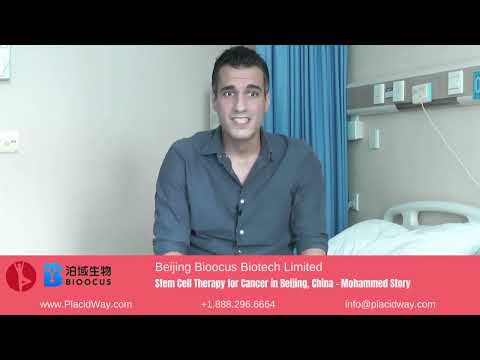





.png)
.png)








Share this listing