


The Ultimate Guide to Dental Implants with Computerized Guidance by Dr. Johanna Calderon
Are you struggling with missing teeth and seeking a permanent, painless, and highly predictable tooth replacement solution? Discover the transformative power of dental implants with computerized guidance by Dr. Johanna Calderon. This advanced digital dentistry approach ensures pinpoint accuracy, minimizing surgical risks and dramatically reducing your overall recovery time.
Gone are the days of freehand guesswork and extensive incisions that lead to prolonged discomfort. By leveraging state-of-the-art 3D imaging and digitally printed surgical guides, patients can now experience minimally invasive procedures with unprecedented success rates. Read on to uncover how this modern dental technology is revolutionizing oral rehabilitation.
Video Chapters & Quick Navigation
The Evolution of Digital Dentistry and Implantology
For decades, dental implant surgery relied heavily on the manual dexterity and visual estimation of the operating surgeon. While highly trained professionals could achieve excellent outcomes, traditional freehand methods inherently carried a margin for human error. The landscape of restorative dentistry changed forever with the introduction of advanced digital dentistry for tooth replacement.
As highlighted in the presentation at , the integration of computer-aided design and computer-aided manufacturing (CAD/CAM) technologies has revolutionized how oral surgeons approach complex cases. This evolution transitions the practice from an art form reliant purely on the surgeon's eye to an exact science governed by sub-millimeter digital parameters. Modern implantology now demands an uncompromised level of predictability.
Today, high-volume long-tail keywords like "best 3D guided dental implant procedure" reflect a growing patient demand for precision and safety. Patients are educating themselves on the biomechanics of artificial tooth roots and are actively seeking out clinics equipped with digital workflows. This technological shift not only enhances the aesthetic outcome but fundamentally secures the functional longevity of the dental prosthesis.
What is Computerized Guidance in Implant Surgery?
Computerized guidance in implantology is a comprehensive digital workflow that allows a dental surgeon to plan the exact placement of a titanium implant in a virtual 3D environment before any physical surgery takes place. This digital blueprint dictates the exact depth, angulation, and rotational position of the implant within the patient's jawbone. The surgeon utilizes specialized software to merge different digital scans, creating a flawless digital twin of the patient's oral anatomy.
Once the virtual planning is perfected, the data is sent to a medical-grade 3D printer to fabricate a custom surgical guide. As detailed around , this guide looks somewhat like a clear dental retainer but features precise titanium sleeves. During the actual surgery, these sleeves restrict the movement of the surgical drill, ensuring the physical placement perfectly matches the virtual plan.
Core Components of the Guided Digital Workflow
| Technological Component | Primary Function in Surgery |
|---|---|
| Intraoral Digital Scanner | Captures high-resolution, full-color 3D surface impressions of the teeth and gums without messy putty. |
| Cone Beam Computed Tomography (CBCT) | Provides a three-dimensional radiographic view of underlying bone volume, density, and vital nerve pathways. |
| CAD/CAM Planning Software | Merges optical scans and CBCT data to allow the surgeon to virtually place the implant in the optimal biomechanical position. |
| 3D Printed Surgical Guide | The physical apparatus worn by the patient during surgery that dictates exact drill depth and trajectory. |
The Critical Role of 3D CBCT Scans for Dental Implants
At the very foundation of any successful computer-guided implant procedure is the Cone Beam Computed Tomography, or 3D CBCT scan. Unlike traditional two-dimensional dental X-rays, which suffer from distortion and superimposition, a CBCT scan produces a perfectly scaled, undistorted three-dimensional view of the patient's maxillofacial structure. This allows the implantologist to evaluate bone density down to the microscopic trabecular level.
Identifying vital anatomical landmarks is paramount to avoiding permanent surgical complications. As explained at , the lower jaw contains the inferior alveolar nerve, while the upper jaw sits just below the maxillary sinus cavities. The 3D CBCT scan allows Dr. Johanna Calderon to map these exact locations and choose an implant length that maximizes bone anchorage while remaining safely distanced from nerves and sinus floors.
Furthermore, this high-resolution imaging helps determine if a patient requires preliminary bone grafting or a sinus lift prior to implant placement. By diagnosing severe bone resorption early in the planning phase, the surgical team can create a comprehensive treatment plan that guarantees the highest probability of successful osseointegration.
The Unmatched Benefits of Minimally Invasive Tooth Replacement
One of the most profound advantages of computer-guided dental implants is the ability to perform minimally invasive, or "flapless," implant surgery. In traditional procedures, the surgeon must make extensive scalpel incisions and peel back the gum tissue (creating a flap) to visually inspect the underlying jawbone. This trauma to the soft tissue is the primary cause of postoperative pain, swelling, and bleeding.
With a 3D printed surgical guide in place, Dr. Johanna Calderon already knows the exact topography of the underlying bone. Therefore, as mentioned at , the implant can often be placed through a tiny, precise circular punch in the gum tissue. Because there are no extensive incisions and often no need for sutures, the blood supply to the surgical site remains largely uninterrupted, promoting significantly faster healing.
Patients searching for affordable minimally invasive tooth replacement options are often thrilled to learn that this technique allows them to return to their normal daily activities almost immediately. The reduction in surgical trauma directly correlates to a massive reduction in the need for prescription pain medication, making the entire recovery process smoother and more comfortable.
Traditional Freehand vs. Computer-Guided Implantology
When considering the cost of computerized guided dental implants, patients frequently wonder if the investment in digital technology is truly worth it compared to traditional methods. Understanding the stark contrasts between these two surgical approaches highlights why digital guidance is rapidly becoming the universal gold standard in restorative dentistry.
While traditional freehand surgery relies on standard X-rays and the surgeon's tactile feedback, it leaves room for microscopic deviations in implant angulation. Even a few degrees of misalignment can compromise the final prosthetic crown, leading to uneven bite forces and potential mechanical failure over time. Guided surgery eliminates this spatial guesswork entirely.
A Direct Clinical Comparison
- Surgical Precision: Freehand surgery is limited by human visual acuity. Guided surgery ensures sub-millimeter precision strictly governed by digital CAD/CAM planning.
- Operating Time: Because the exact depth and angle are pre-determined by the surgical template, the actual time spent in the surgical chair is often reduced by up to 50% for the patient.
- Aesthetic Outcomes: Guided surgery ensures the implant emerges through the gums at the perfect prosthetic angle, resulting in a final crown that looks and functions exactly like a natural tooth.
- Risk Profile: The digital mapping of the inferior alveolar nerve and sinus cavities virtually eliminates the risk of accidental surgical nerve damage or sinus perforation.
The Comprehensive Step-by-Step Surgical Procedure
Understanding the exact workflow of dental implants with computerized guidance by Dr. Johanna Calderon helps alleviate dental anxiety and empowers patients. The process is highly systematic, ensuring that every variable is controlled before the patient ever sits in the surgical chair. It begins with comprehensive data acquisition.
During the initial consultation, the clinical team performs an intraoral optical scan and a 3D CBCT scan. These two digital files are imported into specialized implant planning software. As shown at , the software overlays the soft tissue surface data with the hard tissue skeletal data, providing a complete 360-degree digital workspace. The surgeon then virtually positions the ideal implant size and shape into the jawbone.
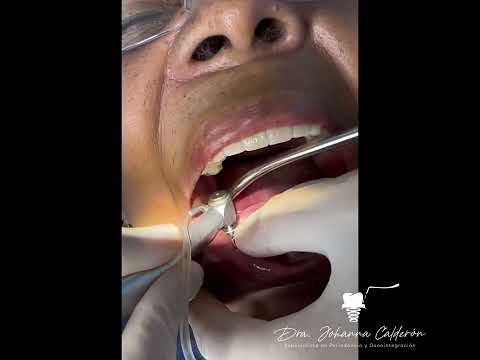
Once the virtual surgery is complete, the surgical guide is 3D printed using biocompatible resin. On the day of surgery, this guide is securely seated in the patient's mouth. The surgeon uses specialized drills that fit perfectly into the guide's titanium sleeves. The implant is subsequently threaded into the prepared osteotomy with absolute mechanical precision, followed by the placement of a healing abutment or a temporary restoration.
The Unrivaled Expertise of Dr. Johanna Calderon
Technology alone does not guarantee a successful clinical outcome; it requires the steady hand and vast clinical experience of a dedicated specialist. Dr. Johanna Calderon represents the pinnacle of modern implantology, blending extensive surgical expertise with a deep mastery of digital CAD/CAM software. Her approach to restorative dentistry is defined by meticulous preoperative planning and compassionate patient care.
Dr. Calderon understands that every patient's oral anatomy is as unique as their fingerprint. By utilizing full computerized guidance, she ensures that individuals presenting with complex cases—such as severe bone atrophy or full-arch edentulism—receive customized, safe, and highly predictable treatments. This commitment to clinical excellence is referenced throughout the video at .
Furthermore, her dedication to continuing education in the realm of 3D guided dental implant procedures ensures that her clinic remains at the forefront of global dental innovations. Patients traveling for specialized dental care actively seek out her precision, knowing that her technologically advanced protocols translate directly to beautiful, lifelong smiles.
Patient Candidacy and Strategies for Long-Term Success
While computerized guided implant surgery represents the zenith of dental technology, assessing patient candidacy remains a vital first step. Ideal candidates are those who possess adequate jawbone density, maintain healthy gum tissue free of active periodontal disease, and are committed to excellent oral hygiene. However, even patients with significant bone loss can often become candidates following targeted bone grafting or sinus augmentation procedures.
The biological magic behind dental implants is a process called osseointegration, where the living bone cells tightly fuse to the micro-roughened titanium surface of the implant. Because computerized guidance ensures the implant is placed in the densest, most biomechanically sound bone available, it actively promotes a faster and more robust osseointegration phase. This structural integrity is critical for supporting the heavy bite forces generated during chewing.
To ensure your dental implants last a lifetime, stringent postoperative care is non-negotiable. Patients must adhere strictly to Dr. Calderon's hygiene protocols, which include using ultra-soft bristled toothbrushes, non-abrasive toothpaste, and specialized water flossers to clean around the implant abutment. Regular bi-annual professional cleanings and digital radiographic check-ups will safeguard your investment and maintain the radiant aesthetics of your fully restored smile.
Ready to Reclaim Your Confident Smile?
Take the guesswork out of your dental health. Experience the pinnacle of precision, safety, and rapid recovery with computerized guided dental implants. Connect with leading specialists to discuss your personalized digital treatment plan today.
REQUEST YOUR FREE CONSULTATION





.jpg)











Share this listing