


Advance Treatment on Avascular Necrosis: A Life Transformed with Regenerative Medicine
Avascular necrosis (AVN) often begins as a subtle, easily dismissed ache in the hip or knee, but it rapidly evolves into a debilitating condition that threatens mobility and quality of life. For decades, patients diagnosed with osteonecrosis were handed a grim prognosis: manage the agonizing pain until the bone inevitably collapses, and then undergo an invasive total joint replacement.
Today, advanced treatment on avascular necrosis using regenerative medicine is rewriting this narrative. By harnessing the body’s innate healing capabilities through stem cell therapy and platelet-rich plasma (PRP), modern orthopedics can now halt bone death and stimulate new tissue growth. Watch this video to uncover the breakthrough non-surgical options for osteonecrosis that are saving joints and transforming lives globally.
Video Chapters & Quick Navigation
Understanding Avascular Necrosis: The Silent Bone Thief
Avascular necrosis, frequently referred to as osteonecrosis or bone infarction, is a devastating pathological process that occurs when the blood supply to a specific region of bone is compromised. Without a steady influx of oxygen and essential nutrients, the living cells within the bone tissue begin to starve and die . This cellular death weakens the structural integrity of the bone, making micro-fractures inevitable and, ultimately, leading to complete structural collapse.
While this condition can affect any bone in the human body, it most commonly strikes the femoral head—the spherical top of the thigh bone that fits snugly into the hip socket. Patients diagnosed with avascular necrosis of the hip experience progressive, debilitating pain that drastically limits their range of motion. The underlying causes of this blood starvation are vast and multifaceted, complicating early diagnosis.
The Primary Catalysts of Bone Starvation
Prolonged use of high-dose corticosteroids is one of the most prominent triggers for non-traumatic AVN, as these medications can alter lipid metabolism and increase fat deposits in the blood vessels, restricting flow. Additionally, chronic alcohol consumption is strongly linked to the disease, operating through similar lipid-altering mechanisms.
Trauma is another leading cause; a severe dislocation or fracture of the joint can instantly sever or crush the delicate blood vessels supplying the bone. In other instances, systemic conditions such as sickle cell anemia, lupus, or even decompression sickness in deep-sea divers can precipitate this localized ischemia. Recognizing these risk factors is vital for exploring early advanced treatment on avascular necrosis before irreversible joint destruction occurs.
The Limitations of Traditional AVN Surgery
Historically, orthopedic protocols for treating late-stage avascular necrosis have been notoriously aggressive and heavily reliant on joint replacement. When the femoral head begins to flatten and collapse, the smooth articular cartilage is destroyed, leading to severe bone-on-bone osteoarthritis . At this stage, traditional medicine has typically offered only one definitive solution: a total hip arthroplasty.
While total hip replacement is a highly successful surgery for elderly patients with degenerative arthritis, it presents massive drawbacks for the typical AVN demographic. Avascular necrosis frequently strikes patients in the prime of their lives—usually between the ages of 30 and 50. Inserting a prosthetic joint into a young, active patient guarantees future complications.
The Inevitability of Revision Surgery
Prosthetic joints have a finite lifespan, typically lasting 15 to 20 years before the artificial materials degrade or loosen. For a 35-year-old patient receiving a hip replacement, this guarantees at least one, if not two, highly complex revision surgeries later in life. Revision surgeries carry significantly higher risks of infection, nerve damage, and bone loss compared to the initial procedure.
Because of this looming timeline, younger patients are heavily incentivized to seek out non-surgical options for osteonecrosis. The overarching goal of modern orthopedic intervention is joint preservation—saving the patient’s native bone and delaying or entirely eliminating the need for metal and plastic implants. This desperate clinical need has paved the way for the regenerative medicine revolution.
Regenerative Medicine: A Paradigm Shift in Treatment
Regenerative medicine for avascular necrosis of the hip represents a monumental paradigm shift in orthopedic care. Rather than surgically excising the necrotic bone and replacing it with artificial hardware, regenerative therapies aim to reverse the disease process. This is achieved by introducing potent biological agents directly into the necrotic lesion to stimulate angiogenesis (the formation of new blood vessels) and osteogenesis (the creation of new bone tissue).
The cornerstone of this advanced therapeutic approach is stem cell therapy. Mesenchymal stem cells (MSCs) are multipotent adult stem cells found in high concentrations within bone marrow and adipose (fat) tissue. These remarkable cells have the unique ability to differentiate into osteoblasts, the specific cells responsible for synthesizing and mineralizing new bone.
The Role of Cell Signaling and PRP
Beyond their ability to transform into bone-building cells, MSCs act as powerful localized immunomodulators and cellular signaling centers. When injected into the dying bone cavity, they release a cascade of growth factors and cytokines that suppress harmful inflammation and recruit the body’s own healing mechanisms to the site of the injury . This cellular communication is vital for resurrecting the dead zones within the femoral head.
Frequently, stem cell therapy for hip AVN is combined with Platelet-Rich Plasma (PRP) therapy. PRP is derived from a standard draw of the patient's own blood, which is centrifuged to concentrate the platelets. These platelets are bursting with growth factors that act as a biological fertilizer, supercharging the injected stem cells and creating an optimal microenvironment for tissue regeneration.
The Synergy of Core Decompression and Stem Cells
While stem cells are incredibly potent, delivering them directly to the necrotic lesion requires anatomical precision. This is where advanced treatment on avascular necrosis combines minimally invasive surgical techniques with cutting-edge biology. The gold standard for this delivery is an enhanced procedure known as core decompression with stem cell grafting.
During a traditional core decompression, a surgeon drills a small tract into the femoral head to relieve the intense intraosseous pressure caused by the dying tissue. This physical decompression instantly alleviates pain and creates a pathway for new blood vessels to migrate into the dead zone. However, core decompression alone has historically shown variable success rates.
Supercharging the Healing Process
The true breakthrough occurs when the core decompression tract is utilized as a delivery channel. After the necrotic bone is cleared, the hollowed-out area is packed with a concentrated solution of the patient’s own bone marrow aspirate concentrate (BMAC), rich in mesenchymal stem cells and PRP . Sometimes, a biocompatible bone graft is also mixed in to provide a structural scaffold.
This synergistic approach addresses both the mechanical and biological failures of AVN simultaneously. The decompression relieves the pressure and pain, while the regenerative orthobiologics immediately go to work rebuilding the vascular network and regenerating the trabecular bone structure. This combination is currently yielding the highest success rates for joint preservation in early to mid-stage AVN patients.
A Patient's Journey: A Life Transformed
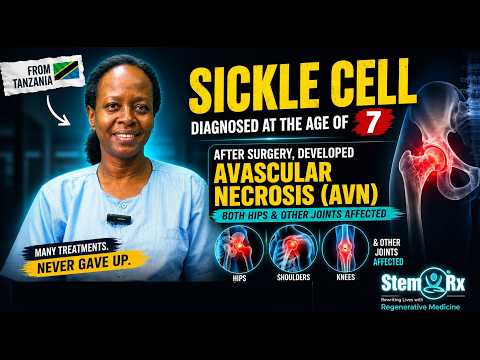
The clinical data supporting regenerative medicine is compelling, but the true impact of these treatments is best understood through the lens of patient experience. The featured video highlights a profound transformation, showcasing an individual whose life had been completely derailed by a bilateral AVN diagnosis. Previously active and vibrant, the patient found themselves reliant on mobility aids, facing the terrifying prospect of double hip replacements.
The daily reality of untreated AVN is a shrinking world. Simple tasks like tying shoes, climbing stairs, or walking through a grocery store become insurmountable challenges dictated by sharp, unpredictable groin pain. The psychological toll of chronic pain, combined with the loss of physical independence at a young age, frequently leads to profound depression and anxiety.
The Turning Point with Regenerative Therapy
Choosing advanced regenerative medicine for avascular necrosis was the pivotal turning point in this patient's journey . By opting for a minimally invasive stem cell procedure rather than a total joint amputation, they preserved their native anatomy. The recovery process from regenerative therapy is drastically different from joint replacement; it focuses on off-loading the joint with crutches to allow the cells to build new bone, rather than aggressively rehabilitating severely traumatized muscle tissue.
Within months of the stem cell infusion, follow-up MRI scans revealed a remarkable halting of the disease progression. The necrotic lesions began to show signs of revascularization and increased bone density. More importantly, the patient's subjective experience mirrored the imaging results: the deep, constant ache vanished, range of motion returned, and they successfully avoided the operating table, reclaiming their active lifestyle entirely.
Candidacy and Diagnostic Protocols for Stem Cell Therapy
It is crucial to understand that while regenerative medicine is miraculous, it is not a universal cure for every stage of the disease. The success rate of regenerative medicine for AVN is heavily dependent on early intervention. Once the femoral head has suffered a severe subchondral collapse and secondary osteoarthritis has set in, the mechanical architecture of the joint is irreversibly destroyed, and traditional joint replacement becomes unavoidable.
Therefore, early diagnosis through advanced imaging is critical. Standard X-rays are notoriously poor at detecting early-stage avascular necrosis, often appearing completely normal while the bone is silently dying inside. Magnetic Resonance Imaging (MRI) is the gold standard diagnostic tool, capable of identifying the subtle edema and marrow changes associated with stage 1 and stage 2 AVN.
Who is the Ideal Candidate?
The ideal candidate for stem cell treatment for osteonecrosis is a patient in the pre-collapse stages of the disease (Ficat Stages I or II). At these stages, the spherical shape of the femoral head is still intact, and the cartilage is healthy. The goal is to fortify the underlying bone before the structural integrity is compromised .
Orthopedic specialists will conduct a thorough medical history review to identify and manage any underlying risk factors. If a patient is actively consuming large amounts of alcohol or requires ongoing high-dose steroid therapy, these factors must be addressed to ensure the new, regenerating bone is not subjected to the same vascular starvation that caused the initial necrosis.
Comparative Analysis: Regenerative Therapy vs. Total Joint Replacement
When weighing treatment options, patients must evaluate the long-term implications of their choices. Below is a clinical comparison highlighting why younger, active patients are increasingly gravitating toward advanced treatment on avascular necrosis.
| Clinical Factor | Total Hip Replacement (THR) | Regenerative Medicine (Stem Cells) |
|---|---|---|
| Joint Preservation | Sacrifices native bone entirely; replaced with metal/plastic. | 100% joint preservation. Stimulates native tissue repair. |
| Invasiveness | Major open surgery with significant muscle/tissue disruption. | Minimally invasive needle injections or small core tract. |
| Risk of Revision | High for younger patients. Implants wear out over 15-20 years. | Zero risk of prosthetic revision. Joint remains natural. |
| Activity Restrictions | High-impact sports often restricted to prevent implant wear. | No permanent restrictions once bone has fully regenerated. |
The Cost and Global Access of Advanced Regenerative Medicine
Despite the overwhelming clinical evidence supporting joint preservation, many patients face significant hurdles when attempting to access these treatments domestically. In many Western healthcare systems, including the United States and Canada, insurance providers still classify certain regenerative orthobiologics as "experimental." Consequently, the cost of stem cell therapy for avascular necrosis is frequently an out-of-pocket expense.
Domestically, a comprehensive core decompression paired with autologous stem cell harvesting and PRP can easily exceed $15,000 to $25,000 per hip. This financial barrier forces many patients to settle for the insurance-covered joint replacement, sacrificing their long-term health for short-term financial relief .
Empowering Patients Through Medical Tourism
This is where global medical tourism is profoundly changing the landscape of AVN treatment. Forward-thinking patients are expanding their geographical horizons to access world-class regenerative clinics in countries like Mexico, Colombia, and various European nations. In these premier international medical hubs, specialized orthopedic centers offer identical, highly advanced regenerative protocols at a fraction of the cost.
Medical tourism platforms, such as PlacidWay, are empowering patients by connecting them directly with board-certified international orthopedic surgeons who specialize in advanced treatment on avascular necrosis. These comprehensive packages often include the specialized imaging, the stem cell harvesting, the surgical intervention, and the postoperative regenerative boosters for up to 60% less than domestic prices, making joint preservation an affordable reality.
Reclaiming Your Future with Confidence
An avascular necrosis diagnosis is undoubtedly terrifying, but it no longer has to dictate the end of your active life. The medical community has moved past the archaic era where amputation of the joint was the only remedy for bone death. By leveraging the immense power of your body’s own cellular repair mechanisms, you can halt the progression of the disease, regenerate lost bone tissue, and preserve your natural anatomy for decades to come.
Through advanced treatment on avascular necrosis utilizing regenerative medicine, patients are bypassing the painful cycle of joint replacements and revision surgeries. It is time to step out of chronic pain and explore the non-surgical options that are setting a new global standard in orthopedic excellence.
Take the First Step Toward Joint Preservation Today
Don't let Avascular Necrosis force you into an unwanted joint replacement. PlacidWay connects you with globally recognized orthopedic specialists offering cutting-edge stem cell therapy and regenerative medicine. Protect your joints and reclaim your active life.
GET A FREE MEDICAL CONSULTATION



















Share this listing