


Receiving a preliminary breast cancer diagnosis or discovering a suspicious lump can trigger immediate anxiety for any patient. During this stressful time, understanding the safety and efficacy of diagnostic procedures is crucial for your peace of mind. In this expert discussion, Dr. Köksal Bilgen from the General Surgery Department at Bay?nd?r ?çerenköy Hospital answers a critical question: is a core needle biopsy for breast cancer harmful?
For years, patients have harbored fears that invasive needle testing might cause tumor cells to spread into healthy tissue. This comprehensive guide dismantles those fears with clinical evidence, exploring exactly why pathological tissue diagnosis is the ultimate gold standard in oncology. Read on to discover the step-by-step process of advanced breast cancer diagnostic testing, the unmatched benefits of core tissue sampling, and how accurate pathology reports pave the way for highly successful, personalized treatment plans.
Video Chapters & Quick Navigation
When dealing with suspected malignancies, time and accuracy are the most critical factors for a positive patient outcome. As noted by leading medical specialists, establishing a definitive diagnosis requires specialized procedures that go far beyond a simple physical exam [00:00]. Modern diagnostic protocols are designed to be minimally invasive while providing maximum clinical data to your oncology team.
The primary question many anxious individuals ask is whether the core needle biopsy itself could inadvertently be harmful to their overall health [00:08]. This understandable fear often causes dangerous delays in seeking appropriate medical care. By exploring the science behind tissue extraction, we can confidently eliminate these fears and highlight the life-saving benefits of early intervention.
The Foundational Steps in Breast Cancer Diagnosis
The journey toward an accurate breast cancer diagnosis usually begins at home or during a routine clinical checkup. A patient may discover a palpable lump during a breast self-exam, or a physician might note unusual tissue changes during an annual physical. These initial physical examinations are vital first steps in identifying potential health issues [00:15].
However, simply feeling a lump provides very little information about its cellular composition or biological behavior. The mass could easily be a benign fibroadenoma, a fluid-filled cyst, or a malignant tumor. Because physical touch cannot differentiate between benign and cancerous tissues, doctors must immediately escalate the diagnostic process to the next level.
The Transition to Advanced Diagnostics
Once an anomaly is detected, physicians rely on highly advanced clinical pathways to narrow down the possibilities. Patients are generally referred to dedicated breast care centers where specialized equipment is utilized. This multidisciplinary approach ensures that no detail is overlooked during the critical early stages of assessment.
The speed at which a patient moves from initial discovery to clinical testing directly impacts their long-term prognosis. Delays caused by anxiety or lack of information can allow a potentially treatable condition to progress unnecessarily. Education regarding the diagnostic timeline is the best tool for empowering patients to take immediate, proactive steps.
Why Advanced Imaging Methods Require Pathological Confirmation
In the modern medical landscape, we rely heavily on sophisticated imaging techniques to visualize internal structures without surgery. Tools such as digital mammography, targeted breast ultrasounds, and magnetic resonance imaging (MRI) are globally recognized as the standard of care. These machines can pinpoint the exact location, size, and shape of a suspicious mass deep within the breast tissue.
Despite their incredible technological sophistication, these imaging modalities share one significant limitation: they only provide visual representations. An MRI or an ultrasound can highlight irregular borders or microcalcifications, but it cannot definitively confirm the presence of malignant cancer cells. To achieve absolute certainty, acquiring a physical tissue sample is a strict medical necessity [00:25].
Understanding BI-RADS Scoring
When radiologists interpret breast imaging, they use a universal grading system known as BI-RADS (Breast Imaging-Reporting and Data System). A BI-RADS score of 1 or 2 indicates normal, benign findings that require no further immediate action. However, if the imaging reveals highly suspicious characteristics, the radiologist will assign a BI-RADS category 4 or 5.
A score of 4 or 5 acts as an immediate trigger for mandatory tissue sampling. It alerts the surgical and oncological teams that the visual evidence strongly suggests malignancy, requiring laboratory verification. This scoring system ensures that biopsies are only recommended when medically justified, preventing unnecessary procedures for clearly benign cysts.
Understanding the Core Needle Biopsy Procedure for Breast Cancer
When the need for tissue confirmation arises, doctors must choose the safest and most efficient extraction method. They can opt to surgically remove the entire tumor or just a small section of it in an operating room [00:35]. Fortunately, less invasive outpatient procedures like fine needle aspiration or core needle biopsy are highly effective alternatives [00:42].
A core needle biopsy utilizes a specialized, hollow needle—typically 14 to 16 gauge in thickness—to extract small, intact cylinders of tissue. The procedure is performed under local anesthesia, meaning the patient remains fully awake but feels no sharp pain. A tiny nick is made in the skin, allowing the needle to enter the breast tissue smoothly and precisely.
The Role of Image Guidance
To guarantee that the sample is taken from the exact center of the suspicious mass, physicians rely on concurrent image guidance. Ultrasound-guided core needle biopsies are the most common, allowing the doctor to watch the needle's progression on a monitor in real-time. This dynamic visualization eliminates guesswork and ensures total accuracy.
If the abnormality consists only of tiny microcalcifications that cannot be seen on an ultrasound, stereotactic mammography guidance is utilized instead. In an MRI-guided biopsy, a magnetic resonance scanner is used to direct the needle to lesions that are only visible under high-contrast magnetic imaging. Regardless of the guidance method, the goal remains the same: safe, targeted tissue acquisition.
Is a Core Needle Biopsy Harmful? Debunking the Myth of Tumor Spread
The most pervasive myth surrounding breast cancer diagnostics is the concept of "needle tract seeding." Many patients worry that puncturing a malignant tumor will release cancer cells into the bloodstream, causing the disease to spread rapidly to other organs. It is essential to explicitly state that extensive clinical data absolutely refutes this dangerous misconception.
This minimally invasive method is highly favored by oncologists worldwide because it poses no systemic danger to the patient while yielding rapid, reliable diagnostic results [00:50]. Modern biopsy devices utilize advanced coaxial sheaths—a protective outer tube that encapsulates the needle during extraction. This ensures that the tissue sample never comes into direct contact with the surrounding healthy tissue as it is withdrawn.
The Global Consensus on Biopsy Safety
Major global health organizations, including the American Cancer Society and the World Health Organization, universally endorse core needle biopsies. Millions of these procedures are performed annually with an exceptional safety record and no increased risk of metastasis. The slight, localized trauma caused by the needle does not alter the fundamental biology or aggressiveness of the tumor.
In fact, the true harm lies in delaying the biopsy due to unfounded fears. Skipping a core needle biopsy means doctors cannot identify the cancer's molecular subtype, leading to delayed treatments and worsened survival rates. The medical community continues to emphasize that core biopsies are life-saving tools, completely devoid of the mythical dangers often circulated online.
Comparing Diagnostic Accuracy: Fine Needle Aspiration vs. Core Needle Biopsy
When patients hear the word "biopsy," they may not realize that there are several different techniques available. The two most common outpatient methods are Fine Needle Aspiration (FNA) and Core Needle Biopsy (CNB). Understanding the differences between them highlights why core biopsies are the preferred choice for solid breast tumors.
Fine needle aspiration uses a very thin needle attached to a syringe to draw out fluid and individual scattered cells. While excellent for draining benign cysts or checking swollen lymph nodes, it does not preserve the architectural structure of the tissue. Because it only yields a cellular smear (cytology), FNA often provides insufficient data for a comprehensive breast cancer diagnosis.
Why Core Biopsy is the Gold Standard
Conversely, a core needle biopsy extracts solid, cylindrical pieces of tissue, preserving the exact cellular arrangement (histology). This intact architecture allows pathologists to determine whether the cancer is non-invasive (in situ) or if it has begun invading surrounding tissues. It also provides enough volume for vital biomarker testing, which FNA simply cannot supply.
| Diagnostic Feature | Fine Needle Aspiration (FNA) | Core Needle Biopsy (CNB) |
|---|---|---|
| Needle Size | Very thin (21-25 gauge) | Thicker, hollow (14-16 gauge) |
| Sample Type | Fluid and loose scattered cells | Intact tissue cylinders |
| Primary Use Case | Draining simple cysts | Diagnosing solid tumor masses |
| Biomarker Testing | Often insufficient tissue | Excellent tissue volume for ER/PR/HER2 |
Alternative Surgical Interventions: Excisional and Incisional Biopsies
While needle biopsies are the preferred first step, there are specific clinical scenarios where an open surgical biopsy becomes necessary. If a core needle biopsy yields inconclusive results, or if the tumor is located in an inaccessible area, surgeons may need to operate. These procedures are performed in a hospital setting, usually under intravenous sedation or general anesthesia.
An excisional biopsy, commonly referred to as a lumpectomy, involves the complete surgical removal of the suspicious mass along with a margin of healthy tissue. This method guarantees that the pathologist receives the entire abnormality for comprehensive evaluation. It is highly definitive but carries longer recovery times, potential scarring, and higher costs compared to needle methods.
The Role of Incisional Biopsies
An incisional biopsy is a less common alternative where only a wedge or slice of a very large tumor is surgically removed for testing. This is typically reserved for advanced stage tumors that are too large to be removed completely during the initial diagnostic phase. Because core needle biopsies have become so technologically advanced, the need for diagnostic incisional surgeries has drastically decreased over the last decade.
Patients should always discuss their specific anatomical situation with their surgical team. Your doctor will weigh the risks, the tumor location, and your overall health to determine if an outpatient needle test or an inpatient surgical extraction is best. Ultimately, achieving a definitive diagnosis with the least amount of bodily trauma remains the primary goal.
The Role of Histopathology in Crafting Targeted Oncology Treatments
Once the core needle biopsy is complete, the crucial next phase happens out of sight in the pathology laboratory. The tissue cylinders are preserved in formalin, sliced microscopically thin, and stained with special dyes for evaluation. A specialized breast pathologist examines the tissue under high-powered microscopes to detect the presence of malignant cellular changes.
Beyond simply answering "is it cancer," the core tissue sample provides extensive molecular data required for modern precision medicine. The pathologist will test the tissue for hormone receptors, specifically Estrogen Receptors (ER) and Progesterone Receptors (PR). They will also evaluate the HER2 protein status, which dictates how aggressively the tumor might grow.
Directing the Treatment Blueprint
This comprehensive profiling provides clear, actionable guidance for formulating an incredibly precise and individualized treatment plan [01:00]. If a tumor is ER-positive, the oncologist knows that the cancer feeds on estrogen, making the patient an ideal candidate for hormone-blocking pills. If the tumor is HER2-positive, targeted biological therapies can be deployed to specifically attack those aggressive proteins.
Without the substantial tissue volume provided by a core needle biopsy, these critical tests would be impossible. Oncologists would be forced to guess the tumor's biology, potentially subjecting the patient to ineffective chemotherapies. The core biopsy is the definitive key that unlocks a tailored, highly successful oncological strategy.
Post-Biopsy Recovery: What Patients Should Expect After Tissue Extraction
Understanding the post-procedure recovery timeline significantly reduces patient anxiety leading up to biopsy day. Because core needle biopsies are minimally invasive, the physical recovery is generally fast and entirely manageable at home. Most patients are monitored for just 15 to 30 minutes in the clinic before being safely discharged with a small bandage over the incision.
Once the local anesthesia wears off, it is entirely normal to experience mild soreness, tenderness, and localized bruising. Physicians typically recommend applying cold ice packs to the area in 20-minute intervals to reduce swelling. Over-the-counter pain relievers containing acetaminophen are usually sufficient to manage any residual discomfort over the first 48 hours.
Precautions and Activity Resumption
Patients are strongly advised to avoid heavy lifting, vigorous exercise, or strenuous chest movements for at least three to five days post-biopsy. Keeping the incision site clean and dry is paramount to preventing rare infections. While complications are exceedingly uncommon, patients should immediately contact their clinic if they notice excessive bleeding, severe heat, or worsening pain.
The most challenging aspect of the recovery process is rarely physical; it is the psychological wait for the pathology results. Depending on the complexity of the biomarker testing, lab results generally take between three to seven business days. Maintaining open communication with your medical team during this waiting period is crucial for emotional support.
Accessing World-Class Breast Cancer Care and Advanced Diagnostics
Receiving a breast cancer diagnosis is a life-altering event that demands the highest standard of medical intervention available. While local clinics provide excellent initial diagnostics, many patients look beyond their immediate geography when it comes time for comprehensive treatment. Accessing cutting-edge robotic surgeries, advanced radiation therapies, and elite oncology boards is a top priority for newly diagnosed individuals.
Medical tourism has revolutionized how patients approach their cancer care journey, offering pathways to prestigious international medical centers. By exploring global healthcare options, patients can seek highly qualified second opinions, minimizing the risk of misdiagnosis. Furthermore, international treatment hubs often provide accelerated access to the latest targeted therapies and clinical trials that may not yet be available domestically.
Empowering Your Healthcare Decisions
Taking control of your breast cancer treatment means evaluating all available surgical and oncological options without border limitations. Expert facilitators specialize in connecting international patients with accredited, top-tier medical facilities renowned for their oncology success rates. These services streamline medical visa processes, coordinate complex specialist appointments, and ensure seamless continuity of care.
You deserve absolute certainty in your diagnosis and the most advanced therapeutic strategies for your recovery. Whether you require a specialized core needle biopsy, an intricate lumpectomy, or comprehensive post-surgical oncology care, global excellence is within your reach. Taking that first step toward superior, patient-centric healthcare can fundamentally alter your treatment trajectory for the better.
Take Control of Your Health Journey Today
PlacidWay Medical Tourism connects you with globally recognized, top-tier oncology centers and specialized breast care clinics. Ensure your diagnosis and treatment are handled by world-class experts utilizing the most advanced medical technology.
REQUEST FREE INFORMATION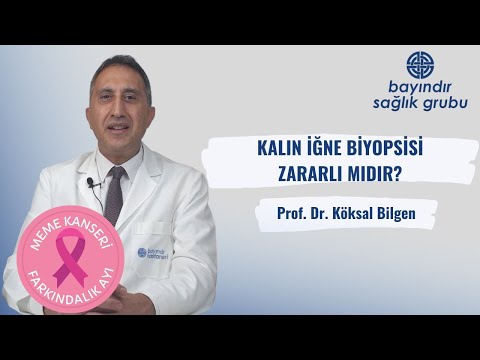



.png)

.png)













Share this listing