


Selecting the right medical facility for advanced eye care and laser surgery procedures in India requires a deep understanding of modern clinical safety protocols and infection control guidelines. Medical technology has advanced significantly, making ophthalmology treatments more precise, yet the overarching priority remains strict adherence to hygiene and patient safety. Facilities prioritizing high standards utilize extensive measures ranging from contactless patient registration to highly specialized surgical environments. These systems are designed to mitigate the risks of cross-contamination and ensure optimal clinical outcomes for individuals seeking vision correction or therapeutic interventions.
A meticulously structured clinical environment minimizes airborne and surface-level pathogens. Ophthalmology practices are particularly vulnerable to transmission risks due to the close physical proximity required between the medical practitioner and the patient during routine examinations. Consequently, leading clinics have completely re-engineered their operational frameworks. By integrating digital health screening applications, automated sanitization stations, and advanced air filtration systems within operation theaters, these institutions deliver world-class medical care without compromising on rigorous health safeguards.
Video Chapters & Quick Navigation
- 1. Growth of Advanced Eye Care and Laser Surgery Procedures in India
- 2. Pre-Visit Instructions and Digital Health Screening Protocols
- 3. Implementing No-Contact Screening Methods at Clinic Entrances
- 5. Maintaining Stringent Social Distancing in Clinic Waiting Areas
- 6. Patient Safety at Registration and Zero Contact Cash Transactions
- 7. Thorough Disinfection of Outpatient Department (OPD) Equipment
- 8. Microorganism-Free Operation Theaters with HEPA Filters
- 9. Remote Work Solutions for a Less Crowded Healthcare Environment
1. Growth of Advanced Eye Care and Laser Surgery Procedures in India
The medical landscape for vision correction and ocular disease management has transformed drastically over the past decade. Seeking advanced eye care and laser surgery procedures in India provides patients with access to state-of-the-art medical technologies at highly competitive costs. Medical practitioners utilize cutting-edge diagnostic and surgical tools, delivering treatments that range from routine refractive error corrections to complex macular degeneration therapies.
International and domestic patients frequently travel for specialized procedures like specialized LASIK (Laser-Assisted In Situ Keratomileusis), SMILE (Small Incision Lenticule Extraction), and computer-guided cataract phacoemulsification. The success rates of these delicate procedures depend heavily on the clinical infrastructure supporting the surgical teams. Top-tier facilities have completely revamped their daily operations to reflect international best practices regarding sanitary conditions and environmental sterility.
Setting the Standard for Medical Excellence
Quality assurance in ophthalmology goes beyond the immediate surgical intervention. A comprehensive approach involves rigorous pre-operative evaluations and meticulously monitored post-operative recovery stages. Maintaining a zero-infection environment ensures that patients recovering from corneal incisions or intraocular lens implantations heal without complications.
2. Pre-Visit Instructions and Digital Health Screening Protocols
Proactive risk management begins long before a patient steps through the clinic doors. Establishing strict pre-visiting instructions for patients sets a foundational layer of security for both the medical staff and other visitors. Clinics mandate specific behavioral guidelines, such as limiting the number of accompanying attendants and enforcing the use of standardized respiratory masks.
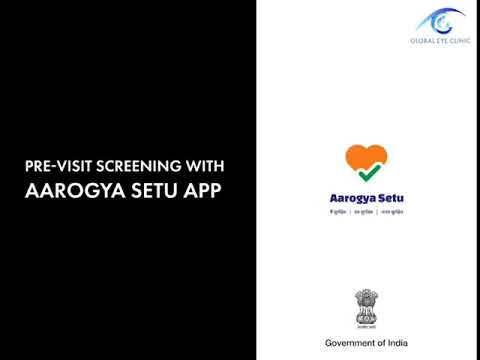
Digital health tracking applications play a pivotal role in this initial safety phase. As demonstrated at [00:09], pre-visit screening utilizing platforms like the Aarogya Setu App allows clinic administrators to verify the health status and potential exposure history of incoming patients. This digital footprint helps clinics manage appointment schedules dynamically and isolate high-risk individuals prior to their arrival.
Patient Compliance and Communication Strategies
- Symptom Reporting: Patients must accurately report any febrile illnesses, coughs, or respiratory distress during the booking phase.
- GPS and Contact Tracing: Enabling application-based contact tracing provides a verifiable method to ensure patients have not recently traversed containment zones.
- Minimal Belongings: Restricting the personal items brought into the clinical setting reduces the available surface area for potential fomite transmission.
3. Implementing No-Contact Screening Methods at Clinic Entrances
The primary point of entry acts as the most critical bottleneck for infection control within a medical facility. Transitioning to no-contact screening methods completely eliminates the physical interaction historically required during preliminary temperature checks. Utilizing calibrated infrared thermometers, as seen at [00:13], trained personnel assess the thermal signatures of visitors from a safe distance.
Following thermal evaluation, immediate hand sanitization is enforced. The deployment of no-contact sensor sanitizers [00:16] prevents the cross-contamination typically associated with manual pump dispensers. By utilizing motion-activated technology, the clinic guarantees that every individual entering the premises maintains clean hands without touching any shared surfaces.
4. Maintaining Stringent Social Distancing in Clinic Waiting Areas
Optimizing the spatial layout of waiting rooms is a fundamental strategy in mitigating airborne transmission vectors. Maintaining social distancing at clinic waiting areas requires a deliberate rearrangement of seating furniture and clear visual cues. As highlighted at [00:19], specific seats are visibly marked to remain unoccupied, ensuring adequate physical separation between patients waiting for their consultations.
Advanced scheduling algorithms further support these physical modifications. By spacing out appointment slots and reducing the volume of concurrent bookings, clinics prevent overcrowding during peak hours. This structured approach allows the facility's air conditioning and ventilation systems to effectively cycle the ambient air without being overwhelmed by a high density of occupants.
Redesigning the Patient Flow Experience
Directing patient traffic systematically prevents accidental clustering in hallways and diagnostic rooms. Floor decals and designated waiting zones guide individuals smoothly from the entrance to the registration desk, and subsequently to the examination areas. This continuous flow prevents static congregations and enhances the overall efficiency of the medical practice.
5. Patient Safety at Registration and Zero Contact Cash Transactions
The registration desk traditionally represents a high-frequency touchpoint where documents, identification cards, and payment methods are continuously exchanged. Enhancing safety at registration involves erecting physical barriers, such as transparent acrylic shields, to block respiratory droplets between administrative staff and patients [00:22]. Staff members are equipped with appropriate personal protective equipment (PPE), including face shields and medical-grade masks.
The financial interaction process has also undergone a radical transformation. Implementing zero contact cash transactions [00:25] is crucial for limiting the handling of physical currency, which is known to harbor bacteria and viruses. Patients are encouraged to utilize digital wallets, unified payment interfaces (UPI), and contactless credit or debit cards, streamlining the billing process while strictly maintaining sanitary standards.
Handling Inevitable Physical Exchanges
When physical currency or documents must be exchanged, specialized transfer trays are utilized to prevent direct hand-to-hand contact. These trays undergo continuous sanitization protocols throughout the operational day. Electronic medical records (EMR) have largely replaced paper files, further reducing the need to physically transfer information between different departments within the clinic.
6. Thorough Disinfection of Outpatient Department (OPD) Equipment
Ophthalmic examinations demand the use of highly precise, close-contact diagnostic machinery. Ensuring that cash and documents are disinfected [00:28] is just the first step; the true clinical challenge lies in the rapid and thorough sterilization of Outpatient Department (OPD) equipment. Devices such as slit lamps, autorefractors, and tonometers come into direct proximity with the patient's face, necessitating uncompromising cleaning regimens.
Dedicated staff members execute OPD equipment disinfection [00:31] between every single consultation. This process involves the application of specialized antimicrobial wipes and UV wand sterilizers that neutralize pathogens without damaging the sensitive optical lenses of the machinery. This thorough cleaning [00:35] guarantees a pristine environment for the subsequent patient.
Safe Patient Check-Up Dynamics
During the actual consultation, maintaining a safe patient check up [00:37] is paramount. Ophthalmologists employ large breath shields mounted directly onto the slit lamps to act as a physical barrier. Furthermore, conversations regarding diagnoses and treatment plans are conducted while adhering strictly to social distancing protocols [00:40], providing medical counseling without close-range exposure.
| Clinical Element | Standard Eye Clinic Protocol | Advanced Safety Protocol Clinic |
|---|---|---|
| Patient Registration | Manual form filling, paper exchange | Digital EMR, UV-disinfected documents |
| Payment Processing | Physical cash handling | Zero-contact digital transactions via UPI/Cards |
| Diagnostic Equipment | End-of-day bulk cleaning | Immediate UV wand & alcohol wipe post-use |
7. Microorganism-Free Operation Theaters with HEPA Filters
The pinnacle of medical safety resides within the surgical suites. Operating on the delicate structures of the human eye requires an environment completely devoid of microscopic contaminants. Investing in an advanced microorganism-free Operation Theater (OT) [00:43] is an indispensable requirement for performing procedures like cataract extraction or complex retinal surgeries. These specialized rooms operate under positive air pressure, preventing external, unpurified air from seeping into the sterile field when doors are opened.
The cornerstone of this environmental control is the integration of HEPA (High-Efficiency Particulate Air) filters coupled with UV light within the Air Handling Units (AHU). HEPA filters are scientifically validated to capture 99.97% of airborne particles as small as 0.3 microns, effectively trapping dust, bacteria, and viral aerosols. The continuous circulation of air through these dense filtration matrices ensures that the ambient air within the surgical suite remains impeccably clean.
The Mechanism of UV Light in Air Handling Units (AHU)
While HEPA filters physically trap contaminants, Ultraviolet Germicidal Irradiation (UVGI) neutralizes their genetic material. By installing powerful UV-C lights within the AHU, any biological pathogens that navigate the initial filtration stages are rendered inert and unable to replicate. This dual-action purification strategy is the gold standard for infection control in modern medical engineering, drastically reducing the incidence of post-operative endophthalmitis and other severe surgical complications.
8. Remote Work Solutions for a Less Crowded Healthcare Environment
Managing the density of human traffic within the clinic extends beyond patient scheduling; it also involves optimizing the deployment of medical administrative staff. Facilitating remote work from home for non-clinical employees results in a significantly less crowded clinic [00:51]. Personnel responsible for quality management, data entry, and backend registration processes can perform their duties efficiently off-site using secure, encrypted medical networks.
This reduction in on-site staff dramatically lowers the overall risk of community transmission within the facility. It frees up physical space, allowing for more expansive social distancing measures in common areas and break rooms. Operating consistently from Monday to Saturday, 9am to 6pm [00:56], these refined operational strategies ensure that the clinic delivers uninterrupted, premium eye care services while fiercely protecting the well-being of every individual involved.
Ready to Schedule Your Secure Eye Consultation?
Experience world-class medical expertise with uncompromising safety protocols. Connect with leading specialists for advanced eye care and laser surgery procedures in India today.
Get Free QuoteView Full Video Transcript & Timestamps
[00:00] Global Eye Clinic
[00:01] we are open and how #staysafe
[00:04] Pre-visiting Instructions for Patients
[00:09] PRE-VISIT SCREENING WITH AAROGYA SETU APP
[00:13] SCREENING BEFORE ENTRY (NO-CONTACT METHOD)
[00:16] NO CONTACT SENSOR SANITISER
[00:19] Social Distancing at Clinic Waiting Area
[00:22] Safety at Registration
[00:25] Zero Contact Cash Transactions
[00:28] Cash & Documents Disinfected
[00:31] OPD Equipment Disinfected
[00:35] Thorough Cleaning
[00:37] Safe Patient check up
[00:40] Social Distancing while counselling patients
[00:43] Advanced microorganism free OT with HEPA filters and UV light in AHU
[00:51] Work from home for a less crowded clinic (Quality Management, Data Entry, Registration)
[00:56] Working hours Monday to Saturday 9am to 6pm
[00:59] www.globaleyeclinic.com






.jpg)
.png)
.png)
.png)








Share this listing