


Welcome to your ultimate resource for understanding the life-changing benefits of modern vision restoration procedures. If you or a loved one are experiencing blurred vision, exploring safe and effective cataract surgery in India could be the perfect solution for long-term clarity. This medical intervention is globally recognized for its remarkable success rates and its unparalleled ability to completely restore visual acuity. Patients from around the world are increasingly seeking top-tier medical facilities that provide specialized eye care at incredibly affordable prices.
In this detailed guide, we will thoroughly explore the critical aspects of advanced vision correction for global patients. We will cover the early warning signs of lens clouding, the sophisticated diagnostic processes, and the state-of-the-art surgical techniques used by leading international ophthalmologists. You will also discover the inspiring story of a patient who traveled internationally to successfully regain his sight. Whether you are researching treatment options or actively preparing for an upcoming procedure, this comprehensive information will empower you to make the best healthcare decisions for your eyes.
Video Chapters & Quick Navigation
Understanding Early Cataract Surgery Intervention for Seniors
Cataracts represent one of the most prevalent causes of severe vision impairment among adults over the age of fifty. This degenerative condition involves the gradual clouding of the eye's natural crystalline lens, leading to a progressive and noticeable decline in visual acuity. Recognizing the early signs and opting for prompt medical evaluation can significantly improve the long-term outcomes of any restorative surgical intervention.
Many individuals make the critical mistake of delaying their visit to an eye specialist until their daily activities are severely disrupted. However, early detection allows ophthalmologists to monitor the structural progression carefully and plan the absolute optimal time for surgical correction. Advanced medical facilities abroad offer comprehensive diagnostic tools that detect microscopic changes in the lens long before significant functional vision loss occurs.
Choosing to undergo a proactive vision correction procedure minimizes the risk of complications heavily associated with hyper-mature cataracts. When the clouded lens is removed earlier in its development, the surgical extraction is generally smoother, requiring less ultrasonic energy. This minimally invasive approach invariably leads to a faster healing period and a much quicker return to normal, independent living.
Common Symptoms Indicating You Need Cataract Treatment Abroad
The onset of this specific visual impairment is usually quite insidious, meaning the troubling symptoms develop so gradually that many patients fail to notice the initial changes. One of the primary indicators that you might require specialized eye treatment is a persistent blurring or dimming of your overall field of vision. Colors may also begin to appear drastically faded or take on a distinctly yellowish tint, making it difficult to distinguish between subtle, everyday shades.
Another highly common symptom reported by prospective patients worldwide is an increased, painful sensitivity to bright light and significant glare, especially during nighttime driving. You may notice disturbing halos appearing around streetlights and oncoming headlights, which can make navigating roads after dark inherently dangerous and anxiety-inducing. If you find yourself constantly needing much brighter lighting to read or perform detailed close-up tasks, it is crucial to schedule a professional ophthalmic assessment.
Frequent and frustrating changes in your eyeglass or contact lens prescription can also serve as a strong warning sign of a developing cataract. While newly prescribed glasses might temporarily improve your sight, they fundamentally cannot correct the underlying physical opacity of the crystalline lens. Ultimately, surgical removal remains the only definitive, medically proven cure for restoring clear and unobstructed vision.
The Risks of Delaying Vision Correction Procedures in Adults
Postponing necessary medical treatment can ultimately lead to a severe condition known as a hyper-mature cataract, where the eye's lens becomes exceptionally dense and physically hard. This highly advanced state makes the surgical extraction process much more complex and significantly increases the inherent risk of intraoperative complications. Furthermore, a swollen, untreated lens can physically block the natural drainage of fluid within the eye, potentially causing dangerous secondary glaucoma.
As visual acuity continues to decline over time, affected individuals face a much higher likelihood of experiencing accidental falls, dangerous fractures, and other serious physical injuries. The devastating loss of independence associated with severe visual impairment can also have a profound and lasting impact on a patient's mental health and overall quality of life. Timely medical intervention ensures that you can continue enjoying your favorite hobbies and maintaining a highly active, fulfilling lifestyle.
- Blurred or Clouded Vision: Experiencing a gradual but steady loss of visual sharpness.
- Increased Light Sensitivity: Feeling physical discomfort when exposed to bright indoor or outdoor environments.
- Poor Night Vision: Having extreme difficulty navigating low-light conditions safely.
- Frequent Prescription Changes: Dealing with the constant, frustrating need for new eyeglasses.
Real Patient Experience: Successful Cataract Surgery Journey
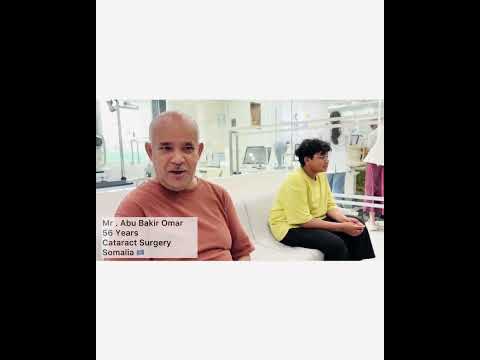
Understanding the clinical aspects of a major medical procedure is incredibly important, but hearing directly from someone who has successfully navigated the journey provides invaluable reassurance. Mr. Abu Bakir Omar, a 56-year-old patient originally from Somalia, recently traveled extensively to access high-quality medical care for his rapidly deteriorating eyesight. His authentically documented experience serves as a powerful, real-world testament to the absolute effectiveness of modern ophthalmic treatments.
At [00:00] in his heartfelt video testimonial, Mr. Omar introduces himself and discusses his initial arrival at the highly regarded Global Clinic Eye Surgery center. He candidly shares that upon initially arriving at the medical facility, he was struggling with significant vision problems that severely affected his daily life. His proactive decision to seek professional medical help abroad perfectly highlights the growing global trend of patients traveling for superior medical expertise.
Fortunately, the highly skilled and compassionate medical team was able to expertly address his condition promptly and effectively. By [00:11], he joyfully and confidently reports that the attending doctor has completely solved his vision problem, allowing him to finally see clearly once again. He visibly expresses immense satisfaction with the comprehensive care he received, enthusiastically praising the dedication of the hospital staff.
Concluding his deeply inspiring message, Mr. Omar offers a strong and genuine recommendation to others suffering from similar debilitating visual impairments. At [00:21], he strongly advises anyone who is truly determined to improve their eyesight to graciously welcome the exceptional services provided by the global clinic. His undeniably successful recovery story is a perfect example of exactly why pursuing international eye care can be a profoundly life-changing decision.
Step-by-Step Breakdown of the Modern Cataract Surgery Procedure
Modern cataract surgery is widely celebrated as a true marvel of contemporary medicine, typically completed entirely on an outpatient basis within a mere matter of minutes. The entire surgical process is meticulously designed to ensure maximum patient comfort and uphold the absolute highest possible clinical safety standards. Before the operation officially begins, the dedicated surgical team administers specialized, localized anesthetic eye drops to completely numb the area, ensuring a virtually painless experience.
The most widely utilized and respected technique today is known as phacoemulsification, a highly advanced method that requires only a microscopic, self-sealing incision. During this crucial phase, the skilled ophthalmic surgeon carefully inserts a tiny ultrasound probe into the eye to gently break the clouded lens into minuscule fragments. These microscopic fragments are then meticulously suctioned out, intentionally leaving the clear posterior capsule perfectly intact to safely support the new artificial lens.
In certain structurally complex cases, medical specialists may actively opt for highly advanced laser-assisted technology to create the initial incisions and soften the natural lens with unparalleled precision. This customized, high-tech approach can significantly enhance the overall accuracy of the procedure and potentially reduce the already brief recovery time. Regardless of the specific cutting-edge method used, the primary objective strictly remains the complete and totally safe removal of the opaque natural lens.
Comprehensive Pre-Operative Assessment for Eye Surgery
Long before you ever enter the sterile operating room, a highly thorough pre-surgical evaluation is absolutely mandatory to customize the treatment plan to your unique anatomical needs. Ophthalmologists routinely utilize advanced diagnostic imaging, such as precise optical coherence tomography, to flawlessly map the exact dimensions and curvature of your eye. This critical, highly detailed data is meticulously used to calculate the exact focusing power mathematically required for your new artificial implant.
During this comprehensive clinical check-up, your complete medical history, current daily medications, and any underlying systemic health conditions will be carefully reviewed by the medical staff. Patients are quite often advised to temporarily discontinue certain specific blood-thinning medications to dramatically minimize the risk of bleeding during the procedure. This meticulous, uncompromised preparation is undeniably the cornerstone of achieving optimal visual outcomes and ensuring absolute patient safety.
Intraocular Lens (IOL) Implantation Options for Patients
Once the severely clouded natural lens is successfully removed, it absolutely must be replaced with a crystal-clear artificial substitute known universally as an Intraocular Lens (IOL). The careful selection of the appropriate IOL is a deeply critical decision that will permanently and dramatically define the quality of your post-operative vision. Today's highly innovative medical market proudly offers a wide array of sophisticated lens technologies explicitly designed to accommodate various unique lifestyle requirements.
Standard monofocal lenses are undeniably the most traditional and commonly utilized option, providing excellent, unmatched clarity at a single set distance, typically optimized for faraway viewing. Patients who ultimately choose this highly reliable basic implant will still likely require reading glasses for detailed close-up activities such as using a smartphone or reading a book. Despite this minor limitation, monofocal lenses remain incredibly popular worldwide due to their proven reliability and frequent coverage by most standard insurance plans.
For those actively seeking much greater visual independence, premium multifocal and accommodating lenses offer a truly revolutionary and liberating alternative. These advanced, high-tech implants are ingeniously engineered with multiple focal zones, easily allowing patients to see clearly at near, intermediate, and far distances simultaneously. Additionally, highly specialized toric lenses are widely available to perfectly correct pre-existing corneal astigmatism, ensuring consistently crisp and distortion-free vision across all focal ranges.
| Intraocular Lens Type | Primary Visual Benefit | Best Suited Candidate |
|---|---|---|
| Standard Monofocal IOL | Offers crystal-clear vision at one single, predetermined distance. | Patients perfectly comfortable wearing traditional reading glasses. |
| Premium Multifocal IOL | Provides dynamic clarity seamlessly across near, intermediate, and far distances. | Highly active individuals desperately wanting freedom from all spectacles. |
| Advanced Toric IOL | Specifically and accurately corrects underlying corneal astigmatism. | Patients currently diagnosed with significant pre-existing astigmatism. |
Essential Tips for a Smooth Cataract Surgery Recovery Process
Following your highly successful vision restoration procedure, adhering strictly to your surgeon's specific post-operative instructions is absolutely vital for achieving the very best possible outcome. While most patients excitedly experience a noticeably dramatic improvement in their eyesight within twenty-four hours, complete cellular healing can actually take several full weeks. During this deeply critical period, your sensitive eye inherently needs a highly stable and completely sterile environment to properly integrate the new artificial lens.
You will inevitably be prescribed a strict regimen of medicated eye drops, typically including powerful antibiotics to prevent infection and anti-inflammatory agents to heavily reduce internal swelling. It is absolutely imperative that you meticulously apply these prescribed drops exactly as directed, even if your vision happily feels perfectly clear and completely comfortable. Foolishly skipping doses or intentionally terminating the medication prematurely can severely compromise the delicate healing process and openly invite unwanted, dangerous complications.
Diligently protecting your healing eyes from direct physical trauma and harsh environmental irritants is another incredibly crucial aspect of the overarching recovery journey. Patients are strongly and repeatedly advised to consistently wear a specialized protective eye shield while sleeping during the first week to prevent accidental, damaging rubbing. Furthermore, faithfully wearing high-quality, polarized sunglasses when outdoors will perfectly shield your newly sensitive eyes from harsh ultraviolet rays and painfully bright glares.
Activities to Avoid During the Eye Healing Phase
To successfully prevent unnecessary and potentially harmful pressure spikes directly within the eye, you absolutely must refrain from strenuous physical activities, heavy lifting, and intense exercise routines. Simply bending over at the waist can drastically increase intraocular pressure, so it is universally deemed best to keep your head elevated as much as humanly possible. Even standard, simple household chores that inherently require vigorous bodily movement should be promptly delegated to family members until your doctor officially provides medical clearance.
Additionally, strictly keeping tap water, irritating soap, and chemical shampoo out of the recently treated eye is profoundly essential to actively ward off potentially blinding bacterial infections. You absolutely should avoid public swimming pools, communal hot tubs, and humid saunas for at least a full calendar month strictly following the operation. By exercising diligent patience and faithfully following these remarkably straightforward guidelines, you can seamlessly ensure a flawless recovery and joyfully enjoy your newly restored vision for decades.
Selecting Cost-Effective Medical Tourism for Eye Care
The steeply rising, often prohibitive costs of essential healthcare in Western nations have rapidly driven countless individuals to actively seek highly viable medical alternatives far beyond their borders. Specialized medical tourism for eye care treatments has exponentially exploded in global popularity, generously offering broad access to world-class medical facilities at a mere fraction of domestic prices. International destinations universally known for their profound healthcare excellence routinely provide highly transparent pricing models that explicitly encompass everything from the initial detailed consultation to vital post-operative medications.
Many prestigious international clinics are fully and rigorously accredited by renowned global organizations, staunchly ensuring that their unwavering standards of clinical safety and hygiene consistently meet or exceed those found in the United States. These top-tier, globally recognized medical centers actively and selectively recruit highly trained, elite ophthalmologists who frequently hold prestigious international certifications and boast decades of complex surgical experience. Global patients can confidently and affordably receive cutting-edge, life-altering treatments without ever having to compromise on the absolute fundamental quality of clinical care.
Beyond the truly significant and undeniable financial savings, purposefully traveling for medical purposes gracefully offers the unique, added opportunity to peacefully recover in a beautifully serene, stress-free environment. Premium international healthcare packages very often include highly dedicated patient concierges, wonderfully luxurious accommodations, and seamlessly coordinated, private airport transfers. This wonderfully holistic and attentive approach to international patient care strongly ensures a perfectly smooth and deeply comfortable journey, completely transforming the typically stressful traditional hospital experience.
Key Factors in Selecting a Global Eye Clinic Destination
When diligently researching potential overseas medical destinations, thoroughly investigating the specific clinic's proven track record and official international accreditation status is absolutely paramount to your safety. Look exclusively for modern centers that proudly utilize the absolute latest FDA-approved surgical equipment and globally recognized, premium intraocular lens brands. Carefully reviewing authentically documented patient testimonials and independently verified surgical success rates can easily provide a very clear, highly accurate picture of the facility's overall clinical reliability.
Completely transparent and highly responsive communication is another undeniably vital factor to carefully consider long before officially committing to an overseas medical surgical journey. The absolute best international clinics boldly offer fully dedicated international patient departments featuring highly fluent, English-speaking staff to expertly facilitate clear and continuous daily dialogue. Ensuring that you confidently have direct, unfettered access to your chosen surgeon for virtual, face-to-face consultations prior to traveling will rapidly build profound trust and easily alleviate any lingering pre-surgical anxieties.
Frequently Asked Questions About Safe Cataract Surgery Procedures
Navigating the sheer, overwhelming wealth of medical information regarding critical visual health can sometimes feel deeply confusing and profoundly overwhelming for highly prospective patients. Many individuals naturally harbor completely valid, completely natural anxieties and highly specific questions regarding the overarching safety, total efficacy, and ultimate longevity of modern lens replacement treatments. To wonderfully help gracefully ease your worried mind, we have meticulously compiled highly detailed, medically accurate answers to some of the absolute most common inquiries frequently presented to leading global ophthalmologists.
A remarkably frequently asked medical question is whether the brief surgical intervention physically involves any significant, noticeable pain or lingering discomfort. Prospective patients are profoundly and instantly relieved to happily discover that the routine administration of highly advanced topical anesthetics flawlessly ensures a virtually completely painless experience throughout the entire quick operation. While a very mild, fleeting sensation of physical pressure is deemed completely normal, severe, sharp pain is extraordinarily rare and starkly indicates a crucial need for immediate, urgent medical assessment.
Another highly common, incredibly valid patient concern is the genuine possibility of the specific visual impairment somehow mysteriously returning much later in life. It is deeply important to fully understand that an artificial, synthetic intraocular lens absolutely cannot physically develop a new cataract, meaning the original underlying condition is cured entirely and permanently. However, some specific patients may naturally experience a subsequent, highly mild clouding of the remaining lens capsule, a completely normal biological occurrence that is easily and swiftly treated with a brief, entirely painless outpatient laser procedure.
Ready to Restore Your Vision with Top Global Specialists?
Take the vital first step towards achieving crystal-clear eyesight. Connect seamlessly with highly accredited international eye clinics today and receive a perfectly customized treatment plan tailored specifically to your exact visual needs.
Get Free QuoteView Full Video Transcript
[00:00] Good evening. I came to this hospital at the Global Clinic Eye Surgery.
[00:08] When I came, I was having a little bit of a problem.
[00:11] But doctor has solved my whole problem.
[00:15] Now I can see and I'm happy with this hospital of the Global Clinic Surgery.
[00:21] And I would advise you who really insists to make his eyes or to help his eyes,
[00:28] welcome to a global eye clinic service, welcome again.



.jpg)
.png)
.png)
.png)








Share this listing