


Receiving a urological diagnosis can be a highly stressful experience, prompting patients to seek out the most effective and safest treatment pathways available globally. For individuals exploring international healthcare options, undergoing robotic prostate cancer surgery in Turkey represents a transformative approach that combines world-class surgical expertise with state-of-the-art medical technology. Historically, treating malignant growths within the pelvic region required highly invasive techniques that often forced patients to choose between life-saving tumor eradication and permanent, life-altering side effects. Today, rapid advancements in minimally invasive surgical platforms have completely rewritten the standard of care for urological malignancies.
Modern urooncology prioritizes not just the complete removal of cancerous tissues, but also the meticulous preservation of a patient's post-operative quality of life. Through the integration of advanced robotic-assisted laparoscopic systems, highly skilled surgeons can navigate the complex anatomy of the male pelvis with unprecedented precision. This paradigm shift has dramatically lowered the historical risks associated with pelvic surgeries, particularly regarding urinary control and sexual function. As medical infrastructure continues to evolve, patients worldwide are discovering that elite-level academic proficiency and immediate access to cutting-edge medical technologies are no longer confined to North America or Western Europe, making international medical travel a highly viable and attractive option for specialized oncological care.
Video Chapters & Quick Navigation
Understanding Prostate Health: Myths vs. Clinical Reality
A fundamental misconception regarding men's health is the assumption that any issue related to the prostate gland automatically signifies a severe or life-threatening condition. As noted in the clinical discussion at [00:01], the mere presence of a prostate gland or common age-related changes do not inherently mean a patient is suffering from a disease that requires aggressive intervention. The prostate is a small, walnut-sized gland that forms a crucial part of the male reproductive system, responsible for producing seminal fluid. Over time, it is entirely biologically normal for this gland to undergo structural changes and gradual enlargement.
This natural enlargement is medically categorized as Benign Prostatic Hyperplasia (BPH). BPH is a non-cancerous proliferation of prostate cells that can press against the urethra, causing restrictive urinary symptoms. While these symptoms can be frustrating and impact daily routines, they are vastly different from the aggressive cellular mutations characteristic of prostate cancer. Understanding this distinction is the first critical step in patient education. When patients experience increased urinary frequency, weakened flow, or nocturnal waking, these are signals to consult a urologist for proper diagnostic screening rather than immediate cause for panic. Accurate differentiation between benign growth and malignant tumors dictates the entire trajectory of the clinical response.
Diagnostic Distinctions in Modern Urology
To accurately distinguish between standard benign enlargement and potential malignancies, specialists rely on a combination of specific diagnostic tools. Digital rectal exams (DRE) remain a baseline physical assessment, but modern protocols heavily integrate Prostate-Specific Antigen (PSA) blood tests. A mildly elevated PSA level can be indicative of simple inflammation, infection (prostatitis), or BPH. However, continuously rising PSA velocity or abnormal free-to-total PSA ratios will prompt further, highly precise investigative measures. The goal of these comprehensive evaluations is to avoid unnecessary medical treatments while swiftly identifying cases that genuinely require oncological intervention.
The Importance of Early Detection and Evolving Patient Awareness
Historically, a significant challenge within urooncology was the delayed presentation of patients to medical facilities. As highlighted at [00:13], prostate patients frequently sought medical attention only after their symptoms had become severe or intractable. By the time noticeable physical symptoms of prostate cancer manifest—such as deep bone pain, severe urinary blockage, or hematuria—the disease has often advanced beyond the localized stages. Late-stage diagnoses severely limit the availability of curative treatment options, shifting the clinical focus from complete eradication to mere symptom management and disease deceleration.
Fortunately, the landscape of prostate cancer screening has undergone a massive transformation. Increased societal awareness campaigns have educated men about the silent nature of early-stage prostate tumors. Modern healthcare systems have heavily prioritized making diagnostic services highly accessible and economically viable, dramatically lowering the financial and logistical barriers to routine check-ups. Furthermore, the modern patient possesses a much stronger desire for maintaining a high quality of life as they age, driving proactive health-seeking behaviors. This cultural shift toward preventative medicine is resulting in localized, highly treatable tumors being caught years before they can spread to surrounding pelvic lymph nodes or skeletal structures.
Advanced Imaging and Targeted Biopsies
When early screening indicates a potential abnormality, the diagnostic pathway moves to advanced imaging rather than immediate blind biopsies. Multi-parametric Magnetic Resonance Imaging (mpMRI) has revolutionized how urologists visualize the prostate gland. This advanced imaging maps the exact location, volume, and density of suspicious lesions. If a lesion appears highly suspicious, surgeons can perform an MRI-Ultrasound fusion biopsy. This technique merges real-time ultrasound with detailed MRI maps, allowing the surgical needle to precisely target the exact tissue in question, vastly improving the accuracy of the cancer diagnosis and grading.
- Routine PSA Testing: A simple blood test that serves as the first line of defense in identifying prostate abnormalities long before symptoms appear.
- Multi-Parametric MRI: Non-invasive, high-definition imaging that maps out suspicious lesions, drastically reducing the need for unnecessary, blind tissue biopsies.
- Active Surveillance: A monitored protocol for low-risk, slow-growing tumors that safely delays invasive treatments until absolutely clinically necessary.
Primary Goals of Modern Prostate Treatment Approaches
Once a definitive diagnosis of localized prostate cancer is established, formulating a treatment plan requires balancing aggressive disease management with physiological preservation. As discussed at [00:30], there are two distinct, non-negotiable pillars in contemporary prostate cancer therapy. The first and most critical objective is the complete oncological control of the disease. This means surgically extracting the entire tumor along with a safe margin of surrounding healthy tissue to ensure zero malignant cells are left behind in the pelvic bed. Achieving clear surgical margins is the ultimate marker of oncological success and the primary defense against biochemical recurrence.
The second pillar, which has gained equal prominence in modern medical literature, is safeguarding the patient's long-term quality of life following the intervention. Historically, radical prostatectomies were blunt, highly invasive procedures. While they successfully removed the cancer, they frequently inflicted severe collateral damage on the delicate neurovascular bundles and sphincter muscles surrounding the prostate. Today, a surgical outcome is only considered truly successful if it cures the cancer while simultaneously allowing the patient to return to their normal daily life without debilitating physical handicaps. The integration of technology has made this dual-goal approach a consistent reality for patients.
The Robotic Surgery Revolution in Urooncology
The transition from traditional open surgery to minimally invasive techniques represents a defining milestone in medical history. In the field of urooncology, this evolution is described at [00:41] as a literal revolution. Robotic-assisted laparoscopic prostatectomy (RALP) utilizes advanced platforms, most notably the Da Vinci Surgical System, to grant surgeons superhuman dexterity and vision. Rather than making a massive incision from the navel to the pubic bone, the surgeon operates through a few tiny keyhole incisions, inserting specialized, multi-articulated robotic instruments and a high-definition 3D camera deep into the pelvic cavity.
It is vital to understand that the robot does not perform the surgery autonomously. The system is entirely commanded by an expert urologist seated at an ergonomic console a few feet away from the operating table. The console translates the surgeon's hand movements in real-time, completely filtering out natural human hand tremors and scaling micro-movements into ultra-precise surgical actions inside the patient. The 3D camera provides up to 10x magnification, illuminating the microscopic blood vessels and fine nerve fibers that are virtually invisible to the naked eye during traditional open procedures. This visual and mechanical superiority is the core reason behind the dramatic improvement in patient outcomes.
Mechanics of the Da Vinci Surgical Platform
The primary advantage of robotic instruments is their Endowrist technology. Traditional straight-stick laparoscopic tools lack the ability to articulate, severely limiting the surgeon's angle of approach within the tight, bony confines of the male pelvis. Robotic instruments feature internal joints that mimic and actually exceed the natural range of motion of the human wrist. This allows the surgeon to perform highly complex suturing, delicate tissue dissection, and sharp anatomical reconstruction at incredibly awkward angles with total structural stability, resulting in significantly less internal trauma and bleeding.
Open Surgery vs. Robotic Prostatectomy: Comparing the Risks
One of the most profound metrics demonstrating the superiority of robotic platforms is the reduction in severe post-operative complications. Urinary incontinence is widely regarded as the most deeply feared side effect of prostate removal. The prostate gland sits directly below the bladder and surrounds the urethra, sharing structural boundaries with the urinary sphincter. According to clinical data referenced at [00:47], traditional open methods carry a distinct and concerning risk of urinary incontinence, typically hovering between 10% to 15%. In traditional surgery, the massive bleeding and poor visibility often lead to inadvertent damage to the sphincter complex.
Conversely, the application of robotic technology has radically suppressed this risk profile. With the advanced optical magnification and precise, bloodless dissection afforded by the robotic platform, the incidence of long-term urinary incontinence drops sharply. The data indicates that robotic methods reduce this risk to below 3%, and in the hands of highly specialized, high-volume surgical centers, this complication rate often falls to less than 1%. This staggering statistical difference is the primary reason why open radical prostatectomies are rapidly being phased out in advanced medical hubs in favor of robotic-assisted techniques.
Surgical Approach Comparison
| Surgical Metric | Traditional Open Surgery | Robotic-Assisted Surgery |
|---|---|---|
| Incontinence Risk | 10% - 15% long-term risk | Under 3% (often <1%) |
| Incision Size | Large lower abdominal vertical incision | 5-6 small keyhole incisions |
| Hospital Stay | Typically 3 to 7 days | Usually 1 to 2 days |
| Blood Loss | High (transfusions frequently required) | Minimal (transfusions very rare) |
Preserving Quality of Life After Prostate Cancer Surgery in Turkey
The true metric of success in a modern prostatectomy extends far beyond the immediate removal of the malignancy. As the transcript outlines at [01:00], robotic technology has elevated the surgical conversation into entirely new realms of physiological preservation. The trifecta of a successful radical prostatectomy encompasses oncological control, urinary continence, and the preservation of erectile function. In traditional surgery, protecting the cavernous nerves responsible for erectile function was incredibly difficult because these microscopic nerves cling tightly to the outer capsule of the prostate gland like a web.
By leveraging the ultra-high magnification of the robotic camera, surgeons can meticulously peel these delicate neurovascular bundles away from the prostate tissue before extracting the gland. This highly intricate "nerve-sparing" technique requires immense skill and a perfectly clear, bloodless surgical field, which the robotic platform expertly facilitates by maintaining constant intra-abdominal gas pressure. Patients who undergo a successful nerve-sparing robotic prostatectomy experience drastically accelerated timelines for the return of their natural sexual function, heavily mitigating the psychological and emotional impacts traditionally associated with prostate cancer treatments.
The Post-Operative Recovery Timeline
Because robotic surgery minimizes massive tissue trauma and muscular disruption, the overall patient recovery timeline is remarkably rapid. Most patients are ambulatory within hours of waking from anesthesia and are routinely discharged from the hospital within 24 to 48 hours. The urinary catheter, necessary to allow the newly reconstructed connection between the bladder and urethra to heal, is typically removed within 7 to 10 days. While minor, temporary stress incontinence is common in the initial weeks post-catheter removal, aggressive pelvic floor rehabilitation (Kegel exercises) usually restores full urinary control rapidly. Comprehensive oncological monitoring via PSA blood tests begins a few weeks post-surgery and continues long-term to ensure sustained disease-free status.
Turkey's Global Standing in Advanced Urooncologic Treatments
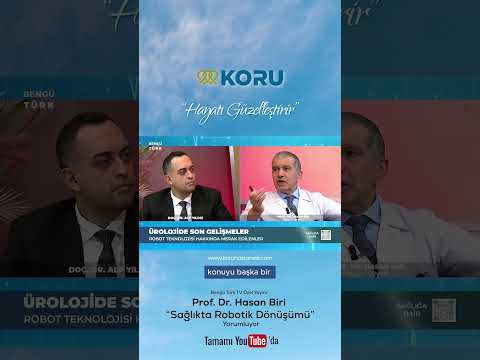
When considering international destinations for highly specialized medical care, a nation's academic infrastructure and technological adoption rates are paramount. At [01:16], Prof. Dr. Hasan Biri highlights a crucial reality regarding Turkey's current standing in the global medical community. Despite the persistent assumption that the absolute pinnacle of medical care is exclusive to the United States or Western Europe, empirical data and academic output indicate otherwise. Turkey has heavily invested in establishing itself as a premier destination for complex surgical interventions, particularly within the highly demanding fields of urology and urooncology.
Turkish medical institutions are operating completely on par with the most prestigious Western medical centers. This parity is not merely anecdotal; it is clearly demonstrated through rigorous academic competence, high-volume surgical case studies, and rapid integration of the latest robotic surgical platforms. The immediate transfer of surgical technology ensures that patients treated in Turkey are benefiting from the exact same, if not newer, surgical hardware as they would in top-tier global hospitals. Furthermore, the immense volume of international and domestic patients treated by Turkish surgeons results in highly refined, world-class surgical expertise that directly translates to superior patient outcomes.
Why International Patients Choose Turkey
The combination of elite surgical proficiency and state-of-the-art facilities creates a highly attractive proposition for international patients. Beyond the clinical excellence, the holistic patient experience is carefully managed. Major Turkish hospitals are heavily accredited by international governing bodies, ensuring strict adherence to global safety and hygiene protocols. Additionally, the inherent cost efficiencies of the Turkish healthcare system allow for highly competitive pricing structures without compromising on the quality of surgical hardware, hospital amenities, or the caliber of the surgical team. This high-value, high-quality medical environment is why Turkey is globally recognized as a premier hub for complex oncological care.
- Elite Surgeon Expertise: Turkish urologists frequently train internationally and handle vast surgical volumes, resulting in highly refined robotic operative skills.
- Advanced Technological Infrastructure: Top-tier private hospitals in Turkey are equipped with the latest iterations of the Da Vinci robotic surgical systems and mpMRI diagnostic units.
- Comprehensive Care Ecosystem: International patient departments manage everything from preoperative language translation services to post-operative luxury accommodations and airport transfers.
The Patient Journey: Preparing for Surgery in Turkey
Embarking on international medical travel for an advanced procedure like robotic prostatectomy requires careful coordination. The journey begins with a comprehensive, remote clinical consultation. Patients are required to submit their recent PSA history, biopsy pathology reports, and MRI imaging directly to the Turkish medical team. Expert urooncologists rigorously review this data to confirm that the patient is an appropriate candidate for nerve-sparing robotic surgery. Once clinical eligibility is established, specialized international patient coordinators step in to handle the logistical framework, ensuring a stress-free transition from the patient's home country to the hospital.
Upon arrival in Turkey, the clinical protocol is highly streamlined yet incredibly thorough. Patients undergo a final series of pre-operative blood panels, cardiopulmonary clearances, and direct consultations with both their lead surgeon and the anesthesiology team. The actual surgical procedure is typically scheduled within 48 hours of arrival. Following the successful operation and the brief hospital recovery period, patients are relocated to comfortable, partnered hotels for their initial recuperation phase. The surgical team conducts regular follow-up checks during this time, ultimately clearing the patient for safe international travel back home, fully equipped with a detailed, long-term post-operative care and monitoring plan.
Take the First Step Toward World-Class Prostate Cancer Treatment
Don't compromise on your health or your quality of life. Connect with elite urooncology specialists in Turkey to evaluate your medical history and determine if you are a candidate for minimally invasive robotic prostatectomy. Secure top-tier medical care with unparalleled surgical precision today.
Get Free QuoteView Original Video Transcript
[00:00] Her prostat mutlaka bir tedavi gere?i; prostat?n olmas?, hastal???n olmas? anlam?na gelmez.
[00:06] Mutlaka prostat? olan insanlar?n yapmas? gereken ?eyler de var.
[00:11] Prostat hastalar? genellikle geç gelirdi; ama toplumsal fark?ndal???n artmas?, sa?l?k hizmetine ula?man?n kolayla?mas?,
[00:19] tetkik maliyetlerinin dü?mesi ve herkesin daha konforlu ya?ama arzusu; bugün art?k prostat fark?ndal???n? çok artt?rm?? durumda.
[00:28] Tabii prostat kanserinde tedavi yakla??m?n?n: 1- Hastal???n tedavisi önemli;
[00:34] 2- Tedavi sonras? yapaca??n?z, özellikle ameliyat sonras?, hastan?n ya?am kalitesi önemli.
[00:40] Özellikle üroonkoloji alan?nda devrim niteli?inde bizim robotik dönü?ümümüz oldu.
[00:46] Aç?k metodda görülme riski %10-15'lere kadar ç?karken idrar kaç?rma riski;
[00:52] Robotik teknolojide %3'ün alt?nda, %1'in alt?nda ki biz çok nadiren gördü?ümüz bir durum.
[00:58] Prostat kanseri cerrahisinde robotik teknoloji konuyu ba?ka bir mecraya ta??m??t?r ve
[01:05] hem ameliyat?n ba?ar?s?n?, hem onkolojik ba?ar?, hem inkontinans aç?s?ndan ba?ar?s?, hem de cinsel sa?l?k aç?s?ndan ba?ar?s?
[01:13] son derece önemli fark yaratm??t?r.
[01:15] Türkiye her ?eye ra?men bugün bakt???m?zda üroonkolojide ya da ürolojide, hatta birçok bran??m?zda,
[01:21] Bat?'yla k?yaslanma noktas?nda ba?a ba? noktaday?z.
[01:26] Hem akademik yetkinlik anlam?nda, hem teknoloji transferi anlam?nda
[01:30] Türkiye'nin gücü art?k dünyada parmakla gösterilir bir noktada.




















Share this listing