


Success Rates for Age-Related Degenerative Diseases
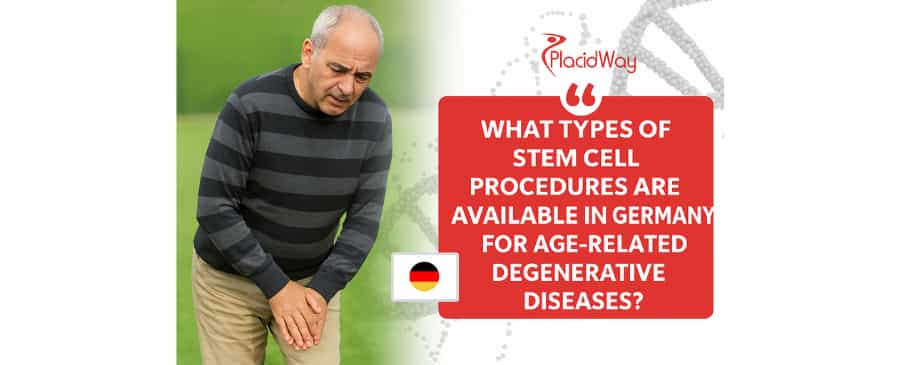
Germany stands as a global fortress of medical innovation, particularly in the field of regenerative medicine. If you are researching solutions for age-related degenerative diseases, you have likely encountered conflicting information about what is actually allowed and available. In Germany, the answer is defined by high scientific standards and strict ethical boundaries.
For patients facing conditions like osteoarthritis, Parkinson's disease, or general frailty, Germany offers specialized treatments that focus on Adult Stem Cells, specifically Mesenchymal Stem Cells (MSCs). Unlike clinics in less regulated regions that might promise overnight cures with unverified methods, German centers operate under federal oversight, prioritizing safety and "Individual Curative Attempts." This guide breaks down exactly what procedures are available, how they work, and the investment required.
What stem cell therapies are legally authorized in Germany?
Germany’s regulatory framework is one of the strictest in the world, governed by the German Drug Act (AMG). This safeguards patients from "cowboy clinics" often seen in other jurisdictions. The primary legal avenue for treatment is the use of autologous cells, meaning cells harvested from the patient's own body. These cells must be processed in a way that is considered "minimal manipulation," ensuring they retain their original biological characteristics without being chemically altered in a risky manner.
Clinics operating legally usually hold a manufacturing license for Tissues and Cells or operate under the "Individual Curative Attempt" exemption. This exemption allows doctors to produce and administer a cell product for a specific patient when standard therapies have failed. This high bar for entry means that while fewer clinics exist compared to countries like Mexico or Panama, the ones that do exist are typically attached to high-level university research or specialized private centers with GMP (Good Manufacturing Practice) laboratories.
Can stem cells treat osteoarthritis and joint degeneration effectively?
Osteoarthritis is the leading reason medical tourists seek regenerative care in Germany. As we age, the cartilage cushioning our joints wears down, leading to bone-on-bone friction. German orthopedists utilize stem cells not just to mask pain, but to address the root cause: tissue degeneration.
The procedure typically involves harvesting stem cells from the patient’s bone marrow or adipose tissue (fat). These cells are then concentrated and injected directly into the affected knee, hip, or shoulder. Once inside the joint, the MSCs signal local repair mechanisms and drastically lower inflammation levels. Patients often report significant pain reduction and improved mobility within 3 to 6 months, potentially delaying or eliminating the need for invasive metal joint replacements.
Are there stem cell options for Parkinson’s and Alzheimer’s in Germany?
Neurodegenerative diseases are notoriously difficult to treat, but German research has pushed the envelope with regenerative approaches. For conditions like Parkinson’s Disease and early-stage Alzheimer’s, therapies focus on neuroprotection and immunomodulation. The goal is not necessarily to regrow the entire brain, but to stop the immune system from attacking neural tissue and to support the survival of remaining neurons.
Recent advances in Germany have shifted focus toward Secretome or Exosome therapy (discussed further below). Instead of just injecting cells, doctors use the "signaling packets" released by stem cells, which can cross the blood-brain barrier more easily. These treatments are generally administered intravenously or, in some specific cases, via lumbar puncture, always under strict medical supervision.
How does Adipose-Derived Stem Cell therapy work?
Fat tissue is one of the richest sources of adult stem cells in the human body, yielding up to 500 times more mesenchymal stem cells per volume than bone marrow. In Germany, this procedure is highly refined. It begins with a gentle, manual liposuction (usually from the abdomen) performed under local anesthesia. This ensures the cells are not damaged by high-pressure machines.
The fat is then processed—often using mechanical separation rather than enzymatic digestion to comply with strict regulations—to isolate the Stromal Vascular Fraction (SVF). This "soup" contains stem cells, pre-adipocytes, and endothelial cells. It is a potent regenerative cocktail used for both orthopedic joint issues and systemic anti-aging applications.
What is Bone Marrow Aspirate Concentrate (BMAC) therapy?
Bone Marrow Aspirate Concentrate (BMAC) has a long track record of safety and efficacy. In this procedure, a doctor uses a needle to withdraw marrow blood from the back of the patient's hip bone. While it sounds intimidating, it is a routine procedure done with local anesthesia and typically causes only minor soreness.
The marrow is spun in a specialized centrifuge to separate the red blood cells from the nucleated cells (stem cells) and platelets. The resulting concentrate is rich in hematopoietic and mesenchymal stem cells. German surgeons prefer BMAC for treating deep cartilage defects, avascular necrosis (bone death), and non-healing fractures because bone marrow cells have a natural affinity for bone and cartilage repair.
Is PRP considered a stem cell procedure in Germany?
Patients often confuse PRP with stem cell therapy, but they are distinct. PRP involves drawing standard blood from the arm and concentrating the platelets. Platelets are responsible for clotting and contain growth factors that signal the body to heal. They act like the "construction managers" of the body.
Stem cells, on the other hand, are the "bricks and mortar" that can actually turn into new tissue. In German regenerative clinics, PRP is rarely used alone for severe degenerative diseases. Instead, it is used as a booster or "fertilizer" alongside stem cell injections. The growth factors in PRP help the injected stem cells survive the transfer and start working faster.
What is the cost of stem cell therapy in Germany?
Germany is not a "budget" medical destination; it is a premium destination known for quality and safety. The costs reflect the high standards of GMP laboratory processing, the expertise of the medical team, and the strict regulatory compliance required. Insurance rarely covers these procedures as they are often elective or "individual curative attempts."
Below is a detailed cost estimation for various procedures:
| Procedure Type | Target Condition | Estimated Cost (EUR) | Estimated Cost (USD) |
|---|---|---|---|
| Orthopedic Injection (BMAC) | Knee/Hip Osteoarthritis (1 Joint) | €8,500 - €12,000 | $9,000 - $13,000 |
| Adipose Stem Cell Therapy | Multiple Joints / Systemic Anti-Aging | €14,000 - €18,000 | $15,000 - $19,500 |
| Neuro-Regenerative Therapy | Parkinson's, Alzheimer's, MS | €18,000 - €26,000 | $19,500 - $28,000 |
| Secretome / Exosome Therapy | Anti-Aging, Immune Modulation | €12,000 - €16,000 | $13,000 - $17,500 |
| Combination Therapy | Stem Cells + Physiotherapy + Detox | €20,000+ | $21,500+ |
How does Germany’s "Embryo Protection Act" affect treatment options?
If you are looking for embryonic stem cell treatments, you will not find them in Germany. The country has a unique historical and ethical sensitivity regarding the manipulation of human life. The Embryo Protection Act (Embryonenschutzgesetz) criminalizes the use of fertilized human eggs for research or therapy.
While this might seem restrictive, it has actually pushed German science to become a world leader in Adult Stem Cell and iPSC (Induced Pluripotent Stem Cell) technologies. By focusing on cells that come from the patient's own body (somatic cells), German clinics avoid the risks of tumor formation (teratomas) and ethical controversies often associated with embryonic cells in other countries.
What is "Secretome" or "Exosome" therapy?
One of the most exciting developments in German regenerative medicine is the shift toward cell-free therapies. Scientists realized that stem cells often work by "paracrine signaling"—sending chemical messages to nearby cells to repair themselves.
Exosomes are tiny vesicles (bubbles) released by stem cells that contain these messages (mRNA, proteins, growth factors). In Secretome therapy, these exosomes are concentrated and administered to the patient. Because there are no live cells involved, the risk of rejection or unwanted cell growth is virtually zero. This therapy is particularly popular for anti-aging and managing chronic inflammation associated with age-related diseases.
What is the success rate for age-related degenerative diseases?
It is vital to manage expectations. For orthopedic conditions like osteoarthritis, the success rate is high. Most patients experience significant pain relief and improved function that can last for years. It is a well-established alternative to surgery.
For systemic degenerative diseases like Parkinson's or ALS, the definition of "success" is different. These conditions currently have no known cure. German clinics aim to "halt the progression" or improve quality of life (better sleep, reduced tremors, improved energy). While many patients report positive outcomes, these treatments should be viewed as supportive and experimental therapies that aim to manage the condition rather than reverse it completely.
How long does the treatment process take?
Efficiency is a hallmark of the German medical system. A typical itinerary for an international patient looks like this:
- Day 1: Arrival, detailed medical consultation, blood work, and imaging (MRI/X-ray).
- Day 2: Harvesting of tissue (Bone marrow aspiration or mini-liposuction). The tissue is sent to the clean-room lab for processing.
- Day 3/4: Re-administration of the concentrated stem cells or secretome. Adjunct therapies (like ozone therapy or physiotherapy) may be included.
- Day 5: Final check-up and discharge.
Some complex neurodegenerative protocols may require a slightly longer stay (up to 10 days) for observation and multiple infusion sessions.
Are there risks or side effects to German stem cell treatments?
Safety is the primary advantage of choosing Germany. Because the cells are autologous (your own), your immune system recognizes them, eliminating the risk of Graft-versus-Host Disease (GVHD). The strict "minimal manipulation" rules also prevent the cells from mutating during processing.
Common side effects are related to the procedure itself rather than the cells: temporary pain at the harvest site (hip or abdomen) and swelling at the injection site (knee or spine). Serious complications like infection are extremely rare in Germany due to the mandatory high-hygiene standards required for clinic certification.
What is the difference between Autologous and Allogeneic stem cells?
In many countries, "off-the-shelf" stem cells from umbilical cords (allogeneic) are heavily marketed. In Germany, the focus remains heavily on autologous treatments. The philosophy is that your own body is the safest biological source.
However, some German centers do use allogeneic cells (often from healthy donors) for specific applications where the patient's own cells might be too old or weak (senescent). These procedures are subject to even tighter scrutiny, requiring rigorous donor screening for viruses and genetic defects. If a clinic offers you donor cells, ensure they explain exactly how they screen for safety, as this carries a slightly higher risk of immune reaction compared to using your own cells.
Do German insurance companies cover these procedures?
It is important to understand that even for German citizens, regenerative medicine is largely a self-pay market. The public health system covers standard-of-care treatments (like pain medication or joint replacement surgery). Stem cell therapy is viewed as an innovative, elective alternative.
For international patients, this means you will be treated as a "private patient." You will receive a transparent cost estimate (Heil- und Kostenplan) before travel. Payment is usually required upfront. However, some private international health insurance plans may cover part of the diagnostic or hospital stay costs, so it is worth checking with your provider.
How do I prepare for stem cell therapy in Germany?
To get the best results, your body needs to be a receptive host for the stem cells. German doctors often recommend a "pre-treatment" phase. This includes stopping smoking and alcohol at least two weeks prior, as these toxins can kill stem cells. You may also be advised to take specific supplements (like Vitamin D or C) to boost your immune system.
Logistically, preparation involves gathering your MRI scans and medical history. German doctors rely heavily on data; they will not treat you without a clear diagnosis. Ensure all your documents are translated into English or German to facilitate a smooth review process before you even book your flight.
How do German clinics ensure safety and quality?
The "Made in Germany" label applies to medical quality just as it does to cars. Clinics performing stem cell procedures must operate clean-room laboratories that meet GMP standards. This means the air quality, equipment sterility, and cell processing techniques are monitored constantly.
Furthermore, medical liability laws in Germany are strict. Doctors are personally liable for malpractice, which creates a culture of extreme caution and diligence. Unlike "stem cell tourism" hotspots where clinics might disappear overnight, German medical centers are usually established institutions with long-term reputations to protect.
Ready to explore regenerative options in Europe? Finding the right clinic and navigating the strict regulations can be complex. If you are looking for trusted medical providers for stem cell therapy, PlacidWay can help you connect with certified German clinics, compare costs, and organize your medical journey safely.
Ready to Explore Stem Cell Options in Germany?
Navigating the regulations and finding the right clinic can be overwhelming. Let us help you connect with MHLW-approved providers.

















Share this listing