
Understanding Knee Regeneration Treatment Options in Osaka
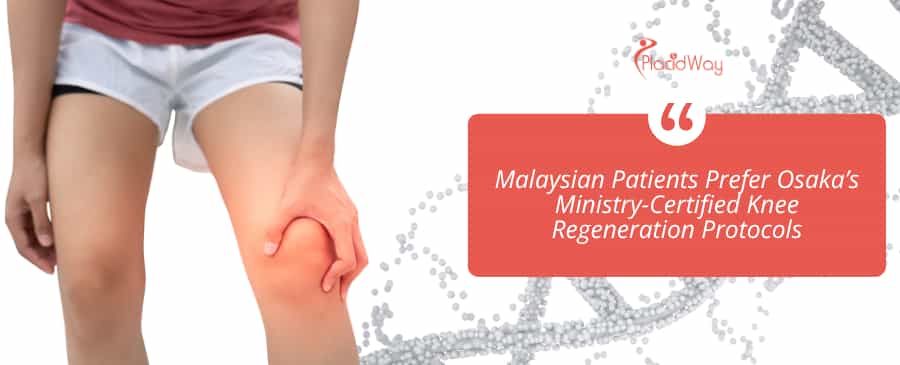
Knee regeneration in Japan, especially in Osaka, offers Malaysian patients Ministry-certified stem cell protocols that are highly safe. Costs typically range from $15,000 to $25,000, providing advanced alternatives to total knee replacement surgery.
Key Takeaways: Knee Regeneration in Osaka
- Regulatory Excellence: All procedures are strictly governed by the Japanese Ministry of Health under the Safety of Regenerative Medicine Act.
- Non-Surgical Alternative: Malaysian patients often choose this to avoid the long recovery and risks associated with total knee replacement.
- Advanced Lab Standards: Osaka hosts some of the world's most advanced Cell Processing Centers (CPC) with ISO-grade sterilization.
- High Success Rates: Clinical data from Japan shows significant pain reduction and cartilage improvement in over 85% of early-stage osteoarthritis patients.
Why is knee regeneration in Japan becoming the top choice for Malaysians?
Malaysian patients choose Japan due to the unmatched legal safety framework and the proximity of Osaka as a direct-flight destination. The protocols ensure the highest quality of autologous stem cells.
The rise of medical tourism in Japan among Malaysians is driven by the search for safe, non-invasive alternatives to surgery. In Osaka, clinics follow the strict guidelines of the Act on the Safety of Regenerative Medicine, which provides a layer of consumer protection not found in many other medical destinations. This legal framework requires clinics to report all clinical outcomes and adverse effects directly to the government.
Furthermore, the cultural synergy and high standards of Japanese hospitality appeal greatly to the Malaysian demographic. Patients from Kuala Lumpur or Penang find that the precision of a knee regeneration clinic in Japan aligns with their expectations for premium healthcare. The use of advanced imaging and automated cell counting ensures that every patient receives a standardized, potent dose of therapeutic cells.
Cost-effectiveness also plays a role when considering the long-term benefits. While the initial investment might be higher than local options, the avoidance of repeat surgeries and the high quality of the cultured cells in Japanese labs often result in better long-term mobility, making it a preferred choice for the aging population in Malaysia.
What is the typical knee regeneration cost in Japan for international patients?
The knee regeneration cost in Japan usually ranges from $15,000 to $25,000 per knee. This includes the cell harvesting, culture process, and final injection under ultrasound guidance.
The pricing for knee regeneration in Japan is transparent but reflects the high-tech nature of the treatment. The total cost is influenced by the number of cells being cultured—often reaching tens of millions for a single injection. Patients should be aware that the culture process itself takes about 3 to 4 weeks, which is the gold standard for achieving the necessary cell count for tissue repair.
When comparing prices, Malaysian patients often look at the comprehensive nature of the Japanese quote. Unlike "bargain" destinations, a premium Osaka clinic includes pre-operative MRI analysis, specialized culture medium, and multiple post-operative follow-up teleconsultations. This ensures that the patient is not just buying an injection, but a managed recovery pathway.
It is important to note that secondary booster injections, if required six months later, are often offered at a reduced rate. Patients are encouraged to request an all-inclusive medical tourism package that covers the 10% Japanese consumption tax and provides assistance with medical documentation for their local doctors in Malaysia.
How does a knee regeneration clinic in Japan achieve Ministry certification?
Certification requires a clinic to pass a review by a Certified Regenerative Medicine Committee and obtain final approval from the Ministry of Health. This process validates the safety and efficacy of their cell protocols.
A certified knee regeneration clinic in Japan must adhere to the GCTP (Good Gene, Cellular, and Tissue-based Products Manufacturing Practice) standards. This means their laboratory environments must be strictly controlled to prevent contamination. For Malaysian patients, this certification is the ultimate "peace of mind" badge, ensuring they are not receiving unproven or dangerous "street" stem cells.
The Ministry of Health also monitors the background of the medical directors. Surgeons and specialists in these clinics typically have extensive backgrounds in orthopedics and regenerative science. They are required to undergo continuous medical education to maintain their status, ensuring that the techniques used—such as PRP-assisted stem cell delivery—are based on the latest clinical evidence.
Finally, the certification includes a mandate for transparency. Clinics must provide patients with detailed informed consent documents, often available in multiple languages, explaining the source of the cells, the culture methodology, and the realistic expected outcomes. This transparency is a hallmark of the Japanese medical system.
What specific protocols are used for knee regeneration in Osaka?
Osaka clinics primarily use Adipose-Derived Mesenchymal Stem Cells (ADSCs) which are cultured to high concentrations. The protocol often involves a 'Scaffold-Free' injection technique for maximum tissue integration.
The "Osaka Protocol" for knee regeneration in Japan is famous for its precision. It begins with a mini-liposuction procedure, usually from the abdomen, to collect a small amount of fat tissue. This tissue is then sent to a high-tech lab where the Mesenchymal Stem Cells are isolated and expanded over a 21-day period. This expansion is critical, as millions of cells are needed to stimulate the body's natural cartilage repair mechanism.
Once the cells are ready, the patient returns for the injection. Unlike standard injections, Japanese doctors use high-resolution ultrasound guidance to ensure the cells are delivered exactly into the damaged area of the meniscus or the cartilage defect. This "target-specific" approach minimizes cell waste and maximizes the regenerative signal sent to the surrounding tissues.
Post-injection, clinics often utilize Platelet-Rich Plasma (PRP) as a natural growth factor "booster." This combination therapy helps the newly injected stem cells survive and begin the differentiation process into new chondrocytes (cartilage cells). This comprehensive biological approach is why Japan maintains such high patient satisfaction rates.
Are there did you know facts about medical tourism in Japan for Malaysians?
Osaka is known as the "Nation's Kitchen" in Japan. Many Malaysian medical tourists find the local diet—rich in Omega-3 from fresh fish and anti-inflammatory green teas—to be the perfect natural supplement for their knee recovery journey. Furthermore, the Kansai region (Osaka/Kyoto) has a higher density of Ministry-certified regenerative centers than any other part of Asia.
What is the success rate for knee regeneration in Japan?
Clinical studies from leading Osaka institutions report that 85% to 90% of patients experience significant pain reduction within 3 months. MRI scans often show visible cartilage thickening after one year.
The success of knee regeneration in Japan is measured both subjectively (pain scales) and objectively (MRI imaging). For many Malaysians, the ability to return to daily activities like walking through shopping malls or performing religious prayers without pain is the ultimate success metric. Japanese protocols are specifically designed to treat Grade 2 and Grade 3 osteoarthritis, where some cartilage still remains to act as a foundation for the stem cells.
Factors that influence success include age, weight, and the severity of the joint misalignment. Japanese doctors are very honest; if they believe the knee is too far gone for regeneration (Grade 4), they will not recommend the procedure. This medical integrity ensures that the success rates of those who do undergo the treatment remain exceptionally high.
Long-term data from Japan suggests that the regenerative effects can last for 3 to 5 years, with some patients maintaining benefits even longer. This makes the knee regeneration cost in Japan a worthwhile investment for those looking to delay or completely avoid the hardware and complications of an artificial joint.
How does Osaka's climate affect recovery for Malaysian patients?
The moderate climate of Osaka, particularly in Spring and Autumn, is ideal for recovery. Avoid the humid summer months if you have sensitive joints that react to pressure changes.
For Malaysians accustomed to tropical heat, the cooler air of Osaka in April or October can actually help reduce post-procedural swelling. Cold therapy is a common part of the "Osaka Protocol," and the natural environment supports this. However, patients should be mindful of the walking required in Japanese cities. While medical tourism in Japan is well-supported by public transport, those in the early stages of recovery should utilize the city's efficient and clean taxi services.
Humidity and atmospheric pressure can affect joint pain. Many patients report that the lower humidity in Japan compared to Malaysia makes their joints feel "lighter" during the recovery phase. It is recommended to bring light layers of clothing to manage the temperature transitions between the ultra-modern clinics and the outdoor air.
The psychological aspect of recovery is also enhanced by the serene environment of Osaka. Whether it is a quiet stroll through Utsubo Park or a visit to the Sumiyoshi Taisha shrine, the low-stress environment of Japan contributes significantly to the overall healing process.
What are the risks involved in knee regeneration in Japan?
Risks are minimal since the treatment uses your own cells. Potential minor issues include temporary swelling at the injection site or bruising from the fat harvesting site.
The primary safety advantage of a knee regeneration clinic in Japan is the use of autologous cells. Because the cells are yours, there is zero risk of allergic reaction or rejection. The "safety act" mentioned earlier also ensures that all reagents used in the culture process are of pharmaceutical grade and free from animal-derived contaminants.
The harvesting process is a minor surgical procedure performed under local anesthesia. While some bruising is expected, serious complications are extremely rare. The injection into the knee carries the standard minimal risk of infection associated with any joint injection, but the sterile standards of Japanese operating rooms make this statistically negligible.
Malaysian patients are advised to disclose all current medications, especially blood thinners, during their initial consultation. The Japanese medical team will provide a specific protocol for pausing and restarting medications to ensure the safest possible experience during the cell harvest and injection phases.
Why Choose PlacidWay for Knee Regeneration in Japan?
PlacidWay provides a secure bridge between Malaysian patients and Japan's elite certified clinics, ensuring a seamless, safe, and transparent medical journey.
Organizing medical tourism in Japan requires careful coordination, especially when dealing with the time-sensitive nature of cell culture. PlacidWay simplifies this by handling the complex communication and verification tasks for you. Here is why PlacidWay is the preferred partner for Malaysians:
- Ministry Verification: We only partner with Osaka clinics that hold active permits from the Japanese Ministry of Health, protecting you from uncertified operators.
- Multilingual Support: We facilitate communication with the Japanese medical teams, ensuring that your medical history from Malaysia is correctly translated and understood by the specialists.
- Transparent Pricing: We ensure that the knee regeneration cost in Japan presented to you is all-inclusive, with no hidden laboratory or administrative fees.
- Post-Op Care Coordination: Our team helps schedule your follow-up virtual appointments, ensuring that the Japanese doctors can monitor your progress once you return to Malaysia.
- Concierge Expertise: We understand the nuances of medical travel from KL to Osaka, helping you select clinics located near accessible transportation and recovery-friendly accommodation.
Frequently Asked Questions About Knee Regeneration in Japan
Do Malaysian citizens need a medical visa for knee regeneration in Osaka?
Malaysian passport holders currently enjoy visa-free entry to Japan for short-term stays up to 90 days. For regenerative treatments which usually require only a few days of clinical presence, a standard tourist entry is sufficient. However, if complications arise or if you plan an extended recovery of over three months, a specific Medical Stay Visa should be discussed with the clinic and the Japanese Embassy in Kuala Lumpur.
How does the Japanese Ministry of Health regulate stem cell clinics in Osaka?
The Japanese Ministry of Health, Labour and Welfare (MHLW) enforces the Act on the Safety of Regenerative Medicine. Every knee regeneration clinic in Japan must submit a detailed 'Regenerative Medicine Provision Plan' to a certified committee. Only after rigorous review of their cell processing facility and clinical protocols do they receive an official permit number, which must be publicly displayed.
Are there direct flights from Kuala Lumpur to Osaka for medical tourists?
Yes, AirAsia X and Malaysia Airlines offer direct flights from Kuala Lumpur (KUL) to Osaka (KIX). The flight time is approximately 6 to 7 hours. This accessibility is a primary reason why medical tourism in Japan is thriving among Malaysians, as it minimizes travel stress on painful knee joints compared to long-haul flights to Europe or the US.
Is the knee regeneration cost in Japan covered by Malaysian health insurance?
Most standard Malaysian private health insurance policies do not cover elective regenerative treatments performed abroad. However, some premium international health plans or specific medical tourism insurance riders may offer partial reimbursement. It is essential to check with your provider and request a detailed itemized quote from the Osaka clinic for your claim submission.
What is the primary language used in Osaka clinics for international patients?
While Japanese is the primary language, top-tier clinics in Osaka catering to international patients provide professional medical translators, often fluent in English or Malay. Many doctors in these certified facilities have trained internationally and speak English well. When booking through a facilitator, dedicated interpretation services are usually included in the package.
How long after the procedure can I fly back to Malaysia?
For minimally invasive knee regeneration in Japan, patients are typically advised to wait 3 to 5 days before boarding a long-haul flight. This window allows the medical team to monitor for any immediate adverse reactions and ensures that the initial inflammatory response has stabilized. Compression stockings and frequent in-flight movement are recommended for the return journey.
Are the stem cells used in Osaka autologous or donor-based?
The vast majority of certified knee regeneration protocols in Osaka utilize autologous adipose-derived or bone marrow-derived mesenchymal stem cells. This means the cells are harvested from your own body, significantly reducing the risk of rejection or ethical concerns. This personalized approach is a cornerstone of regenerative medicine in Japan.
What happens if the knee regeneration treatment does not work?
While regenerative therapies have high success rates for early to mid-stage osteoarthritis, results vary by individual. Certified clinics provide a thorough pre-screening to ensure you are a good candidate. If the primary treatment does not yield expected results, the medical team will offer follow-up consultations to discuss secondary booster injections or traditional orthopedic alternatives.
Can I travel to other cities like Kyoto during my recovery in Osaka?
Kyoto is only 30 minutes from Osaka by train, making it a popular side trip for medical tourists. However, during the first week of recovery, strenuous walking is discouraged. It is better to use taxis or private car services if you wish to sightsee. Many patients prefer to experience the 'omotenashi' (hospitality) of Osaka's local culture while resting.
Are Japanese regenerative protocols safer than those in other Asian countries?
Japan was the first country in the world to establish a comprehensive legal framework specifically for regenerative medicine. This early adoption of strict safety standards, combined with advanced laboratory technology, makes Japan a global leader. The transparency of the Ministry-certified list provides a level of security that is often unmatched in regions with looser regulations.
Regain Your Mobility with Osaka's Elite Protocols
* Personalized support for Malaysian patients. Confidentiality assured.
.png)

.png)

.png)
.png)
-(2).png)
.png)

.png)
.png)
.png)
.jpg)










Share this listing