


Stem Cell Therapy in Mexico
Yes, stem cell therapy in Mexico helps many US patients avoid knee replacement surgery by regenerating damaged cartilage and reducing joint inflammation. This minimally invasive treatment offers faster recovery at a fraction of standard US costs.
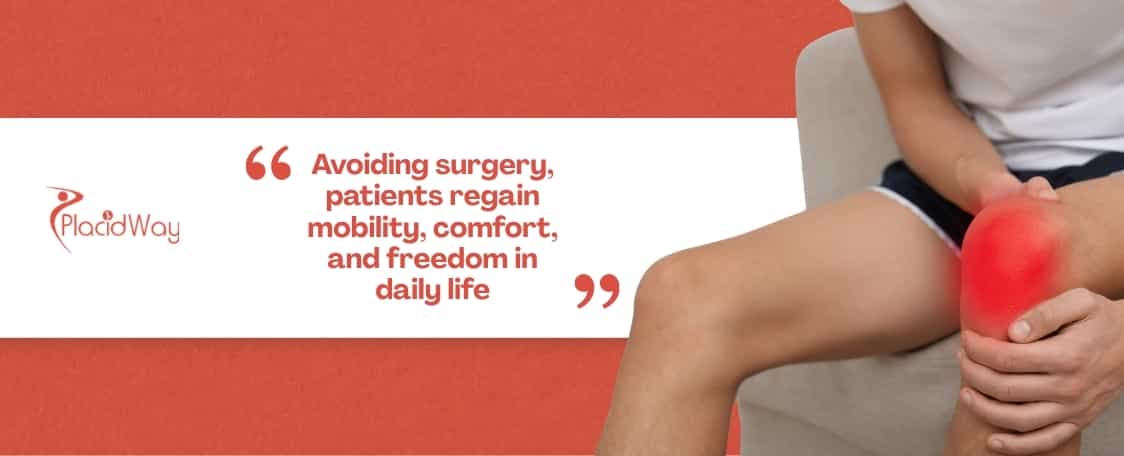
Key Takeaways: Knee Regeneration Options
- Surgical Alternative: Biologics heal meniscus tears and osteoarthritis without removing bone.
- Regulatory Advantage: International labs can legally cultivate larger, more effective therapeutic doses.
- Financial Savings: Patients save up to 70 percent compared to private clinics in the United States.
- Rapid Recovery: Zero hospital stays are required, and patients walk out on the same day.
- High Safety Profile: Minimally invasive joint injections eliminate the severe risks of general anesthesia.
How does regenerative medicine prevent total knee replacement?
Regenerative treatments address the root cause of joint pain by rebuilding worn cartilage and lowering inflammation within the knee capsule. This biological healing process can restore joint mechanics and eliminate the need for artificial hardware.
Orthopedic surgery relies on amputating the damaged bone ends and replacing them with titanium and plastic components. While effective for extreme cases, this highly invasive approach involves lengthy rehabilitation, immense postoperative pain, and the permanent loss of natural joint mechanics. Regenerative medicine takes a completely opposite approach by stimulating the bodys innate healing mechanisms to repair the existing biological structures.
When highly concentrated biologics are injected into the knee capsule, they immediately begin communicating with surrounding damaged tissues. They release powerful anti-inflammatory proteins called cytokines that halt the aggressive degradation common in osteoarthritis. This reduction in inflammation provides rapid pain relief, allowing patients to regain mobility often within just a few weeks of their visit.
Following the initial inflammatory control phase, these intelligent biological materials initiate physical tissue repair. They differentiate into chondrocytes, which are the specialized building blocks required to synthesize new cartilage. Over several months, this process thickens the protective cushioning between the femur and tibia, ultimately restoring a smooth gliding surface and helping patients avoid the trauma of total joint arthroplasty.
What is the average stem cell therapy cost in Mexico for knees?
Patients typically pay between $3,500 and $6,000 per knee for comprehensive regenerative treatments south of the border. This represents a significant saving compared to the massive fees charged at private clinics in the United States.
- Transparent Pricing Models: The stem cell therapy cost in Mexico is generally bundled into an all-inclusive package covering the consultation, diagnostic imaging, biological materials, and facility fees.
- Zero Hidden Hospital Charges: Because the procedure is performed in an outpatient setting, patients entirely avoid the exorbitant overnight hospital room fees associated with invasive orthopedic surgeries.
- Higher Value Per Dose: International laboratories are permitted to culture millions of active biological units per injection, meaning patients receive a substantially more potent treatment for a fraction of the cost.
- Bilateral Treatment Discounts: Many centers offer reduced rates when treating both the left and right knee simultaneously, making full lower-body rehabilitation highly accessible.
- Affordable Follow-up Care: Routine blood work, physical therapy recommendations, and post-procedure medical reviews are often provided at nominal fees compared to standard American medical billing.
| Treatment Type | Average US Cost | Average International Cost |
|---|---|---|
| Single Knee Injection | $8,000 - $15,000 | $3,500 - $5,000 |
| Bilateral Knee Injections | $15,000 - $28,000 | $6,000 - $8,500 |
| Total Knee Replacement | $30,000 - $50,000+ | Not Applicable |
How do patients choose a safe stem cell therapy clinic in Mexico?
Selecting a reputable facility requires verifying board certifications, reviewing patient testimonials, and confirming the use of ethically sourced biologics. High-quality centers maintain rigorous laboratory standards and prioritize patient safety.
When searching for a highly rated stem cell therapy clinic in Mexico, thorough research is absolutely essential to ensure a safe and successful outcome. The most reliable medical facilities operate under strict licenses issued by COFEPRIS, the federal health regulatory agency equivalent to the American FDA. These certifications guarantee that the clinical environment meets international sterilization and operational safety standards.
When exploring options, facilities like the Immunity Therapy Center in Tijuana, Mexico stand out for their comprehensive approach to holistic and regenerative healthcare. Patients specifically seek specialized regenerative medicine by ITC Immunity Therapy Center to address complex joint degradation safely. Centers of this caliber utilize advanced imaging technology like ultrasound guidance to ensure the biological materials are placed exactly where the cartilage damage has occurred.
Furthermore, premier clinics provide complete transparency regarding their laboratory partnerships. They will openly share the viability reports and cell count certificates associated with your specific treatment vial. By ensuring the medical team involves board-certified orthopedic specialists and specialized laboratory technicians, international patients can proceed with their joint restoration journey with absolute confidence.
Many top-tier biological laboratories located just across the border use specialized clean rooms that are regularly audited by independent third-party health organizations to guarantee zero bacterial contamination during the cell cultivation process.
Which biological materials are most effective for knee osteoarthritis?
Mesenchymal biological materials derived from umbilical cord tissue or the patients own bone marrow yield the highest success rates. These specific components possess powerful anti-inflammatory properties and robust tissue regeneration capabilities.
- Whartons Jelly Derivatives: Sourced ethically from donated umbilical cords after healthy childbirths, these young components are incredibly robust and replicate rapidly once injected into an arthritic joint.
- Autologous Bone Marrow: Extracted directly from the patients hip bone, this method utilizes the individuals native healing materials, ensuring zero risk of tissue rejection during the orthopedic treatment.
- Exosome Additives: Many advanced protocols now include concentrated exosomes, which act as microscopic messengers that instruct the surrounding knee tissues to accelerate the cartilage repair process.
- Platelet Rich Plasma Combination: Doctors frequently blend the primary biological therapy with PRP derived from the patients blood, creating a nutrient-dense scaffolding that helps the new tissue adhere properly.
- Hyaluronic Acid Base: To provide immediate lubrication for severely dry and grating joints, treatments are often suspended in medical-grade hyaluronic acid to improve mechanical gliding instantly.
- Immune Privilege Quality: Umbilical-derived materials lack specific surface markers, making them universally accepted by any patient without requiring complex blood typing or tissue matching procedures.
Is it safe for international patients to undergo stem cell therapy in Mexico?
Receiving regenerative treatments internationally is highly safe when patients select accredited facilities that adhere to strict federal health protocols. Top destinations implement advanced sterilization techniques and employ globally trained doctors.
Undergoing stem cell therapy in Mexico is considered an exceptionally safe medical alternative for treating degenerative joint disease. Because the protocol involves simple intra-articular injections rather than massive surgical incisions, the massive risks associated with deep tissue infections, blood clots, and general anesthesia are entirely removed. The procedure feels very similar to receiving a standard cortisone shot.
The safety of the biological materials themselves is heavily regulated. Reputable laboratories utilize comprehensive screening panels to test all biologic donors for infectious diseases, genetic anomalies, and bacterial presence before any material is approved for cultivation. The final therapeutic vials undergo rigorous quality control testing to ensure viability and complete sterility before they ever reach the treatment room.
Patient safety is further enhanced by the use of real-time diagnostic imaging during the actual procedure. Skilled physicians use fluoroscopy or high-definition ultrasound guidance to navigate the injection needle with pinpoint accuracy. This precise delivery method guarantees the healing agents reach the damaged meniscus or degraded cartilage without causing accidental trauma to surrounding healthy nerves or blood vessels.
Combining biological joint injections with targeted physical therapy during the first three months significantly amplifies the final structural outcome. Controlled mechanical loading of the knee actually stimulates the newly injected cells to multiply faster and form stronger, more resilient cartilage fibers.
What does the recovery timeline look like after joint injections?
Most patients experience mild soreness for a few days before noticing gradual pain reduction over the following three to six weeks. Complete cartilage regeneration and maximal joint mobility typically finalize within three to six months post-injection.
- Days 1 to 3: Patients might notice temporary swelling or a feeling of fullness within the knee capsule. This initial inflammatory response is entirely normal and represents the activation of the biological healing process.
- Weeks 2 to 4: The powerful anti-inflammatory components begin to neutralize the destructive enzymes inside the arthritic joint. Patients frequently report a significant reduction in sharp daily pain and improved morning stiffness.
- Months 1 to 3: Cellular differentiation occurs as the biological materials transform into fresh cartilage matrix. Patients usually experience enhanced range of motion and the ability to walk longer distances without discomfort.
- Months 4 to 6: The newly formed tissue fully integrates with the existing joint structures. Many individuals successfully return to low-impact recreational activities like golf, swimming, or cycling without requiring pain medication.
- Long-term Maintenance: Unlike the grueling physical therapy required after joint replacement, recovery from regenerative injections simply involves maintaining a healthy body weight and practicing moderate daily movement.
Who is considered the ideal candidate for knee regeneration?
The best candidates are individuals suffering from mild to moderate osteoarthritis, meniscal tears, or chronic joint inflammation who wish to avoid invasive surgery. Those with total joint degradation might require surgical consultation instead.
Regenerative medicine performs exceptionally well for patients experiencing early to mid-stage joint deterioration. If you have been diagnosed with grade two or grade three osteoarthritis and are regularly relying on anti-inflammatory medications to manage daily walking pain, you are likely an excellent candidate. The biologics require at least a minimal existing cartilage scaffolding to attach to and successfully rebuild upon.
Athletes or active individuals dealing with stubborn sports injuries, such as partially torn ligaments or meniscal fraying, also respond incredibly well to these treatments. The targeted injections flood the localized injury zone with concentrated growth factors, accelerating tissue repair far beyond the bodys natural healing capabilities. This allows active individuals to bypass surgical reconstruction and return to their sports faster.
However, patients with extremely advanced grade four osteoarthritis, characterized by complete bone-on-bone friction and severe physical joint deformity, might not achieve full restoration through injections alone. In these advanced scenarios, ethical medical providers will thoroughly review the MRI results and openly discuss whether the biological approach can still offer pain management or if traditional orthopedic hardware replacement remains the only viable mechanical solution.
How does medical tourism in Mexico enhance the patient experience?
Traveling for healthcare allows patients to access innovative treatments not widely available at home while enjoying a supportive, hospitality-driven environment. This approach combines premium medical care with significant financial savings.
- Access to Advanced Protocols: Medical tourism in Mexico empowers patients to legally receive highly expanded biologic cell counts that provide vastly superior healing potential compared to domestically restricted treatments.
- VIP Concierge Services: Top clinics assign dedicated patient coordinators who assist with bilingual communication, scheduling, and ensuring maximum comfort throughout the entire clinical visit.
- Holistic Treatment Focus: Many international facilities integrate nutritional counseling, hyperbaric oxygen therapy, and immune support alongside the orthopedic injections to maximize whole-body healing.
- Rapid Appointment Availability: Patients can bypass the notoriously long waiting lists typical of domestic orthopedic specialists and schedule their restorative treatments exactly when they need them.
- Stress-Free Recovery Environments: Recovering in a warm, welcoming climate surrounded by dedicated healthcare professionals significantly lowers patient cortisol levels, creating an optimal biological state for tissue regeneration.
- Unrushed Medical Consultations: International doctors typically spend an hour or more with each patient thoroughly explaining the MRI findings and outlining the biological healing process without feeling rushed by insurance constraints.
Why Choose PlacidWay for your regenerative medicine journey?
PlacidWay serves as a dedicated medical concierge connecting global patients with thoroughly vetted, top-tier healthcare facilities worldwide. Our transparent process ensures you receive the highest quality care tailored to your orthopedic needs.
- Strict Clinic Verification: We conduct rigorous background checks on all partner facilities, guaranteeing they possess the necessary federal accreditations, laboratory certifications, and impeccable safety records before offering them to patients.
- Verified Medical Credentials: Our platform exclusively collaborates with board-certified orthopedic specialists and regenerative medicine experts who have demonstrated proven clinical success in biological joint restoration.
- Complete Price Transparency: We eliminate financial surprises by providing patients with all-inclusive treatment estimates upfront, protecting you from hidden facility fees or unexpected laboratory charges.
- Dedicated Patient Support: From facilitating preliminary MRI reviews to answering complex clinical questions, our knowledgeable support team stands by your side to advocate for your medical needs throughout the entire process.
- Customized Treatment Matching: Because no two knee injuries are identical, we evaluate your specific diagnosis to connect you with the specialized clinic best equipped to handle your unique cartilage degradation issues.
Frequently Asked Questions
Does health insurance cover these regenerative knee procedures internationally?
Most traditional United States health insurance providers consider international regenerative medicine to be an elective or experimental procedure and will not cover the costs. Patients should expect to pay out of pocket for their treatments south of the border. However, because the cash price internationally is substantially lower than co-pays or deductibles for joint replacement surgery at home, many patients find the international route far more affordable overall.
How many injection sessions are necessary for severe joint pain?
The vast majority of patients require only a single comprehensive treatment session to experience significant relief and structural improvement. During this primary visit, doctors inject a highly concentrated dose of biologics directly into the knee capsule. While some individuals with aggressive degenerative joint disease might benefit from a booster injection six to twelve months later, a one-time protocol is the standard approach for halting osteoarthritis progression.
Are the joint improvements from regenerative injections permanent?
The regenerated cartilage and tissue are genuine biological structures, meaning the repair is real and durable. Many patients enjoy pain-free mobility for five to ten years or more following a successful procedure. While the newly formed tissue can age and wear down over time just like original cartilage, the treatment effectively resets the clock on joint degradation, delaying or entirely eliminating the need for metallic artificial joints.
What side effects might occur after receiving knee joint injections?
Because the procedure utilizes natural biological materials, the risk of adverse or allergic reactions is incredibly low. The most common side effects are mild swelling, temporary stiffness, and localized soreness at the injection site lasting 48 to 72 hours. These minor symptoms indicate that the bodys natural healing cascade has been activated. Severe complications like joint infections are exceptionally rare when treatments are performed in sterile clinical environments.
Can I walk immediately after receiving the knee injection?
Yes, patients remain fully ambulatory and can walk out of the clinic on their own immediately following the procedure. Doctors encourage gentle movement to help circulate the injected fluids throughout the joint capsule. However, patients are advised to avoid strenuous activities, high-impact sports, and heavy lifting for several weeks to allow the biological materials to properly adhere to the damaged cartilage and begin the cellular replication process.
How do Mexican biological treatment regulations compare to those in America?
Federal health authorities south of the border permit the cultivation and expansion of mesenchymal biological materials in licensed laboratories, a process currently heavily restricted by American regulatory agencies. This allows international doctors to deliver much higher cell counts per injection. These expanded treatments provide a robust healing stimulus necessary for repairing severe cartilage defects that cannot be effectively treated with the limited, non-expanded cell therapies available natively.
Is a passport required to visit Tijuana for medical appointments?
Yes, a valid United States passport or a certified passport card is mandatory for crossing the international border and returning home. Many medical facilities are conveniently located just minutes from the border crossing, making the logistics incredibly simple for visiting patients. Some centers even provide specialized medical passes that grant patients access to expedited border crossing lanes, significantly reducing wait times on the return trip.
Can bilateral knee issues be treated during the same clinic visit?
Absolutely. It is highly common for patients to have both the left and right knees treated simultaneously during a single appointment. Treating both joints at once is clinically safe, cost-effective, and prevents the overcompensation issues that occur when only one bad knee is addressed. The recovery protocol remains the same, though patients might experience slightly more fatigue as their body works to heal two major joints concurrently.
What is the statistical success rate for avoiding total knee arthroplasty?
Clinical data and patient registries indicate that approximately 80 to 85 percent of carefully selected candidates successfully delay or completely avoid total joint replacement after undergoing high-dose regenerative protocols. Success heavily depends on the severity of the initial joint damage, patient age, and strict adherence to post-procedure physical therapy. Patients who address their knee pain before reaching total bone-on-bone status experience the highest rates of surgical avoidance.
Are there upper age restrictions for receiving orthopedic joint therapies?
There is no strict upper age limit for receiving these minimally invasive joint injections. Because the procedure does not require general anesthesia or involve massive tissue trauma, it is particularly advantageous for elderly patients who might be considered high-risk candidates for traditional orthopedic surgery. Doctors evaluate each patient based on their overall health profile, immune system status, and specific joint pathology rather than chronological age alone.
Start Your Joint Healing Journey Today
* Responses typically within 24 hours. Complete privacy and medical confidentiality guaranteed.
.jpg)



.png)
.png)
.png)
.png)




Share this listing