


Bone Marrow Transplant Options for Moroccan Patients
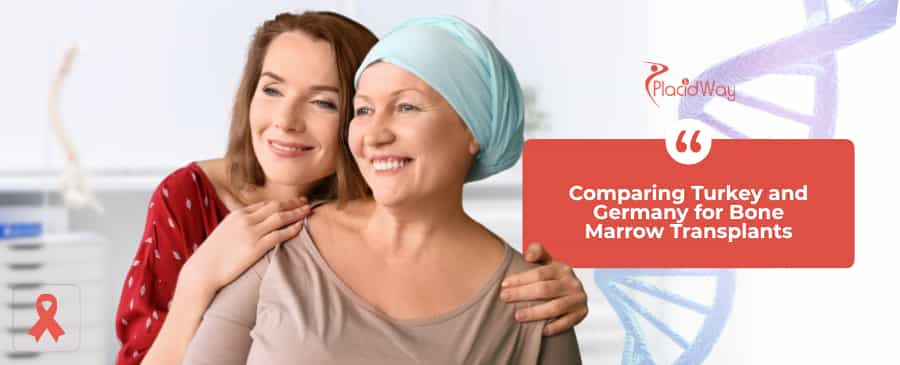
Hearing that you or a loved one needs a bone marrow transplant stops your entire world. Whether you are battling leukemia, lymphoma, multiple myeloma, or a severe blood disorder, the diagnosis alone brings an overwhelming wave of fear. But as a Moroccan patient, that medical fear is quickly followed by logistical panic. Your local doctors may have advised you to seek treatment abroad for the highest chance of success. Suddenly, you are staring at a monumental decision: where do you go for a procedure where every single day, and every single dollar, matters?
For decades, Germany has been the gold standard for Moroccan patients seeking complex medical care in Europe. But recently, you have likely noticed a massive shift. Friends, community members, and even your oncologists are mentioning Turkey. You are probably wondering: "Is Turkey a Better Option Than Germany for Bone Marrow Transplant for Moroccan Patients? Am I sacrificing quality for a cheaper price? Will I be safe?"
These are the exact right questions to ask. You need honest, transparent information to make a choice that literally impacts the rest of your life. In this comprehensive guide, we are going to look past the marketing brochures and compare Turkey and Germany side-by-side. We will break down the real costs, the true success rates, the medical visa processes, and what the recovery journey actually looks like, so you can make a confident, informed decision for your family.
Quick Facts: Bone Marrow Transplant (Germany vs. Turkey)
What Exactly Is a Bone Marrow Transplant?
To understand why choosing the right hospital is so vital, you need to understand the procedure. A bone marrow transplant (often called a hematopoietic stem cell transplant) is not a surgery in the traditional sense. It is a complex, multi-week medical intensive care process.
There are two main types: Autologous (using your own healthy stem cells, collected before treatment) and Allogeneic (using stem cells from a matched donor, like a sibling or an unrelated registry match).
Here is how the medical journey unfolds:
- Collection (Harvesting): Stem cells are collected either from your blood (autologous) or a donor's blood (allogeneic) through a specialized IV machine.
- Conditioning: You are admitted to a highly sterile hospital room. You receive very high doses of chemotherapy (and sometimes radiation). This kills the cancer cells but also completely wipes out your existing bone marrow and immune system.
- The Transplant (Infusion): The healthy stem cells are infused into your bloodstream through a central venous catheter, much like a regular blood transfusion.
- Engraftment and Recovery: The infused stem cells travel to your bone marrow spaces and begin producing new, healthy blood cells. This takes 2 to 4 weeks, during which you have zero immune system and must be kept in a specialized isolation room to prevent infection.
Because your immune system is erased and rebuilt, the hospital's infection control, nursing care, and technology are just as critical as the doctor's expertise.
Why Choose Turkey for Bone Marrow Transplant Over Germany?
- Speed of Access: Blood cancer does not wait. Getting a medical Schengen visa for Germany from Morocco can take months of bureaucratic delays. Turkey offers fast-tracked medical visas, allowing you to start treatment in days or weeks, not months.
- Massive Cost Savings: Treatment in Turkey is 50% to 70% less expensive than in Germany. When a procedure costs upwards of $100,000, this difference often determines whether a family can afford the treatment at all.
- World-Class Infrastructure: Top Turkish hospitals are JCI-accredited and members of the European Society for Blood and Marrow Transplantation (EBMT). They use the exact same chemotherapy drugs, HEPA-filtered clean rooms, and protocols as German hospitals.
- Cultural and Language Support: Turkey has positioned itself as a global medical hub. Major hospitals have dedicated international patient centers with native Arabic and French-speaking coordinators who handle everything from airport transfers to doctor translations.
- Familiar Environment: For Moroccan patients and their caregivers (who must stay for months), Turkey often feels culturally more comfortable. Halal food is standard, and the general cultural warmth helps ease the emotional burden of a long medical stay.
Cost of Bone Marrow Transplant in Turkey vs Germany
Let us look at the financial reality. A bone marrow transplant is one of the most expensive medical procedures in the world because it requires weeks of hospitalization in an intensive care isolation unit, expensive conditioning drugs, and a massive team of specialists.
| Procedure Type | Germany (Avg. Price) | Turkey (Avg. Price) | Estimated Savings |
|---|---|---|---|
| Autologous BMT | $80,000 - $120,000 | $30,000 - $50,000 | ~60% |
| Allogeneic (Related Donor) | $150,000 - $200,000 | $60,000 - $80,000 | ~60% |
| Allogeneic (Unrelated Donor) | $200,000 - $250,000 | $75,000 - $90,000 | ~65% |
| Pre-Transplant HLA Typing | $3,000 - $5,000 | $1,000 - $2,000 | ~60% |
| Monthly Living Costs (Caregiver) | $2,500 - $4,000 | $800 - $1,500 | ~65% |
Why is there such a massive price gap? It is critical to understand that the lower cost in Turkey does not mean lower medical quality. The drugs (chemotherapy, immunosuppressants) cost roughly the same. The difference comes entirely from the cost of living and labor. German doctors, nurses, and hospital administrators command salaries that are vastly higher than their Turkish counterparts. Additionally, the Turkish government heavily subsidizes healthcare infrastructure and medical tourism to keep their hospitals globally competitive. You are paying for the medicine, not the high European overhead.
Are Bone Marrow Transplants in Turkey as Safe as in Germany?
It is entirely natural to worry that paying less means risking your life. But when you look at the verifiable medical data, the safety and quality standards in Turkey's top hospitals match Germany's.
| Quality Metric | Germany | Turkey | Notes |
|---|---|---|---|
| Clinical Guidelines | EBMT Standards | EBMT Standards | Both follow the exact same European protocols |
| Hospital Accreditation | JCI / European bodies | JCI (Turkey has over 30) | Highest global standard for hospital safety |
| Clean Room Tech | HEPA filtered isolation | HEPA filtered isolation | Crucial for preventing infections when immune system is zero |
| Doctor Training | German medical schools | Turkish, US, & European | Many top Turkish hematologists trained in the USA/Europe |
Here is what you need to verify before choosing any hospital abroad:
- JCI Accreditation: The Joint Commission International is the gold standard for hospital safety. Turkey actually has more JCI-accredited hospitals than Germany.
- EBMT Membership: The European Society for Blood and Marrow Transplantation tracks outcomes and enforces strict safety criteria. The top hospitals in Turkey are proud, active members.
- Infection Control: When your immune system is wiped out, a common cold can be fatal. Both German and Turkish BMT units utilize positive-pressure, HEPA-filtered isolation rooms to keep you completely safe while your new marrow engrafts.
- Multidisciplinary Teams: Complications like Graft-versus-Host Disease (GVHD) require quick action. Leading Turkish centers have dedicated hematologists, infectious disease specialists, and ICU teams on standby 24/7, identical to a German university hospital.
Ultimately, as long as you choose a verified, top-tier medical institution in Turkey, you are not compromising on your safety or your chances of survival.
How Long Does a Bone Marrow Transplant Take in Turkey?
Do not let anyone tell you this is a quick trip. Whether you go to Germany or Turkey, a bone marrow transplant requires a massive time commitment. Here is the typical timeline for an international patient:
- Pre-Transplant Testing (Days 1-7): Extensive blood work, heart and lung function tests, and final disease staging to ensure you are physically strong enough for the conditioning phase.
- Conditioning (Days 8-14): High-dose chemotherapy to destroy your diseased bone marrow.
- Day Zero (Day 15): The actual transplant. The stem cells are infused.
- Engraftment and Isolation (Days 16-40): You stay in the hospital's sterile isolation ward while waiting for the new cells to start producing healthy blood. You will likely need blood and platelet transfusions during this time.
- Outpatient Recovery (Months 2-3): Once your blood counts are safe, you are discharged to a local apartment or hotel. You must visit the hospital 2 to 3 times a week for monitoring.
Crucial considerations for Moroccan patients:
- The Caregiver Rule: You cannot do this alone. You must bring a dedicated caregiver (spouse, parent, adult child) who will live with you, cook sterile meals, and monitor your temperature 24/7 once you leave the hospital.
- Language Logistics: Top Turkish hospitals assign a dedicated Arabic or French translator to your case to ensure you and your doctors communicate perfectly.
- Follow-up in Morocco: Before you leave Turkey, your team will coordinate with your local hematologist in Morocco so your care continues seamlessly when you return home.
Who is an Ideal Candidate for a Bone Marrow Transplant Abroad?
Traveling abroad for a BMT is demanding on the body. Your medical team will rigorously evaluate your eligibility.
You are likely a great candidate for treatment in Turkey if you:
- Have a qualifying disease (Leukemia, Lymphoma, Multiple Myeloma, Aplastic Anemia, Sickle Cell).
- Have disease that has responded to initial chemotherapy.
- Have strong organ function (lungs, heart, kidneys, and liver).
- Have a willing, healthy matched donor (for allogeneic), or healthy enough marrow for collection (autologous).
- Have a dedicated caregiver who can travel to Turkey with you for 3 months.
- Are generally under the age of 70 (though biological age and fitness matter more than chronological age).
You may need to reconsider or seek alternative treatments if you:
- Have severe organ damage: High-dose chemotherapy can be fatal if your heart or kidneys are already failing.
- Have active, uncontrolled, progressing cancer: BMT is usually most successful when the disease is in remission.
- Cannot secure a caregiver: Hospitals will literally not perform the procedure if you do not have a dedicated support person.
- Have severe, active infections: Any infection must be cleared before conditioning begins.
- Lack financial resources or insurance: BMTs require upfront payment or guaranteed embassy/insurance coverage before admission.
- Cannot travel: If your condition is highly unstable, a medical flight might be too dangerous.
If you fit the criteria, taking the next step involves sending your medical records to a specialist in Turkey for a free, remote evaluation.
Frequently Asked Questions
When families are researching options between Turkey and Germany, the same crucial questions come up time and time again. We have compiled the most urgent concerns regarding cost, quality, and the realities of the recovery process.
How much does a bone marrow transplant cost in Turkey compared to Germany?
A bone marrow transplant in Turkey costs between $30,000 and $90,000 depending on the type (autologous vs. allogeneic). In Germany, the same procedures cost $80,000 to $250,000. Moroccan patients typically save 50% to 70% in Turkey due to lower overhead and living costs, not lower medical quality.
Are bone marrow transplant success rates in Turkey as good as Germany?
Yes. Top Turkish hospitals report overall success and 5-year survival rates of 70-85% for autologous transplants and 50-70% for allogeneic transplants (depending heavily on the specific disease stage). These rates are statistically identical to leading hematology centers in Germany because both follow EBMT guidelines.
What is the recovery time for a bone marrow transplant?
Initial hospital recovery in the sterile isolation unit takes 3 to 5 weeks. Full immune system recovery takes 3 to 12 months for autologous transplants and 1 to 2 years for allogeneic transplants. You will need to stay near the hospital in Turkey for about 2 to 3 months total before returning to Morocco.
What are the risks of Graft-versus-Host Disease (GVHD)?
GVHD is a significant risk in allogeneic (donor) transplants where donor cells attack your body. Acute GVHD occurs in 30-50% of patients. Turkish hospitals use the exact same immunosuppressive drugs and targeted therapies as Germany to prevent, monitor, and aggressively manage this complication if it arises.
Can I travel to Turkey alone for a bone marrow transplant?
Absolutely no. A bone marrow transplant requires rigorous post-treatment care. You must have a dedicated caregiver (a family member or close friend) with you 24/7 during your outpatient recovery phase in Turkey for at least 2 to 3 months. Hospitals will not proceed without this support system in place.
Which locations in Turkey are best for a bone marrow transplant?
Istanbul and Ankara are the leading hubs for complex medical tourism in Turkey. They house the country's most advanced JCI-accredited university hospitals and private medical centers with dedicated hematology-oncology departments and HEPA-filtered clean rooms necessary for transplant patients.
How is follow-up care handled when I return to Morocco?
Before you leave Turkey, your medical team will provide a detailed, translated care plan. You will need a trusted local hematologist in Morocco to perform weekly or monthly complete blood counts (CBCs) and monitor your immunosuppressive medications, coordinating directly with your Turkish team if issues arise.
How do I know if a Turkish hospital is reputable for BMT?
Do not rely on glossy brochures. Look specifically for hospitals with JCI (Joint Commission International) accreditation, active membership in the EBMT (European Society for Blood and Marrow Transplantation), and dedicated stem cell processing laboratories right on site.
Is it easier for Moroccan patients to get a medical visa for Turkey or Germany?
Turkey is significantly easier and faster. Moroccan patients can often obtain an electronic visa or fast-tracked medical visa for Turkey within days. Conversely, obtaining a German Schengen medical visa can take weeks to months of bureaucratic delays, which is dangerous when battling an aggressive blood cancer.
What happens if there are complications during my transplant?
Turkish hospitals have comprehensive intensive care units (ICUs) and specialists across all departments to handle severe infections, bleeding, or organ issues. However, it is vital to understand that treating prolonged complications will increase your total medical bill, so having a financial buffer is essential.
How many trips will I need to make to Turkey?
Typically, you only make one long trip. You arrive for final testing, undergo the conditioning and transplant, and stay in Turkey for the entire 2-3 month recovery monitoring period before returning to Morocco permanently for your long-term local follow-up.
Can I finance my bone marrow transplant in Turkey?
While some medical tourism agencies offer financing for smaller procedures, a BMT is a major expense. International patients usually must pay out-of-pocket, secure funding through personal loans, community fundraising, or rely on Moroccan state health coverage (like CNSS/AMO) if they have secured prior authorization for international care.
Take the Next Step Toward Healing
References
- Joint Commission International. "JCI-Accredited Organizations."
- PlacidWay Medical Tourism. "Cost of Bone Marrow Transplant in Turkey vs. Global Options"
.png)



.png)

.png)

Share this listing