
Is Fibroid Removal Surgery in Tijuana Safe for Women From the United States?
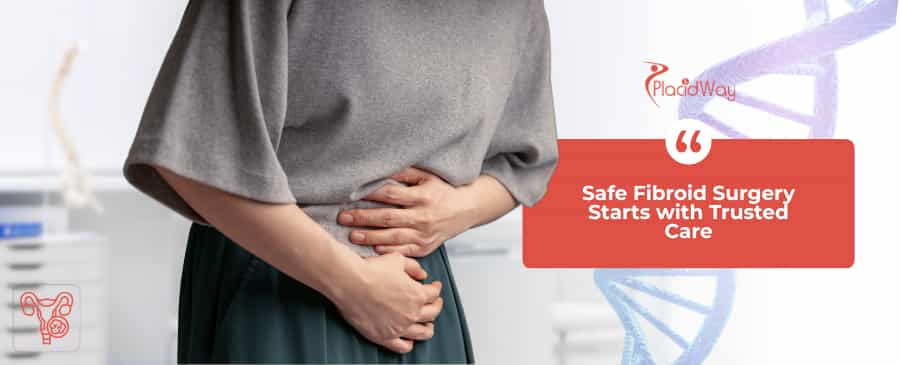
Living with uterine fibroids is utterly exhausting. You know the reality all too well: the debilitating cramps that dictate your schedule, the heavy bleeding that leaves you profoundly anemic, and the sudden urge to use the restroom every hour. Perhaps you are dealing with a bloated, distended abdomen that makes you look pregnant when you are not, inviting unwanted questions and silent tears. It is a physical and emotional toll that drains the joy out of daily life.
When you finally ask your US doctor for a solution, the financial reality hits hard. Even with insurance, high deductibles and out-of-network fees can leave you staring at a $10,000 to $20,000 bill. For many women, that price tag forces them to suffer in silence. As you search for alternatives, you stumble upon medical tourism and a burning question emerges: Is it safe for US women to get fibroid removal surgery in Tijuana, Mexico?
You might feel hesitant, and that is completely valid. Trusting your body to a foreign healthcare system is a massive leap of faith. You want reassurance, honest facts, and a clear understanding of the risks and rewards. This guide is written specifically for you. I will walk you through exactly what to expect, comparing costs, quality, and recovery, so you can make an empowered decision about reclaiming your health and your life.
Quick Facts: Fibroid Removal (US vs. Tijuana)
What Exactly Is Fibroid Removal Surgery?
A myomectomy is the gold standard for women who want to eliminate their fibroid symptoms but refuse to undergo a hysterectomy (full removal of the uterus). Depending on the size, number, and location of your fibroids, the surgeon will choose one of three main approaches.
Here is step-by-step how the procedure works:
- Anesthesia & Preparation: You are placed under general anesthesia so you will feel absolutely no pain and sleep through the 2-to-4 hour procedure.
- Incision and Access:
Laparoscopic: The surgeon makes 3 to 4 tiny "keyhole" incisions in your abdomen, using a camera and small tools.
Abdominal (Open): A horizontal incision is made along the bikini line (similar to a C-section) for very large fibroids.
Hysteroscopic: No incisions are made; tools are passed through the vagina and cervix (only for fibroids inside the uterine cavity). - Extraction: The surgeon carefully cuts the fibroids away from the healthy uterine muscle and removes them from your body.
- Uterine Reconstruction: The remaining uterine tissue is meticulously stitched back together to ensure it is strong enough to support a future pregnancy.
- Closure and Healing: Incisions are closed with dissolvable stitches or surgical glue, and you are moved to recovery.
The beauty of a myomectomy is that it specifically targets the the tumors while preserving your feminine anatomy, your natural hormones, and your fertility.
Why Choose Fibroid Removal in Tijuana?
- Uterine Preservation: Many US doctors quickly recommend a hysterectomy because it is a simpler, faster surgery for them. Top surgeons in Mexico are highly skilled in complex myomectomies, fighting to save your uterus.
- Zero Wait Times: In the US or Canada, non-emergency surgeries can take 6 to 12 months to schedule. In Tijuana, you can often book your surgery within 3 to 4 weeks, ending your suffering faster.
- Holistic Health & Convenience: Tijuana facilities are accustomed to medical tourists. They pick you up at the San Diego airport, drive you to the hospital, and coordinate your recovery hotel—meaning less stress for you.
- No Insurance Battles: You will not spend hours on the phone arguing with insurance companies about pre-authorizations or surprise out-of-network anesthesiologist bills. The quoted price is the final price.
- Luxurious Recovery: Instead of being rushed out of a US hospital hours after surgery, Mexican packages often include several days in a private hospital suite, followed by nursing care in a high-end recovery boutique.
How Much Does a Myomectomy Cost in Tijuana?
Let's look at the financial reality. In the US, medical billing is incredibly fragmented. You pay the hospital facility fee, the surgeon fee, the anesthesiologist, and pathology separately. In Mexico, medical tourism clinics offer "all-inclusive" packages that cover everything.
| Procedure Type | United States Price | Tijuana Price | Savings % |
|---|---|---|---|
| Laparoscopic Myomectomy | $20,000 - $40,000 | $5,000 - $7,000 | 65% - 75% |
| Open Abdominal Myomectomy | $15,000 - $30,000 | $4,500 - $6,500 | 65% - 70% |
| Hysteroscopic Myomectomy | $10,000 - $20,000 | $3,000 - $4,500 | 60% - 70% |
| Hysterectomy (Alternative) | $15,000 - $35,000 | $4,500 - $6,000 | 65% - 75% |
| Pre-Op Consult & Scans | $1,000 - $3,000 | Often Included | 100% |
Why is healthcare so much cheaper in Mexico? The steep discount has absolutely nothing to do with subpar medical materials. Surgeons in Mexico use the exact same surgical mesh, sutures, and laparoscopic cameras (like Stryker or Karl Storz) as US doctors. The massive savings come from macroeconomics. Labor costs for nurses and support staff are much lower. Administrative overhead is drastically reduced because they don't employ armies of medical coders. Most importantly, Mexican doctors pay pennies on the dollar for malpractice insurance compared to the crippling premiums US doctors face.
How Safe Is a Myomectomy in Tijuana for International Patients?
Safety is the anchor of your decision. It is natural to picture outdated clinics when thinking of cross-border medicine, but the reality of modern medical tourism in Tijuana is the exact opposite. Top-tier hospitals in Tijuana look like luxury US facilities and adhere to the strictest global medical protocols.
| Quality Metric | United States | Tijuana, Mexico | Notes |
|---|---|---|---|
| Hospital Accreditation | JCAHO Standard | JCI & CSG Standards | Both strictly regulate cleanliness & safety |
| Surgeon Qualifications | ACOG Board Certified | FEMEGO Board Certified | Many MX doctors have US/EU fellowships |
| Infection Rates | 1% - 3% | 1% - 3% | Identical outcomes in premium facilities |
| Anesthesia Safety | Certified Anesthesiologist | Certified Anesthesiologist | Continuous vitals monitoring in both |
| Surgical Tools | FDA Approved | FDA & CE Approved | Global supply chains mean identical tools |
Here is how top clinics in Tijuana protect you:
- Elite Surgeons: You are not getting a medical student. You are assigned a Chief Surgeon with decades of experience performing complex gynecological surgeries.
- Comprehensive Screening: Before you even touch a scalpel, doctors run extensive blood panels, EKGs, and ultrasounds to ensure your heart and body can handle anesthesia safely.
- Strict Sterilization: Hospitals catering to international patients follow ISO and Joint Commission International (JCI) protocols, meaning their air filtration and instrument sterilization rival top US hospitals.
- Language Is No Barrier: Miscommunication is a massive safety risk. That is why medical tourism hospitals employ fully bilingual doctors and 24/7 English-speaking nursing staff.
Your greatest protection is performing due diligence. As long as you bypass "back-alley" clinics and book through verified, accredited hospital networks, you are incredibly safe.
What to Expect During Fibroid Removal in Mexico: A Typical Timeline
The logistics of traveling for surgery are much smoother than most people imagine. Here is the phase-by-phase timeline of your medical journey:
- Arrival & Pre-Op (Day 1): Fly into San Diego Airport (SAN). A driver picks you up and crosses the border directly to the clinic. You undergo bloodwork, an EKG, and a final ultrasound, then meet your surgeon face-to-face.
- Surgery Day (Day 2): You check into the hospital. The surgery takes 2 to 4 hours. You wake up in a private recovery suite where nurses monitor your pain levels closely.
- Hospital Recovery (Days 3-4): For an open myomectomy, you remain in the hospital for 2 nights. For laparoscopic, usually 1 night. Nurses manage your pain medication and help you take your first post-surgery walk.
- Hotel Recovery (Days 5-9): You are transferred to a local medical recovery hotel. You will rest, watch TV, and eat room service. Your surgical team will check on your incisions.
- Clearance & Departure (Day 10): The surgeon performs a final check-up, removes any necessary drains, hands you your medical files (translated to English), and clears you to fly. A driver takes you back to San Diego.
Crucial Considerations Before You Pack:
- Travel Companion: While some brave women travel solo, having a friend or spouse with you for the first 3 days is incredibly helpful for carrying luggage and assisting you out of bed.
- Post-Op Pain Management: You will be sent home with a detailed prescription plan, including antibiotics and pain relievers (like Ketorolac or Ibuprofen), easily filled at a Mexican pharmacy before crossing the border.
- Follow-Up Care: You will need a US gynecologist to perform a 6-week post-op check. Make sure to establish this relationship before you travel.
- Bone Loss Mitigation: In the US, doctors often prescribe Lupron for 3-6 months to shrink fibroids before surgery, which causes temporary bone loss and menopause symptoms. By traveling to Mexico, you can often bypass this wait time and have the tumors removed surgically right away, protecting your bone density.
Who Is the Ideal Candidate for Fibroid Surgery in Mexico?
Surgery is not a one-size-fits-all solution. Your safety depends heavily on your current health profile.
You are likely a great candidate if you have:
- Diagnosed uterine fibroids causing pain, heavy bleeding, or fertility issues.
- A strong desire to keep your uterus (avoiding hysterectomy).
- Good overall cardiovascular health to withstand general anesthesia.
- The ability to take 2 to 4 weeks off work for proper recovery.
- A BMI under 35 (higher BMIs may require specialized evaluation).
- A valid passport and the ability to travel comfortably.
You may need to reconsider or seek highly specialized care if you have:
- Suspicion of Uterine Cancer: If your biopsy suggests malignancy, you need an oncology team, not a standard medical tourism package.
- Severe Uncontrolled Anemia: If your hemoglobin is dangerously low from fibroid bleeding, you may require blood transfusions and stabilization before flying.
- Massive Fibroids: Tumors mimicking a 20+ week pregnancy can be operated on, but usually require a larger open incision and a longer stay.
- Severe Heart or Lung Disease: Pre-existing conditions that make anesthesia highly risky must be managed locally.
- Uncontrolled Diabetes: High blood sugar dramatically impedes wound healing and increases infection risk.
- Pregnancy: Surgery is rarely performed during an active pregnancy due to the risk of miscarriage.
If you fit the good candidate profile, the next step is simple. Gather your recent pelvic ultrasound or MRI reports, and request a free evaluation from a board-certified Mexican gynecologist to confirm your eligibility.
Frequently Asked Questions
It is totally normal to have a dozen questions running through your head right now. Below, we address the most common concerns women have regarding cost, quality comparison, recovery, solo travel safety, and clinical verification.
How much does fibroid removal surgery cost in Tijuana, Mexico?
A myomectomy in Tijuana costs between $4,000 and $7,000 depending on the surgical method. In the US, the same procedure ranges from $15,000 to $40,000 without insurance coverage. The Mexican fee generally includes hospital stays, surgeon fees, and anesthesia.
How does the quality of surgery compare between the US and Mexico?
The quality is highly comparable. Top hospitals in Tijuana are internationally accredited, use modern laparoscopic equipment, and employ board-certified gynecological surgeons with international training. The difference is the price of labor, not the quality of medicine.
What is the typical recovery time for a myomectomy?
Laparoscopic removal requires 2 to 4 weeks of recovery. An open abdominal myomectomy takes 4 to 6 weeks. You will typically stay in Mexico for 7 to 10 days before flying home, and must avoid lifting anything over 10 pounds for a full month.
What are the potential complications of fibroid removal?
Complications are rare (2-5%) but can include excessive bleeding, infection, or damage to surrounding organs. Board-certified surgeons take strict precautions to minimize these risks, including administering preventative antibiotics and using advanced bleeding control techniques.
Can medications for fibroids cause bone loss before surgery?
Yes. US doctors often prescribe GnRH agonists (like Lupron) to shrink fibroids before surgery, which can cause temporary bone loss. Mexican clinics often provide faster surgical timelines, minimizing the need for prolonged hormone therapy and protecting your skeletal health.
Which are the best locations in Mexico for gynecology procedures?
Tijuana is the premier destination due to its immediate proximity to the US border, world-class hospitals, and bilingual medical staff catering specifically to American patients. Cancun and Monterrey are also excellent, reputable hubs for women's health surgeries.
Will my US gynecologist provide follow-up care?
Yes, most US doctors will provide routine follow-up care. Reputable clinics in Tijuana provide all surgical notes and imaging in English to ensure a smooth transition back home. It is best to notify your local doctor of your plans before you travel.
How do I verify a Mexican clinic or surgeon is reputable?
Look for Joint Commission International (JCI) accreditation, verify the surgeon's board certification with the Mexican Council of Gynecology and Obstetrics, and read independent patient reviews. Reputable clinics are always transparent about their credentials and complication rates.
Is solo travel safety a concern when getting surgery in Tijuana?
While thousands travel safely alone, having a companion is highly recommended for major surgery to assist you with luggage, medications, and emotional support during the first 48 hours. If you must go alone, clinics offer VIP nursing care to ensure you are never unattended.
How many trips to Mexico will I need to make?
You typically only need one trip. You will arrive 1-2 days before surgery for consultations, have the procedure, and stay 5-7 days in a recovery hotel before being cleared to travel home. All follow-up can be done via telehealth and with your local US doctor.
Can I get financing for my surgery abroad?
Yes. While US health insurance rarely covers international care, there are specialized medical tourism financing companies. However, because costs are 60-70% lower, many patients successfully pay out-of-pocket using savings or low-interest personal credit lines.
Take the First Step Toward a Pain-Free Life
References
- American College of Obstetricians and Gynecologists (ACOG). "Uterine Fibroids: Treatment and Surgery."
- Mayo Clinic. "Myomectomy: Risks, Preparation, and Recovery."
- PlacidWay Medical Tourism. "Cost and Safety of Gynecological Surgery in Mexico."
.png)





.png)
.png)

















Share this listing