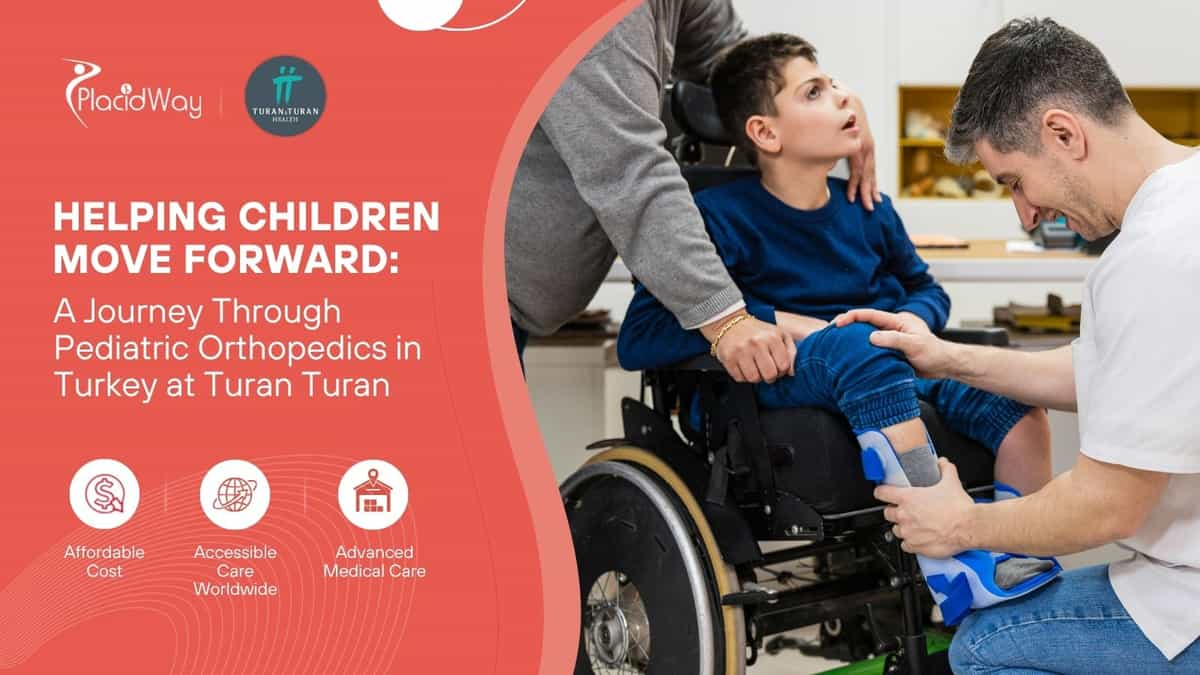
Pediatric orthopedics focuses on evaluating, diagnosing, and treating musculoskeletal conditions affecting infants, children, and adolescents. Because growing bones, open growth plates, and developing movement patterns require specialized care, children need treatment plans designed around their age, diagnosis, mobility, and stage of development.
Turan Turan Health Group provides international families with access to pediatric orthopedic treatment in Turkey, including diagnostic evaluation, non-surgical treatment, corrective surgery, physiotherapy, rehabilitation, and international patient support.
Quick Summary: Pediatric Orthopedic Care in Turkey
| Key Aspect |
Summary Details |
| Primary Medical Focus |
Pediatric orthopedics and neuromuscular rehabilitation |
| Main Center |
Turan Turan Robotic Surgery Center and Orthopedic Clinic, Bursa / Istanbul, Turkey |
| Conditions Treated |
Cerebral palsy, hip dysplasia, clubfoot, gait disorders, limb deformities, fractures, and other pediatric musculoskeletal conditions |
| Treatment Options |
Physiotherapy, orthotics, casting, botulinum toxin treatment, corrective surgery, and rehabilitation |
| Listed Cost Examples |
$400–$900 for consultation and diagnostics up to $12,000–$22,000 for SEMLS, depending on the treatment plan |
| Typical Medical Travel Stay |
About 3–5 days for consultation or selected non-surgical care and approximately 10–21 days for major reconstructive surgery with initial rehabilitation |
| International Services |
Remote record review, multilingual coordination, transfer support, travel assistance, and long-term follow-up |
What Is Pediatric Orthopedics?
Pediatric orthopedics is a specialized medical field focused on conditions affecting the bones, joints, muscles, tendons, ligaments, movement, and alignment of growing children. Pediatric orthopedic care differs from adult orthopedics because children's bones continue to grow and remodel throughout childhood and adolescence.
A pediatric orthopedic specialist considers growth plates, bone development, muscle function, neurological development, gait, and future skeletal growth when evaluating a child. Early assessment can help determine whether a walking, posture, alignment, or mobility difference is part of normal development or whether treatment may be appropriate.
Active Growth Plates
Children's bones contain growth plates that require careful protection during casting, surgery, and other orthopedic treatments.
Bone Remodeling Potential
Young bones can heal and remodel differently from adult bones, which can influence treatment timing and technique.
Developmental Changes
Walking patterns, posture, and limb alignment naturally change as children grow and develop.
Long-Term Mobility Goals
Treatment planning considers immediate symptoms as well as future mobility, independence, and skeletal development.
What Does a Pediatric Orthopedic Specialist Treat?
- Congenital Orthopedic Conditions: Clubfoot, congenital hip problems, and limb abnormalities present at birth.
- Developmental Conditions: Developmental dysplasia of the hip (DDH), slipped capital femoral epiphysis (SCFE), and other conditions appearing during growth.
- Neurological & Neuromuscular Conditions: Musculoskeletal problems associated with cerebral palsy, spina bifida, muscular dystrophy, and brachial plexus injuries.
- Gait & Movement Disorders: In-toeing, out-toeing, toe walking, bent-knee gait, and leg-length differences.
- Bone & Joint Conditions: Pediatric scoliosis, kyphosis, Perthes disease, septic arthritis, and osteomyelitis.
- Sports & Traumatic Injuries: Growth plate fractures, ligament injuries, and recurrent dislocations.
- Limb & Foot Deformities: Bowlegs, knock-knees, flexible flat feet, and limb-length discrepancy.
Featured Pediatric Orthopedic Center in Turkey
Families considering pediatric orthopedic treatment in Turkey may look for a center that combines orthopedic evaluation, pediatric rehabilitation, diagnostic imaging, treatment planning, and international patient coordination.
Turan Turan Health Group
Location: Bursa, Turkey
Turan Turan Robotic Surgery Center and Orthopedic Clinic provides orthopedic services that include pediatric orthopedics and neuro-rehabilitation. Its treatment scope includes movement disorders, deformities, congenital orthopedic conditions, corrective procedures, rehabilitation, and international patient support.
Which Children May Need Pediatric Orthopedic Evaluation?
Parents are often the first to notice changes in their child's walking, posture, balance, limb alignment, movement, or physical activity. Pediatric orthopedic evaluation may be appropriate when these findings are persistent, progressive, painful, or interfere with daily function.
Gait & Walking Patterns
Persistent limping, toe walking, frequent tripping, severe in-toeing, or feet turning outward.
Alignment & Limb Length
One leg appearing shorter than the other, uneven shoulder height, visible limb deformity, or asymmetrical posture.
Mobility & Pain Concerns
Recurrent joint pain, stiffness, restricted movement, muscle tightness, or reluctance to run and play.
Why Early Assessment Can Matter During Growth
Monitoring pediatric orthopedic conditions during growth can help doctors decide whether observation, physiotherapy, bracing, casting, orthotics, medication, or surgery should be considered. Treatment timing may depend on the child's diagnosis, age, growth potential, symptoms, mobility, and overall functional needs.
Pediatric Orthopedic Conditions Treated in Turkey
Cerebral Palsy & Movement Disorders
Orthopedic management may address spasticity, muscle contractures, hip subluxation, joint deformity, and gait abnormalities alongside rehabilitation.
Developmental Hip Conditions
Developmental Dysplasia of the Hip (DDH) and hip dislocation may be managed using age-appropriate approaches such as harnessing, reduction, monitoring, or reconstructive procedures.
Clubfoot & Foot Deformities
Management may include Ponseti serial casting, Achilles tenotomy, bracing, rehabilitation, or corrective surgery depending on the child's condition.
Spina Bifida & Neuromuscular Conditions
Care may address spinal deformity, joint contractures, foot alignment, mobility, and functional limitations associated with neuromuscular disease.
Torticollis & Postural Issues
Assessment can include congenital muscular torticollis, postural asymmetry, and pediatric spinal alignment variations.
Pediatric Fractures & Trauma
Children with growth plate fractures and other traumatic injuries may require age-specific alignment, fixation, and follow-up during growth.
How Is a Child Evaluated at a Pediatric Orthopedic Center in Turkey?
Pediatric orthopedic assessment usually combines medical history, physical examination, developmental context, functional evaluation, and targeted diagnostic testing. International families may also submit records for review before traveling.
1. Medical History & Consultation
Review of birth history, developmental milestones, previous treatment or surgery, family history, symptoms, and parental concerns.
2. Physical & Functional Examination
Assessment of joint motion, muscle tone, spasticity, limb alignment, balance, posture, walking pattern, and gait when appropriate.
3. Developmental Context & Treatment Planning
Clinical findings are considered alongside the child's age, growth potential, diagnosis, mobility, symptoms, and treatment goals before a plan is discussed.
Diagnostic Tests Used in Pediatric Orthopedics
Diagnostic testing is selected according to the child's symptoms and clinical findings. Imaging and other investigations can help define bone structure, soft tissue, neurological involvement, alignment, and movement.
| Diagnostic Test |
Primary Focus |
Pediatric Clinical Role |
| Digital X-Ray |
Bone structure, alignment, fractures, deformities |
Common first-line assessment for skeletal alignment, injury, and growth plate status |
| Pediatric MRI |
Soft tissue, cartilage, spinal cord, ligaments |
Detailed imaging without ionizing radiation |
| CT Scan with 3D Reconstruction |
Complex three-dimensional bony anatomy |
May be used for detailed pre-operative planning in selected cases |
| Electromyography (EMG) |
Nerve and muscle electrical activity |
May help assess neuromuscular disease, nerve injury, or muscle weakness |
| Dynamic Ultrasound |
Real-time soft tissue and hip imaging |
Can be used for infant hip evaluation without ionizing radiation |
Pediatric Orthopedic Treatment in Turkey: Non-Surgical Options
Conservative treatment is often considered before surgery, depending on the child's diagnosis, symptoms, age, functional limitations, and stage of development.
- Physiotherapy & Rehabilitation: Exercise and movement programs may focus on flexibility, strength, coordination, balance, mobility, and walking.
- Bracing, Orthoses & Casting: AFOs, braces, splints, and serial casting may be used to support alignment and mobility.
- Botulinum Toxin for Spasticity: Selected children with focal spasticity may receive injections as part of a broader rehabilitation plan.
- Ultrasound-Guided Interventions: Selected injections or procedures may be performed with image guidance when clinically appropriate.
- Observation & Growth Monitoring: Some mild or developmental orthopedic variations may be monitored as the child grows.
When Is Pediatric Orthopedic Surgery Considered?
Pediatric orthopedic surgery may be considered when conservative treatment does not adequately manage significant deformity, progressive symptoms, pain, or severe functional limitations.
Clinical Decision Factors: Surgical timing should be individualized according to the child's diagnosis, age, skeletal maturity, mobility, symptoms, overall health, and long-term developmental needs.
Pediatric Orthopedic Surgery Options at Turan Turan
Corrective Bone Surgery (Osteotomy)
Osteotomy can be used to realign bones in areas such as the hip, femur, tibia, ankle, or foot.
Developmental Hip Reconstruction
Pelvic and femoral procedures may be considered in selected children with developmental hip conditions.
Single-Event Multilevel Surgery (SEMLS)
SEMLS combines multiple muscle, tendon, and bone procedures during one surgical session for selected children with cerebral palsy and complex gait problems.
Tendon & Muscle Procedures
Tendon lengthening, tendon transfers, and muscle procedures may be used to address contractures and muscle imbalance.
Pediatric Orthopedic Surgery Risks & Safety Considerations
Pediatric orthopedic surgery should be planned around the child's diagnosis, age, growth potential, overall health, and expected rehabilitation needs. Risks and recovery requirements differ between procedures, so families should receive a procedure-specific discussion before treatment.
- Individual Assessment: Surgical planning should consider diagnosis, mobility, previous treatment, skeletal maturity, and overall health.
- Alternatives to Surgery: Physiotherapy, bracing, orthotics, casting, monitoring, and selected interventions may be considered when appropriate.
- Growth Considerations: Treatment should account for open growth plates and future skeletal development.
- Rehabilitation: Families should understand the expected therapy, mobility, and brace requirements after treatment.
- Informed Consent: The treating team should explain expected benefits, limitations, possible complications, and alternatives for the specific procedure.
Rehabilitation After Pediatric Orthopedic Treatment
Rehabilitation is an important part of pediatric orthopedic care. Physical therapy may help children build strength, improve flexibility, adapt to changes in alignment, practice balance, and retrain walking patterns following selected treatments.
Multidisciplinary Rehabilitation Model
Pediatric orthopedic care may involve collaboration between the orthopedic surgeon, neurology team, pediatric physiotherapist, orthotist, rehabilitation professionals, and the family.
Pediatric Orthopedic Surgeon ? Neurology Team ? Pediatric Physiotherapist ? Orthotist ? Family
Ongoing follow-up during growth can help the medical team monitor alignment, mobility, orthotic needs, and rehabilitation goals as the child grows.
Why Consider Pediatric Orthopedics in Turkey?
International families may consider Turkey when looking for pediatric orthopedic evaluation, treatment, rehabilitation, and medical travel support within one coordinated care pathway.
- Specialized Orthopedic Services: Access to centers providing pediatric orthopedic evaluation and treatment.
- Diagnostic & Rehabilitation Infrastructure: Services may include imaging, gait evaluation, physiotherapy, orthotics, and rehabilitation.
- Published Treatment Pricing: The page provides estimated USD price ranges for selected pediatric orthopedic services and procedures.
- International Patient Support: Remote medical record review, multilingual coordination, transfer support, and travel assistance are available for international families.
Pediatric Orthopedic Treatment Costs in Turkey
Pediatric orthopedic costs depend on the child's diagnosis, diagnostic needs, treatment complexity, hospital requirements, surgery, implants, rehabilitation, and length of stay. The following estimates are the treatment ranges listed for Turan Turan services on this page.
| Treatment / Procedure |
Listed Components |
Estimated Cost Range (USD) |
| Pediatric Consultation & Diagnostics |
Specialist consultation, digital X-rays, computerized gait evaluation |
$400–$900 |
| Clubfoot Ponseti Serial Casting (Per Leg) |
Serial casts, tenotomy procedure, custom orthotic brace |
$2,500–$4,500 |
| Botulinum Toxin Spasticity Treatment |
OR time, ultrasound-guided injections, one week of physical therapy |
$1,800–$3,200 |
| Corrective Osteotomy (Hip / Limb) |
Surgeon fees, hospital stay, implant hardware, post-operative imaging, therapy |
$7,500–$14,000 |
| Single-Event Multilevel Surgery (SEMLS) |
Multi-site bone and soft tissue surgery, hospital stay, intensive rehabilitation |
$12,000–$22,000 |
Cost Note: Final pricing should be confirmed after medical review because treatment plans can vary by diagnosis and complexity. Families should request a written quote that clearly lists included services before booking travel.
What Should Parents Prepare Before Traveling to Turkey?
Preparing complete medical records before traveling can help the pediatric orthopedic team review the child's history and plan the consultation more efficiently.
Medical Documents to Prepare
- Previous physical examination reports and diagnostic summaries
- DICOM files of previous X-rays, MRIs, or CT scans
- Previous orthopedic or neurological surgery reports
- Current medication list
- Orthotic or brace specifications
- Videos showing walking patterns when relevant
Questions to Ask During the Consultation
- What is causing my child's movement or alignment problem?
- Are non-surgical options appropriate?
- What treatment is recommended and why?
- If surgery is recommended, what hospital stay and rehabilitation are expected?
- What follow-up will be needed after returning home?
- What services are included in the treatment quote?
Frequently Asked Questions About Pediatric Orthopedics in Turkey
1. How much does pediatric orthopedic treatment cost in Turkey?
Pediatric orthopedic treatment costs in Turkey vary by diagnosis and treatment type. Estimated prices listed on this page range from $400–$900 for pediatric consultation and diagnostics to $12,000–$22,000 for single-event multilevel surgery. Clubfoot Ponseti casting is listed at $2,500–$4,500 per leg, botulinum toxin treatment at $1,800–$3,200, and corrective osteotomy at $7,500–$14,000.
2. What conditions can pediatric orthopedic specialists treat?
Pediatric orthopedic specialists treat congenital, developmental, neuromuscular, gait, bone, joint, limb, foot, fracture, and trauma-related conditions. Examples include cerebral palsy, developmental hip dysplasia, clubfoot, scoliosis, spina bifida, gait disorders, limb deformities, and pediatric fractures.
3. When should my child see a pediatric orthopedic specialist?
Evaluation may be appropriate when a child has persistent limping, severe in-toeing or out-toeing, toe walking, frequent tripping, unequal leg length, recurrent joint pain, limited movement, muscle stiffness, or delayed walking and standing.
4. Does every child with an orthopedic condition need surgery?
No. Many pediatric orthopedic conditions may be managed with physiotherapy, rehabilitation, braces, orthoses, serial casting, monitoring, or other conservative treatment. Surgery may be considered when non-surgical options are insufficient for the child's condition.
5. What diagnostic tests may be required?
Diagnostic testing may include digital X-rays, pediatric MRI, CT with 3D reconstruction, dynamic ultrasound, electromyography, or computerized gait analysis. The appropriate tests depend on the child's symptoms and clinical findings.
6. Can pediatric orthopedic treatment include physiotherapy?
Yes. Physiotherapy can be used as a primary conservative treatment and as part of rehabilitation after orthopedic procedures. Treatment may focus on strength, flexibility, balance, walking, coordination, and functional mobility.
7. What pediatric orthopedic surgeries are available in Turkey?
Available procedures may include corrective osteotomy, developmental hip reconstruction, tendon lengthening, tendon transfers, muscle procedures, and single-event multilevel surgery for selected children with complex orthopedic conditions.
8. How important is rehabilitation after pediatric orthopedic surgery?
Rehabilitation can play an important role after pediatric orthopedic surgery. Physical therapy may help children improve strength, flexibility, mobility, balance, and walking while adapting to changes following treatment.
9. How long should families stay in Turkey for pediatric orthopedic treatment?
Consultation or selected non-surgical treatment may require approximately 3–5 days. Major reconstructive surgery with initial rehabilitation may require approximately 10–21 days in Turkey. The recommended stay should be confirmed after medical review.
10. How can international families arrange a pediatric orthopedic consultation in Turkey?
Families can provide their child's medical history, current X-rays or MRI scans, previous reports, and relevant walking videos for pre-travel review through PlacidWay. International patient services may include medical record review, multilingual coordination, transfer support, and follow-up assistance.
Request a Pediatric Orthopedic Consultation in Turkey
Send your child's available medical records, diagnostic imaging, and relevant movement videos for review before traveling. A personalized consultation can help your family understand possible treatment options, expected length of stay, rehabilitation needs, and estimated treatment costs.
Request a Pediatric Orthopedic Treatment Review
Medical Disclaimer: This page is provided for educational and medical travel information only and does not replace professional diagnosis, medical advice, or treatment. Pediatric orthopedic care must be individualized after evaluation by a qualified healthcare professional. Parents should discuss treatment benefits, risks, alternatives, recovery, and travel suitability with the treating medical team before making medical decisions.
References & Authoritative Sources


















Share this listing